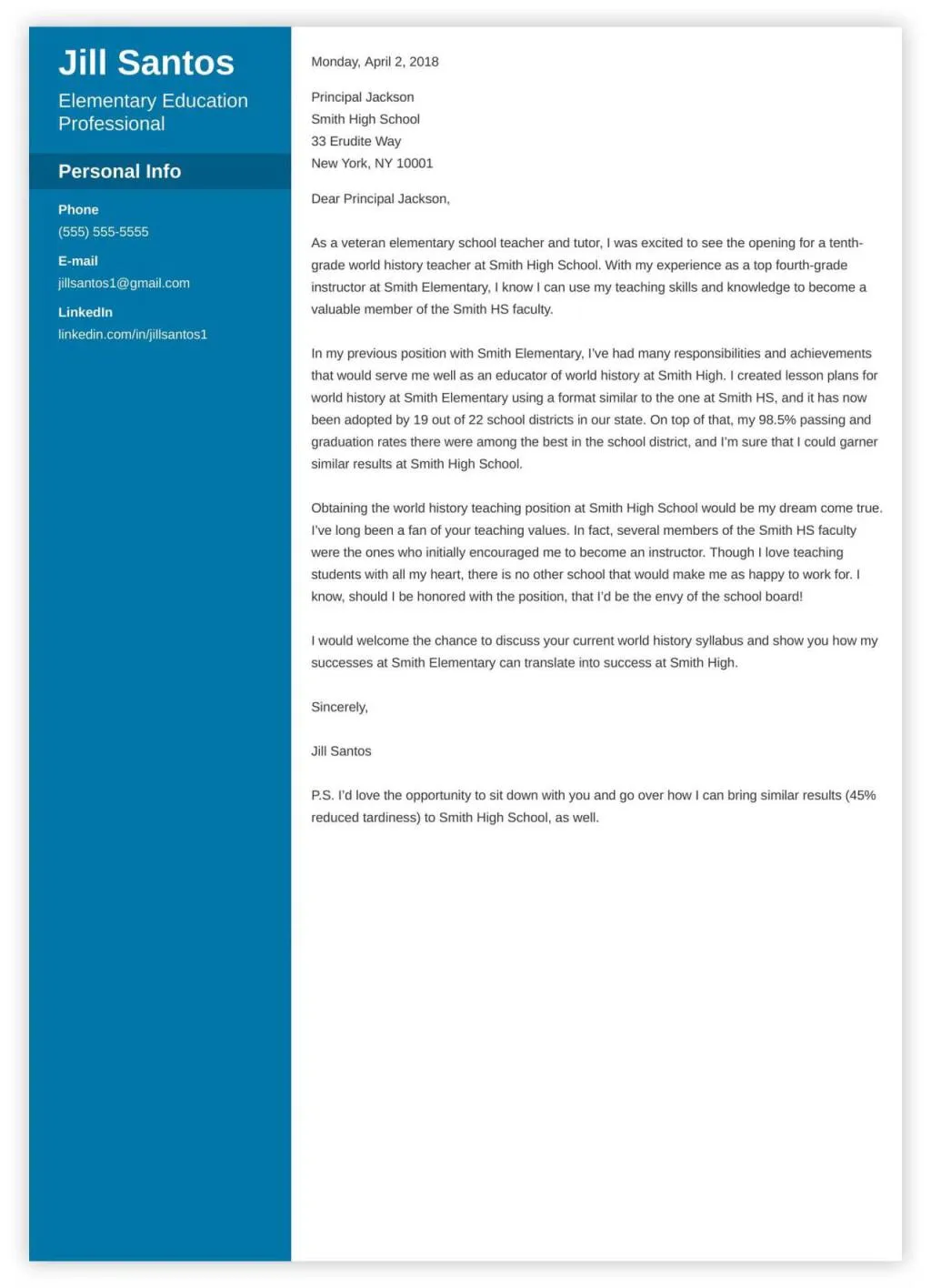
Crafting a Compelling Writing Teacher Cover Letter
A well-crafted cover letter is your first opportunity to make a positive impression on a potential employer. For a writing teacher, it’s even more critical. Your cover letter is a writing sample, demonstrating your communication skills, attention to detail, and passion for the subject. It should be tailored to the specific position and highlight the skills and experiences that make you the ideal candidate. The goal is to persuade the hiring committee that you are not just qualified, but also the right fit for their school or institution. This guide will help you master the art of creating a compelling cover letter that showcases your abilities and increases your chances of landing your dream job.
Understanding the Purpose of Your Cover Letter
The primary purpose of a writing teacher cover letter is to introduce yourself and your qualifications to the hiring committee. Unlike a resume, which provides a chronological overview of your experience, a cover letter allows you to tell your story, explain why you are interested in the position, and make a personal connection. It should complement your resume, expanding on key achievements and demonstrating your passion for teaching writing. Your cover letter acts as an introduction, providing context to your resume and highlighting the skills and experience that align with the specific needs of the school. It shows the hiring team your personality and writing skills.
Highlighting Relevant Skills and Experience

Your cover letter is the perfect place to showcase the skills and experiences that are most relevant to the writing teacher position. Go beyond simply listing your qualifications. Instead, provide specific examples that illustrate your abilities. For instance, if you have experience teaching different writing styles, mention those. If you’ve successfully implemented a particular teaching method, describe how it benefited your students. Emphasize any experience with curriculum development, assessment, or student support. Quantify your achievements whenever possible – for example, ‘Increased student writing proficiency scores by 15%’. Focus on experience that aligns with the job description.
Showcasing Your Passion for Teaching Writing
A genuine passion for teaching writing is a key attribute for any writing teacher. Your cover letter is your opportunity to express this passion. Share your enthusiasm for the subject, and describe what excites you about teaching writing to others. Discuss your teaching philosophy, and explain how you inspire students to develop their writing skills. Talk about the joy of witnessing students grow as writers. This could be by sharing stories of how you encourage creative thinking, critical analysis, or effective communication. Convey your love for the craft of writing, and your dedication to helping students discover their own writing potential. This level of passion helps you stand out.
Structuring Your Writing Teacher Cover Letter
Header and Contact Information

Start with a professional header that includes your full name, contact information (phone number and email address), and the date. If you know the name of the hiring manager, include their name and title, along with the school’s name and address. This shows you’ve taken the time to personalize your application. Ensure all contact information is accurate and up-to-date. Use a professional email address. This formatting sets a tone of professionalism and respect.
The Opening Paragraph: Grabbing Attention
Your opening paragraph is your chance to grab the reader’s attention and make them want to learn more. Start with a strong statement that highlights your enthusiasm for the position and the school. Briefly mention your key qualifications or a significant achievement that relates to the job. Avoid generic opening lines. Tailor your opening to the specific job and school. Demonstrate your understanding of the school’s mission or values. This demonstrates that you’ve done your homework and are genuinely interested in the opportunity. A great opening makes a great first impression, encouraging the reader to continue.
Body Paragraphs: Demonstrating Value
The body paragraphs are where you provide detailed information about your skills, experience, and teaching philosophy. Use these paragraphs to highlight your most relevant qualifications and provide specific examples of your successes. Explain how your skills align with the job requirements. Use action verbs to describe your accomplishments. This will paint a picture of how you would be successful as a teacher. Describe how you engage students, differentiate instruction, and assess student writing. Ensure each paragraph has a clear focus. This demonstrates your ability to write clearly and concisely. Each paragraph should contribute to demonstrating your value as a candidate.
Closing Paragraph: Call to Action

Your closing paragraph should reiterate your interest in the position and thank the hiring manager for their time and consideration. Include a call to action, such as expressing your availability for an interview or stating your enthusiasm for discussing your qualifications further. Make sure your call to action is clear and direct. Reiterate your contact information and show your professionalism and courtesy. This reinforces your interest and makes it easy for the hiring manager to take the next step.
Essential Elements to Include in Your Letter
Your Qualifications and Certifications
Clearly state your qualifications and certifications, including your degree(s), major(s), and any teaching certifications. Specify the subject and grade levels you are certified to teach. If you have any specialized training or professional development related to writing instruction, be sure to mention it. Include any relevant coursework or specializations. Don’t just list these items; provide context for how these qualifications make you a strong candidate for the writing teacher position. This section gives the hiring committee a quick overview of your credentials.
Teaching Philosophy and Approach

Describe your teaching philosophy and approach to writing instruction. Explain how you foster a positive and engaging learning environment. Discuss your methods for assessing student writing and providing feedback. Highlight your strategies for differentiating instruction to meet the needs of all learners. Emphasize your ability to adapt your teaching to different student needs. Show your understanding of current best practices in writing instruction. This section gives the hiring committee insight into your teaching style and how you will contribute to the classroom environment.
Examples of Student Success
Provide specific examples of student success you’ve achieved in your teaching. This could include improved writing scores, student publications, or any other metrics that demonstrate your impact. Describe how you’ve helped students overcome challenges in writing. Quantify your achievements whenever possible – for example, ‘Increased student essay scores by 20%’. Include any awards or recognition received by your students. These concrete examples help the hiring committee visualize your impact and effectiveness as a teacher.
Tailoring Your Cover Letter to the Job
Researching the School or Institution

Before you begin writing, research the school or institution to understand its mission, values, and student demographics. Visit the school’s website, read any available publications, and familiarize yourself with their programs and initiatives. Tailor your cover letter to reflect your understanding of the school’s specific needs and priorities. This demonstrates your genuine interest and increases your chances of getting an interview. Show how your qualifications align with the school’s culture and educational philosophy. This helps make the hiring team feel you understand their needs.
Customizing for Specific Requirements
Carefully review the job description and identify the key requirements and desired qualifications. Customize your cover letter to address these specific needs. Use keywords and phrases from the job description to demonstrate that you are a good match. Highlight the skills and experiences that directly align with the position. Mention any special programs or initiatives the school is involved in. Show how you can contribute to their success. This ensures that your letter is relevant and compelling to the hiring committee.
Proofreading and Editing Your Cover Letter
Checking for Grammar and Spelling Errors

Proofreading is essential. Errors in grammar and spelling can undermine your credibility and make you appear unprofessional. Carefully review your cover letter for any typos, grammatical errors, or punctuation mistakes. Use spell-check and grammar-check tools, but don’t rely on them completely. Read your cover letter aloud to catch any awkward phrasing or unclear sentences. Have a friend or colleague proofread your cover letter for you. Errors make a bad impression, especially for a writing teacher.
Ensuring a Professional Tone
Maintain a professional tone throughout your cover letter. Avoid slang, jargon, or overly casual language. Use formal language and a respectful tone. Be enthusiastic but avoid hyperbole. Present yourself as a confident and capable professional, without being arrogant. Your writing should reflect the standards you expect from your students. Your professionalism shows your commitment to your career.
Formatting for Readability
Make your cover letter easy to read and visually appealing. Use a standard font, such as Times New Roman or Arial, in a size between 11 and 12 points. Use clear and concise language, with short paragraphs and sentences. Use bullets and headings to break up the text and make it easier to scan. Ensure your cover letter is well-organized and logically structured. This increases the chances of your cover letter being read.