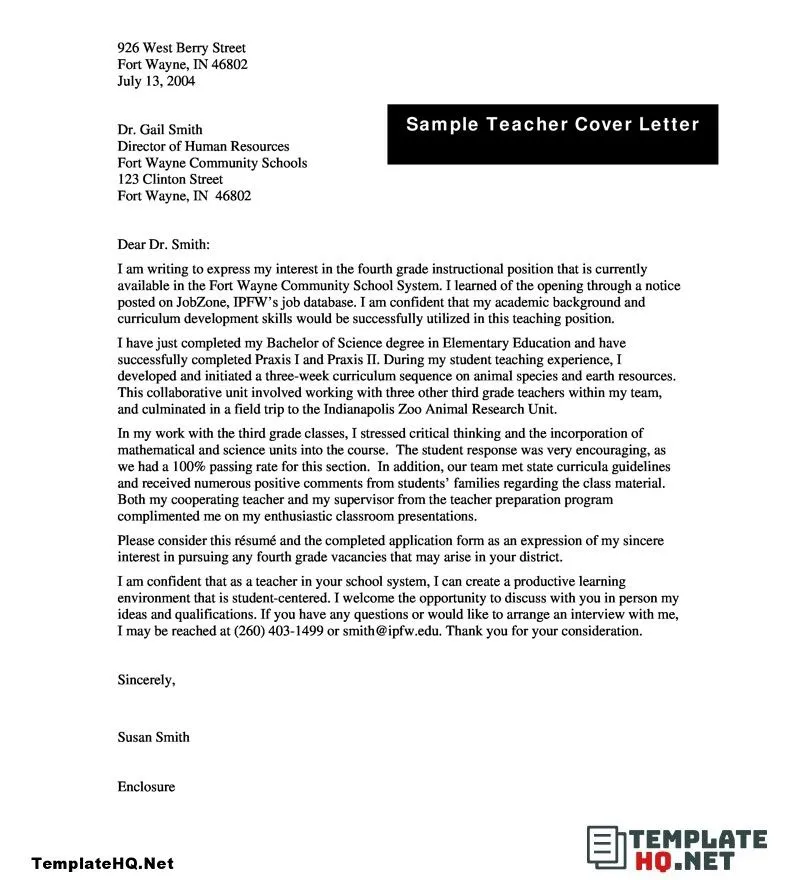
Understanding the Teacher Cover Letter Format
A well-formatted teacher cover letter is your first chance to make a positive impression on a potential employer. It’s a crucial document in the job application process, serving as a personalized introduction that goes beyond the information presented in your resume. The format, tone, and content of your cover letter should be professional, engaging, and tailored to the specific teaching position you’re applying for. Remember, the primary purpose is to demonstrate how your skills, experience, and personality align with the needs of the school and the role. It’s an opportunity to showcase your passion for education and your ability to make a real difference in the lives of students. Mastering the cover letter format is essential for crafting a compelling document that grabs the attention of hiring managers and increases your chances of landing an interview.
Key Elements of a Teacher Cover Letter
Several key elements are essential for a successful teacher cover letter. These elements work together to create a cohesive and impactful narrative. First, a clear and concise header is vital, including your contact information, the date, and the recipient’s details. Next, the opening paragraph should immediately grab the reader’s attention, stating the position you’re applying for and expressing your enthusiasm. The body paragraphs are where you highlight your relevant skills, experience, and achievements, providing specific examples to support your claims. Finally, a strong closing paragraph should reiterate your interest, express gratitude, and include a call to action. By incorporating these key elements effectively, you can create a cover letter that stands out from the competition and effectively showcases your qualifications.
Header Essentials

The header of your teacher cover letter should be both professional and easy to read. Start with your full name, address, phone number, and email address. Ensure that your email address is professional and appropriate for job applications. Following your contact information, include the date. Next, address the letter to the specific person, if possible, such as the principal or hiring manager. If you’re unsure of the name, research the school’s website or call the school to find the correct contact person. Using a specific name shows that you’ve taken the time to research the school and personalize your application. This attention to detail can significantly impact the hiring manager’s impression of you. A well-formatted header sets a positive tone from the start and conveys your professionalism.
Contact Information
Your contact information must be accurate and up-to-date. It’s crucial that the hiring manager can easily reach you. Double-check all details to avoid errors. Your full name should be clearly visible at the top of the page. Following that, provide your complete mailing address. Next, include a phone number where you can be readily reached during the day. It’s advisable to have a professional voicemail greeting. Finally, use a professional email address. Avoid using nicknames or informal email addresses. A polished, correct contact section reflects your preparedness and attention to detail. This also increases the likelihood of receiving a call or email about the position you are seeking. Always proofread this section carefully to prevent oversights that may undermine your application.
Date and Salutation
The date should be included to indicate when the letter was written. It is generally placed below your contact information or the recipient’s details. Use a standard format for the date, such as Month Day, Year. Following the date, the salutation begins the body of your letter. A formal salutation, such as ‘Dear Mr./Ms./Mx. [Last Name],’ is recommended. If you do not know the name of the hiring manager, use a professional alternative like ‘Dear Hiring Manager’ or ‘Dear [School Name] Hiring Committee’. Always use the correct title and spelling of the recipient’s name. If there is any doubt, research the school’s website or call the school to confirm the correct information. A proper salutation shows respect and sets a positive tone for the rest of the letter.
Body Paragraphs that Impress

The body paragraphs form the core of your teacher cover letter. This section allows you to elaborate on your qualifications and express your interest in the position. It is here you need to strategically showcase your skills, experience, and achievements to capture the hiring manager’s attention. Structure the body into well-defined paragraphs, each focusing on a specific aspect of your qualifications. A strong cover letter should highlight how you meet the school’s needs, showcasing relevant skills and accomplishments. Consider the school’s values and culture, and demonstrate how your teaching philosophy aligns with their mission. The use of clear, concise language is essential, and avoid jargon or overly complex sentences. The body paragraphs should be compelling, persuading the reader that you are the best candidate for the job.
First Paragraph Hook
The first paragraph is critical because it must grab the reader’s attention immediately. Begin by clearly stating the position you’re applying for and where you saw the job posting. Show enthusiasm for the specific school or district by mentioning something that attracted you to their mission, values, or programs. Briefly mention your qualifications and why you are a good fit for the role. Avoid generic opening statements. Instead, tailor your introduction to the specific school and position. Your goal is to hook the hiring manager right away, making them want to learn more about you. Use a compelling sentence or two to express your excitement. This initial impression can significantly influence whether the reader continues to the next paragraph.
Highlighting Relevant Skills
In the body of your cover letter, highlight the skills that directly relate to the teaching position. Identify the skills the school is seeking by carefully reviewing the job description. Use specific examples from your experience to illustrate these skills. For instance, if the job description emphasizes classroom management, describe a time when you successfully managed a challenging classroom situation. If it values curriculum development, share details about your experience creating lesson plans or educational materials. Be specific and provide quantifiable results whenever possible. Show, don’t just tell, about your skills. Using action verbs and concrete examples is more impactful than simply listing your abilities. This section should clearly demonstrate how your skills meet the school’s needs. Focus on the key requirements.
Showcasing Teaching Experience

Your teaching experience is a vital aspect of your cover letter. Detail your past roles and responsibilities in a way that demonstrates your growth and impact. Start by mentioning your previous teaching positions, the schools you worked at, and the grade levels you taught. Then, describe your key responsibilities and the tasks you performed. Highlight any special programs or initiatives you were involved in, like special education, STEM, or arts integration. Use the STAR method (Situation, Task, Action, Result) to provide specific examples of how you handled different situations. For each experience, highlight your achievements and the positive outcomes you achieved. Providing evidence of your successful teaching experience can make your cover letter compelling and demonstrate your ability to contribute to the school’s success. Focus on both the experiences and how these helped your students excel.
Quantifying Achievements
To make your cover letter even more impactful, quantify your achievements whenever possible. Use numbers, statistics, and data to demonstrate your successes. For instance, instead of saying, ‘I improved student test scores,’ state, ‘I increased student test scores by 15% in one year.’ Similarly, when talking about class management, mention how you reduced disciplinary incidents or improved attendance rates. Did you implement a new teaching strategy? Share the results. Did you secure any grants or funding? Be specific about the amount. Quantifying your achievements provides concrete evidence of your capabilities and makes your claims more credible. It shows that you can measure and evaluate your effectiveness, which is critical in teaching. These metrics show the school that you have a proven track record.
Tailoring to the Specific School
One of the most crucial tips for a successful teacher cover letter is to tailor it to the specific school and position. Generic cover letters do not impress hiring managers. Research the school’s mission, values, and programs. Demonstrate how your teaching philosophy and skills align with their specific needs. Mention any initiatives or projects that you are particularly excited about. If the school emphasizes a specific teaching approach, such as project-based learning or differentiated instruction, make sure to mention your experience with it. Show that you have taken the time to understand what makes the school unique and how you can contribute to their goals. Customization shows that you are genuinely interested in the position and are willing to contribute to the school’s success.
Closing the Letter with Confidence

The closing paragraph of your teacher cover letter is your final opportunity to make a lasting impression. Restate your interest in the position and express your gratitude for the hiring manager’s time and consideration. Summarize briefly why you are a good fit for the role and the school. End with a clear call to action, such as stating your availability for an interview. Provide your contact information again to make it easy for the hiring manager to reach you. Use a professional closing salutation, such as ‘Sincerely’ or ‘Best regards.’ The closing should be confident, enthusiastic, and forward-looking. Ensure that your letter ends on a positive note, leaving the hiring manager with a strong impression of your qualifications and dedication. A great closing strengthens your application.
Expressing Enthusiasm and Gratitude
In the closing paragraph, express your enthusiasm for the position and the school. Show that you are genuinely excited about the opportunity to teach at their school. Mention specific aspects of the role or the school that appeal to you. Express your gratitude to the hiring manager for their time and consideration. Thank them for taking the time to review your application. This demonstrates professionalism and courtesy. By expressing genuine enthusiasm and gratitude, you leave a positive final impression. It reinforces your interest in the position and shows respect for the hiring process. This can significantly impact the hiring manager’s decision.
Proper Sign-off and Contact Details
Choose a professional and appropriate sign-off, such as ‘Sincerely,’ ‘Best regards,’ or ‘Thank you.’ Following your sign-off, leave space for your handwritten signature if you are submitting a physical copy. Below the signature space, type your full name. Ensure that your contact information is readily available. Include your phone number and email address again. This makes it easy for the hiring manager to contact you. Always double-check that your contact details are correct. Make certain that the email address is professional and up to date. This information is critical for the hiring manager. A well-crafted closing and accurate contact information help facilitate the next steps in the hiring process. They help simplify communication.
Proofreading for Perfection
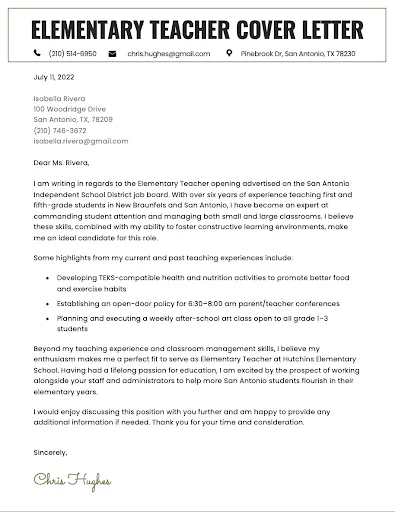
Before you submit your teacher cover letter, proofread it carefully. Check for any spelling mistakes, grammatical errors, and typos. Errors can undermine your professionalism and negatively impact your application. Read the letter aloud to catch any awkward phrasing or sentence structures. Ask a trusted friend, colleague, or family member to proofread your letter as well. A fresh pair of eyes can often spot errors that you might miss. Ensure that the formatting is consistent and visually appealing. Your cover letter is a reflection of your attention to detail and your professionalism. Taking the time to proofread and perfect your cover letter is a crucial step. Thorough proofreading demonstrates your dedication to quality and attention to detail. It elevates your application.