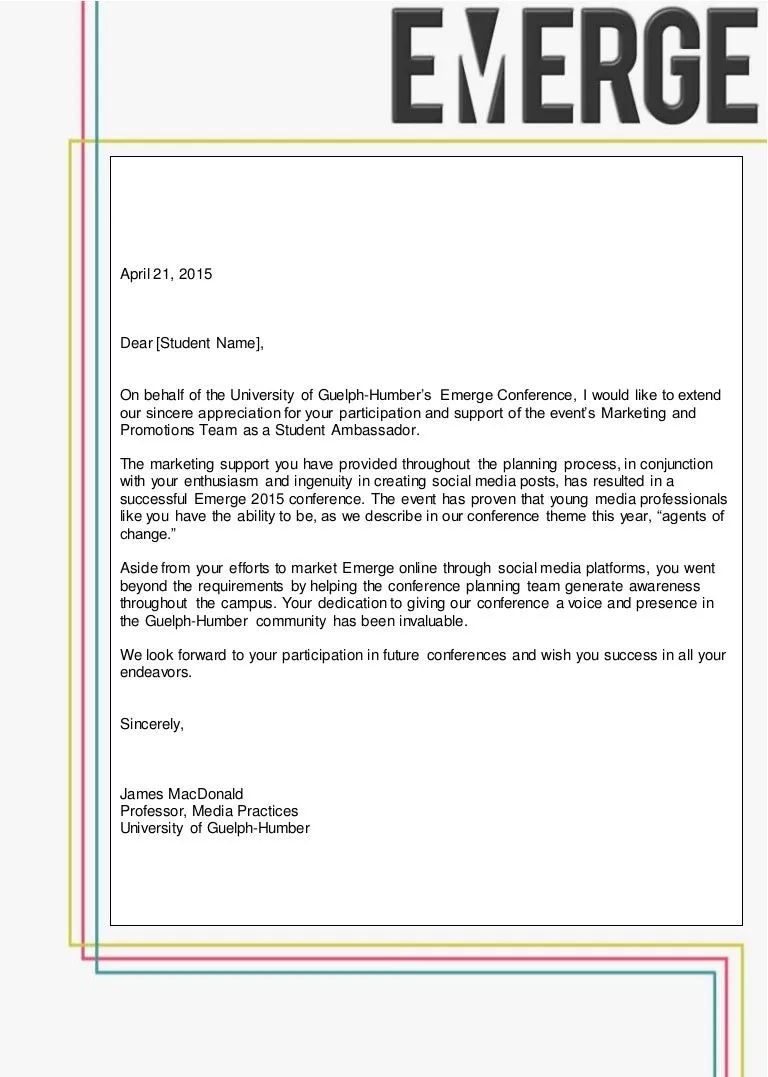
What is a Student Ambassador Cover Letter?
A student ambassador cover letter is a formal document you submit alongside your application when applying for a student ambassador role. This letter acts as your personal introduction, allowing you to showcase relevant skills, experiences, and your genuine passion for the position. Unlike a resume, which offers a factual overview of your qualifications, a cover letter offers an opportunity to express your personality, demonstrate your enthusiasm, and articulate why you are the ideal candidate. Think of it as your chance to make a strong first impression, convincing the selection committee that you’re a great fit. Tailoring your cover letter to the specific requirements of the student ambassador role and the institution you are applying to is crucial. Show how your unique qualities align with their needs. The cover letter is more than just a list of your accomplishments; it is a compelling narrative designed to capture attention and motivate the reader to learn more about you.
Why is a Cover Letter Important for Student Ambassadors?
A well-written cover letter is crucial because it can significantly increase your chances of getting selected as a student ambassador. Primarily, it provides context to your resume. While your resume details your skills and experience, your cover letter explains how these relate to the student ambassador role’s specific requirements. Secondly, it demonstrates your communication skills. A cover letter showcases your ability to express yourself clearly and professionally, a vital skill for an ambassador. Thirdly, it displays your enthusiasm and personality. A cover letter enables you to convey your passion for the role and eagerness to contribute to the university or organization. Finally, it sets you apart from other applicants. A compelling cover letter highlights your unique qualities and achievements, making you memorable to the selection committee. Without a cover letter, your application might appear incomplete, and you could miss an opportunity to showcase what makes you the perfect candidate.
Key Components of a Student Ambassador Cover Letter

A successful student ambassador cover letter comprises several essential components, each playing a vital role in presenting you as the best candidate. The structure must be clear, concise, and compelling. These components work together to create a narrative that highlights your qualifications, enthusiasm, and suitability for the role.
Header & Contact Information
The header of your cover letter is the place to include your contact information. Include your full name, address, phone number, and email address, ensuring all information is accurate and up-to-date. This section guarantees the recipient can easily contact you for an interview if interested. Format the header neatly and consistently with the rest of the document. Use a professional font and layout for better readability and to create a positive first impression. This is a straightforward yet crucial part of your cover letter, establishing a professional foundation for the rest of the document. (Image: student-ambassador-cover-letter-header.webp)
Greeting and Addressing the Recipient
Start your cover letter with a professional greeting. If possible, address the letter to a specific person, such as the hiring manager or the head of the student ambassador program. This shows that you’ve taken the time to research the organization and tailor your application. If you can’t find a specific name, use a professional greeting like “Dear Student Ambassador Selection Committee.” Avoid generic greetings such as “To Whom It May Concern.” Addressing the letter to a specific person demonstrates your attention to detail and personalizes your application, setting a positive tone from the start. Researching the name of the hiring manager can often be found on the university or organization’s website or by contacting their human resources department.
Body Paragraph 1 Expressing Enthusiasm

The first body paragraph should express your enthusiasm for the student ambassador role and the organization. Clearly state the specific position you are applying for and how you learned about it. Mention why you are excited about the opportunity, highlighting what interests you about the organization’s mission, values, or activities. This paragraph sets the tone for your letter and conveys your genuine interest in the position. Demonstrate that you understand the role and the responsibilities involved. This initial enthusiasm is essential to capture the reader’s attention and encourage them to continue reading your application. Avoid generic phrases; instead, show your genuine interest and excitement.
Body Paragraph 2 Highlighting Skills and Experience
In the second body paragraph, focus on highlighting your relevant skills and experience. Review the job description and identify the key skills and qualifications the organization is seeking. Provide specific examples from your past experiences that demonstrate these skills. Quantify your achievements whenever possible to provide concrete evidence of your abilities. For example, instead of saying, ‘I improved student engagement,’ state, ‘I increased student participation in events by 20% through innovative outreach strategies.’ Tailor this section to the specific requirements of the student ambassador role, emphasizing how your background and experiences align with what the organization is looking for. Use action verbs to describe your accomplishments and showcase your abilities. (Image: student-ambassador-skills.webp)
Body Paragraph 3 Showcasing Relevant Achievements
The third body paragraph should highlight your relevant achievements that demonstrate your ability to excel as a student ambassador. Select accomplishments that showcase leadership, communication, teamwork, and any other skills mentioned in the job description. Use the STAR method (Situation, Task, Action, Result) to structure your examples, making them clear and impactful. For instance, describe a situation, the task you were assigned, the actions you took, and the positive results you achieved. This method ensures that your achievements are presented in a compelling and easy-to-understand manner. Focus on accomplishments where you made a significant difference or exceeded expectations. By providing detailed examples, you can effectively convince the selection committee of your capabilities and potential as a student ambassador. (Image: student-ambassador-achievements.webp)
Body Paragraph 4 Demonstrating Cultural Fit and Passion

In your fourth body paragraph, demonstrate your cultural fit with the organization and express your passion for the role. Explain why you are genuinely interested in the organization’s mission, values, or initiatives. Share how your personal values align with the organization’s culture and vision. Illustrate your understanding of what it means to be a student ambassador and how you plan to contribute to the organization’s success. Show enthusiasm, and personalize your application by conveying your personality and enthusiasm for the role. This helps the selection committee envision you as part of their team. Mention any relevant experiences or qualities that make you uniquely suited to represent the institution and connect with students, prospective students, and alumni. Show genuine excitement about the position and the ability to contribute to a positive and engaging environment. (Image: student-ambassador-passion.webp)
Closing the Cover Letter
The closing of your cover letter is an important element for making a strong impression on the reader. It reiterates your interest in the position and provides a clear call to action. The closing should be professional, expressing gratitude, and outlining the next steps you hope to take. Your final words will leave a lasting impression, so craft your closing carefully to ensure you leave a positive note and are ready for the next step.
Expressing Gratitude and Call to Action
End your cover letter by expressing your gratitude for the reader’s time and consideration. Thank the selection committee for reviewing your application and acknowledging their commitment to the selection process. Conclude with a clear call to action. Indicate your availability for an interview and express your eagerness to discuss your qualifications further. You might say, ‘Thank you for your time and consideration. I am available for an interview at your earliest convenience and look forward to discussing how I can contribute to the student ambassador program.’ Include your contact information again, just in case the reader wants to reach out directly. This shows that you are proactive and enthusiastic about the opportunity.
Formatting and Proofreading Your Cover Letter

Ensuring that your cover letter is well-formatted and free of errors is essential. Formatting and proofreading are critical aspects of your application process. A professional, error-free cover letter demonstrates your attention to detail, which is crucial for a student ambassador. Follow these guidelines to make sure your cover letter looks professional and represents you in the best possible light. (Image: student-ambassador-formatting.webp)
Tips for Formatting
Follow these formatting tips to ensure your cover letter is visually appealing and easy to read. Use a professional font, such as Times New Roman, Arial, or Calibri, with a font size between 11 and 12 points. Use standard margins (1 inch on all sides) and single-space your text, with a blank line between each paragraph. Keep your cover letter concise, ideally no longer than one page. Break up large blocks of text by using paragraphs, bullet points, and white space. This makes your letter more readable and visually appealing. Use a clear and consistent layout throughout the document. Align text to the left and avoid justifying the text to ensure the reader can follow along with ease. Consider using bolding and italics sparingly to highlight important information. A well-formatted cover letter makes a positive first impression and shows that you pay attention to detail.
Proofreading for Errors
Proofreading your cover letter is critical to eliminate any grammatical errors, spelling mistakes, or typos. Errors can undermine your credibility and make a negative impression. Always proofread your cover letter multiple times. Read it slowly, word by word, and check for any mistakes. Use a spell checker and grammar checker, but don’t rely on them entirely; they can sometimes miss errors. Ask someone else to proofread your cover letter. A fresh pair of eyes can often spot errors that you might have missed. Pay close attention to punctuation, capitalization, and sentence structure. Make sure your sentences are clear, concise, and easy to understand. A polished and error-free cover letter demonstrates your professionalism and attention to detail.
Examples of Strong Action Verbs

Using strong action verbs in your cover letter will help you convey your skills, achievements, and abilities effectively. Action verbs make your descriptions more impactful and engaging, making a better impression on the hiring manager. (Image: student-ambassador-action-verbs.webp)
Action Verbs for Leadership
When describing your leadership abilities, use action verbs that highlight your ability to guide, motivate, and inspire others. Here are some examples: Led, Managed, Directed, Oversaw, Chaired, Coordinated, Spearheaded, Organized, Motivated, Inspired, Facilitated, Guided, Delegated, Mentored, Trained, Supervised.
Action Verbs for Communication
Use strong communication verbs to show your ability to express yourself clearly and persuasively. Here are some examples: Communicated, Presented, Publicized, Delivered, Wrote, Edited, Published, Reported, Articulated, Addressed, Advocated, Negotiated, Persuaded, Informed, Explained, Translated.
Action Verbs for Teamwork
When describing your teamwork skills, use verbs that highlight your ability to work collaboratively and contribute to a team’s success. Here are some examples: Collaborated, Cooperated, Partnered, Assisted, Supported, Contributed, Participated, Shared, Teamed, United, Unified, Assisted, Facilitated, Contributed, Coordinated.
Finalizing and Submitting Your Cover Letter
Once you have completed writing and formatting your student ambassador cover letter, it’s important to finalize it and submit it correctly. Preparing for submission and reviewing your letter ensures that you present a polished, professional application. Follow these steps to complete your cover letter and submit your application effectively. (Image: student-ambassador-submit.webp)
Reviewing and Editing
Before submitting your cover letter, take the time to review and edit it carefully. Make sure all the information is accurate and up-to-date. Check the spelling, grammar, and punctuation for errors. Verify that your contact information is correct. Ensure that your cover letter is tailored to the specific requirements of the student ambassador position. Review your letter for clarity, conciseness, and overall effectiveness. Consider getting feedback from a trusted friend, family member, or career advisor.
Submitting Your Cover Letter

Submit your cover letter and resume according to the instructions provided by the organization. If the instructions ask you to send it via email, use a professional subject line, such as “Student Ambassador Application – [Your Name].” Attach your cover letter and resume as PDF files unless otherwise specified. PDF files ensure that your formatting remains consistent regardless of the recipient’s software. If the application process is online, follow the specific instructions carefully. After submitting, send a thank-you email to the hiring manager, if possible. This shows your appreciation for their time.