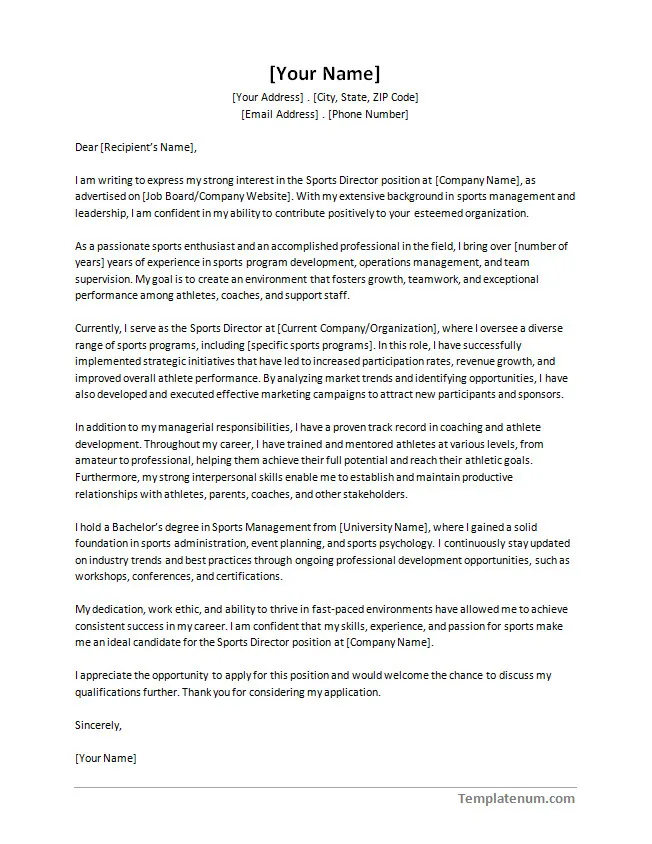
Understanding Sport Management Cover Letters
In the competitive world of sport management, a well-crafted cover letter is your first opportunity to make a strong impression. It serves as a crucial introduction, providing context to your resume and allowing you to articulate your passion, skills, and experience in a way that a resume alone cannot. A compelling cover letter can significantly increase your chances of landing an interview and ultimately securing your desired role within the dynamic sports industry. It’s not just a formality; it’s a strategic tool to showcase your unique value and why you are the perfect fit for the opportunity.
Why Cover Letters Matter in Sport Management
Cover letters provide an essential platform to go beyond the bullet points of your resume. In sport management, where passion and personality are highly valued, a cover letter allows you to express your enthusiasm for the specific organization and the role. This is especially important, as the industry is often highly competitive. A well-written cover letter can effectively communicate your understanding of the industry, the specific demands of the job, and the organization’s mission. It’s your chance to demonstrate your commitment and stand out from other candidates.
Highlighting Your Skills and Experience

The cover letter’s primary objective is to highlight your relevant skills and experience in a way that directly aligns with the job description. This means more than just listing your qualifications; it’s about demonstrating how your past experiences have prepared you to succeed in the role. Consider the specific skills and experiences the employer seeks, and use the cover letter to present your qualifications in a clear and concise manner. Use action verbs to showcase what you’ve achieved and how your expertise can benefit the organization.
Key Components of a Strong Cover Letter
Contact Information and Salutation
Begin by including your contact information, such as your name, phone number, email address, and LinkedIn profile URL. Then, address your letter appropriately. If you know the hiring manager’s name, use it. If not, using a professional salutation like “Dear Hiring Manager” is acceptable. Always research the organization to find out the hiring manager’s name.
Crafting a Compelling Opening

Your opening paragraph is your chance to grab the reader’s attention. State the position you’re applying for and how you learned about the opportunity. Then, make a strong statement about your enthusiasm for the role and the organization. This could be a brief summary of your key skills, your career goals, or an impressive achievement. The goal is to create an engaging introduction that encourages the reader to continue.
Showcasing Your Relevant Skills
The body of your cover letter should focus on highlighting the skills and experiences most relevant to the job description. Use specific examples from your past experiences to illustrate your abilities. Explain how your skills align with the requirements of the position. Make sure that the language is clear and tailored to the specific role; this shows that you have researched the role and understand what is expected of you. Use the same keywords found in the job description to make sure your application is easily searchable and highlights your value.
Quantifying Your Achievements
Whenever possible, quantify your achievements to demonstrate the impact of your work. For example, instead of saying “Managed social media accounts,” say “Increased social media engagement by 30% in six months.” Providing specific numbers and data gives your claims credibility and demonstrates your tangible contributions.
Highlighting Experience

Describe your relevant experience. Whether it’s internships, volunteer work, or previous roles, provide details that show how your experience has prepared you for the job. Mention any specific projects or initiatives you’ve been involved in that showcase the type of work that you’re capable of doing. Emphasize the skills that you’ve developed throughout your journey that aligns with the job post requirements.
Demonstrating Passion for Sport
Demonstrate your genuine passion for sport. Mention your favorite teams or athletes, and why you’re interested in the sport industry. This adds a personal touch and demonstrates a commitment to your career field. This is the point of the cover letter where you can show your personality and enthusiasm for the industry. It is also where you can talk about any industry knowledge and experiences that relate to the role.
Professional Closing and Call to Action
End your cover letter with a professional closing. Reiterate your interest in the role and thank the reader for their time and consideration. Include a clear call to action, such as stating that you are available for an interview and eager to discuss your qualifications further. Use a professional closing, such as “Sincerely” or “Best regards”, followed by your name.
Tailoring Your Cover Letter to the Job

Researching the Organization
Research the organization to understand its mission, values, and recent activities. This knowledge will enable you to tailor your cover letter and show that you are a suitable candidate. Visit the organization’s website, social media accounts, and any news articles about the company. This research will help you tailor your letter to fit their needs.
Matching Skills to Job Requirements
Carefully review the job description, and match your skills and experiences to the listed requirements. Highlight the skills and experiences that align most closely with the job description and provide specific examples. This will demonstrate to the hiring manager that you have the key qualifications required for the position.
Using Keywords Effectively

Incorporate keywords from the job description throughout your cover letter. Many companies use Applicant Tracking Systems (ATS) to screen applications. Using relevant keywords can help your application get past the initial screening stage and into the hands of a hiring manager. Incorporate keywords naturally into your writing, so it does not appear forced.
Sport Management Cover Letter Examples
Example 1 Recent Graduate
For a recent graduate, your cover letter should highlight your academic achievements, relevant coursework, internships, and any volunteer experience. Showcase transferable skills such as communication, teamwork, and problem-solving abilities. Customize the letter to show your enthusiasm for the position and demonstrate a strong understanding of the sport organization’s mission and values. Mention any projects related to the role or work experience from any volunteer or internship experience that helps highlight the skills that are needed for the role.
Example 2 Experienced Professional

Experienced professionals should emphasize their accomplishments and how they have created value in their previous roles. Focus on your leadership, strategic thinking, and results-driven approach. Provide specific examples of your successes and quantify your achievements whenever possible. Tailor your cover letter to the job description and highlight how your previous experience aligns with the new role. Use specific keywords that demonstrate your value, and quantify results.
Example 3 Volunteer Experience
If you have limited experience, focus on the skills and experiences gained through volunteering. Highlight any leadership positions or responsibilities you held. Detail how your volunteering experience has prepared you for the role, emphasizing transferable skills. Show your enthusiasm for the sport industry and your eagerness to learn. You can discuss any specific projects you worked on, your role, and the results of your contributions to the organization.
Common Mistakes to Avoid
Generic Cover Letters
Avoid using generic cover letters that are not tailored to the specific job or organization. Generic letters can be easily identified and show a lack of effort and interest. Always customize your cover letter to reflect the job requirements and the company’s values.
Typos and Grammatical Errors
Typos and grammatical errors can undermine your credibility. Always proofread your cover letter carefully before submitting it, or ask a friend or family member to review it. Professional proofreading is critical.
Lack of Specificity
Avoid vague statements. Provide specific examples of your accomplishments and skills, showing how your experience is relevant to the job requirements. Ensure that your cover letter provides enough information to the hiring manager to understand your qualifications and how you can help the organization.
Formatting and Presentation
Ensure your cover letter has a professional and easy-to-read format. Use a clear font, appropriate margins, and consistent spacing. Present your cover letter in a well-structured format to make it easy to read and convey your qualifications.
Proofreading and Editing
Before submitting your cover letter, thoroughly proofread it for any errors in grammar, spelling, and punctuation. Ask a friend or career advisor to review your cover letter for feedback. Ensure your cover letter is clear, concise, and conveys your qualifications.