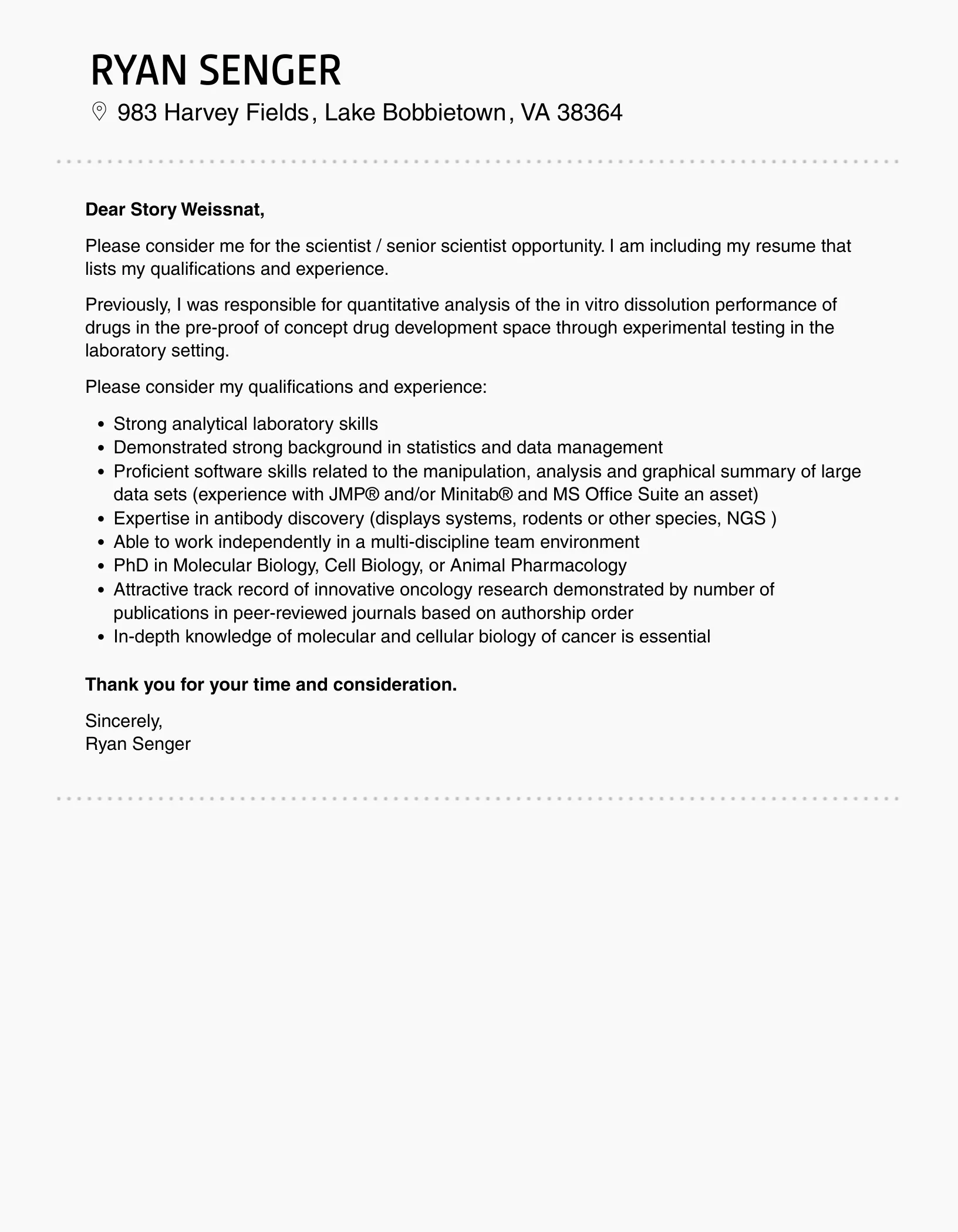
Key Elements of a Scientist Cover Letter
A scientist cover letter is your first opportunity to make a strong impression on a potential employer. It’s more than just a formality it’s your chance to highlight your most relevant skills, experience, and passion for the position. A well-crafted cover letter can significantly increase your chances of securing an interview, while a poorly written one can lead to your application being overlooked. This guide will walk you through the key components of a compelling cover letter that will help you stand out from the competition and land your dream scientist position.
Contact Information and Salutation
The foundation of a professional cover letter begins with your contact information and a proper salutation. This section ensures the hiring manager knows who you are and how to reach you, while the salutation sets a tone of respect and professionalism. Accuracy and attention to detail in this section are crucial; a single mistake can reflect negatively on your overall application. Ensuring that you present yourself as organized and professional is key to a strong first impression.
Formatting Your Contact Info

At the top of your cover letter, include your full name, address, phone number, and professional email address. Use a clear, easy-to-read font, and ensure the information is correctly aligned. Double-check for any typos or errors. If you have a professional online profile, such as a LinkedIn profile, you can include the URL. Your contact information should be easily accessible and visually distinct from the body of the letter, typically placed at the top left or right corner of the document.
Addressing the Hiring Manager
Whenever possible, address your cover letter to a specific person, such as the hiring manager or the head of the department. Research the company and the hiring process to find out who will be reviewing your application. Using a specific name demonstrates that you’ve taken the time to research the company and shows a level of interest beyond a generic application. If you are unable to find a specific name, use a professional greeting such as “Dear Hiring Manager” or “Dear [Department Name] Hiring Team”.
Highlighting Your Skills and Experience
The core of your cover letter is the section where you showcase your skills and experience. This is where you demonstrate why you’re the ideal candidate for the position. Focus on the skills and experiences that are most relevant to the job description, and provide specific examples of your accomplishments. Use action verbs to describe your contributions and quantify your achievements whenever possible. Your goal is to create a compelling narrative that highlights your capabilities and the value you can bring to the company.
Tailoring Your Letter to the Job Description

Carefully review the job description and identify the key requirements and qualifications. Customize your cover letter to address these specific needs, ensuring that your skills and experience align with the employer’s expectations. Use keywords from the job description throughout your letter to demonstrate that you understand the role and are a good fit. Avoid sending generic cover letters; instead, tailor each letter to the specific position you are applying for. This will show that you have taken the time to understand the role and the company.
Quantifying Achievements
Instead of simply listing your responsibilities, quantify your achievements with data and specific results. For example, instead of saying “Managed research projects,” you could say “Managed three research projects, resulting in a 20% increase in efficiency and successful publication of findings in a peer-reviewed journal.” Quantifiable achievements provide concrete evidence of your capabilities and make a stronger impression. Use metrics like percentages, numbers, and dollar amounts to demonstrate the impact of your work. Quantifying your achievements allows the hiring manager to easily see the value you can bring to their team.
Showcasing Research Experience
For scientist positions, your research experience is critical. Describe your research projects, including the methodologies you used, the results you obtained, and the impact of your work. Highlight any publications, presentations, or awards you’ve received. Detail your experience with specific techniques, equipment, and software relevant to the position. Showcase your ability to design experiments, analyze data, and draw meaningful conclusions. Be sure to showcase any grants or fellowships you may have been awarded. Be clear and concise about the scope of your work and the results.
Expressing Your Interest and Enthusiasm

Your cover letter is also an opportunity to express your genuine interest and enthusiasm for the position and the company. Explain why you are interested in this specific role and what excites you about the opportunity. This helps the hiring manager understand your motivations and assess whether you are a good fit for the company culture. Your enthusiasm can set you apart from other candidates and make a memorable impression.
Why This Position and Company
Explain why you are particularly interested in this position and why you want to work for this specific company. Research the company’s mission, values, and recent achievements. Connect your goals and aspirations to the company’s objectives, demonstrating that you have a clear understanding of the role and are passionate about contributing to its success. Express what specifically draws you to the company’s work environment.
Demonstrating Your Research Fit
Highlight how your research experience aligns with the company’s current projects or future goals. Mention any specific research areas or technologies that resonate with your interests and expertise. Show that you’ve done your homework and understand the company’s work, and that your skills and research interests are a good match. Illustrate how your experience can contribute to the company’s research objectives, and explain how your research interests complement their current focus.
Concluding Your Letter

The conclusion of your cover letter should leave a lasting impression. It’s your final chance to reiterate your interest, express your gratitude, and encourage the hiring manager to take the next step. A strong conclusion will encourage the reader to contact you for an interview and further discuss your qualifications.
Formal Closing and Signature
Use a professional closing, such as “Sincerely,” “Best regards,” or “Respectfully,” followed by your full name. If you are submitting a digital cover letter, you can include your digital signature. If sending a physical copy, leave space for your handwritten signature. This is a small but important detail that adds a touch of professionalism to your application.
Proofreading and Editing
Before submitting your cover letter, thoroughly proofread and edit it for any errors in grammar, spelling, and punctuation. Ask a friend, colleague, or career advisor to review your letter for clarity and coherence. Typos and grammatical errors can undermine your credibility, so make sure your letter is polished and error-free. Proper proofreading can make a significant difference in how your application is perceived.
In conclusion, a compelling scientist cover letter is a critical tool in your job search. By highlighting your key skills, quantifying your achievements, showcasing your research experience, and expressing your enthusiasm, you can create a cover letter that stands out and impresses potential employers. Remember to tailor your letter to each specific job and company, and always proofread your work carefully. Following these guidelines will significantly increase your chances of landing an interview and securing your desired scientist position.