Why a Stellar Resume Cover Letter Matters
In the competitive landscape of IT job applications, a well-crafted resume cover letter can be the crucial factor that sets you apart from other candidates. It’s more than just a formality; it’s your opportunity to make a compelling first impression and demonstrate your genuine interest in the role and the company. A cover letter allows you to expand on your resume, providing context and depth to your skills and experiences. It’s your chance to showcase your personality, enthusiasm, and communication skills – qualities that are often difficult to convey through a resume alone. In the fast-paced world of IT, where technical skills are essential, a cover letter helps you highlight how your specific expertise aligns with the requirements of the job and the needs of the employer. Neglecting this important step can be a missed opportunity to present yourself as the ideal candidate, potentially leading to your application being overlooked.
Showcase Your Skills and Experience
Your cover letter is the ideal place to delve into your IT skills and relevant experience. While your resume provides a summary, your cover letter allows you to elaborate on specific projects, technologies, and accomplishments. For instance, if you’re applying for a software development role, highlight your proficiency in programming languages, development methodologies, and any contributions to open-source projects. If you have a background in cybersecurity, detail your experience with network security, risk assessment, and incident response. Furthermore, mention any professional certifications, such as those from CompTIA, Cisco, or Microsoft, to add credibility. Quantify your achievements whenever possible; for example, ‘Developed a new security protocol that reduced network vulnerabilities by 30%’ or ‘Managed a team of developers to successfully launch three major software updates’. By providing clear examples, you paint a vivid picture of your value and suitability for the position.
Tailor Your Letter to the Job

Generic cover letters are a quick way to end up in the ‘reject’ pile. Customizing your cover letter for each job application is crucial. Recruiters and hiring managers can easily spot generic, mass-produced letters, and these often indicate a lack of genuine interest. Start by carefully reviewing the job description and identifying the key skills, experience, and qualifications the employer is seeking. Then, structure your letter to directly address these requirements. Provide specific examples from your past experiences that demonstrate how you’ve successfully used these skills and achieved results. If the job description mentions specific technologies, make sure to highlight your familiarity and proficiency with them. Be specific about how your experiences and qualifications align with their needs. This shows you’ve taken the time to understand their requirements and have carefully considered how you can contribute to their team and projects, thereby increasing your chances of getting noticed.
Highlight Relevant Achievements
Instead of simply listing your job duties, focus on your achievements. Quantify your accomplishments whenever possible to make them more impactful. For instance, instead of saying ‘Managed IT projects,’ state ‘Managed IT projects, delivering them on time and within budget, resulting in a 15% increase in team efficiency.’ Or, instead of writing ‘Improved network security,’ state ‘Implemented new security protocols, reducing network security breaches by 40%.’ Use specific examples that showcase your impact and value to previous employers. These achievements prove your capabilities and offer concrete evidence of what you can bring to the table, making you stand out from other applicants. Emphasize the results you generated; for example, increased revenue, reduced costs, improved efficiency, or enhanced customer satisfaction. The more specific and quantifiable your achievements are, the more memorable and impressive your cover letter will be.
Use Action Verbs and Quantify Results
Action verbs are the building blocks of a compelling cover letter. They energize your writing and draw attention to your accomplishments. Begin sentences with strong action verbs like ‘Developed,’ ‘Managed,’ ‘Implemented,’ ‘Led,’ ‘Improved,’ ‘Optimized,’ and ‘Achieved’. These verbs demonstrate your initiative, skills, and the impact of your actions. For instance, use phrases like ‘Implemented a new CRM system, increasing sales team productivity by 20%’ or ‘Led a team of five engineers to successfully launch a new software product within six months’. Furthermore, quantifying your results is essential for showing your impact. Whenever possible, use numbers, percentages, and metrics to illustrate your achievements. For example, instead of saying ‘Improved customer satisfaction,’ state ‘Improved customer satisfaction by 25% through the implementation of a new support system.’ By incorporating action verbs and quantifying your accomplishments, you provide concrete evidence of your skills and ability to deliver results, making your cover letter more persuasive and memorable.
Address the Hiring Manager Directly

Whenever possible, address your cover letter to a specific person, rather than using a generic greeting like ‘To Whom It May Concern.’ Research the company and try to identify the hiring manager or the person in charge of reviewing applications. Addressing your letter to a specific person shows that you’ve done your homework and that you’re genuinely interested in the role and the company. This also helps you create a more personal connection. You can usually find the hiring manager’s name on the company’s website, LinkedIn, or in the job posting. If you are unable to find a specific name, you can use a professional greeting like ‘Dear Hiring Manager’ or ‘Dear [Department Name] Team.’ However, always try to personalize your letter as much as possible. Personalization demonstrates that you’ve gone the extra mile and that you’re committed to the opportunity.
Research the Company and Its Culture
Before writing your cover letter, thoroughly research the company. Visit their website, read their ‘About Us’ section, and explore their social media profiles to understand their mission, values, and recent projects. This research will help you tailor your letter and demonstrate your genuine interest in the company. Showcasing your understanding of the company’s culture is a great way to emphasize why you are a good fit. Identify the key projects, technologies, and goals that the company is focused on. Mention how your skills and experience align with these areas. If the company values innovation, highlight your ability to think creatively and solve complex problems. If they prioritize teamwork, emphasize your collaborative skills and experience working in a team environment. Personalize your letter by referencing specific projects or initiatives that resonate with you. Demonstrate that you understand the company’s challenges and how you can contribute to their success.
Mention How You Fit Their Needs
Clearly articulate how your skills and experience align with the specific requirements of the job and the needs of the company. Refer to the job description and identify the key skills, qualifications, and experience that the employer is seeking. Provide concrete examples of how your past experiences have prepared you to excel in this role. This is your opportunity to make the connection between your abilities and the employer’s needs. Highlight your understanding of the company’s industry and challenges. Explain how your skills and experience will enable you to contribute to the company’s goals. Showcase how you can add value and solve the problems that they are facing. Be sure to use keywords from the job description to make your cover letter easily searchable by applicant tracking systems (ATS). Make it obvious that you have carefully considered their needs and are confident that you can meet and exceed their expectations, thereby positioning yourself as the ideal candidate for the position.
Focus on Formatting and Tone

The formatting and tone of your cover letter are essential for making a positive impression. The layout, font, and tone communicate a lot about your professionalism, attention to detail, and communication skills. Choose a professional and easy-to-read font, such as Arial, Calibri, or Times New Roman, and use a standard font size (11 or 12 points). The formatting should be clean and uncluttered, with ample white space. Use short paragraphs and bullet points to make the text easier to scan. Ensure that your letter is properly aligned and consistent in formatting. Moreover, pay careful attention to the tone of your writing. Maintain a professional but enthusiastic tone throughout. Avoid using overly casual language or slang. Show your enthusiasm for the opportunity, but remain professional and respectful. Tailor your tone to match the company’s culture. Demonstrate your communication skills by writing clearly and concisely. A well-formatted and thoughtfully written cover letter demonstrates your attention to detail and your professionalism.
Keep It Concise and Engaging
Keep your cover letter concise and engaging to capture the reader’s attention. Hiring managers are busy and often have to review numerous applications, so a long, rambling cover letter is unlikely to be read in its entirety. Aim for a length of one page, divided into a few well-structured paragraphs. Start with a strong opening statement that grabs the reader’s attention. Briefly introduce yourself and state the position you are applying for. In the body of your letter, focus on your most relevant skills, experience, and achievements. Highlight your ability to contribute to the company’s success. Make every word count, avoiding unnecessary jargon or repetition. Use action verbs to describe your accomplishments and quantify your results whenever possible. End with a call to action, expressing your interest in the role and the company and inviting the reader to contact you for an interview. A concise and engaging cover letter ensures that your key message is clearly conveyed and keeps the reader interested.
Use a Professional Font and Layout
The appearance of your cover letter can significantly influence the first impression. Use a professional and readable font, such as Arial, Calibri, or Times New Roman, and a standard font size (11 or 12 points). A clean and well-formatted layout is important for readability. Use consistent margins, spacing, and alignment. Break up large blocks of text into shorter paragraphs and use bullet points to highlight key achievements and skills. Ensure that your letter is free of grammatical errors, spelling mistakes, and typos. Proofread your letter multiple times and consider asking a friend or colleague to review it. A professional font and layout demonstrate your attention to detail and respect for the reader’s time. They make your letter easy to read and enhance the overall impression that you make on the hiring manager. A well-formatted letter is a reflection of your organizational and communication skills.
Proofread and Edit Meticulously

Proofreading and editing are critical steps in ensuring that your cover letter is polished and professional. Errors in grammar, spelling, punctuation, and formatting can undermine your credibility and make you appear careless. Thoroughly proofread your letter multiple times, paying close attention to every detail. Use spell-check and grammar-check tools, but don’t rely solely on these tools; they may not catch all errors. Read your letter out loud to identify awkward phrasing or unclear sentences. Consider asking a friend, colleague, or career counselor to review your cover letter. A fresh pair of eyes can often catch errors that you may have missed. Check that all contact information is accurate and up-to-date. Double-check the company name, job title, and hiring manager’s name to avoid any mistakes. Ensure that your cover letter is free of typos and errors. A well-proofread and edited cover letter demonstrates your attention to detail and commitment to excellence, and it leaves a positive impression.
End with a Strong Call to Action
The conclusion of your cover letter is the perfect spot to end with a strong call to action. Briefly reiterate your interest in the position and the company. Reiterate your enthusiasm for the opportunity, and express your confidence that your skills and experience align with the requirements of the job. Invite the reader to contact you for an interview or to discuss your qualifications further. Make it easy for them to reach you by including your phone number and email address. Thank the hiring manager for their time and consideration, and express your hope to hear from them soon. A strong call to action leaves a lasting impression and encourages the reader to take the next step in the hiring process. Ensure that your call to action is specific and relevant to the job and the company. Always end with a positive and enthusiastic tone.
Express Enthusiasm for the Opportunity
Expressing genuine enthusiasm for the opportunity is one of the key ways to make a lasting impression. Let the hiring manager know why you are excited about the role and the company. Highlight specific aspects of the job or the company that attract you. Show that you are passionate about your career and genuinely interested in working for them. Explain why you are a good fit for their culture and values. A genuine expression of enthusiasm will make your cover letter more memorable and will help you stand out from other candidates. Your passion can be contagious and increase your chances of getting noticed. This is where your research on the company pays off; mention specific initiatives, projects, or company values that resonate with you. Tailor your cover letter to express your genuine interest in the specific opportunity, showing that you’re not just looking for any job, but are eager to contribute to the company’s success.
Provide Your Contact Information

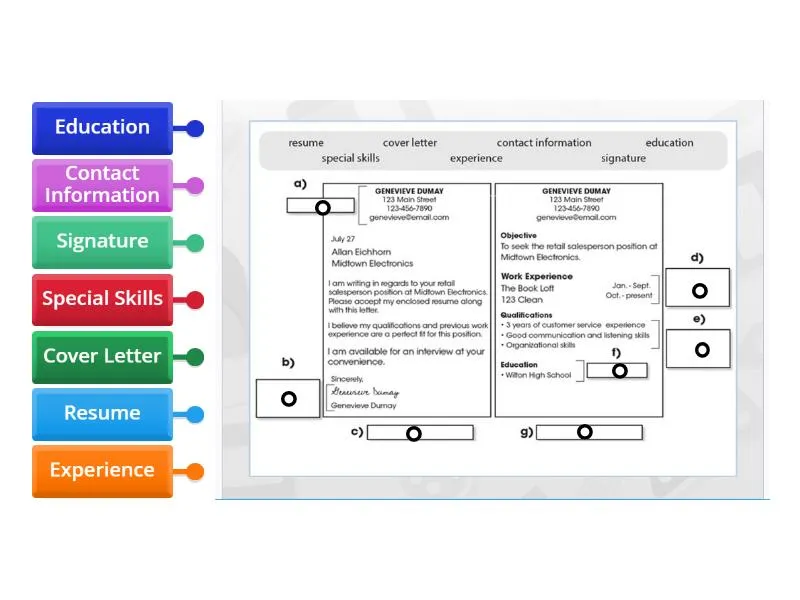
Make it as easy as possible for the hiring manager to contact you by providing clear and accessible contact information. Include your full name, phone number, email address, and LinkedIn profile URL (if you have one). Ensure that the contact information is accurate and up-to-date. Place this information at the top of your cover letter and resume, or at the end of your cover letter. Use a professional email address, and avoid using a casual or unprofessional email address. Double-check the phone number and email address to avoid any typos or errors. Provide your information in a clear and easy-to-read format. This ensures that the hiring manager can easily reach out to you for an interview or to discuss your qualifications further. Making it easy for the hiring manager to contact you is a key step towards securing an interview and ultimately, landing the job.