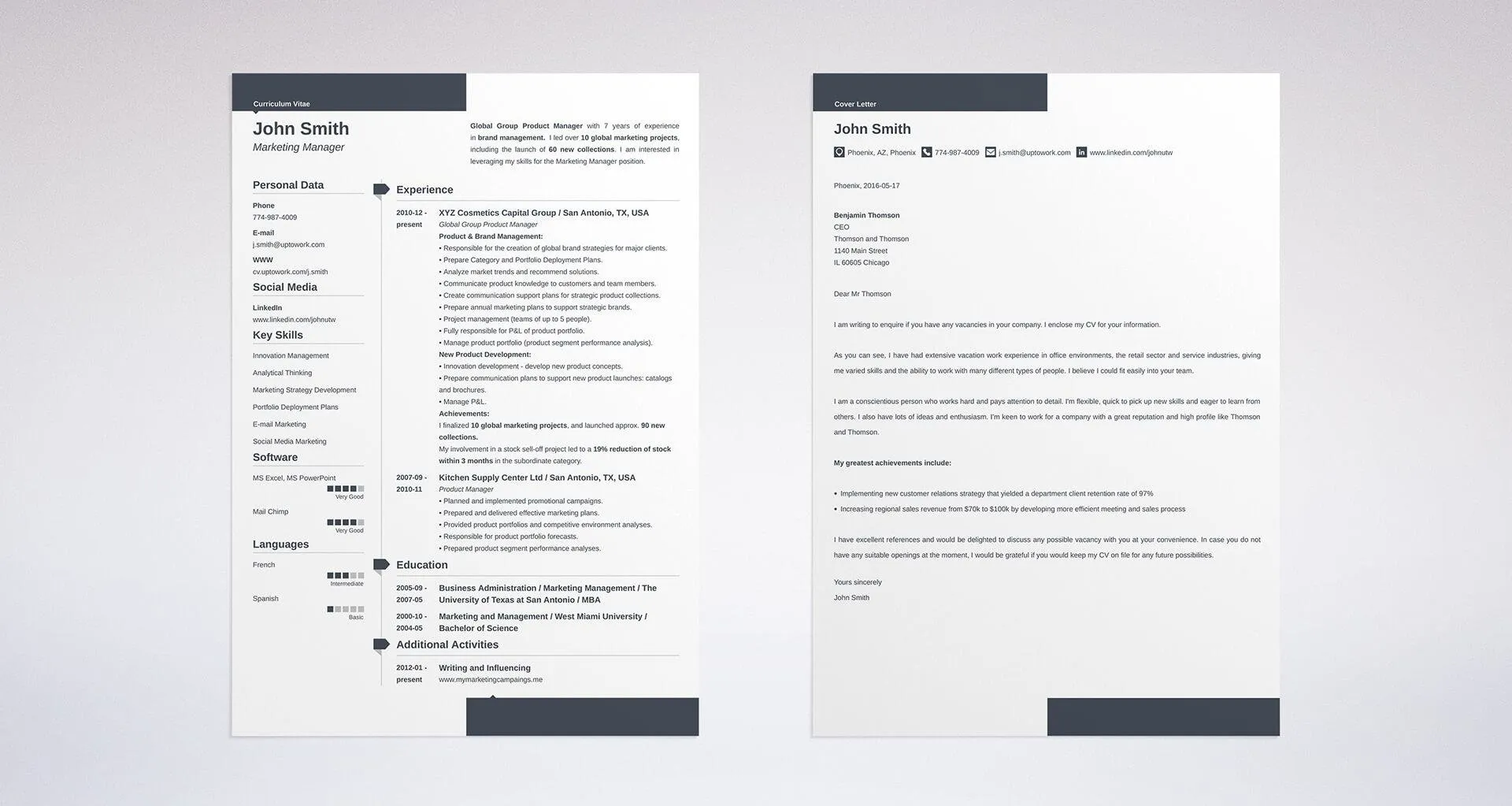
Why a Resume Cover Letter Is Essential
In today’s competitive job market, a resume cover letter is not merely a formality—it’s your opportunity to make a strong first impression and differentiate yourself from the competition. A well-crafted cover letter serves as a personalized introduction, allowing you to provide context to your resume and showcase your genuine interest in the role and the company. While your resume offers a snapshot of your qualifications, the cover letter gives you the space to tell your story, highlighting how your skills and experience align with the specific job requirements. It’s your chance to explain your career goals and express your passion for the position. Many hiring managers carefully review cover letters, and a poorly written or missing one can be a significant disadvantage. A cover letter lets you demonstrate your personality, enthusiasm, and unique value proposition, giving you a competitive edge. It’s often the deciding factor in whether your application gets noticed and progresses to the next stage of the hiring process. It gives you the opportunity to provide a narrative, explaining why you are the perfect fit.
Crafting a Compelling Cover Letter Headline
Your cover letter headline is your first opportunity to capture the hiring manager’s attention and set the tone for the rest of your application. It should be concise, impactful, and designed to hook the reader from the start. Your headline should summarize your key selling points or express your enthusiasm for the role. Use strong action verbs and keywords from the job description. Avoid generic phrases and strive for a unique headline that sets you apart. A strong headline demonstrates your value and understanding of the company’s needs. Consider a headline that highlights a relevant achievement or expresses your passion for the company’s mission. Make it clear, concise, and incorporate relevant keywords. Ensure that your headline is a compelling representation of the content in your cover letter. Remember, your headline is your first chance to stand out.
Highlight Your Achievements in the Cover Letter

Instead of just listing your job responsibilities, your cover letter should highlight your achievements. Use the STAR method to showcase your accomplishments. For each accomplishment, describe the Situation, the Task you undertook, the Action you took, and the Result you achieved. Quantify your achievements whenever possible, using numbers and data to demonstrate your impact. For example, rather than writing “Managed social media accounts,” try “Increased social media engagement by 30% in six months.” This demonstrates your ability to deliver tangible results and makes your application more compelling. By focusing on your achievements, you go beyond listing job duties and demonstrate your value as a candidate. This gives hiring managers a clearer picture of what you can bring to the role. This way, you are telling the hiring manager what you can do rather than just what you have done.
Tailoring Your Cover Letter for Each Application
One of the biggest mistakes job seekers make is sending a generic cover letter for every application. Tailoring your cover letter to each specific job and company is essential to getting noticed. This involves researching the company’s mission, values, and recent projects. Carefully review the job description, identifying the key skills and qualifications. Then, address how your experience and skills align with those requirements in your cover letter. Provide specific examples to show you understand the company and the role. Avoid generic language and inject a personal touch that reflects your genuine interest. Tailoring your cover letter demonstrates that you’ve put in the effort to understand the role and company. This increases your chances of making a strong impression on the hiring manager. Tailoring shows that you have invested the necessary time and consideration into the application.
Showcasing Your Skills and Experience
Your cover letter shouldn’t simply repeat your resume. Instead, it should elaborate on your skills and experiences relevant to the job. Focus on the qualifications mentioned in the job description. Provide specific examples of how you’ve utilized those skills in the past. Use action verbs to describe your accomplishments and quantify your achievements whenever possible. Structure your cover letter to emphasize skills and experiences matching the job requirements. For instance, if the job emphasizes project management, highlight your experience managing projects. This demonstrates you have the skills and experiences to succeed. Showcasing the link between your skills and the company’s needs helps the hiring manager quickly see your fit for the position. Emphasize the skills and experiences that highlight you as a great candidate.
Writing a Strong Cover Letter Opening

Your opening paragraph is critical for grabbing the hiring manager’s attention and setting the tone. Avoid generic openings. Instead, aim for an engaging approach. Mention a mutual connection, reference a specific company project, or express enthusiasm. Clearly state the position you’re applying for and why you’re interested in the company. Show why you are the right candidate. A strong opening highlights your key qualifications and demonstrates your company knowledge and role understanding. Your opening should convey your enthusiasm and relevant qualifications. Tailor your opening to the job description and company culture. Your goal is to stand out. Be concise, compelling, and show that you understand the company and the role.
Structuring Your Cover Letter Body
Structure your cover letter’s body logically, with clear, flowing paragraphs. Focus each paragraph on a specific point. Begin with a brief introduction, followed by a strong middle section emphasizing your accomplishments. Transition into a closing paragraph. Ensure readability through clear, concise writing. Use bullet points to highlight key skills or accomplishments. Keep a professional but personable tone, avoiding jargon. Maintain a positive, enthusiastic tone. A well-structured letter ensures your key selling points are easily understood, increasing your chances of getting noticed. Use appropriate formatting.
Cover Letter Examples and Templates to Get You Started
Studying examples and templates is a great way to learn how to write an effective cover letter. Many online resources provide free, customizable cover letter templates. Search for examples related to your industry or the job type. Analyze the structure, language, and tone of these examples. However, don’t copy templates directly; adapt them to your unique skills and experience. The goal is to showcase your individuality. Use templates as a guide, and personalize your letter to show your genuine interest. Reviewing examples can give you inspiration and help you present your qualifications. Numerous websites and career blogs have useful cover letter templates to help you start. These are great tools for seeing how others have approached the task and presenting your best self.
The Art of a Powerful Cover Letter Closing

Your closing paragraph is your final chance to leave a positive impression. Keep it brief, and reiterate your interest. Express enthusiasm and confidence. Include a call to action, like requesting an interview or inviting the hiring manager to contact you. Thank them for their time and consideration. Avoid clichés; use a more direct approach. For example, you could say, “I am eager to discuss how my skills can benefit your team.” Proofread your entire letter, including the closing, for errors. A strong closing leaves a positive, memorable impression. Summarize your main points concisely. The closing should reiterate your value and express eagerness to move forward. This is your final opportunity to leave a lasting impression and invite the hiring manager to take the next step.
Proofreading and Editing Your Cover Letter for Perfection
Before submitting your cover letter, proofread and edit it to eliminate grammar, spelling, and punctuation errors. These errors undermine your credibility. Check for clarity and conciseness. Read your cover letter aloud to catch awkward phrasing. Ask a friend or colleague to review your letter for fresh perspectives. Pay attention to the tone and ensure it is professional. Your cover letter should be polished and error-free. Ensure consistent and visually appealing formatting. A well-proofread and edited cover letter shows attention to detail, professionalism, and increases your chances of getting noticed. Proofreading is a critical step in ensuring that your message is delivered correctly and professionally.