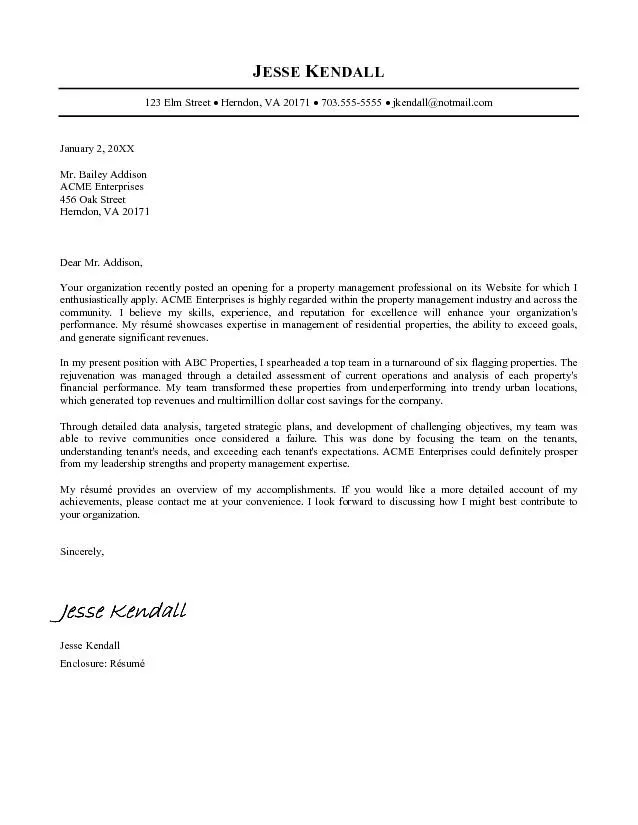
What is a Cover Letter?
A resume cover letter is a crucial document that accompanies your resume when applying for a job. It serves as a personalized introduction, allowing you to elaborate on your skills, experiences, and motivations. Unlike a resume, which provides a concise overview of your qualifications, a cover letter offers an opportunity to express your personality, demonstrate your enthusiasm for the role, and explain why you are a good fit for the company. It is a chance to make a strong first impression and capture the hiring manager’s attention.
Why is a Cover Letter Important?
In today’s competitive job market, a cover letter can significantly increase your chances of getting noticed. It showcases your communication skills, highlights your relevant experience, and demonstrates your genuine interest in the specific position and company. Many hiring managers consider a cover letter as an essential part of the application process, as it provides insights into your writing abilities, attention to detail, and overall suitability for the role. A well-crafted cover letter can set you apart from other applicants and make you stand out.
Cover Letter vs Resume Differences

The resume and cover letter serve different purposes in the job application process. A resume provides a factual summary of your work history, skills, and education, typically formatted in a concise and easy-to-scan manner. It is designed to give the hiring manager a quick overview of your qualifications. In contrast, a cover letter is a more personal document, allowing you to expand on specific experiences, explain your career goals, and express your enthusiasm for the position. The cover letter provides a narrative and demonstrates your communication skills, while the resume presents a structured overview.
Consider this example: your resume is the sales brochure, providing a list of your “products” (skills and experience), and the cover letter is the sales pitch, explaining why those “products” are a perfect match for the customer (the employer). Both are necessary to close the deal (land the job).
Key Components of a Cover Letter
A well-structured cover letter consists of several key components. Each part serves a specific purpose in presenting you as a strong candidate. Understanding these elements is vital to create a compelling and effective cover letter that captures the reader’s attention and highlights your suitability for the job.
Heading
The heading of your cover letter should include your contact information, such as your name, address, phone number, and email address. It is typically positioned at the top of the document, making it easy for the hiring manager to reach you. You may also include the date and the hiring manager’s name and title if you know it. This information ensures the recruiter can quickly and easily contact you if they are interested in moving forward with your application.
Contact Information

Your contact information should be clear, accurate, and professional. Double-check your email address to ensure it is current and that your phone number is correct. Consider using a professional-sounding email address. This helps ensure your application looks polished and professional. An easy-to-read font and a clear layout also contribute to a positive first impression.
Salutation
The salutation is your greeting to the hiring manager. The best approach is to address the letter to a specific person if possible. If you know the hiring manager’s name, use “Dear Mr./Ms. [Last Name].” If you are unsure of the name, research it online. If you cannot find a name, use a professional alternative like “Dear Hiring Manager” or “Dear [Company Name] Hiring Team.” Avoid generic greetings such as “To Whom It May Concern” or “Dear Sir/Madam,” as these can make your letter seem impersonal.
Body Paragraphs
The body paragraphs are the core of your cover letter, where you showcase your qualifications, skills, and enthusiasm for the position. Structure your body paragraphs strategically to capture the reader’s attention and demonstrate why you are the ideal candidate. It is important to tailor each paragraph to the specific job description and company requirements.
First Paragraph Introduce Yourself

Begin your cover letter with a strong introduction that grabs the reader’s attention. State the position you are applying for and how you learned about it. Briefly mention your key qualifications or experiences that align with the job requirements. Express your enthusiasm for the opportunity and the company. This first paragraph should quickly establish the context of your application and make the reader want to learn more.
Second Paragraph Show Your Skills
In the second paragraph, highlight your relevant skills and experiences. Provide specific examples of how you have successfully applied these skills in previous roles. Quantify your achievements whenever possible, using numbers or data to demonstrate your impact. Tailor this section to match the requirements outlined in the job description, demonstrating your understanding of the company’s needs.
Third Paragraph Highlight Your Enthusiasm
Use the third paragraph to express your enthusiasm for the specific role and the company. Research the company and explain why you are drawn to their mission, values, or culture. Connect your career goals with the company’s objectives, and demonstrate how you can contribute to their success. Show genuine interest and a clear understanding of what makes the company unique.
Closing Paragraph

The closing paragraph should summarize your interest and reiterate your qualifications. Thank the hiring manager for their time and consideration. Include a call to action and a formal closing.
Call to Action
In your closing paragraph, include a call to action. This encourages the hiring manager to take the next step. State that you are available for an interview and provide your contact information again. You can also mention that you look forward to hearing from them soon. This demonstrates your proactive approach and eagerness for the opportunity.
Formal Closing
Conclude your cover letter with a professional closing, such as “Sincerely,” “Best regards,” or “Respectfully.” Avoid overly casual closings like “Thanks” or “Cheers.” Use your full name below the closing. This adds a touch of professionalism to your cover letter and reinforces your attention to detail.
Formatting Tips for a Cover Letter

Proper formatting is essential for creating a professional and easy-to-read cover letter. Formatting includes font selection, margins, spacing, and proofreading.
Font Selection
Choose a readable font that is easy on the eyes. Popular and professional fonts include Times New Roman, Arial, Calibri, and Helvetica. Use a font size between 10 and 12 points for the body text. Be consistent with your font choices throughout the entire document.
Margins and Spacing
Set standard margins (1 inch on all sides) for your cover letter. Use single spacing for the body text and double spacing between paragraphs. This ensures the letter looks clean, organized, and easy to scan. Proper spacing improves readability and makes your letter more appealing to the hiring manager.
Proofreading

Proofread your cover letter carefully before submitting it. Check for any grammatical errors, typos, or inconsistencies. Have a friend or family member review it as well, as a fresh pair of eyes can often catch mistakes that you may have missed. A polished and error-free cover letter demonstrates your attention to detail and professionalism. Spell check is your friend, but it is not perfect, so read through the letter multiple times.
Resume Cover Letter Example
Here are cover letter examples tailored for various scenarios to help you craft your own. Remember to customize each example to match the specific job description and your personal experiences.
Example for a recent graduate
Dear [Hiring Manager Name],
I am writing to express my enthusiastic interest in the [Job Title] position at [Company Name], as advertised on [Platform]. As a recent graduate with a degree in [Your Degree] from [Your University], I am eager to apply my skills and knowledge to a challenging and rewarding role. During my academic career, I gained hands-on experience in [relevant skills], including [specific achievements]. I also participated in [relevant projects or internships], where I developed a strong understanding of [industry knowledge]. I am particularly drawn to [Company Name]’s commitment to [company value or mission], and I believe my passion for [industry] aligns perfectly with your company’s goals.
I am confident that my skills and enthusiasm make me a great fit for this role. Thank you for your time and consideration. I look forward to hearing from you.
Sincerely, [Your Name]
Consider adding a section for relevant coursework or projects. This helps to connect your education with the job’s requirements. Customize the example to mirror the job description’s keywords, this demonstrates your close attention to detail and genuine interest.
Example for an experienced professional

Dear [Hiring Manager Name],
I am writing to express my keen interest in the [Job Title] position at [Company Name], as advertised on [Platform]. With over [number] years of experience in [your field], I bring a proven track record of success in [relevant skills]. In my previous role at [Previous Company], I was responsible for [key responsibilities] and achieved [significant accomplishments]. I am particularly impressed by [Company Name]’s innovative approach to [industry area], and I am eager to contribute my expertise to your team.
I am excited about the opportunity to leverage my experience to drive [company goals] forward. Thank you for your time and consideration. I look forward to the opportunity to discuss my qualifications further.
Sincerely, [Your Name]
Focus on quantifiable achievements and results that demonstrate your impact in previous roles. Highlight leadership experiences and any awards or recognitions you have received. Tailor the example to highlight skills most sought after by the employer, using their language to show you understand their needs.
Example for a career change
Dear [Hiring Manager Name],
I am writing to express my interest in the [Job Title] position at [Company Name], as advertised on [Platform]. While my background is in [previous field], I am confident that my transferable skills and passion for [new field] make me a strong candidate for this role. I have honed my skills in [relevant skills] over [number] years, and I am eager to apply them to this exciting opportunity.
My experience in [previous role/industry] has equipped me with valuable skills such as [skill 1], [skill 2], and [skill 3]. I am particularly drawn to [Company Name]’s reputation for [company value or mission], and I am excited about the prospect of contributing my skills to your team. I am eager to learn and grow within your organization.
Thank you for your time and consideration. I look forward to discussing how my skills and enthusiasm can benefit your team.
Sincerely, [Your Name]
Emphasize transferable skills and explain your motivation for the career change. Highlight any relevant coursework, certifications, or projects that demonstrate your commitment. Customize your response, clearly linking your past experience to the current job description.
Common Mistakes to Avoid
Avoiding common mistakes can significantly improve the effectiveness of your cover letter and increase your chances of success. Take the time to review and correct any errors before submitting your application. This shows that you pay attention to detail and are serious about the role.
Generic Content
Avoid using generic content that could apply to any job or company. Tailor your cover letter to each specific position and company. Research the company and the role, and demonstrate a clear understanding of their needs and values. Generic letters show a lack of interest, and they will probably be overlooked. Show genuine interest in the specific opportunity and company.
Typos and Grammatical Errors
Always proofread your cover letter carefully for any typos or grammatical errors. Mistakes can undermine your credibility and make you appear unprofessional. Use spell check and grammar check tools, but also review the letter yourself. Having a friend or family member review it is also a great strategy, as a fresh pair of eyes can often catch errors you may have missed.
Ignoring the Job Description
Read the job description carefully and tailor your cover letter to match the requirements. Highlight the skills and experiences that are most relevant to the position. Ignoring the job description makes it seem like you did not take the time to understand the role, and makes you appear less suited for the job. Make sure you clearly address the requirements outlined by the employer.
The Benefits of a Well-Crafted Cover Letter
A well-crafted cover letter offers several significant benefits in your job search. It provides an opportunity to showcase your skills and experiences in a way that complements your resume, and it can set you apart from other applicants by demonstrating your enthusiasm, communication skills, and attention to detail. Ultimately, a strong cover letter can increase your chances of getting an interview and landing the job. Do your research, tailor your approach to each job, and craft a cover letter that reflects the best version of you.