Why a Project Manager Cover Letter Matters
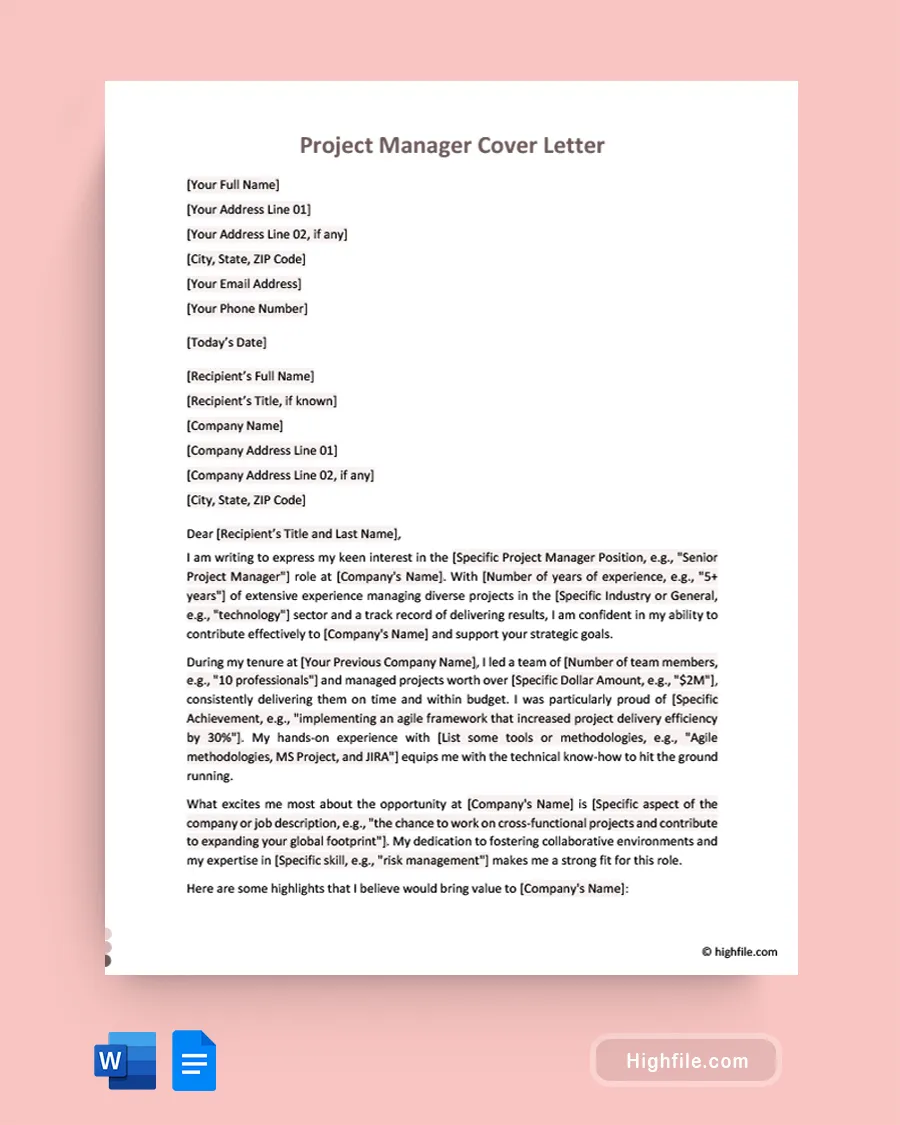
A project manager cover letter is more than just a formality; it’s your first opportunity to make a strong impression on a potential employer. In a competitive job market, a well-crafted cover letter can set you apart from other candidates by providing context to your resume and showcasing your unique skills, experiences, and personality. A cover letter allows you to tell a story, connecting your qualifications with the specific requirements of the project management role and demonstrating why you are the perfect fit for the organization. A compelling cover letter proves your keenness and understanding of the role. It’s your chance to highlight your most relevant achievements and tailor your application to the company’s needs. This is a crucial step in the application process, one you can’t afford to overlook.
Key Components of a Winning Project Manager Cover Letter
A winning project manager cover letter requires a strategic approach, focusing on key elements that effectively communicate your value proposition to the hiring manager. A successful cover letter is clear, concise, and tailored to the specific job requirements. This involves a strategic blend of information, presentation, and language. It should highlight key skills, experiences, and achievements, demonstrating your ability to effectively manage projects. Remember to follow standard business letter formatting and use professional language, making it easy for the reader to understand your qualifications. Always proofread the document to eliminate any errors that might affect your chances.
Your Contact Information

At the top of your cover letter, include your full name, phone number, email address, and optionally, your LinkedIn profile URL. This information ensures that the hiring manager can easily contact you. Make sure that the contact information is accurate and up-to-date. This is a simple but critical step, as it allows the hiring manager to reach out to you promptly if they are interested in your application. This is also a good area to verify your professionalism and make a good impression. Use a professional email address and double-check the phone number you provide.
The Date
Below your contact information, include the date you are writing the letter. This is a standard practice in professional correspondence and helps the hiring manager understand when you submitted your application. The date provides context to the application and gives a sense of timeliness. Ensure that the date format adheres to the standard used in your region to avoid any confusion.
Hiring Manager’s Information
If possible, address your cover letter to a specific person (the hiring manager or the relevant contact). Research the company’s website or use LinkedIn to find the correct name and title. Addressing the letter to a specific person demonstrates that you have done your research and are genuinely interested in the role. If you cannot find a specific name, use a professional greeting such as ‘Dear Hiring Manager’ or ‘Dear [Department Name] Team’. Avoid generic greetings that can make your application seem less personalized.
Professional Greeting

Start your cover letter with a professional greeting. The most common and appropriate greetings are ‘Dear Mr./Ms./Mx. [Last Name]’ if you know the hiring manager’s name, or ‘Dear Hiring Manager’ if you don’t. Avoid casual greetings that can undermine your professionalism. The greeting sets the tone for the rest of the letter, so it is essential to start with a positive and respectful tone. Ensure that you spell the recipient’s name correctly; a misspelling immediately diminishes your credibility. Proofread your greeting carefully.
Highlighting Your Project Management Skills
Project managers need diverse skills, which include leadership, communication, organization, and problem-solving. Your cover letter is an excellent place to showcase these skills and emphasize how they align with the job’s requirements. Use specific examples from your past projects to demonstrate your abilities. This could be communication skills used to lead team meetings or the organization skills to manage project timelines. The goal is to demonstrate a combination of hard and soft skills. For example, mentioning your proficiency in project management software demonstrates technical proficiency and highlights your capabilities.
Demonstrating Relevant Experience
Focus on the project management experiences most relevant to the job you’re applying for. Use your cover letter to connect your past experience to the specific role’s requirements. Highlight experiences that show your skills in project planning, execution, and monitoring. If the job emphasizes agile methodologies, mention your experience with Scrum or Kanban. When describing your experience, provide brief but impactful details. Describe the scope of your project, your role, and the key outcomes. This gives the hiring manager a clear idea of your capabilities. Focus on accomplishments, not just responsibilities.
Showcasing Achievements and Results
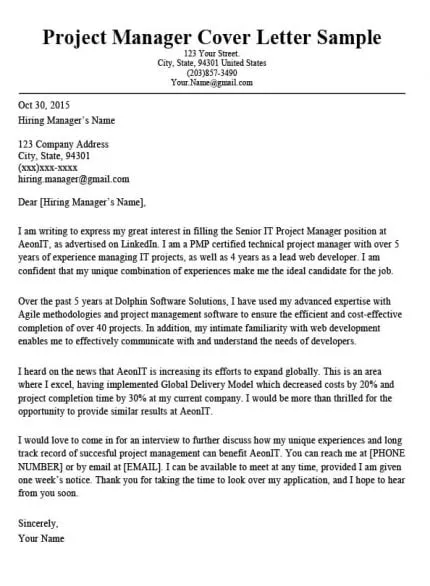
Instead of simply listing your responsibilities, focus on what you achieved in your previous project management roles. Quantify your achievements whenever possible; this makes your claims more credible and impactful. Did you bring a project in under budget? Did you improve team efficiency? Provide data to support your statements. Showing concrete results proves your value to the company and gives the hiring manager a clear idea of your capabilities. Use metrics, percentages, or specific numbers to illustrate your successes. Emphasize the positive impact you made on your past projects.
Quantifying Your Accomplishments
Quantifying your achievements involves providing specific numbers and data to demonstrate your successes. When describing your achievements, use numbers to illustrate the impact of your work. For example, instead of saying that you ‘improved project efficiency,’ say that you ‘improved project efficiency by 15%.’ Using measurable results helps the hiring manager quickly understand the value you can bring to their organization. This method also demonstrates your ability to track, measure, and report on project performance, a critical skill for any project manager. Numbers provide concrete evidence of your accomplishments, increasing your chances of being hired.
Expressing Your Enthusiasm and Fit
Expressing genuine enthusiasm for the role and the company shows that you are not just looking for any job but are genuinely interested in this opportunity. This increases your chances of making a positive impression and being selected for an interview. Briefly explain why you are excited about the role and why the company appeals to you. This can include mentioning their mission, values, or specific projects you admire. Ensure your enthusiasm is clear and authentic, showing that you are not just another applicant. The tone should be positive and professional. This personal touch can help you stand out from other candidates.
Tailoring Your Letter to the Specific Job

Avoid using a generic cover letter. Tailor each cover letter to the specific job and company you are applying to. Carefully review the job description and identify the key skills, experiences, and requirements the employer is seeking. Customize your letter to address these requirements directly. Show the hiring manager that you have taken the time to understand the company’s needs and how your skills and experience can fulfill them. This shows you are genuinely interested in the specific opportunity. This approach will significantly increase your chances of getting an interview. By tailoring your letter, you demonstrate that you understand the company’s needs and how your skills align with those needs.
Choosing the Right Tone and Language
Your cover letter’s tone and language should be professional, yet engaging. The tone should match the company culture and the nature of the role you are applying for. Use clear, concise language that is easy to understand. Avoid overly complex jargon or overly casual language. When applying for a project management position, demonstrate your attention to detail. Choose words that reflect your capabilities and the requirements of the role. Use active voice and strong verbs to make your writing more impactful. The overall goal is to present yourself as a confident, competent, and capable project manager.
Formatting for Readability
Formatting is critical for readability and professional presentation. Use a clean and readable font such as Arial or Times New Roman, and ensure that the font size is comfortable to read (typically 11 or 12 points). Use standard business letter formatting with single-spaced paragraphs and double-spaced lines between paragraphs. Keep your paragraphs concise to avoid overwhelming the reader. Use bullet points or lists to highlight key skills or accomplishments. Proper formatting is vital in making a great first impression. A well-formatted cover letter shows attention to detail and respect for the hiring manager’s time. Avoid dense blocks of text, which can be difficult to read. Make sure the letter is easy on the eyes and aesthetically pleasing.
Proofreading and Editing

Always proofread your cover letter multiple times to catch any errors in grammar, spelling, and punctuation. Errors can undermine your credibility and indicate a lack of attention to detail. Read the letter aloud to catch any awkward phrasing or sentences that don’t flow well. Consider asking a friend or colleague to review your cover letter for feedback. They might spot errors that you have missed. Proofreading is one of the most crucial steps in the application process. Errors can leave a negative impression on the hiring manager, even if you are otherwise a qualified candidate. Take your time and be thorough.
Common Mistakes to Avoid
Certain mistakes can significantly reduce your chances of success. Being aware of these common errors will help you avoid making them and improve your cover letter. Avoid generic language, ignoring the job description, focusing on ‘I’ instead of ‘We’, and failing to proofread your letter. This helps you put your best foot forward and make a great impression. By learning what mistakes to avoid, you can ensure that your cover letter stands out for the right reasons.
Using Generic Language
Generic language is vague and uninspired. It does not provide any specific details about your skills, experience, or achievements. Avoid using generic phrases such as ‘hard worker’ or ’team player’. These statements are common and provide no value to the hiring manager. The goal is to showcase unique skills and experiences relevant to the role. Use specific examples and concrete details to demonstrate your value, making your cover letter more compelling and memorable. Instead of generic statements, use specific examples to showcase your abilities and how you have used them to achieve positive outcomes.
Ignoring the Job Description

The job description provides essential information about the role and the skills and experiences the employer is looking for. Ignoring the job description shows that you lack attention to detail or aren’t genuinely interested in the role. Always carefully review the job description and tailor your cover letter to address the requirements. Highlight relevant skills, experiences, and qualifications that match the needs of the role. Ignoring the job description will show that you haven’t put any effort into your application, and the chances of getting selected will be reduced. Customize your cover letter to specifically address the key requirements and keywords in the job posting.
Focusing on ‘I’ Instead of ‘We’
While it is necessary to highlight your individual skills and contributions, overusing ‘I’ can make your cover letter seem self-centered and diminish your ability to collaborate effectively. Shift the focus to your contributions within a team. Use ‘We’ to emphasize teamwork and collaboration. If possible, describe how you work with others to achieve common goals. A project manager’s success heavily relies on communication and collaboration. Emphasize these skills in your cover letter, demonstrating that you can work effectively with a team. The goal is to showcase your ability to contribute to a team effort.
Failing to Proofread
Failing to proofread is a common but critical mistake. Errors in grammar, spelling, and punctuation make your cover letter appear unprofessional and reduce your chances of success. Always proofread your cover letter multiple times before submitting it. Read the letter aloud to catch any awkward phrasing or sentences that do not flow well. Consider asking a friend or colleague to review your cover letter for feedback. They might spot errors that you have missed. Attention to detail is essential for a project manager. Proofreading demonstrates your commitment to accuracy and your respect for the hiring manager’s time.
Project Manager Cover Letter Examples

Studying examples is a great way to gain insight into the best practices for writing a project manager cover letter. Use examples to understand the different sections. Reviewing these examples will help you understand what to include, how to structure the letter, and what language to use. Always remember to tailor the examples to your specific situation and the job you’re applying for. You can also use these examples as templates and customize them to highlight your experience and skills.
Example 1 IT Project Manager
This example will show how to highlight technical skills, project management experience, and achievements in IT projects. This could include experience with agile methodologies and project tracking tools. The example should showcase the ability to manage complex IT projects and deliver successful outcomes. This would be a great way to highlight your experience within the IT field. Tailor the letter to specific IT roles and projects.
Example 2 Agile Project Manager
This example should focus on agile methodologies, such as Scrum and Kanban. The goal is to show experience in facilitating agile ceremonies and leading agile teams. Highlight specific successes in agile projects, such as increased project velocity. This example can demonstrate how a project manager can utilize agile methodologies to deliver successful outcomes. Tailor the letter to specific agile roles and projects.
Example 3 Construction Project Manager
This example will focus on managing construction projects. The aim is to showcase your experience with budgeting, scheduling, and safety regulations. Highlight successes in completing projects on time and within budget. It will showcase your ability to manage complex construction projects and deliver successful outcomes. Tailor the letter to specific construction roles and projects.
Tips for Different Project Management Roles
When writing your cover letter, it is important to adapt it based on the specific role you’re targeting. You’ll want to adjust your content and tone to suit the unique requirements of each position. Highlight the skills, experiences, and achievements that are most relevant to the job description. Make your application relevant to the needs of each specific project management role to increase your chances of success. Tailor your approach to each specific role you apply for.
Tips for Entry-Level Project Managers
For entry-level project managers, emphasize your education, internships, and any relevant coursework or certifications. Highlight any leadership experience, teamwork skills, and willingness to learn. Describe any projects you have managed, even if they were small. Explain your understanding of project management principles. Show your enthusiasm for the field and your eagerness to contribute to the company. Focus on your transferable skills and your potential to grow within the organization.
Tips for Senior Project Managers
Senior project managers should highlight their extensive experience, leadership abilities, and a track record of success. Focus on your most significant achievements and how you have led and mentored project teams. Mention the scope, budget, and impact of the projects you have managed. Showcase your strategic thinking and ability to drive positive outcomes. Demonstrate how you can solve complex problems. Tailor the letter to the specific senior-level role, emphasizing your relevant expertise and leadership experience.
The Importance of a Strong Closing
The closing of your cover letter is your final opportunity to leave a lasting impression. A well-crafted closing will reiterate your interest in the position, express your gratitude, and include a call to action. A compelling closing will encourage the hiring manager to take the next steps. The closing should be professional and reflect your enthusiasm and interest in the opportunity.
Expressing Gratitude
Thank the hiring manager for considering your application and for their time. Expressing gratitude is a sign of professionalism and respect. Acknowledge the opportunity to apply for the position. Showing appreciation helps create a positive and memorable impression. This simple gesture can make your application more appealing and increase your chances of getting an interview.
Call to Action
End your cover letter with a clear call to action. State your willingness to discuss your qualifications in more detail during an interview. Provide your contact information again for convenience. This action encourages the hiring manager to take the next step and contact you. Clearly state your availability for an interview and express your eagerness to learn more about the role.
Final Thoughts and Next Steps
A well-crafted project manager cover letter is a powerful tool that can make a significant impact on your job search. By following the tips and examples provided, you can create a cover letter that showcases your skills, experience, and achievements and helps you stand out from the competition. The most important step is to customize your cover letter for each job and present yourself in the best possible light. Good luck with your job search! Apply what you’ve learned to your cover letter to increase your chances of securing an interview.