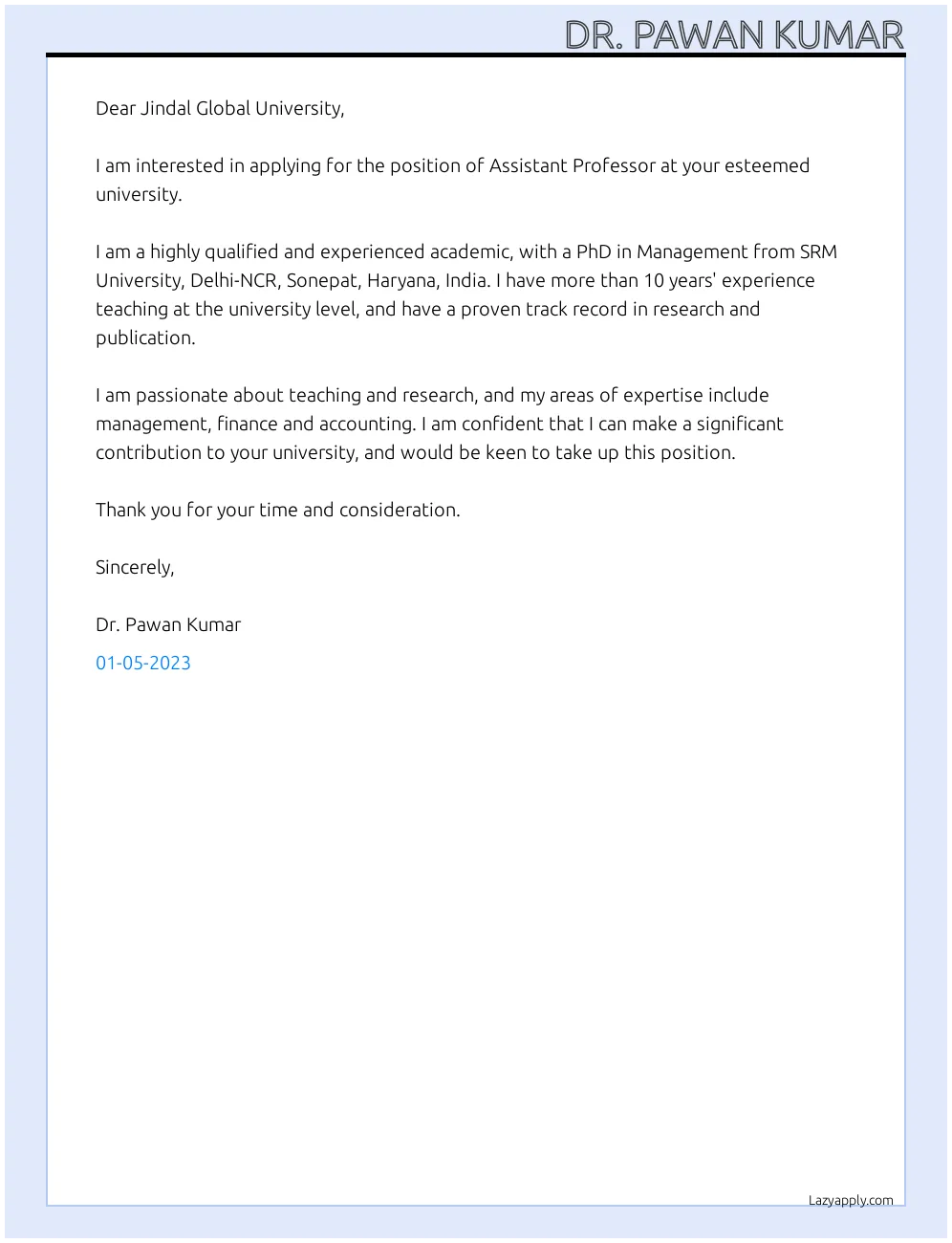
What is a Professor Cover Letter
A professor cover letter is a crucial document when applying for academic positions. It serves as your introduction to the hiring committee, providing an opportunity to showcase your qualifications, research, teaching experience, and overall suitability for the role. Unlike a general job application cover letter, a professor cover letter requires a specialized approach that highlights your academic achievements and potential contributions to the university. It’s your chance to make a strong first impression, demonstrating why you are the ideal candidate and why the institution should consider you for an interview. A well-crafted cover letter can significantly increase your chances of landing your dream job in academia. This document is not just a formality; it’s a strategic marketing tool that sells your unique skills and experiences.
Key Elements of a Strong Professor Cover Letter
A compelling professor cover letter includes several key elements. Start with a professional header that includes your contact information and the date. Then, address the letter to the specific hiring committee or individual, if possible, to personalize it. Your opening paragraph should immediately grab the reader’s attention by stating the position you’re applying for and expressing your enthusiasm. In the body, delve into your research accomplishments, teaching philosophy, and relevant experience. Highlight your key achievements, showcasing your expertise and what you can bring to the department. Conclude with a strong closing statement reiterating your interest and inviting the committee to review your application materials. Attention to detail is paramount; ensure your letter is error-free and tailored to each specific position.
Highlight Your Research Accomplishments

Your research accomplishments are central to your application. Clearly articulate your research interests and how they align with the department’s goals. Describe your major research projects, focusing on your contributions, methodologies, and significant findings. Use specific examples and data to demonstrate the impact of your work, such as publications in peer-reviewed journals, presentations at conferences, and grants or funding received. Mention any awards or recognition you have earned for your research. If possible, include a brief discussion of future research directions and how you plan to contribute to the field. Show the hiring committee that you are not just a researcher, but a valuable asset to their research community.
Quantify Your Achievements
Whenever possible, quantify your achievements to make them more impactful. Instead of saying “I increased student engagement,” say “I increased student engagement by 20% through the implementation of innovative teaching methods.” Quantifying your achievements gives concrete evidence of your accomplishments. This demonstrates your ability to make a measurable difference. Include specific numbers related to publications, grants, citations, teaching evaluations, and any other metrics that showcase your performance. For example, if you have secured funding, specify the amount and the impact it has on your research. This level of detail shows your potential to contribute significantly to the university and gives you a competitive edge.
Demonstrate Your Teaching Philosophy and Experience
Provide a clear and concise teaching philosophy statement. Describe your approach to teaching, including your pedagogical methods, values, and goals. Explain how you engage students and foster a positive learning environment. Include examples of your teaching experience, such as courses taught, student evaluations, and any teaching awards. Highlight your ability to connect with students and create a supportive classroom atmosphere. Mention any innovative teaching strategies you have used, like incorporating technology or developing new course materials. Show the hiring committee that you are a dedicated educator who can effectively inspire and educate students. This aspect is crucial, as universities value professors who excel in the classroom and can contribute to student success.
Showcase Your Publications and Presentations

List your publications and presentations, using a consistent citation style. Include peer-reviewed journal articles, books, book chapters, conference presentations, and other scholarly works. Highlight the most relevant publications to the position and the department’s research interests. Mention any publications that are in press or under review. For presentations, include the name of the conference, date, and location. Provide brief summaries of your key publications and their significance in the field. Showcase the impact of your work by mentioning citations, awards, or recognition received. This section demonstrates your expertise and commitment to scholarly activities, crucial for any professor role. Include link to your google scholar profile.
Address the Specific Requirements of the Position
Carefully review the job description and address each of the requirements. Demonstrate how your skills, experience, and qualifications align with the position’s needs. Use the language and keywords from the job description to show that you understand the requirements. Provide specific examples to illustrate how you have met the criteria. For instance, if the position requires experience with grant writing, describe your experience with securing grants. If the position requires specific teaching skills, explain how you possess those skills. Tailor your cover letter to the specific requirements, showing the hiring committee that you are a great fit for the role. This personalization is key to standing out from other applicants.
Tailor Your Letter to the University and Department
Research the university and the department you are applying to. Learn about their mission, values, and research interests. Tailor your cover letter to reflect your understanding of the institution. Mention specific faculty members whose work aligns with yours and explain how you could collaborate with them. Highlight any connections you have with the university, such as alumni status or previous collaborations. Show the hiring committee that you have taken the time to learn about their institution and are genuinely interested in joining their community. Tailoring your letter demonstrates that you are not just sending out a generic application, but are genuinely interested in the specific opportunity.
Emphasize Your Fit with the University Culture

Explain how your values align with the university’s culture and mission. Discuss your potential contributions to the department’s diversity, equity, and inclusion initiatives. Mention any experiences with mentoring students, participating in departmental activities, or engaging in community outreach. Highlight your ability to work collaboratively with colleagues. Demonstrate your understanding of the university’s goals and how you can contribute to them. Showing your dedication to building a sense of community and collaboration enhances your suitability for the role. This will signal to the hiring committee that you are not only qualified but are also a team player who will thrive in their environment.
Include a Call to Action
Conclude your cover letter with a clear call to action. Express your enthusiasm for the opportunity and reiterate your interest in the position. Thank the hiring committee for their time and consideration. Indicate your willingness to provide further information and be available for an interview. Include a statement expressing your eagerness to discuss your qualifications further and how you can contribute to the university’s success. Provide your contact information and state that you look forward to hearing from them. A strong call to action shows confidence and a desire to move forward in the application process.
Proofread and Edit Your Cover Letter
Before submitting your cover letter, proofread it carefully. Check for any grammatical errors, typos, or inconsistencies. Ensure that your letter is well-organized, clear, and concise. Ask a colleague, mentor, or career counselor to review your letter for feedback. They can provide an objective perspective and help you identify areas for improvement. Make sure all the information you’ve provided is accurate and up-to-date. A polished cover letter will make a positive impression on the hiring committee. A well-edited letter reflects your professionalism and attention to detail. This step is vital, as errors and typos can undermine your credibility. Get the help of professionals when needed.