Why a Strong PR Job Cover Letter Matters
In the competitive world of public relations, a well-crafted cover letter is your first opportunity to make a lasting impression. It’s not just a formality; it’s a critical tool that can make or break your chances of landing an interview. A compelling PR job cover letter showcases your skills, experience, and enthusiasm, setting you apart from other applicants. It provides a narrative that complements your resume, allowing you to highlight specific achievements and explain how your qualifications align with the job requirements. Without a strong cover letter, your application might get overlooked, even if you possess the necessary skills and experience. A great cover letter is your advocate, communicating your value proposition and demonstrating your understanding of the PR industry.
Key Components of a Winning PR Cover Letter
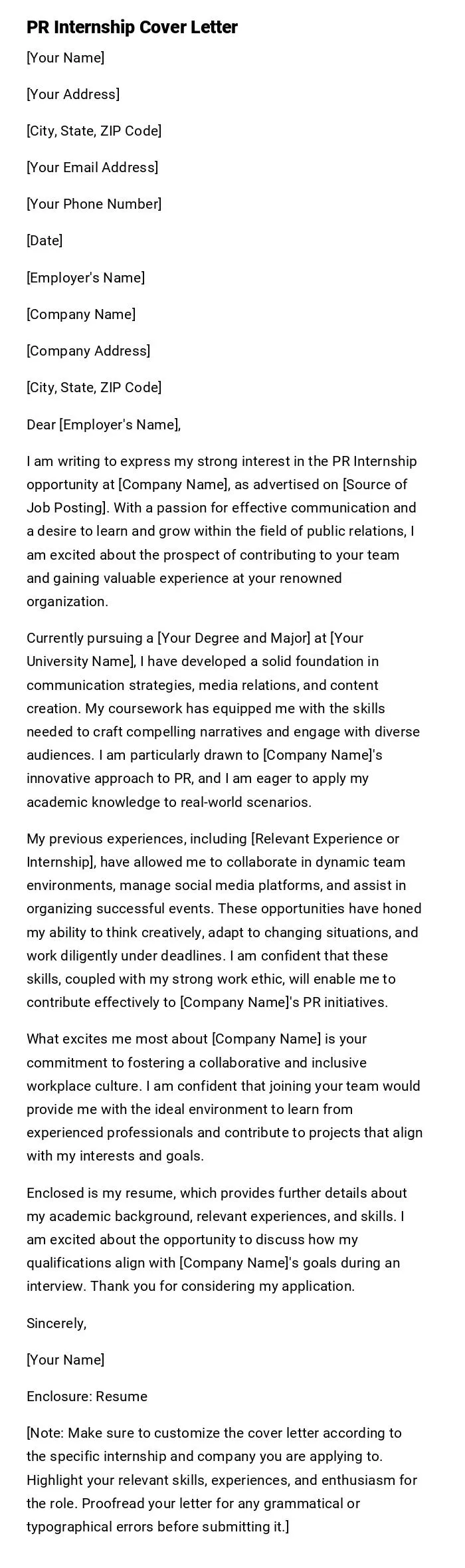
To write a winning PR cover letter, you need to focus on several key components. These elements work together to create a persuasive document that captures the hiring manager’s attention. Each part of your cover letter plays a specific role in demonstrating your suitability for the position. A well-structured cover letter follows a logical flow, making it easy for the reader to understand your qualifications and why you’re the perfect fit for the role. From your contact information to your closing paragraph, every detail should be carefully considered and professionally presented. Paying attention to these elements will significantly increase your chances of success. A winning cover letter isn’t just about what you say, it’s also about how you say it, including tone, style, and overall presentation.
Your Contact Information and Date

Start with your contact information in the top left corner of the cover letter. Include your full name, phone number, email address, and LinkedIn profile URL. Following this, add the date. This ensures the hiring manager can easily reach you and provides a clear timeline for your application. Ensure your contact details are up-to-date and professional. Using a professional email address is vital; avoid using nicknames or unprofessional email handles. Your LinkedIn profile should also be current and showcase your professional experience and network. The date serves as a reference point for the company and helps to track the application’s age.
The Recipient’s Information
Directly below your contact information and the date, provide the recipient’s details. This includes the hiring manager’s name, title, the company’s name, and the company’s address. If you can find the hiring manager’s name, address the letter to them directly. Personalizing the letter shows that you have taken the time to research the company and the role. If the hiring manager’s name isn’t available, use a generic greeting such as ‘Dear Hiring Manager.’ Double-check the accuracy of the recipient’s information to show your attention to detail, a valuable trait in PR. Incorrect information may give the impression of a lack of thoroughness or attention to detail. You can find this information on the company’s website, LinkedIn, or the job posting itself.
A Compelling Opening Paragraph
Your opening paragraph is crucial; it needs to grab the reader’s attention immediately. State the position you’re applying for and how you found it. Briefly highlight your most relevant skills or experience that align with the job requirements. Express your enthusiasm for the role and the company. Avoid generic opening lines. Instead, make your introduction impactful by conveying your understanding of the company’s goals or a specific project. A strong opening paragraph sets the tone for the rest of your cover letter and encourages the hiring manager to continue reading. The goal is to immediately capture their interest and prompt them to learn more about your qualifications.
Highlighting Your Relevant Skills and Experience

The body of your cover letter should highlight your most relevant skills and experience. Refer to the job description and identify the key skills and qualifications the employer is seeking. Provide specific examples that demonstrate how you’ve used these skills to achieve success in previous roles. Use the STAR method (Situation, Task, Action, Result) to structure your examples, making them clear and impactful. Focus on achievements rather than just listing job duties. This section is where you demonstrate your competence and show that you’re a good fit for the position. Tailor this section to each specific job application, ensuring that the information is relevant and targeted to the requirements of the role.
Showcasing Your PR Achievements
In the competitive field of PR, showcasing your achievements is paramount. Don’t just list your responsibilities; focus on what you’ve accomplished in previous roles. Use quantifiable data to support your claims. For instance, instead of saying ‘Managed social media,’ state ‘Increased social media engagement by 30% in six months.’ Highlight successful campaigns you’ve led, media coverage you’ve secured, and any awards or recognition you’ve received. When discussing your achievements, be concise and use powerful language to describe your contributions. Always emphasize the value you brought to previous employers and how you can bring similar results to the company you’re applying to. Your achievements should demonstrate your strategic thinking, creativity, and ability to deliver results.
Quantifying Your Accomplishments
Quantifying your accomplishments makes your cover letter more credible and impactful. Use numbers, percentages, and specific metrics to demonstrate the success of your work. Instead of saying you improved brand awareness, say you increased it by 20% through a specific campaign. Include data on media placements secured, website traffic generated, or social media followers gained. Quantifiable data provides tangible evidence of your contributions and helps the hiring manager understand the value you bring to the table. This approach showcases your ability to drive results and provides a clear indication of your past performance. When possible, include specific data points related to the role requirements to show your ability to meet or exceed the expectations.
Tailoring Your Cover Letter to the Job Description

Never send a generic cover letter. Tailoring your letter to each job description is essential for success. Read the job description carefully and identify the key requirements, skills, and qualifications the employer is seeking. Customize your cover letter to address these specific requirements, highlighting your relevant experience and skills. Use the same keywords and phrases from the job description to demonstrate that you understand the role and the company’s needs. Show the hiring manager how your qualifications align with their needs. Customization shows that you’ve put in the effort to understand the role and are genuinely interested in the opportunity. This level of detail demonstrates your attention to detail and your commitment to the application process.
Demonstrating Your Understanding of the Company
Show the hiring manager that you’ve done your research by demonstrating your understanding of the company. Mention specific projects, campaigns, or initiatives the company has undertaken that align with your interests and skills. Visit their website, read their recent press releases, and follow them on social media. Understanding the company’s mission, values, and recent achievements shows your genuine interest and your ability to contribute. By demonstrating this knowledge, you position yourself as someone who is not only qualified but also invested in the company’s success. Researching the company also allows you to tailor your cover letter and highlight how your skills and experience will benefit their specific needs and goals. This personalization is key to standing out.
Expressing Your Enthusiasm for the Role
Your cover letter should convey your enthusiasm for the role. Let the hiring manager know why you’re excited about the opportunity and the company. Express your interest in the company’s mission, values, or recent projects. Mention what attracts you to the PR field and how this specific role fits into your career goals. Enthusiasm is contagious and helps you make a positive impression. A genuine expression of excitement showcases your passion and dedication, making you a more attractive candidate. It also signals to the hiring manager that you’re likely to be motivated and committed to the role. Let them know you want the job and are eager to contribute.
Crafting a Strong Closing Paragraph

Your closing paragraph should reiterate your interest in the role and company. Express your gratitude for the hiring manager’s time and consideration. Clearly state your willingness to discuss your qualifications further in an interview. Include a call to action, such as mentioning that you’re available for an interview at their earliest convenience. This paragraph should be concise and professional, leaving a positive final impression. A strong closing paragraph reinforces your enthusiasm and encourages the hiring manager to take the next step. Avoid clichés, such as ‘Thank you for your consideration.’ Instead, be specific and reiterate your value to the organization.
Proofreading and Editing Your Cover Letter
Before submitting your cover letter, proofread and edit it meticulously. Check for spelling, grammar, and punctuation errors. Ensure your sentences are clear, concise, and easy to understand. Have a friend or colleague review your letter for a second opinion. Errors can undermine your credibility and make a negative impression. A polished cover letter demonstrates your attention to detail and professionalism. Read your cover letter aloud to catch any awkward phrasing or grammatical errors. Careful proofreading ensures your message is conveyed effectively and that you present yourself as a competent candidate. Small mistakes can lead to big problems.
Common Mistakes to Avoid
There are several common mistakes that can hurt your chances of getting hired. Avoid generic cover letters; tailor each letter to the specific job and company. Do not use clichés or overly formal language. Refrain from focusing on yourself too much. Instead, concentrate on how you can contribute to the company. Do not exceed one page, keep it concise and to the point. Failing to proofread is a common mistake that can easily be avoided by taking the time to edit your letter carefully. Another significant error is neglecting to follow the instructions. Always carefully read the job posting and adhere to the requirements. Be professional and focused.
Using Action Verbs to Make an Impact

Using strong action verbs can make your cover letter more dynamic and impactful. Start each bullet point or sentence describing your achievements with an action verb. Instead of saying ‘Responsible for managing social media,’ use ‘Managed social media, increasing engagement by 30%.’ Examples of strong action verbs include ‘achieved,’ ’led,’ ‘created,’ ‘developed,’ ‘implemented,’ ‘managed,’ ‘improved,’ and ‘increased.’ Action verbs convey energy and demonstrate your ability to take initiative and drive results. They make your cover letter more engaging and make your accomplishments more memorable. Choose verbs that accurately describe your actions and align with the specific requirements of the job description. The correct verbs will help sell your skills.