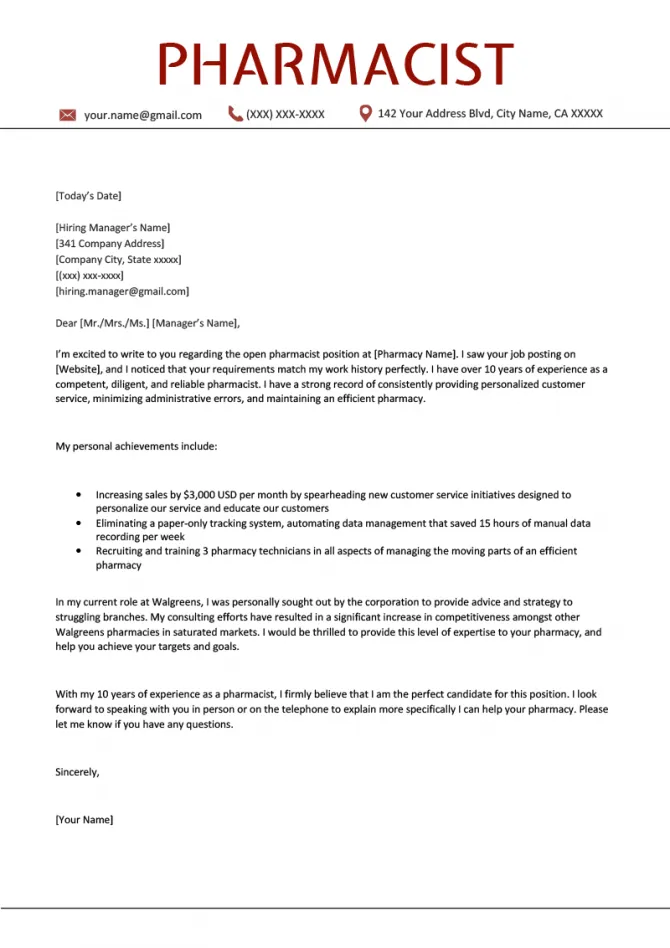
Understanding the Pharmacist Cover Letter
A pharmacist cover letter is more than just a formality; it’s a crucial tool in your job application arsenal. It serves as your introduction, providing a glimpse into your professional background, skills, and aspirations. Unlike a resume, which offers a concise overview of your qualifications, a cover letter allows you to expand on your experiences, connect your skills to the specific job requirements, and demonstrate your enthusiasm for the role and the company. Crafting a compelling cover letter can significantly increase your chances of securing an interview, ultimately helping you land your desired pharmacist position. It’s an opportunity to make a strong first impression and distinguish yourself from other candidates.
Importance of a Strong Cover Letter
In a competitive job market, a well-written cover letter can be the deciding factor in whether your application makes it to the next stage. It demonstrates your communication skills, attention to detail, and genuine interest in the position. A strong cover letter allows you to personalize your application, showcasing your understanding of the company’s needs and how you can contribute to their success. It’s your chance to highlight your most relevant skills and experiences, and to explain any gaps or unique aspects of your background that might not be immediately apparent from your resume. By taking the time to craft a thoughtful and tailored cover letter, you show potential employers that you are serious about the opportunity and invested in making a positive impact.
Key Components of a Pharmacist Cover Letter

Contact Information
Your contact information, including your full name, address, phone number, and professional email address, should be clearly displayed at the top of your cover letter. This ensures that the hiring manager can easily reach you. Ensure your email address is professional-sounding; avoid using nicknames or unprofessional language. This information is crucial for the employer to be able to contact you efficiently should they wish to proceed with your application.
Applicant’s Name & Contact
Start with your full name, centered or aligned to the left. Below your name, include your address, phone number, and a professional email address. Accuracy is key here, so double-check all details before sending.
Recipient’s Information

Below your contact information, include the date and the hiring manager’s name, title, and the company’s address. If you don’t know the hiring manager’s name, research it. If you cannot find it, use a generic greeting like ‘Dear Hiring Manager.’
Professional Greeting
Begin your cover letter with a professional greeting. Using the hiring manager’s name, if known, is ideal; e.g., ‘Dear Mr. Smith.’ If you don’t know the name, ‘Dear Hiring Manager’ is acceptable. Avoid overly casual greetings.
Body Paragraphs
First Paragraph: Expressing Interest

Start with a strong statement of your interest in the position and how you learned about it. Mention the specific job title and the company. Briefly state why you are a good fit, hinting at the skills or experiences that make you suitable for the role. This paragraph sets the tone and captures the reader’s attention, making them want to continue reading.
Second Paragraph: Highlighting Skills
This is where you showcase your skills and qualifications. Select 2-3 key skills or experiences that align with the job requirements. Provide specific examples or accomplishments that demonstrate your abilities, using the STAR method (Situation, Task, Action, Result) to provide context and evidence of your capabilities. Quantify your achievements whenever possible to make them more impactful.
Third Paragraph: Showcasing Experience
Expand on your relevant experience, providing more details about previous roles, responsibilities, and accomplishments. Focus on experiences that are most relevant to the job you are applying for. Describe your contributions and the positive outcomes you achieved. Use action verbs to create a dynamic and engaging narrative, and avoid simply listing your duties. Instead, focus on what you achieved in each role.
Closing Paragraph: Call to Action

Reiterate your interest in the position and express your enthusiasm for the opportunity. Thank the hiring manager for their time and consideration. End with a clear call to action, such as stating that you are available for an interview and look forward to hearing from them soon. Make it easy for them to contact you.
Formal Closing
Use a professional closing such as ‘Sincerely,’ ‘Respectfully,’ or ‘Best regards,’ followed by your typed name. Ensure your signature, if included, is legible. Maintaining a professional tone throughout the closing reflects your attention to detail and respect for the hiring process.
Formatting & Design
Font & Style Guidelines
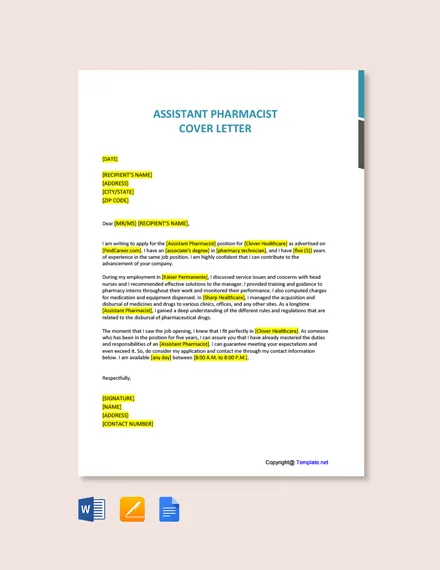
Choose a professional and readable font such as Times New Roman, Arial, or Calibri. Use a font size between 10 and 12 points. Maintain consistent formatting throughout the letter. Keep the overall design clean and uncluttered, with appropriate spacing between paragraphs and sections. Avoid using excessive colors or graphics unless they are relevant and professional.
Formatting for Readability
Use single spacing within paragraphs and double spacing between paragraphs. Use left alignment with justified margins. Break up large blocks of text with shorter paragraphs. Use bullet points to highlight key skills or accomplishments. Ensure the letter is easy to read and visually appealing, helping the hiring manager quickly grasp the most important information.
Proofreading & Editing
Proofreading and editing are essential steps to ensure your cover letter is polished and error-free. Errors can create a negative impression and undermine your credibility.
Common Mistakes to Avoid

Grammar and Spelling Errors
Carefully review your cover letter for grammar and spelling errors. Use spell check, but also read the letter carefully to catch any errors that spell check might miss. These errors can make you appear unprofessional and careless. Consider having a friend or family member proofread your cover letter to get a fresh perspective and catch any mistakes you might have missed.
Generic Content & Lack of Personalization
Avoid using generic cover letters. Tailor each cover letter to the specific job and company. Research the company and the position requirements, and highlight how your skills and experience align with their needs. Show that you have taken the time to understand their needs and explain why you are the right fit for the role. Personalized cover letters demonstrate your interest and increase your chances of success.
Review and Submission

Before submitting your cover letter, review it thoroughly to ensure it’s free of errors and is well-organized. Confirm that the formatting is consistent and professional. Make sure all contact information is correct. If submitting online, ensure the file format is compatible with the employer’s requirements, usually a PDF. Always attach both your cover letter and resume when applying for a job. Double-check everything before sending to ensure a seamless submission process.