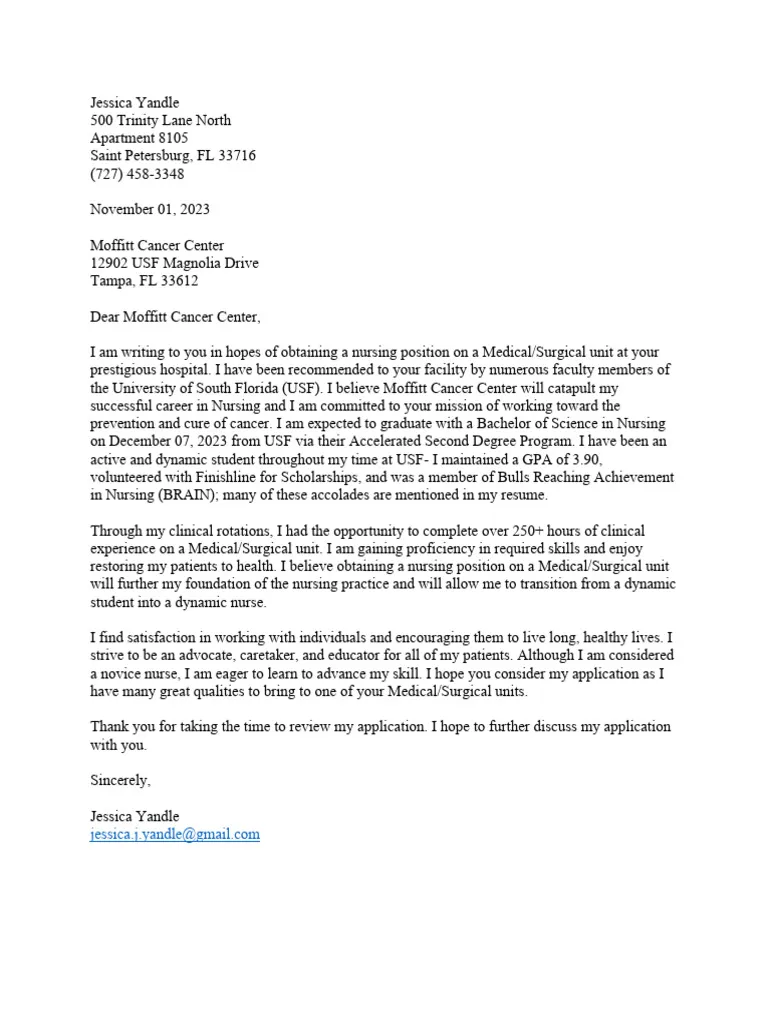
Crafting a Nursing Cover Letter That Stands Out
In the competitive field of nursing, a well-crafted cover letter can be the key to unlocking your dream job. It’s your first impression, a chance to demonstrate why you’re the ideal candidate. A compelling cover letter complements your resume, providing a narrative that showcases your skills, experience, and passion for patient care. This guide offers essential tips to help you create a standout nursing cover letter that captures the attention of hiring managers and sets you apart from the competition. By focusing on key elements like highlighting your skills, quantifying your accomplishments, and expressing your genuine enthusiasm for nursing, you can significantly increase your chances of securing an interview. Remember, your cover letter is more than just a formality; it’s your opportunity to make a lasting impression and pave the way for a successful career in nursing. A well-written cover letter provides a snapshot of your abilities, making the hiring manager want to learn more about you.
Highlighting Your Nursing Skills & Experience
Your cover letter should spotlight your most relevant skills and experience. Start by identifying the key requirements of the nursing position you’re applying for. Then, align your qualifications with those needs, providing specific examples of how you’ve demonstrated those skills in the past. Focus on both clinical and soft skills. Clinical skills include patient assessment, medication administration, and wound care. Soft skills, such as communication, empathy, and teamwork, are equally important. Show how you have used these skills to contribute to positive patient outcomes and create a supportive work environment. Describe experiences where you successfully managed challenging situations, collaborated with interdisciplinary teams, and provided exceptional patient care. By showcasing your ability to handle a range of nursing responsibilities, you will prove that you can excel in the position you are applying for.
What to Include in Your Nursing Cover Letter

A comprehensive nursing cover letter includes several key sections. Each section plays a crucial role in presenting a professional image and highlighting your qualifications. These components work together to create a complete picture of your skills, experiences, and passion for nursing. The following sections are essential for a professional cover letter. A complete cover letter will boost your chances of getting the job.
Your Contact Information
At the top of your cover letter, include your full name, address, phone number, and professional email address. Ensure your email address is professional. Verify this information is accurate and up-to-date to make it easy for the hiring manager to contact you.
The Hiring Manager’s Information
Address your cover letter to the specific hiring manager whenever possible. Research the hiring manager’s name and title and include it in your salutation. Use the correct title and spelling, and this shows that you have put effort into the application.
Professional Greeting

Start with a professional greeting, such as “Dear Mr./Ms. [Last Name].” If you cannot find the hiring manager’s name, use a general greeting like “Dear Hiring Manager.” Avoid informal greetings to maintain a professional tone.
The Opening Paragraph
In your opening paragraph, state the position you are applying for and how you learned about it. Briefly mention your most relevant qualifications and express your enthusiasm for the role and the healthcare organization. Your goal is to immediately grab the reader’s attention and encourage them to read the rest of your letter.
Showcase Your Nursing Skills
Dedicate a section to highlight your key nursing skills. Focus on both clinical and soft skills relevant to the job description. For example, mention skills like patient assessment, medication administration, electronic health records, and experience with specific patient populations or medical technologies. Provide examples of how you have successfully applied these skills in previous roles. Make a list of your skills in a clear and concise manner for easy reading.
Relevant Nursing Experience

Detail your work experience in nursing, including the name of the healthcare facility, your job title, dates of employment, and key responsibilities. Focus on your most relevant experiences and highlight achievements that demonstrate your ability to excel in the role. Use action verbs to describe your duties and contributions. Structure this section in a way that is easy to read.
Quantify Your Accomplishments
Whenever possible, quantify your accomplishments using numbers and data. For example, mention the number of patients you cared for, the percentage of improvement in patient outcomes you achieved, or any cost savings you contributed to. Quantifiable results provide concrete evidence of your abilities and impact, making your cover letter more persuasive.
Highlight Certifications & Licenses
Clearly list your nursing certifications, licenses, and any specialized training you have. Include the issuing organization and the expiration date if applicable. Ensure that all certifications are current and relevant to the position. Highlighting your qualifications demonstrates that you have met the necessary requirements.
Express Your Passion for Nursing

Convey your genuine passion for nursing and patient care. Explain why you are drawn to this specific role or organization. Show enthusiasm for your job and your commitment to providing excellent patient care. Your passion can make your cover letter memorable.
Closing Your Nursing Cover Letter
The closing of your cover letter is just as important as the opening. The last few sentences provide an opportunity to reiterate your interest in the position and invite the hiring manager to contact you. By following the right steps, you are well on your way to success.
Call to Action
Include a clear call to action, such as requesting an interview or expressing your willingness to discuss your qualifications further. Make it easy for the hiring manager to take the next step by being clear with your intentions.
Thank You and Sign Off

Thank the hiring manager for their time and consideration. Use a professional closing, such as “Sincerely” or “Best regards,” followed by your full name. This shows respect and appreciation.
Proofreading Your Nursing Cover Letter
Before submitting your cover letter, carefully proofread it for any errors in grammar, spelling, and punctuation. Ensure that the formatting is consistent and easy to read. Ask a friend or colleague to review your cover letter for feedback. This helps to catch any mistakes you might have missed. A well-proofread cover letter demonstrates professionalism and attention to detail, increasing your chances of a positive outcome.