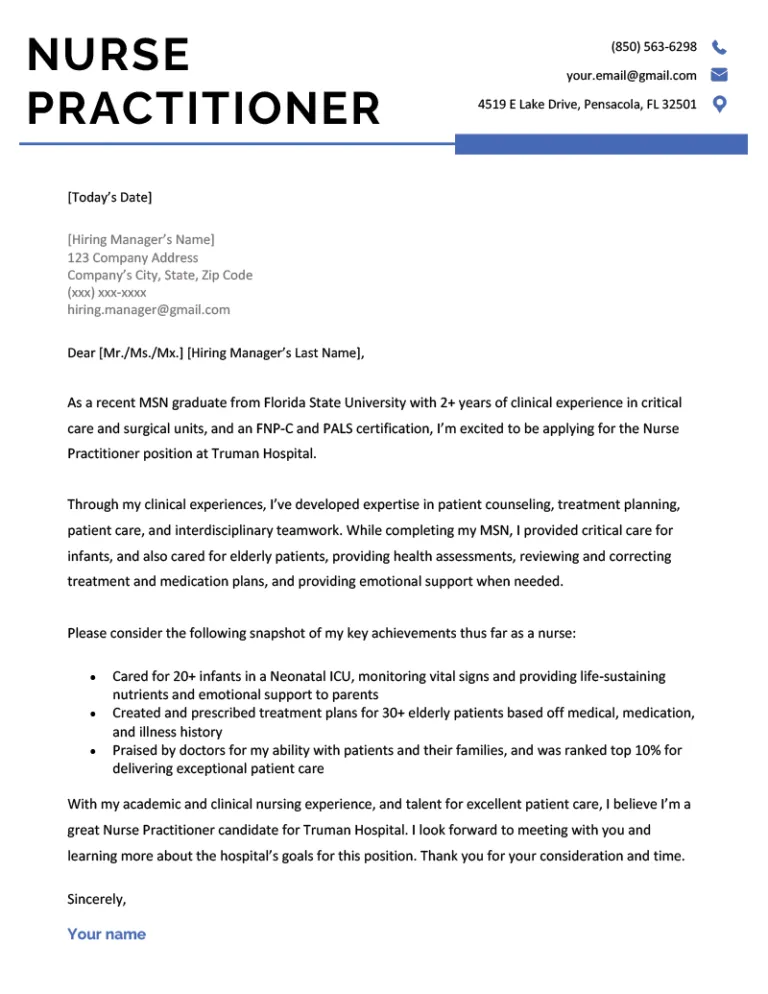
Crafting Your New Nurse Practitioner Cover Letter
As a new nurse practitioner, landing your dream job begins with a well-crafted cover letter. This document is your first impression, a crucial tool to showcase your skills, experience, and passion for patient care. Unlike your resume, a cover letter allows you to tell your story, explaining why you’re the perfect fit for the specific role and organization. This guide will walk you through the essential components and best practices for writing a compelling cover letter that gets you noticed by potential employers. Remember that the cover letter is not just a formality; it’s your opportunity to shine and differentiate yourself from other candidates. A well-written cover letter significantly increases your chances of securing an interview, bringing you one step closer to your desired career in healthcare.
Understanding the Purpose of a Cover Letter
The primary purpose of a cover letter is to introduce yourself and your qualifications to a potential employer. It serves as a bridge between your resume and the hiring manager, offering context and highlighting the most relevant aspects of your experience. Think of it as a personalized advertisement, tailored to the specific job and organization you’re applying to. The cover letter allows you to elaborate on skills and experiences that might not be fully detailed in your resume, demonstrating how you can contribute to the organization’s goals. It also demonstrates your written communication skills, attention to detail, and genuine interest in the position. By clearly articulating your value proposition, the cover letter sets the stage for a successful application and increases your chances of getting an interview.
Highlighting Your Qualifications

Your cover letter is the perfect place to showcase the qualifications that make you an ideal candidate. While your resume lists your education, certifications, and previous roles, the cover letter allows you to delve deeper into the skills and experiences most relevant to the job. Start by identifying the key requirements outlined in the job description. Then, use your cover letter to provide specific examples of how you’ve demonstrated these skills in the past. This could include patient care experiences, leadership roles, or any specific training that aligns with the position. Use action verbs to describe your accomplishments and quantify your achievements whenever possible. For example, instead of saying “Provided patient care,” you could say, “Managed a caseload of 20 patients daily, providing comprehensive care and improving patient outcomes by 15%.” By clearly articulating your qualifications and providing concrete examples, you demonstrate your ability to excel in the role.
Essential Components of a Cover Letter
Header and Contact Information
Your cover letter should begin with a professional header that includes your contact information. This ensures the hiring manager knows how to reach you if they’re interested in your application. Include your full name, address, phone number, and a professional email address. Avoid using nicknames or unprofessional email addresses. Also, include the date and the hiring manager’s name (if you know it) or the title of the hiring manager. Make sure to align this information neatly at the top, typically on the left or right side of the page. The header sets the tone for a professional and organized application. (Image: cover-letter-header-example.webp)
The Salutation

The salutation is your opening greeting, and it’s important to make a good first impression. If you know the hiring manager’s name, use it: “Dear Dr. Smith.” This shows you’ve taken the time to research the organization and personalize your letter. If you don’t know the name, use a professional alternative such as “Dear Hiring Manager” or “Dear [Department Name] Team.” Avoid generic salutations like “To Whom It May Concern,” as they can make your letter seem less personalized. The salutation sets the tone for the rest of your letter, so make it professional and respectful.
Body Paragraphs
The body paragraphs are the heart of your cover letter, where you showcase your skills and experiences. Generally, a well-structured cover letter includes three or four body paragraphs. Each paragraph should focus on a specific aspect of your qualifications or your interest in the position. Keep your paragraphs concise and easy to read, using clear and concise language. Use action verbs to describe your accomplishments and avoid jargon that the hiring manager might not understand. The goal is to provide a compelling narrative that highlights your suitability for the role.
First Paragraph Grabbing Attention
The first paragraph should grab the reader’s attention and introduce you. Start with a strong opening statement that highlights your interest in the position or the organization. Briefly mention where you saw the job posting and why you are excited about the opportunity. You can also mention a key skill or experience that makes you stand out. Keep it concise and to the point, setting the stage for the rest of your letter. This first paragraph is your opportunity to make a positive first impression and encourage the reader to continue.
Second Paragraph Showcasing Skills

In the second paragraph, focus on showcasing your relevant skills and experience. Review the job description and identify the key requirements. Then, provide specific examples from your past that demonstrate your ability to meet those requirements. Quantify your achievements whenever possible, using numbers and data to illustrate your impact. For example, describe a situation where you successfully managed a difficult patient case or implemented a process improvement that led to better patient outcomes. This paragraph is where you convince the hiring manager that you have the skills and experience to excel in the role. (Image: nurse-practitioner-skills.webp)
Third Paragraph Demonstrating Interest
The third paragraph should focus on demonstrating your genuine interest in the organization and the specific position. Research the organization and mention what attracts you to their mission, values, or culture. Explain why you want to work for them, and highlight how your values align with theirs. Demonstrate that you’ve taken the time to learn about the organization and that you’re genuinely excited about the opportunity. This shows the hiring manager that you’re not just looking for any job, but that you’re specifically interested in this particular role and organization.
The Closing
The closing paragraph should reiterate your interest in the position and express your enthusiasm for an interview. Thank the hiring manager for their time and consideration. Reiterate your contact information, and state your availability for an interview. Make it clear that you’re eager to discuss your qualifications further. End with a professional closing such as “Sincerely,” “Best regards,” or “Thank you,” followed by your name. A strong closing leaves a lasting positive impression and encourages the hiring manager to take the next step.
Formatting Your Cover Letter

Proper formatting is crucial for making your cover letter easy to read and visually appealing. A well-formatted cover letter demonstrates professionalism and attention to detail. Use a clean, readable font, maintain consistent margins, and proofread carefully for any errors. The layout should be easy on the eyes and guide the reader through your qualifications.
Choosing the Right Font
Choose a font that is easy to read and professional-looking. Common fonts include Times New Roman, Arial, Calibri, and Helvetica. The font size should be between 10 and 12 points. Ensure that the font is consistent throughout the document. Avoid using overly decorative or unusual fonts, as they can be difficult to read and detract from the content. A clear and simple font will make your cover letter more accessible to the hiring manager. (Image: cover-letter-formatting-tips.webp)
Maintaining Proper Margins
Set consistent margins of at least one inch on all sides of your cover letter. This helps to create a clean and uncluttered appearance. Proper margins provide adequate white space, making your cover letter easier to read and visually appealing. Avoid cramming your text into the margins, as this can make the letter look dense and overwhelming. The standard margin size contributes to a polished and professional look.
Proofreading and Editing

Before submitting your cover letter, proofread it carefully for any errors in grammar, spelling, and punctuation. Errors can create a negative impression and undermine your credibility. Read your cover letter multiple times, and consider asking a friend, family member, or career counselor to review it as well. Use spell-check and grammar-check tools, but don’t rely on them entirely. Proofreading ensures that your cover letter is polished, professional, and free of any mistakes that could detract from your qualifications. (Image: cover-letter-proofreading.webp)
Cover Letter Templates and Examples
Using a cover letter template can be a helpful way to structure your letter and ensure you include all the necessary components. Templates provide a starting point and guide you through the process of writing your letter. However, make sure to customize the template to reflect your own experience and the specific requirements of the job. Don’t just copy and paste the template; tailor it to make it your own. (Image: nurse-practitioner-template.webp)
Where to Find Templates
Numerous online resources offer free cover letter templates. Websites like Indeed, LinkedIn, and Resume.com provide a variety of templates for different professions and experience levels. You can also find templates on Microsoft Word. When selecting a template, choose one that aligns with the tone and style of the job you’re applying for. Consider the overall design and whether it is professional and easy to read.
Analyzing Sample Cover Letters

Reviewing sample cover letters can give you valuable insights into how to structure and write your own. Look for examples that are tailored to nurse practitioner positions. Pay attention to the language used, the format, and how the applicants highlight their skills and experiences. Use these samples as inspiration, but avoid directly copying them. Adapt the strategies and techniques to your own cover letter, ensuring it reflects your unique qualifications and personality.
Common Mistakes to Avoid
Avoiding common mistakes is crucial for writing a successful cover letter. These errors can detract from your qualifications and make you appear less professional. By being aware of these pitfalls, you can ensure your cover letter stands out for the right reasons.
Generic Language
Avoid using generic language that could apply to any job. Customize your cover letter to the specific position and organization you’re applying to. Generic phrases and statements will make your letter seem impersonal and show a lack of interest in the specific opportunity. Tailor your letter to the requirements of the job and use language that demonstrates your understanding of the role and the organization’s values.
Typos and Grammatical Errors

Typos and grammatical errors can significantly damage your credibility. Proofread your cover letter carefully before submitting it. Use spell-check and grammar-check tools, and consider having someone else review your letter as well. Errors show a lack of attention to detail and can make you appear unprofessional. Double-check every word to ensure your cover letter is error-free.
Ignoring the Job Description
Always tailor your cover letter to the specific job description. Highlight the skills and experiences that are most relevant to the position and directly address the requirements outlined in the job posting. Ignoring the job description demonstrates a lack of attention to detail and makes it less likely that you’ll be considered for the role. Review the job description carefully and ensure that your cover letter addresses all the key requirements.
Tailoring Your Cover Letter
Tailoring your cover letter is essential for demonstrating your interest and qualifications for the specific job and organization. It shows the hiring manager that you’ve taken the time to research the role and that you understand their needs. This personalization can significantly increase your chances of securing an interview.
Researching the Organization
Research the organization you’re applying to. Understand their mission, values, and culture. Look at their website, social media, and any recent news or publications. This research will help you tailor your cover letter and demonstrate your interest in the organization. Mention specific aspects of the organization that appeal to you and explain how your values align with theirs. This shows that you’ve taken the initiative to learn about the organization and are genuinely interested in working there. (Image: tailoring-cover-letter.webp)
Matching Skills to Requirements
Carefully review the job description and identify the key skills and experiences the employer is looking for. Then, tailor your cover letter to highlight how your skills and experiences align with these requirements. Provide specific examples from your past that demonstrate your ability to meet those requirements. Use keywords from the job description to show that you understand the role and are a good fit. This targeted approach demonstrates that you are the ideal candidate for the position.
Following Up
After submitting your cover letter and resume, it’s appropriate to follow up with the hiring manager. This demonstrates your continued interest in the position. Send a brief email or make a phone call a week or two after submitting your application. Reiterate your interest, thank the hiring manager for their time, and inquire about the status of your application. A polite follow-up can help you stand out from other candidates and increase your chances of getting an interview. (Image: following-up-job-application.webp)