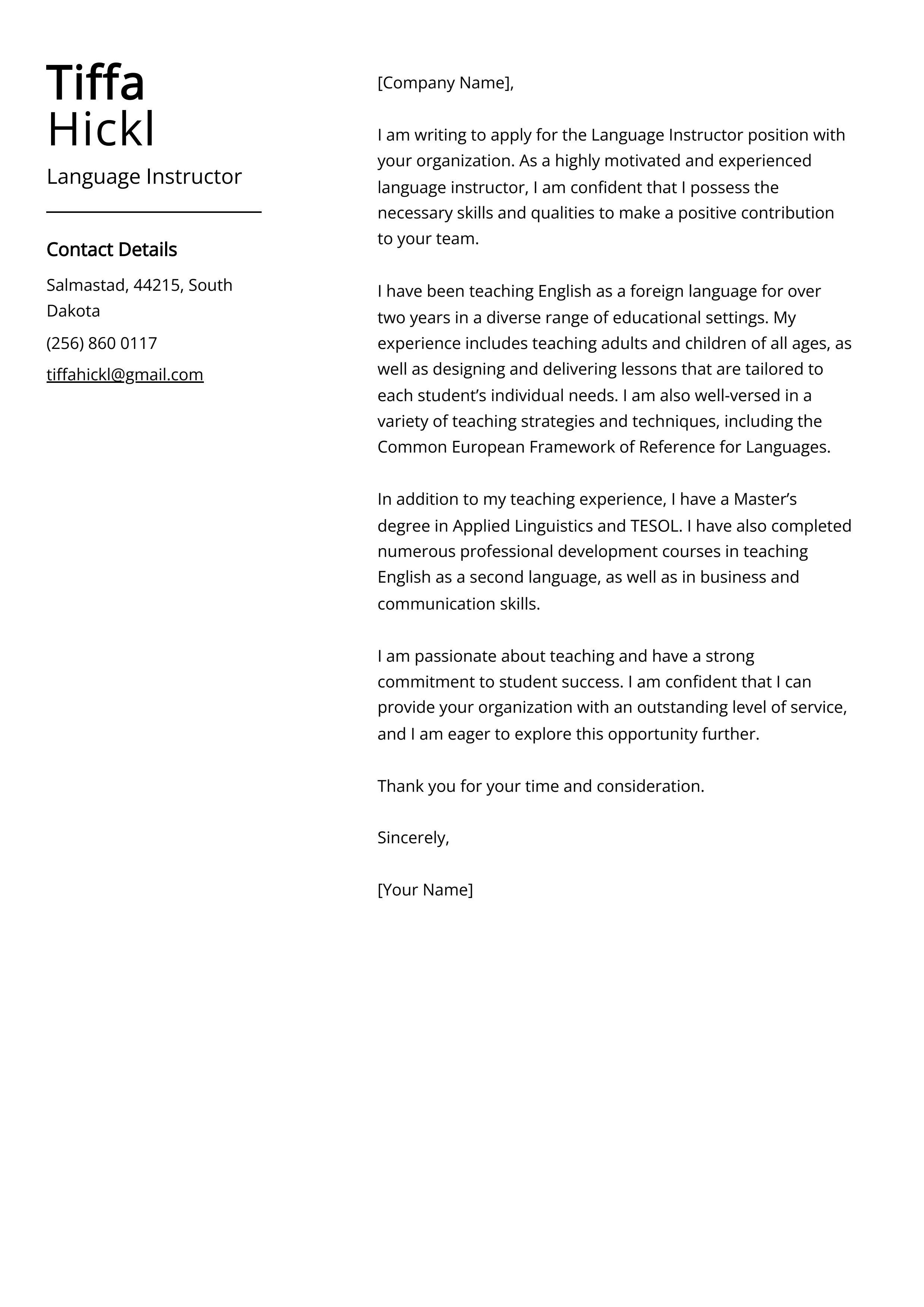
A compelling language teacher cover letter is your first impression on a potential employer. It’s your opportunity to showcase your skills, experience, and passion for teaching languages. A well-crafted cover letter can significantly increase your chances of landing an interview and ultimately, the job. This guide will provide you with essential tips to write a successful language teacher cover letter, ensuring it stands out from the competition. By following these guidelines, you can craft a cover letter that effectively communicates your qualifications and enthusiasm, helping you secure your dream language teaching position.
Highlighting Your Language Skills
Your language proficiency is the cornerstone of your application. Clearly and concisely mention the languages you speak and your fluency level for each. Be specific; instead of simply stating ‘fluent,’ consider using the Common European Framework of Reference for Languages (CEFR) levels (e.g., C2, C1, B2) or equivalent. Detail any certifications or qualifications related to language proficiency, such as a DELE (Diploma de Español como Lengua Extranjera) for Spanish or a TOEFL (Test of English as a Foreign Language) score. If you have experience teaching in a specific language, mention it and how you have helped students improve their skills in reading, writing, listening, and speaking. This information demonstrates your competence and commitment to teaching the target language.
Showcasing Your Teaching Experience
Your teaching experience is another crucial aspect of your cover letter. Describe your previous teaching roles, including the level of students (e.g., elementary, secondary, adult learners) and the language(s) you taught. Highlight the methodologies you employed, such as communicative language teaching, task-based learning, or blended learning. Showcase your ability to create engaging and effective lesson plans and your experience adapting teaching materials to suit different learning styles. Mention any special programs or curricula you’ve worked with. Provide specific examples of how you have improved student outcomes and fostered a positive and inclusive learning environment, showcasing the breadth of your capabilities and your dedication to student success.
Demonstrating Your Passion for Language

Your passion for language is what will make you a memorable candidate. Express your enthusiasm for the target language and culture. Explain why you enjoy teaching and what motivates you to help others learn a new language. Share specific examples of how you have engaged students in language learning, for instance, through cultural activities, real-world scenarios, or technology integration. This passion can be demonstrated through anecdotes about your own language learning experiences or how you aim to inspire your students. This section lets the employer see the person behind the skills, which is very important in a role that requires communication and interpersonal abilities.
Tailoring Your Letter to the Job
Every job application should be unique. Review the job description carefully and tailor your cover letter to match the specific requirements and expectations outlined. Demonstrate that you understand the school’s or institution’s needs and how your skills and experience align with them. Avoid using a generic cover letter; instead, customize it to showcase how you can contribute to their specific program or environment. Research the school’s mission, values, and teaching philosophy to address the specific needs in your letter. This shows that you are genuinely interested in the position and have taken the time to understand the role.
Keywords
Incorporate relevant keywords from the job description throughout your cover letter. This helps the hiring manager quickly identify your qualifications. Keywords might include specific teaching methodologies, language proficiency levels, or software skills. Make sure the keywords are used naturally within the context of your writing, and do not stuff your letter with keywords to ensure readability and professionalism. The goal is to make it easy for the employer to see the direct connection between your skills and their needs, which helps your letter stand out.
Address the Specific Requirements

Address each requirement mentioned in the job description. Clearly state how your skills and experience meet each of the listed requirements. Use specific examples to support your claims. This directly answers the employer’s needs and allows them to quickly determine whether you are a suitable candidate. Be precise and concise, explaining how your prior experience has prepared you for the current role.
Highlighting Achievements
Instead of simply listing your responsibilities, highlight your achievements. Use quantifiable results to demonstrate your impact and success in previous teaching roles. Provide data-driven evidence of your accomplishments, such as increased student test scores, improved student engagement, or successful implementation of new teaching methods. Show how your work has positively affected students and the overall learning environment. These achievements make your application more impressive and demonstrate your ability to deliver results, showcasing that you’re not just doing your job but achieving excellence.
Quantifiable Results
Use numbers and data to quantify your achievements. For instance, mention the percentage increase in student scores, the number of students you helped achieve fluency, or the improvements you achieved in classroom engagement. Use precise language and verifiable metrics to make your accomplishments more convincing. Include specific numbers, dates, and outcomes to provide clear evidence of your impact. These metrics provide concrete evidence that supports the skills and experience you claim to possess.
Use Action Verbs

Start your sentences with strong action verbs to describe your accomplishments. This helps make your cover letter more dynamic and engaging. Use verbs like ‘developed,’ ‘implemented,’ ‘achieved,’ ‘created,’ ‘managed,’ ‘improved,’ and ’led.’ Focus on your specific contributions and impact rather than simply stating what you did. Use action verbs to describe your accomplishments helps to bring your skills and experience to life, highlighting your accomplishments in a powerful way.
Formatting and Presentation
The formatting and presentation of your cover letter are just as important as the content. Use a professional font (e.g., Times New Roman, Arial, Calibri) and maintain consistent formatting throughout. Keep the letter concise and easy to read, with clear paragraphs and ample white space. Make sure it aligns with your resume and is free of any formatting errors. A well-formatted and visually appealing cover letter shows attention to detail and professionalism, which creates a good first impression.
Proofreading and Editing
Carefully proofread and edit your cover letter to eliminate any grammatical errors, spelling mistakes, and typos. Ask a friend, colleague, or career advisor to review your letter as well. A cover letter with errors detracts from your credibility and professionalism. Pay close attention to detail, use spell-check tools, and ensure correct punctuation and grammar. A well-written and error-free cover letter demonstrates your professionalism and respect for the potential employer.
Professional Tone

Maintain a professional and respectful tone throughout your cover letter. Avoid slang, casual language, or overly informal phrasing. Address the hiring manager by name, if possible, and tailor your letter to the specific school or institution. Express your enthusiasm and confidence without being overly boastful. A professional tone conveys respect and demonstrates your understanding of workplace norms. Presenting your qualifications in a professional manner is crucial for making a positive first impression.
Contact Information
Include your contact information at the top of your cover letter. Make sure your contact details are up-to-date and accurate. Include your full name, phone number, email address, and LinkedIn profile URL (if you have one). Ensure your email address is professional. Double-check all details before sending to make sure you can be contacted easily. Providing clear and accurate contact information simplifies the hiring process.
Following Up
After submitting your cover letter and resume, follow up with the hiring manager. Send a brief email or phone call a week or two after the application deadline to express your continued interest and inquire about the status of your application. Refer to specific points in your cover letter to remind them of your qualifications. This shows your dedication and persistence. Remember to maintain a professional tone and respect the hiring manager’s time. Following up demonstrates your interest and increases the likelihood of your application being considered.
Writing a successful language teacher cover letter requires time, effort, and attention to detail. By highlighting your language skills, showcasing your teaching experience, and demonstrating your passion, you can create a cover letter that gets you noticed. Remember to tailor your letter to the specific job, highlight your achievements, and maintain a professional tone. Following these tips will increase your chances of securing an interview and ultimately, your dream job.