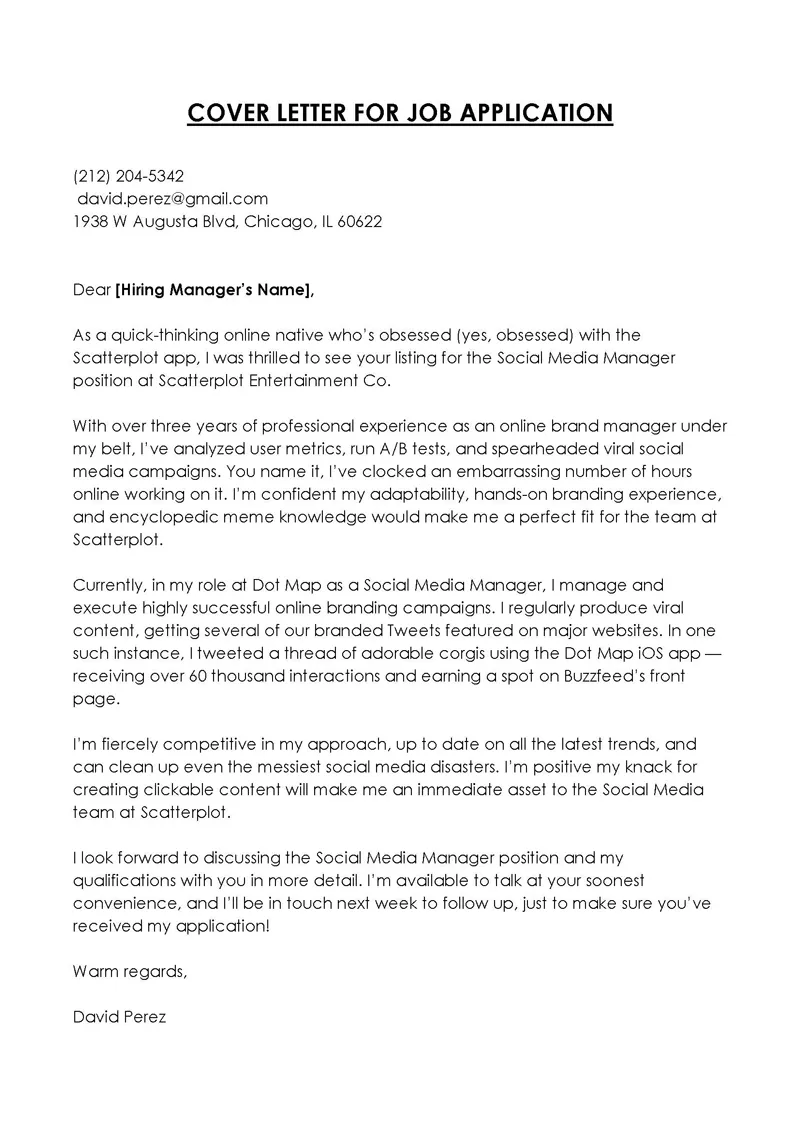
What is a Cover Letter
A cover letter is a crucial document that accompanies your resume when applying for a job. It serves as your personal introduction to the hiring manager, providing context to your application and highlighting why you are the perfect fit for the role. Unlike a resume, which is a factual summary of your experience and skills, a cover letter allows you to express your personality, demonstrate your interest in the company, and explain how your qualifications align with the specific job requirements. It’s your opportunity to make a strong first impression and convince the hiring manager to read your resume and consider you for an interview. A well-written cover letter is tailored to the specific job and company, showcasing your unique value and making you stand out from other applicants. It should be concise, compelling, and free of errors, demonstrating your communication skills and attention to detail, qualities highly valued by employers.
Why You Need a Cover Letter
In today’s competitive job market, a cover letter is often a mandatory requirement, and it’s your chance to differentiate yourself from other candidates. Even if a job posting doesn’t explicitly ask for a cover letter, submitting one can give you a significant advantage. A cover letter allows you to address any potential gaps in your resume, explain career changes, or highlight experiences that might not be immediately apparent. It provides a platform to elaborate on your skills, accomplishments, and motivations, demonstrating to the hiring manager why you are the best candidate for the position. By personalizing your cover letter for each job application, you show that you’ve taken the time to research the company and understand its needs. This attention to detail and genuine interest in the role can make a lasting impression, increasing your chances of getting an interview. Furthermore, a cover letter can showcase your writing skills and communication abilities, which are crucial for many roles.
Key Components of a Cover Letter

A well-structured cover letter follows a standard format, ensuring clarity and professionalism. The key components include your contact information, the date, the hiring manager’s information, a professional greeting, an opening paragraph, body paragraphs highlighting your value and skills, a closing paragraph with a call to action, and a professional closing. Each section plays a vital role in conveying your message and persuading the hiring manager. By including these elements, you create a cohesive and compelling narrative that showcases your qualifications and enthusiasm for the role. Remember to tailor each section to the specific job and company, emphasizing the skills and experiences most relevant to the position. Careful attention to detail in each of these components is essential for creating a cover letter that stands out from the competition.
Contact Information
At the top of your cover letter, include your full name, phone number, email address, and optionally, your LinkedIn profile URL. This information allows the hiring manager to easily contact you. Make sure your email address is professional and that your voicemail message is also professional. Ensure that the contact details you provide are up-to-date and accurate. This is a critical first step, as it provides the hiring manager with immediate access to your contact details, simplifying the process of reaching out to you for an interview or further communication. Always double-check all the contact information to avoid errors. Make your contact information easily visible, typically left-aligned at the top of the document.
Date
Below your contact information, include the current date. This helps the hiring manager know when the cover letter was written and submitted. Ensure that the date format is consistent throughout your document. The date is a standard element and is generally positioned directly below your contact information. In most cases, you’ll write out the month, followed by the day and year. This ensures the document is easily identifiable and provides context.
Hiring Manager’s Name and Title

If possible, address your cover letter to a specific person, such as the hiring manager or the recruiter. Research the company’s website or LinkedIn to find the correct name and title. Addressing the letter to a specific person demonstrates that you’ve done your research and are genuinely interested in the position. If you can’t find a specific name, use a professional greeting such as “Dear Hiring Manager.” Finding the name adds a personal touch and shows initiative. If you can’t find the name, make sure that your greeting still reflects the level of respect. Proper addressing also showcases your attention to detail, which can significantly influence the hiring manager’s perspective.
Professional Greeting
Start your cover letter with a professional greeting, such as “Dear Mr./Ms./Mx. [Last Name],” using the hiring manager’s name. If you don’t know the name, use “Dear Hiring Manager” or “Dear [Company Name] Hiring Team.” Avoid generic greetings like “To Whom It May Concern,” as they lack personalization. Addressing the hiring manager by name sets a positive tone and shows respect, which helps you to stand out. Always spell the name correctly, and double-check the title for accuracy. By personalizing the greeting, you create a connection with the reader from the very beginning. Ensure a professional tone from the start.
The Opening Paragraph
The opening paragraph is your chance to grab the reader’s attention. Clearly state the position you’re applying for and where you saw the job posting. Briefly mention why you’re interested in the company and the role, and highlight your most relevant skills or experience. This paragraph should be concise and engaging, immediately capturing the hiring manager’s interest. Your opening should be clear and grab the attention of the reader to encourage them to read further. The opening paragraph should make a strong impression, setting the tone for the rest of the letter and drawing the reader into your story. Keep it brief but impactful.
Highlighting Your Value

In the body paragraphs, elaborate on your skills and experiences, providing specific examples of your accomplishments. Focus on how your qualifications align with the job requirements, emphasizing your value to the company. Use the STAR method (Situation, Task, Action, Result) to describe your achievements. Quantify your accomplishments whenever possible, providing data or metrics to demonstrate your impact. Your goal is to prove that you are the right candidate for the role. By clearly articulating your achievements, you demonstrate your competence and potential to contribute to the company’s success. Focus on demonstrating a match between your skills and the job requirements.
Skills and Experience
Detail your skills and experience in a way that is directly relevant to the job description. Identify the key skills and experiences the employer is seeking and provide evidence that you possess them. Use action verbs to describe your responsibilities and achievements. Tailor your skills section to match the specific requirements of each job application. Avoid generic descriptions and instead, showcase how your skills have led to tangible results. The goal is to show the hiring manager how your skills and experience align with their needs. Always back up your claims with examples and evidence. Include technical skills, soft skills, and any other relevant abilities that align with the job requirements.
Quantifiable Achievements
Whenever possible, quantify your achievements to demonstrate your impact. Use numbers, percentages, or data to showcase the results of your work. For example, instead of saying “Improved sales,” say “Increased sales by 15% in one quarter.” Providing specific metrics makes your accomplishments more credible and compelling. Quantifiable results illustrate your ability to achieve results. Using numbers makes your claims stronger and more convincing. Including quantifiable achievements strengthens your application and shows your value. This helps to highlight your accomplishments, making your cover letter more impactful. Providing measurable results adds credibility and value to your claims.
Showcase Your Enthusiasm

Express your genuine enthusiasm for the position and the company. Explain why you’re interested in the role and what excites you about the opportunity. Demonstrate that you’ve researched the company and understand its mission, values, and goals. Show your eagerness to contribute to the company’s success. Conveying your enthusiasm demonstrates your commitment and increases your chances of making a positive impression. Make sure to let the hiring manager know why you are passionate about the role. Your enthusiasm for the role and the company will make a lasting impact. The way you show your excitement will add to your appeal.
Closing the Cover Letter
In the closing paragraph, express your gratitude for the hiring manager’s time and consideration. Reiterate your interest in the position and include a call to action, such as requesting an interview or following up with them. The closing should be concise and professional, leaving a positive final impression. This paragraph provides a summary of your strengths. It should also express your gratitude for the hiring manager’s time and review. Ensure you are leaving a memorable impression by restating your enthusiasm.
Expressing Gratitude
Thank the hiring manager for their time and consideration. Showing gratitude reflects professionalism and respect. A simple thank you can go a long way in making a positive impression. Expressing gratitude shows that you value the opportunity and are appreciative of their time. Thank the hiring manager for considering your application. Always express your gratitude, as it is a sign of respect and professionalism. A polite thank you at the end of the letter is a nice touch.
Call to Action

Include a clear call to action, such as requesting an interview or stating your availability for a follow-up. This encourages the hiring manager to take the next step. Make it clear what you hope the hiring manager will do after reading your letter. A specific call to action helps move the application process forward. By giving a clear call to action, you prompt the hiring manager to take the next step. Make it clear how the hiring manager can contact you and the next steps. Requesting an interview shows your eagerness and initiative.
Proper Formatting
Proper formatting is essential for a professional cover letter. Use a clean and readable font, such as Times New Roman, Arial, or Calibri, with a font size of 11 or 12 points. Use standard margins (1 inch on all sides) and single- or 1.15-line spacing. Keep the letter concise, ideally one page long. A well-formatted cover letter is easy to read and reflects your attention to detail. Ensure that your document looks organized and easy to read. The way you format your document sends a message to the hiring manager about your professionalism. Proper formatting demonstrates your respect and attention to detail.
Font and Font Size
Choose a professional and easy-to-read font, such as Times New Roman, Arial, or Calibri. Use a font size between 11 and 12 points. Avoid using overly decorative or unusual fonts. Maintain consistency throughout your cover letter. Make sure the text is easily readable, to ensure your letter appears professional. Easy readability helps the hiring manager focus on your content.
Margins and Spacing

Set margins to 1 inch on all sides of your document. Use single- or 1.15-line spacing. Proper spacing makes your cover letter visually appealing and easier to read. Ensure that the margins and spacing are consistent throughout the document. Ensure consistent formatting to maintain a professional appearance. Properly formatted margins and spacing make the document more readable. Ensure that your spacing and margins are visually pleasing to the reader.
Proofreading and Editing
Carefully proofread and edit your cover letter before submitting it. Check for any typos, grammatical errors, and spelling mistakes. Ask someone else to review your letter for clarity and accuracy. A polished cover letter shows that you pay attention to detail. Proofreading ensures that your letter is free of errors. Review your cover letter, and double-check that you are using the proper format. Editing for errors helps the reader to focus on your skills. A professionally written letter helps to make a good impression.
Common Mistakes to Avoid
Avoiding common mistakes can significantly increase the effectiveness of your cover letter. Some of the most frequent errors include using a generic cover letter, making typos or grammatical errors, ignoring the job description, and adopting an overly formal or informal tone. Paying attention to these areas can help you create a cover letter that stands out and secures you an interview. Avoid errors as they reflect poorly on your attention to detail. By avoiding these common mistakes, you will enhance your chances of success.
Generic Cover Letters
Avoid sending a generic cover letter that is not tailored to the specific job and company. Customize your cover letter to highlight the skills and experiences most relevant to each position. Show that you have taken the time to understand the job requirements and the company’s culture. Generic cover letters fail to make a strong impression. By tailoring your letter to each specific job, you will stand out among the many applicants. Demonstrate genuine interest in the position and company. A generic cover letter is a missed opportunity to highlight your unique qualifications.
Typos and Grammatical Errors
Carefully proofread your cover letter for any typos, grammatical errors, and spelling mistakes. Errors can damage your credibility and make you appear unprofessional. Use spell-check and grammar-check tools, but also review the letter yourself, as these tools may not catch all errors. Ask someone else to review your letter to ensure accuracy. Proofreading is crucial for ensuring that your cover letter is professional. Taking the time to check for errors will show your attention to detail. Your cover letter is your chance to stand out, so ensure it is perfect.
Ignoring the Job Description
Carefully review the job description and tailor your cover letter to match its requirements. Highlight the skills and experiences that are most relevant to the position. Address the specific needs and expectations outlined in the job description. Ignoring the job description demonstrates a lack of attention to detail. Be sure to address all the job requirements to highlight your qualifications. Make sure that you are addressing the job description. Matching the job description will highlight your potential value.
Overly Formal or Informal Tone
Maintain a professional and respectful tone throughout your cover letter. Avoid being overly formal or informal. Use appropriate language and avoid slang or casual expressions. Tailor your tone to match the company’s culture and the industry standards. A professional tone demonstrates your respect and enhances your credibility. Maintain a balance between friendliness and professionalism. Your cover letter should project confidence, which you will achieve by maintaining the appropriate tone.