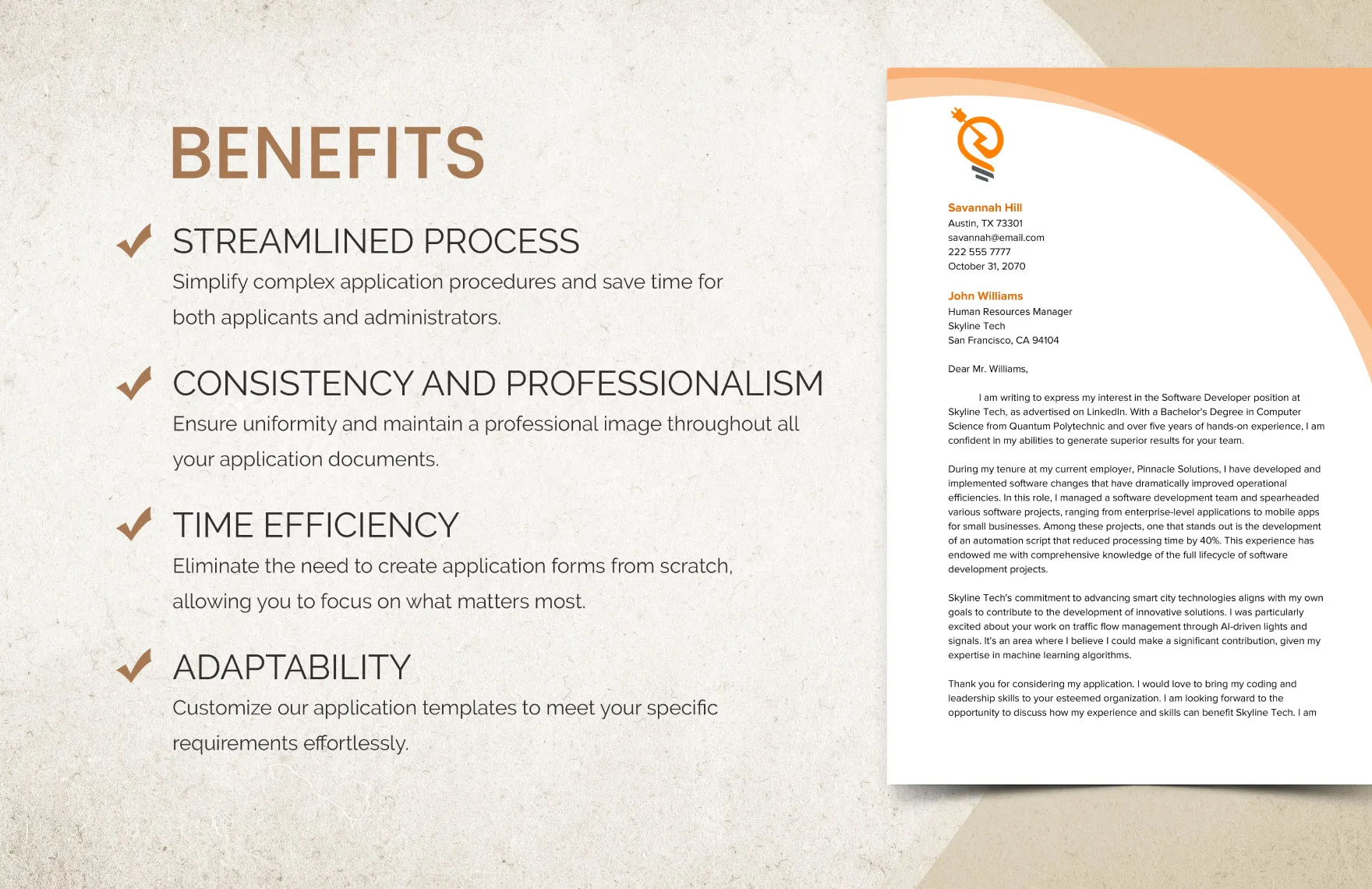
What is a Job Application Cover Letter
A job application cover letter is a crucial document that accompanies your resume when applying for a job. It serves as a personalized introduction, allowing you to highlight your skills, experiences, and qualifications in a way that a resume alone cannot. Think of it as your opportunity to make a strong first impression on a potential employer. The cover letter provides context to your resume, explaining why you are a good fit for the specific role and why the company should consider you for an interview. It’s a chance to showcase your personality, demonstrate your writing skills, and express your enthusiasm for the opportunity.
Purpose of a Cover Letter
The primary purpose of a cover letter is to persuade the hiring manager that you are a suitable candidate for the job. It bridges the gap between your resume and the job description, offering a narrative that connects your skills and experiences to the employer’s needs. A well-crafted cover letter explains why you want the job, what you can offer the company, and why you stand out from other applicants. It demonstrates your communication skills, your understanding of the role, and your genuine interest in the organization. Furthermore, it gives you the chance to address any potential gaps in your resume or explain any unique circumstances that might make you an ideal fit.
Key Elements of a Cover Letter

A successful cover letter consists of several key elements that work together to create a compelling message. These elements include a clear header, a strong introduction, well-developed body paragraphs, and a professional closing. Each part plays a vital role in conveying your qualifications and enthusiasm. Failing to include each element can weaken the overall impact of your application. Pay close attention to detail and tailor each element to match both the specific job you are applying for and the culture of the company you are applying to.
Header
The header of your cover letter should include your contact information, the date, and the recipient’s information. Ensure your contact information is accurate and professional, including your full name, phone number, email address, and optionally, your LinkedIn profile URL. Below this, include the date of your letter. Then, address the letter to the hiring manager or the appropriate contact person at the company. If you can’t find a specific name, use a professional salutation like ‘Dear Hiring Manager’ or ‘Dear [Department Name] Team’.
Introduction
The introduction is your opportunity to grab the reader’s attention. Start by stating the position you’re applying for and how you learned about the opportunity. Briefly mention your most relevant skills or experiences to show why you’re a good fit. The goal is to hook the reader and encourage them to read the rest of your letter. Avoid generic phrases and instead, convey enthusiasm and your understanding of the company and the role. You might reference a particular project or achievement that aligns with the company’s goals, showing you have researched the organization.
Body Paragraphs

The body paragraphs should expand on your qualifications, skills, and experiences. Use specific examples to demonstrate how you meet the requirements of the job description. Quantify your achievements whenever possible, using numbers and data to illustrate your impact. Align your skills and experiences with the keywords and requirements mentioned in the job posting. The body paragraphs should be clear, concise, and highlight what makes you stand out from other candidates. Show that you understand the company’s needs and explain how you can address them.
Closing
The closing of your cover letter should reiterate your interest in the position and thank the reader for their time and consideration. State your availability for an interview and include a call to action, such as encouraging them to contact you. Reiterate your enthusiasm and reiterate your interest in the role. Use a professional closing like ‘Sincerely,’ ‘Best regards,’ or ‘Thank you,’ followed by your full name. Ensure your contact information is readily available, making it easy for the hiring manager to reach you.
How to Write a Compelling Cover Letter
Writing a compelling cover letter requires careful planning and execution. It’s not just about listing your skills and experiences but about crafting a narrative that showcases your unique value proposition. By following these guidelines, you can create a cover letter that captivates the hiring manager and increases your chances of landing an interview.
Research the Company and Position

Before you start writing, research the company and the specific job you are applying for. Visit the company’s website, read their ‘About Us’ section, and explore their social media profiles. Understand the company’s mission, values, and culture. Also, carefully review the job description to identify the key skills, experiences, and qualifications the employer is seeking. This research will help you tailor your cover letter and demonstrate your genuine interest in the role. This way, you can tailor your letter to show your understanding and how your skills fit the company’s needs.
Tailor Your Letter to the Specific Job
Avoid using a generic cover letter for multiple applications. Each cover letter should be tailored to the specific job you are applying for. Customize your letter by highlighting the skills and experiences most relevant to the position. Use keywords from the job description and provide specific examples that demonstrate how you meet the requirements. By tailoring your letter, you show the hiring manager that you have taken the time to understand the role and are genuinely interested in the opportunity.
Highlight Relevant Skills and Experiences
In your cover letter, highlight the skills and experiences that are most relevant to the job. Provide specific examples of your achievements and how you have used your skills to solve problems or achieve results. Quantify your accomplishments whenever possible. For example, instead of saying ‘Managed projects,’ say ‘Managed a team of 5, delivering projects on time and under budget 95% of the time.’ This approach demonstrates your value to the employer and makes your application more compelling. Use action verbs to make your experience more engaging.
Use Action Verbs

Using action verbs in your cover letter makes your writing more dynamic and engaging. Start each sentence with a strong action verb to highlight your accomplishments and skills. Examples include ‘managed,’ ‘developed,’ ‘implemented,’ ’led,’ ‘achieved,’ ‘created,’ ‘analyzed,’ and ‘improved.’ Action verbs show the hiring manager that you are proactive and results-oriented. They also make it easier for the reader to understand what you did and the impact you had in previous roles.
Proofread and Edit Carefully
Proofreading and editing are essential steps in writing a cover letter. Typos, grammatical errors, and formatting mistakes can create a negative impression and undermine your credibility. Before submitting your cover letter, carefully review it for any errors. Consider having a friend or family member proofread it as well. Ensure your letter is clear, concise, and free of any mistakes that could distract the reader from your qualifications. Even the smallest error can be a major turnoff for the hiring manager.
Formatting Your Cover Letter
The format of your cover letter is important, as it affects readability and professionalism. A well-formatted cover letter is easy to read and visually appealing. Pay attention to font, size, spacing, and layout to create a cover letter that makes a positive impression on the hiring manager. A professional format will show that you pay attention to detail and value presentation.
Choosing the Right Font and Size

Choose a professional and easy-to-read font, such as Times New Roman, Arial, or Calibri. Use a font size between 10 and 12 points to ensure your letter is legible without appearing too small or too large. Avoid using overly decorative or unusual fonts, as they can be distracting. Consistent font and size throughout the document will make your letter look polished and professional, making it easier for the hiring manager to read and digest the information.
Formatting the Letter
Use a standard business letter format, with single-spaced paragraphs and a double space between each paragraph. Align your text to the left and use a clear, easy-to-follow layout. Use appropriate margins and include sufficient white space to make your letter visually appealing. Divide your letter into logical sections with clear headings. Ensure your letter is well-organized and easy to navigate. The layout should guide the reader and highlight the key points.
Cover Letter Examples
Reviewing cover letter examples can provide inspiration and guidance as you write your own. By studying different examples, you can see how others have structured their letters and highlighted their qualifications. This will help you get a better understanding of how to write a cover letter. Adapting the examples to your own needs and situation will also help you present your specific skills.
Example 1

Dear [Hiring Manager Name],
I am writing to express my keen interest in the [Job Title] position at [Company Name], as advertised on [Platform]. With my [Number] years of experience in [Industry] and proven track record in [Specific Skill], I am confident I can significantly contribute to your team.
In my previous role at [Previous Company], I successfully [Achievement 1] and [Achievement 2]. My expertise in [Skill 1] and [Skill 2] aligns perfectly with the requirements outlined in the job description. I am particularly drawn to [Company Name]’s commitment to [Company Value], which resonates with my own professional values.
I am eager to learn more about this opportunity and discuss how my skills and experiences can benefit your organization. Thank you for your time and consideration. I look forward to hearing from you soon.
Sincerely, [Your Name]
Example 2
Dear Hiring Team,
I am excited to apply for the [Job Title] position at [Company Name]. I was impressed by [Company’s Achievement] and believe my background in [Field] would make me a valuable asset to your team.
During my tenure at [Previous Company], I spearheaded [Project], resulting in [Quantifiable Result]. I possess strong skills in [Skill 1], [Skill 2], and [Skill 3], all of which I believe would be beneficial to [Company Name]. I am a proactive and results-oriented professional, ready to embrace new challenges and contribute to your company’s success.
I have attached my resume for your review and welcome the opportunity to discuss my application further. Thank you for your time and consideration.
Best regards, [Your Name]
Tips for Success
To maximize your chances of success, follow these additional tips when writing your cover letter. By paying attention to these details, you can create a cover letter that stands out and effectively showcases your qualifications.
Use a Professional Tone
Maintain a professional and formal tone throughout your cover letter. Avoid using slang, jargon, or informal language. Address the hiring manager appropriately and use proper grammar and punctuation. Present yourself as a polished and competent professional. Use professional vocabulary and choose words that convey confidence and expertise. The tone should reflect your respect for the company and the opportunity.
Keep It Concise
Keep your cover letter concise and to the point. Aim for one page, as hiring managers often have limited time to read applications. Focus on the most relevant information and avoid unnecessary details. Be clear and direct in your writing, emphasizing your key skills and experiences. Edit ruthlessly to remove any unnecessary words or phrases, ensuring that every sentence adds value and supports your message. Keep your writing focused and ensure every word counts.
Show Enthusiasm
Demonstrate your enthusiasm for the position and the company. Express your genuine interest in the opportunity and highlight why you are excited about the prospect of working there. Show that you have researched the company and are familiar with its mission, values, and culture. Enthusiasm can make your application more engaging and increase your chances of being noticed. Express your passion for the industry and the specific role, showing that you’re truly motivated and ready to contribute.
Proofread
Always proofread your cover letter carefully before submitting it. Check for typos, grammatical errors, and formatting inconsistencies. Ensure your contact information is accurate. Have a friend or family member review your letter as well. Proofreading is a critical step in ensuring your cover letter is polished and professional. By taking the time to proofread, you can make sure your application will make a positive impact.
Common Mistakes to Avoid
Be aware of common mistakes to avoid when writing your cover letter. These mistakes can undermine your credibility and reduce your chances of getting an interview. By knowing what to avoid, you can create a cover letter that effectively showcases your qualifications.
Typos and Grammatical Errors
Typos and grammatical errors are a major turnoff for hiring managers. Always proofread your cover letter carefully before submitting it. These errors demonstrate a lack of attention to detail and can negatively impact your credibility. Use a spell-checker and grammar checker, and have someone else review your letter for mistakes. A well-written cover letter will prove you can communicate properly.
Generic Cover Letters
Avoid sending generic cover letters that are not tailored to the specific job or company. Hiring managers can easily spot generic letters, which do not show genuine interest in the role. Customize each cover letter to the specific job and company. Highlight the skills and experiences that are most relevant to the position. Show that you have taken the time to understand the company and its needs. This will improve your chance of the hiring manager seeing your application.
Overly Long Letters
Keep your cover letter concise. Aim for one page. An overly long letter is likely to lose the reader’s interest. Focus on the most important information and avoid unnecessary details. Be clear and direct in your writing, and edit ruthlessly to ensure that every sentence adds value. Keep your letter focused and concise, highlighting only the most relevant points.