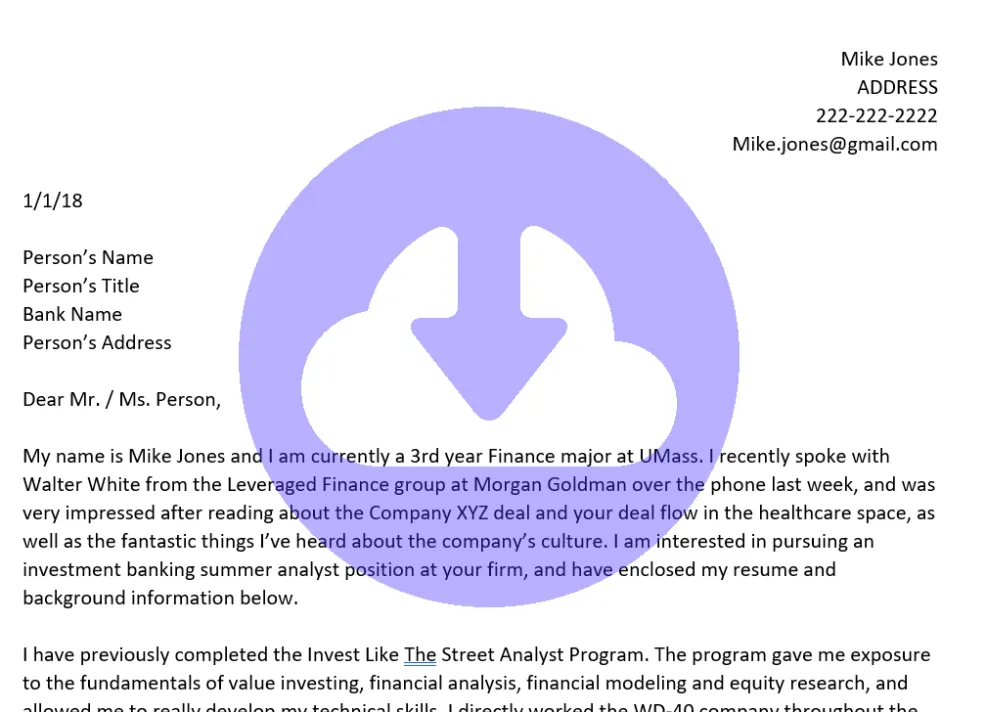
Breaking into investment banking is a competitive endeavor, and your cover letter is your first impression. It is a crucial document that can make or break your chances of landing an interview. A well-crafted cover letter should not only highlight your qualifications but also demonstrate your genuine interest in the role and the firm. Here are the top 5 tips for creating a compelling investment banking cover letter that will capture the attention of hiring managers and set you apart from the competition. Following these tips will significantly increase your chances of success in this highly competitive field.
Highlighting Your Skills
Your cover letter should serve as a concise summary of your most relevant skills and experiences. Avoid simply restating your resume. Instead, select 2-3 key skills that align with the job description and elaborate on them. For instance, if the role emphasizes financial modeling, showcase your proficiency by describing a project where you built a complex model and the results you achieved. If the role requires strong communication skills, provide an example of how you effectively presented financial information to a diverse audience. Remember, the goal is to demonstrate that you possess the abilities and knowledge that the hiring managers are looking for.
Quantify Your Achievements
One of the most impactful ways to distinguish yourself is by quantifying your achievements. Instead of saying you “improved efficiency,” state that you “reduced processing time by 15%.” Similarly, if you played a role in a successful deal, mention the deal size or the impact on the company’s financials. This approach allows the reader to quickly understand the value you bring to the table. Quantifiable results provide concrete evidence of your abilities and make your accomplishments more memorable.
Use Action Verbs

Employing action verbs to describe your past experiences will make your cover letter more dynamic and engaging. Begin each bullet point or sentence with a strong action verb. For instance, instead of writing “responsible for financial analysis,” use “Analyzed financial statements to identify key trends.” This technique adds an element of professionalism and energy to your writing, demonstrating your proactive approach and initiative. Consider using verbs such as ‘led,’ ‘managed,’ ‘developed,’ ‘implemented,’ ‘achieved,’ and ‘contributed’ to showcase your impact.
Demonstrate Industry Knowledge
An investment banking cover letter should clearly demonstrate your understanding of the financial industry. Show that you are informed about current market trends, specific companies, and the role you’re applying for. It’s not enough to just list your academic qualifications; you must prove you possess relevant industry insight. This level of industry awareness highlights your passion and preparedness for the role, showing you’ve gone beyond the basics. Mentioning specific recent deals or industry news can illustrate your up-to-date knowledge. Doing so proves that you are engaged with the sector and well-versed in its intricacies.
Research the Company
Before writing your cover letter, thoroughly research the company and the specific team you’re applying to. Understanding the firm’s recent activities, its values, and its unique culture allows you to tailor your letter, demonstrating a genuine interest in the company. Mentioning a specific deal the firm was involved in, a particular project, or even a company value that resonates with you can illustrate your commitment. Generic cover letters are easily spotted and discarded; a customized letter, showing that you have invested time in understanding the company, will greatly increase your chances.
Address the Right Person

Whenever possible, address your cover letter to a specific person, such as the hiring manager or the head of the team you’re applying to. Finding the right contact shows that you’ve done your homework and that you are serious about the opportunity. If you can’t find the name of the hiring manager, try to find the name of a senior-level individual within the department you are targeting. Addressing the letter to ‘Dear Hiring Manager’ is acceptable, but it’s always best to personalize it. Using the correct name can establish an immediate connection and show your meticulous approach.
Showcase Your Personality
While it’s crucial to maintain a professional tone, don’t be afraid to inject some of your personality into your cover letter. This is your opportunity to connect with the hiring manager on a more personal level. Briefly share your career aspirations or what excites you about the company or the industry. This approach will make your cover letter more memorable and show that you are a well-rounded individual. Avoid using overly casual language or clichés. The key is to be authentic, while still maintaining professionalism.
Proofread Meticulously
Errors, no matter how small, can make your cover letter less credible. Proofreading is one of the most important steps in the writing process, as even a single typo can signal a lack of attention to detail, a critical trait in investment banking. Read through your letter multiple times, and if possible, have someone else review it. Use grammar and spell-check tools, but don’t rely on them completely. Ensuring that your cover letter is free of errors demonstrates your commitment to accuracy and professionalism, giving you a considerable advantage.
Formatting and Structure

The formatting and structure of your cover letter should be clean, easy to read, and organized. This will make it easier for the hiring manager to quickly grasp your qualifications. Use a standard font like Times New Roman or Arial, with a font size between 10 and 12 points. The layout should include clear headings, concise paragraphs, and appropriate spacing. An organized cover letter demonstrates your ability to communicate information effectively, mirroring the structured approach needed for financial analyses.
Keep it Concise
Investment bankers are busy professionals, and they will not spend a significant amount of time reading your cover letter. Aim for a one-page letter. Make every word count. Focus on the most important details that are relevant to the job. Avoid lengthy descriptions or unnecessary information. Short, focused content is easier to read and leaves a lasting impression.
Use a Professional Tone
Maintain a professional tone throughout your cover letter. Use formal language, avoid slang or contractions, and refrain from being overly casual or familiar. The tone reflects your understanding of industry standards and professionalism. Always remember the importance of respectful and polite language in order to create a professional tone, and it will help in the way your cover letter is received.
Closing the Letter

The closing of your cover letter is just as crucial as the rest of the document. It’s your final opportunity to make a strong impression and prompt the reader to take action. It should reflect your enthusiasm for the position and your commitment to the company. Avoid generic phrases and instead, focus on what you can offer.
Express Enthusiasm
In your closing, make sure to clearly express your enthusiasm for the opportunity. Explain why you are interested in the role and the company. Show that you are not just looking for any job, but that you genuinely want to be a part of their team. This enthusiasm should be clear and professional, and make the hiring manager eager to learn more about you. The goal is to make a lasting impression.
Include a Clear Call to Action
End your cover letter with a clear call to action. This gives the hiring manager explicit instructions on what you want them to do next. Include a sentence encouraging them to contact you for an interview or to discuss your qualifications further. Providing your availability for an interview shows your eagerness and willingness to move forward with the hiring process. A direct call to action can significantly increase your chances of receiving an interview invitation.
In summary, crafting a winning investment banking cover letter requires more than just listing your qualifications; it demands strategic planning, careful execution, and a deep understanding of the industry. By following these 5 tips – highlighting your skills, quantifying your achievements, demonstrating industry knowledge, showcasing your personality, and proofreading meticulously – you can create a cover letter that stands out and gets you noticed by the right people. Remember that the cover letter is an essential element in your application package, and putting in the time to perfect it is a worthwhile investment in your career.