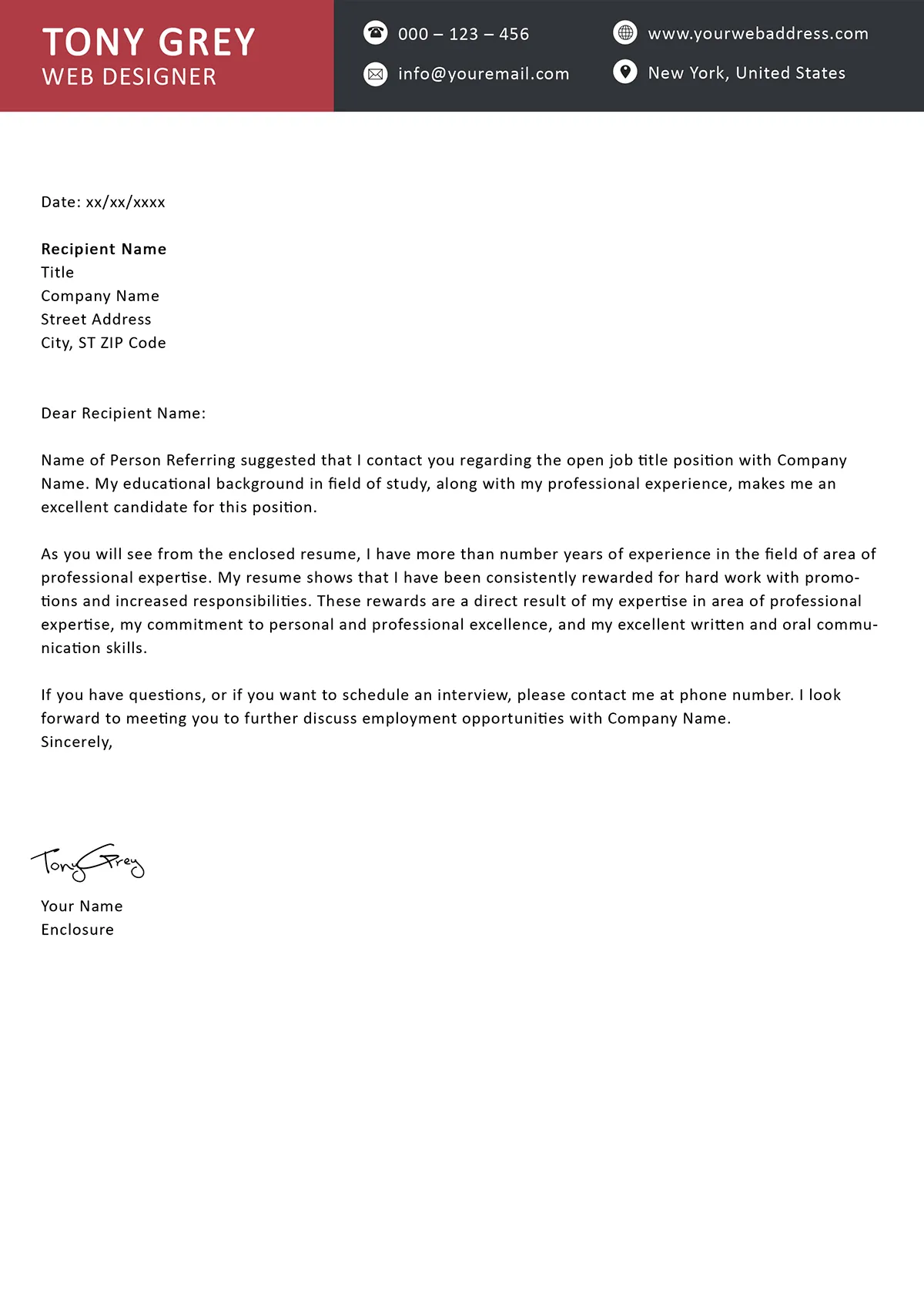
Why You Need a Cover Letter
A cover letter is your initial chance to make a strong impression on a potential employer. It serves as a personal introduction that goes beyond the information listed in your resume. While your resume provides a detailed overview of your qualifications and experience, the cover letter is where you can demonstrate your personality, communication skills, and genuine interest in the position and the company. It allows you to tailor your application to the specific job and highlight the aspects of your background that make you the ideal candidate. In today’s competitive job market, a well-crafted cover letter can significantly increase your chances of getting an interview. It is an essential tool that helps you stand out from other applicants and showcases your unique value proposition.
Highlighting Your Value
Your cover letter should clearly articulate your value proposition to the employer. This means concisely summarizing what you bring to the table, focusing on your skills, experience, and achievements. Instead of simply listing your responsibilities, highlight the tangible results you have achieved in previous roles. Quantify your accomplishments whenever possible, such as by stating the percentage by which you increased sales or the number of projects you successfully managed. Furthermore, connect your skills and experiences with the specific requirements of the job description. Demonstrate that you have the qualities they are seeking and that you are the right fit for their organization. This can include skills such as problem-solving, leadership, communication, or technical expertise.
Understanding the Purpose

Before starting to write, it’s essential to understand the primary purpose of a cover letter. The main goal is to convince the hiring manager to read your resume and invite you for an interview. It’s a marketing document that sells you as the best candidate for the job. To achieve this, your cover letter should be tailored to each specific position and company. Avoid using generic templates or sending the same letter to multiple employers. Research the company, understand their values, and identify how your skills align with their needs. Furthermore, showcase your understanding of the role and why you are enthusiastic about the opportunity. By demonstrating that you have a genuine interest, you increase the likelihood that the hiring manager will see you as a serious contender.
Cover Letter Sections
A well-structured cover letter is easy to read and effectively conveys your key messages. It should follow a standard format that includes several key sections. Properly organizing these sections will help you create a clear and concise narrative that captures the reader’s attention. Each part serves a specific purpose in presenting your qualifications and expressing your interest in the job opportunity. From the header, which includes your contact information, to the closing, which includes your professional sign-off, a well-structured cover letter is essential for success.
Header
Start with a header that includes your name, address, phone number, and email address. Ensure this information is accurate and professional. The header should be placed at the top of the document and should align with the formatting of your resume. It allows the hiring manager to quickly identify your contact information. Make it easy for them to reach out to you if they are interested in scheduling an interview.
Recipient’s Information

Directly below your header, include the recipient’s information. This should include the hiring manager’s name (if you know it), title, company name, and address. Addressing the cover letter to a specific person demonstrates that you have taken the time to research the company. If you are unable to find the name of the hiring manager, you can use a general greeting such as “Dear Hiring Manager”. Accurate recipient information shows that you are diligent and pay attention to detail.
Greeting
Start your cover letter with a professional greeting. Use “Dear Mr./Ms./Mx. [Last Name]” if you know the hiring manager’s name. If you don’t know the name, use a general greeting like “Dear Hiring Manager”. Avoid generic greetings like “To Whom It May Concern”. This ensures the cover letter begins on a positive and respectful note, setting the tone for the rest of the letter.
Body Paragraph 1: Grab Attention
In the first paragraph, immediately grab the reader’s attention. State the position you are applying for and briefly mention where you found the job posting. You can also include a strong, concise statement that highlights your most relevant skill or accomplishment. This initial paragraph should quickly communicate your enthusiasm and establish why you are a strong candidate. Think of this as the hook to draw the reader in and make them want to continue reading.
Body Paragraph 2: Showcase Skills

The second paragraph should showcase your skills and experience. Align your skills with the requirements listed in the job description. Provide specific examples of how you have demonstrated these skills in previous roles. Use the STAR method (Situation, Task, Action, Result) to describe your accomplishments, giving the reader a clear understanding of what you achieved. For example, instead of saying “I managed projects,” say “In my previous role, I managed three projects simultaneously, delivering them on time and under budget, which resulted in a 15% increase in team efficiency.” This illustrates your capabilities effectively.
Body Paragraph 3: Express Interest
Use the third paragraph to express your interest in the company and the role. Explain why you are excited about the opportunity and what you know about the company’s mission and values. Demonstrate that you have researched the company and understand their goals. Explain why you believe you would be a good fit for the company culture and why you want to work there. Be sincere and enthusiastic to make a lasting impression.
Closing
In your closing paragraph, restate your interest in the position and thank the hiring manager for their time and consideration. Include a call to action, such as inviting them to contact you for an interview or to discuss your qualifications further. Reiterate your enthusiasm and confidence in your ability to contribute to the company. This concluding paragraph should reinforce your key message and leave the reader with a positive final impression.
Sign-off

End your cover letter with a professional sign-off, such as “Sincerely,” “Best regards,” or “Thank you.” Ensure that this aligns with the tone of your letter and the culture of the company you are applying to. After the sign-off, leave space for your signature if you are submitting a physical copy. Type your full name beneath the sign-off to maintain clarity.
Formatting Essentials
The formatting of your cover letter is just as important as the content. Properly formatted cover letters are easy to read and make a positive impression on the hiring manager. Formatting can greatly impact how your application is perceived, so understanding the key elements of formatting is crucial. This involves choosing an appropriate font, setting the right margins, and using consistent spacing. Paying attention to these formatting elements makes your cover letter look polished and professional.
Font Selection
Choose a professional and readable font, such as Times New Roman, Arial, or Calibri. Avoid using unusual or overly decorative fonts that can be difficult to read. Maintain consistency in font throughout your cover letter, as it helps the document look organized and professional. A clean and clear font choice shows that you pay attention to detail and have a professional approach.
Font Size

Use a font size between 10 and 12 points. This size is easy to read and allows you to present your content without making the text too large or too small. Ensure that the font size is consistent throughout the document. Make the content accessible and easy for the reader to comprehend quickly.
Margins and Spacing
Set your margins to one inch on all sides of the document. This ensures that your text is neatly contained on the page and prevents the document from looking cramped. Use single spacing within paragraphs and double spacing between paragraphs. This allows for readability and breaks up the text, making it easier for the hiring manager to scan and digest the information.
Tone and Language
The tone and language you use should be professional, enthusiastic, and tailored to the job and company. It is vital to balance professionalism with your personality, but it should be clear that you are ready and able to take on the job. Be positive, confident, and avoid overly casual language. The language you use should reflect the company’s values and culture. Proper grammar and punctuation are essential to demonstrate that you are detail-oriented and capable of clear communication.
Proofreading and Editing
Before submitting your cover letter, proofread it carefully. Errors can create a negative impression and undermine your credibility. Check for spelling mistakes, grammatical errors, and punctuation errors. It is recommended to read the letter aloud, as this can help you identify awkward phrasing or sentences that don’t flow well. It’s also helpful to have a friend or colleague review your letter to get a second opinion. Multiple sets of eyes can catch mistakes that you might have missed.
Common Mistakes to Avoid
Avoiding common mistakes will improve the effectiveness of your cover letter and increase your chances of getting an interview. Being aware of mistakes to avoid makes your cover letter stand out. It shows that you are dedicated to presenting yourself in the best light possible.
Generic Cover Letters
Avoid using a generic cover letter. Customize your cover letter for each job application. Tailor your letter to the specific requirements of the role and the company. This shows that you have researched the company and are genuinely interested in the position. Generic cover letters come across as impersonal and show that you’re not taking the time to consider the individual needs of the hiring manager.
Typos and Grammatical Errors
Carelessly written cover letters with typos and grammatical errors create a negative impression. Proofread the document carefully before submitting it. Use spell-check and grammar-check tools, but also read through the letter yourself to catch any errors that the software may miss. Always have someone else review your letter to catch any mistakes.
Ignoring the Job Description
Failing to address the job description is a major mistake. Carefully read the job description and highlight the key skills and qualifications that the employer is seeking. Tailor your cover letter to demonstrate that you possess these qualifications. Provide specific examples of how your experiences align with the requirements of the job. This demonstrates that you are an excellent fit for the role.
Examples of Effective Cover Letters
Reviewing examples of effective cover letters can provide you with a useful framework for writing your own. Look for templates and samples that match your industry and experience level. Pay attention to the structure, language, and tone of successful cover letters. Analyze how these examples highlight qualifications, express interest, and call to action. You can use these examples to tailor your own cover letter. Use them as a guide to ensure that your letter is well-written, compelling, and tailored to the specific job.
Writing a perfect cover letter requires time and effort. By understanding the purpose of a cover letter, following a structured format, and avoiding common mistakes, you can create a compelling document that gets you noticed. Remember to always tailor your cover letter to each job you apply for, and demonstrate your value and enthusiasm to land your dream job.