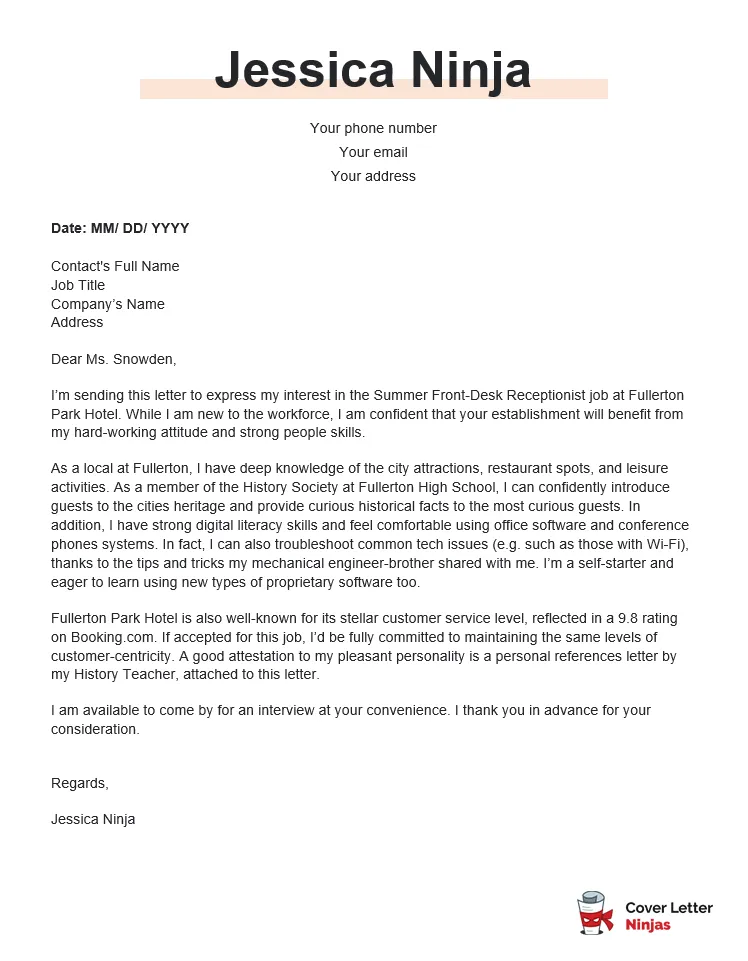
Why Cover Letters Matter for High Schoolers
In the competitive landscape of job applications, internships, and even college admissions, a well-crafted cover letter can be your most potent tool. It provides a unique opportunity to go beyond the basic facts presented in your resume and showcase your personality, passion, and potential. For high school students, a cover letter is particularly important because it allows you to highlight relevant skills, experiences, and your enthusiasm for the opportunity. It’s your chance to make a memorable first impression and set yourself apart from other applicants. This guide provides all of the best practices on how to write a cover letter, ensuring you stand out from the crowd. A cover letter is not just an optional extra; it’s a strategic tool that can significantly increase your chances of success, especially when you are starting out in the job market.
Understanding the Purpose
The primary purpose of a cover letter is to introduce yourself to a potential employer or institution and explain why you’re a good fit for the role or program. It’s not just a rehash of your resume; instead, it’s an opportunity to elaborate on your experiences, demonstrate your communication skills, and express your genuine interest in the opportunity. High school students often have limited work experience, so a cover letter allows you to emphasize transferable skills, such as teamwork, communication, and problem-solving, gained from academic, extracurricular, or volunteer activities. The cover letter should always be tailored to the specific opportunity, demonstrating that you’ve done your research and understand the requirements. The goal is to present a clear and compelling case for why you should be considered.
Highlighting Skills and Experiences

Since high schoolers often lack extensive work experience, focus on the skills and experiences you do possess. Think about your academic achievements, extracurricular activities, volunteer work, and any part-time jobs you might have. Identify the skills you’ve gained from these experiences and relate them to the requirements of the job or program. For example, if you’ve been a member of the debate team, highlight your communication, public speaking, and critical thinking skills. If you’ve volunteered at a local organization, discuss your teamwork, time management, and compassion. By making these connections, you demonstrate how your experiences have prepared you for success. It is a skill of translating your experience to the employer’s needs.
Cover Letter Structure
A well-structured cover letter is easy to read and allows the reader to quickly understand your qualifications and enthusiasm. A clear and logical structure is crucial. The standard cover letter format typically includes a header with your contact information, a formal greeting, an introduction, body paragraphs, a closing, and a professional sign-off. This structure ensures that you provide all necessary information in a concise and organized manner, making a positive impression on the reader. This section will cover the essential elements of cover letter structure to ensure your application stands out from the competition. Following a clear structure ensures you present your information effectively.
Header and Contact Information
Begin your cover letter with a header that includes your name, address, phone number, and email address. This information should be clearly formatted and easy to find. It’s also good practice to include the date and the recipient’s information (name, title, company, and address) below your contact details. Ensure your email address is professional; avoid using nicknames or informal language. By including this information at the top, you make it easy for the reader to contact you and show attention to detail. Presenting a professional header builds trust.
Greeting and Salutation

Address your cover letter with a professional greeting. If you know the name of the hiring manager, use it. For example, “Dear Mr./Ms. [Last Name].” If you’re unsure of the hiring manager’s name, use a general greeting like “Dear Hiring Manager” or “To Whom It May Concern.” Avoid overly casual greetings. Conclude your letter with a formal closing such as “Sincerely,” “Best regards,” or “Thank you.” Following these simple steps will help ensure you convey a professional tone. Proper salutations show respect.
Body Paragraphs
The body of your cover letter is where you showcase your qualifications and express your interest. It typically consists of three main paragraphs. The first paragraph grabs the reader’s attention, the second paragraph highlights your skills and experiences, and the third paragraph expresses your enthusiasm and includes a call to action. Each paragraph serves a specific purpose to present a clear message.
First Paragraph Grab Attention
Start your cover letter with a compelling opening that grabs the reader’s attention. State the position or opportunity you’re applying for and briefly explain why you’re interested. You can mention how you found out about the opportunity, or make a brief statement about your enthusiasm. Avoid generic opening sentences. Be specific and show that you understand what the role entails. For example, you can open with a statement highlighting your specific experience or a brief description of why you’re interested in the company. The goal is to make the reader want to learn more. A strong opening sets the tone.
For example, if applying for a tutoring position: “I am writing to express my enthusiastic interest in the Tutor position advertised on [Platform]. As a highly motivated student with a proven track record of academic excellence in [Subject], I am eager to help other students succeed.”
Second Paragraph Showcase Skills

The second paragraph is where you highlight your relevant skills and experiences. Refer to the job description or requirements, and explain how your skills and experiences align with them. Provide specific examples to demonstrate your skills. For example, instead of saying “I am a good communicator,” describe a situation where you effectively communicated. Quantify your achievements whenever possible, using numbers and data to showcase your impact. Showcasing your skills effectively can set you apart from other candidates, as you demonstrate your ability to perform the required tasks. Highlight what makes you uniquely qualified.
To illustrate: “In my role as a [Role in school club/activity], I developed strong communication skills through [Specific example, e.g., leading meetings, presenting to audiences]. I am adept at [Specific skill, e.g., explaining complex topics in simple terms] and have a proven ability to [Specific achievement, e.g., improve student understanding, increase participation rates].”
Third Paragraph Express Enthusiasm
In the third paragraph, express your enthusiasm for the opportunity and reiterate your interest in the position or program. Explain why you’re excited about the company or organization and how you see yourself contributing to their success. You can also mention what you hope to gain from the experience. This paragraph should summarize your key qualifications and reinforce your interest in the role. Make sure your enthusiasm is genuine, and show that you’ve researched the company and understand its mission and values. Demonstrate why you are a good fit.
For instance: “I am particularly drawn to [Company/Organization]’s commitment to [Specific value/mission]. I am confident that my skills and enthusiasm for [Relevant area] align perfectly with your goals, and I am eager to contribute to [Specific project/initiative]. I am excited about the opportunity to learn from experienced professionals and further develop my skills in [Specific area].”
Closing and Call to Action
End your cover letter with a professional closing and a call to action. Thank the reader for their time and consideration. Reiterate your interest in the position and express your eagerness to discuss your qualifications further. Include a call to action, such as “I look forward to hearing from you soon” or “I am available for an interview at your earliest convenience.” Provide your contact information again and sign off with a professional closing, such as “Sincerely” or “Best regards.” By following these steps, you can effectively end your cover letter on a positive note. Close confidently and professionally.
Proofreading and Editing

Before submitting your cover letter, carefully proofread and edit it for any errors in grammar, spelling, and punctuation. Typos and grammatical errors can create a negative impression and undermine your credibility. Ensure your writing is clear, concise, and easy to understand. Read the letter aloud to catch any awkward phrasing or sentences. Ask a teacher, parent, or friend to review your letter for feedback. Proofreading is a critical step, so take your time to make sure your letter is polished. Check for errors to improve your chances.
Content to Include in Your Cover Letter
The content of your cover letter should highlight your relevant skills, experiences, and enthusiasm for the opportunity. Tailor your letter to each specific application, focusing on the requirements and expectations of the role or program. Here are some key areas to focus on. Use the right content to showcase your experience.
Education and Academic Achievements
Mention your current school, grade level, and any relevant academic achievements, such as honors, awards, or relevant coursework. Highlight any subjects you excel in that relate to the opportunity. For example, if applying for a science-related role, mention your strong performance in science classes. If you have a high GPA, consider including it, especially if it’s above average. Mentioning your academic achievements helps demonstrate your intelligence and dedication. Focus on your academic strengths.
Extracurricular Activities

Include information about any extracurricular activities you participate in. These activities can demonstrate your interests, skills, and ability to work in a team. Describe your role in any clubs, sports, or other organizations. For example, if you’re the captain of the debate team, mention your leadership and communication skills. If you volunteer at a local charity, highlight your compassion and teamwork skills. Extracurricular activities show that you’re well-rounded and possess valuable skills that can be applied to a professional setting. Extracurriculars demonstrate well-roundedness.
Work Experience Volunteer Work
If you have any work experience, whether it’s a part-time job, internship, or volunteer work, be sure to include it. Describe your responsibilities and achievements in each role. Even if the experience isn’t directly related to the opportunity, it can still demonstrate your work ethic, responsibility, and other valuable skills. Quantify your achievements whenever possible. For example, “Increased sales by 15%” or “Managed a team of five volunteers.” Focus on the skills and experiences that align with the opportunity. Relevant experience is a huge asset.
Skills and Qualities
Highlight your key skills and qualities that are relevant to the opportunity. Include both hard skills (technical skills) and soft skills (interpersonal skills). Provide specific examples to illustrate your skills. Hard skills can include computer proficiency, specific software knowledge, or technical abilities. Soft skills include communication, teamwork, problem-solving, and leadership. Show how you’ve used these skills in previous experiences. By demonstrating the appropriate skills, you can impress the hiring manager with your ability to perform well. Be specific about your capabilities.
Common Mistakes to Avoid

Avoiding common mistakes can significantly improve the effectiveness of your cover letter. Being aware of these errors can help you create a more professional and compelling application. Review your cover letter carefully to make sure you have avoided these common pitfalls. Reducing mistakes leads to success.
Typos and Grammatical Errors
Typos and grammatical errors are a major turn-off for employers. They show a lack of attention to detail and can make you appear unprofessional. Always proofread your cover letter carefully. Use a grammar checker, and consider having someone else review it. Errors can damage your credibility, so it is very important to make sure your writing is clean and correct. Correct errors to keep your credibility.
Generic and Uninspired Content
Avoid using generic or cliché phrases that could apply to anyone. Tailor your cover letter to each specific opportunity, and show that you’ve researched the company or organization. Demonstrate your genuine interest in the role by expressing your enthusiasm. Personalize your letter by mentioning specific aspects of the company or opportunity that appeal to you. Personalization shows enthusiasm.
Ignoring Instructions

Always follow the instructions provided by the employer or institution. If they specify a certain format or require specific information, make sure to include it. Failure to follow instructions can signal a lack of attention to detail. Carefully review the application guidelines and ensure that your cover letter meets all requirements. Make sure all instructions are followed.
Cover Letter Template and Examples
Using a cover letter template and reviewing examples can help you structure your letter and get ideas for content. A template provides a basic framework, while examples can guide you on how to express your ideas. Reviewing samples makes the process easier.
Customizing the Template
Adapt the template to fit your specific experiences and the requirements of the opportunity. Use the template as a starting point, but don’t simply fill in the blanks. Customize it to reflect your personality, skills, and enthusiasm. Tailor the content to the specific job or program. This will help you create a unique and compelling cover letter that showcases your best qualities. Make the template your own.
Example Cover Letter 1
Here’s an example of a cover letter for a high school student applying for a volunteer position at a library. Note how it highlights skills and enthusiasm. [Insert an example cover letter here]. The example should include an appropriate header, greeting, three body paragraphs and a professional closing.
Example Cover Letter 2
Here’s an example of a cover letter for a high school student applying for a part-time job. [Insert an example cover letter here]. The example should include an appropriate header, greeting, three body paragraphs and a professional closing.
Finalizing and Submitting
Once you’ve written and revised your cover letter, it’s time to finalize and submit it. Before submitting, re-read your cover letter one last time to ensure that it’s error-free and well-formatted. Then, save the letter in the required format (usually PDF or Word document) and follow the submission instructions provided by the employer or institution. Make sure your cover letter is attached or uploaded correctly and that all necessary documents are included. By following these final steps, you can submit your cover letter with confidence. Carefully review and submit your final draft.