Crafting a Compelling Cover Letter
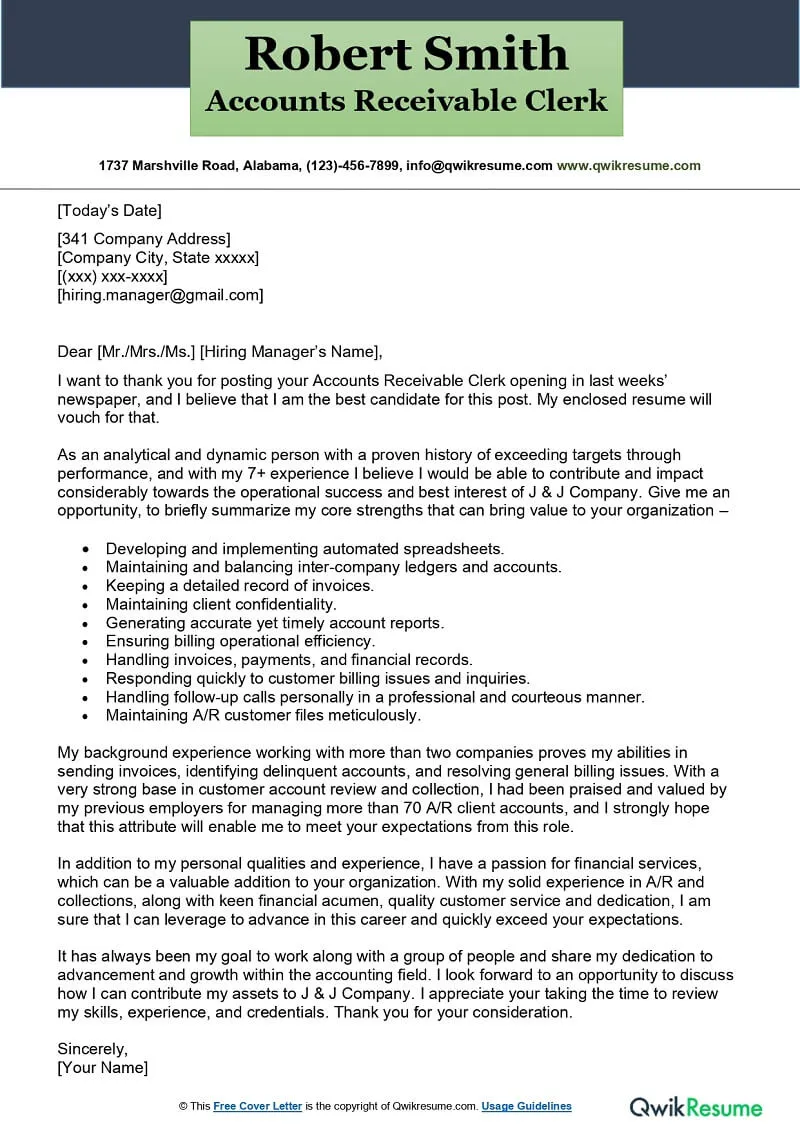
A well-crafted cover letter is your first opportunity to make a positive impression on a potential employer. It’s your chance to introduce yourself, highlight your qualifications, and express your enthusiasm for the accounts payable position. Many job seekers underestimate the importance of a cover letter, but it can significantly increase your chances of landing an interview. A compelling cover letter complements your resume by providing context, personality, and a deeper understanding of your suitability for the role. It allows you to showcase your communication skills and demonstrate your understanding of the company and the specific job requirements. Taking the time to write a stellar cover letter sets you apart from candidates who submit generic applications, signaling your genuine interest and attention to detail. Start with a clear understanding of what makes a cover letter stand out from the competition, focusing on tailoring it to each specific job.
Understanding the Purpose of a Cover Letter
The primary purpose of a cover letter is to introduce yourself to the hiring manager and provide context for your resume. It’s more than just a summary of your qualifications; it’s an opportunity to tell your story and explain why you’re the ideal candidate. The cover letter should clarify your career goals, highlight your relevant skills and experience, and express your genuine interest in the specific accounts payable position. By understanding the purpose, you can tailor your letter to effectively address the employer’s needs and expectations. It should also show your understanding of the company, its values, and its culture. The cover letter should also bridge any gaps or address any concerns the hiring manager might have based on your resume. Remember, the goal is to persuade the reader to move you to the next stage, which is the interview. A well-written cover letter should not only showcase your qualifications but also demonstrate your communication skills, attention to detail, and professionalism.
Highlighting Your Skills and Experience

When highlighting your skills and experience, focus on the most relevant aspects that align with the job description. Accounts payable roles require a specific set of skills, including proficiency in accounting software, attention to detail, and strong organizational abilities. Emphasize your experience with tasks like processing invoices, managing vendor relationships, and reconciling accounts. Quantify your achievements whenever possible. For instance, mention the number of invoices you process monthly or any cost-saving measures you implemented. Use action verbs to describe your accomplishments, such as ‘managed,’ ‘processed,’ ‘reconciled,’ and ‘implemented’. Tailor your descriptions to the specific requirements of the job, referencing keywords from the job posting. Illustrate how your skills have led to tangible results in previous roles. Use specific examples, such as reducing processing errors or improving payment cycle times. The key is to provide clear, concise, and compelling evidence of your capabilities, demonstrating that you not only possess the necessary skills but also know how to apply them effectively.
Skills to Showcase
For accounts payable positions, certain skills are crucial. These include a strong understanding of accounting principles, proficiency in accounting software (such as QuickBooks, SAP, or Oracle), and excellent data entry skills. Attention to detail is paramount, as accuracy in processing invoices and managing financial records is essential. You should also highlight your communication skills, particularly your ability to interact with vendors and internal stakeholders. Other valuable skills include organizational abilities, time management, and problem-solving skills. Familiarity with relevant regulations and compliance requirements is also beneficial. In your cover letter, explicitly mention these skills and provide examples of how you have utilized them in past roles. If you have experience with specific software or systems, be sure to include those details. If you’ve handled vendor inquiries or resolved payment discrepancies, explain how you approached these tasks, demonstrating your ability to handle difficult situations professionally and efficiently. The more specific you can be about your skills and how you have used them, the more convincing your cover letter will be.
Experience to Emphasize
When describing your experience, focus on the responsibilities and achievements that are most relevant to the accounts payable role. Highlight experience processing invoices, managing vendor payments, and reconciling accounts. If you’ve worked with a high volume of transactions or handled complex financial data, mention this to demonstrate your ability to handle pressure and details. Quantify your achievements by providing specific metrics. For example, did you reduce payment processing time by a certain percentage? Did you improve vendor relations or resolve payment disputes efficiently? Use action verbs to describe your tasks and accomplishments, such as ‘managed,’ ‘processed,’ ‘reconciled,’ and ‘implemented’. The purpose is to paint a clear picture of your experience and demonstrate that you possess the practical knowledge to excel in the role. Emphasize your ability to work with various accounting software, handle various types of invoices, and adapt to different payment methods. Illustrate your ability to understand complex financial tasks and apply your accounting knowledge to solve practical challenges. The goal is to present a compelling narrative of your expertise, showing your history of successful contributions in similar roles.
Tailoring Your Cover Letter to the Job

One of the most important steps in writing a stellar cover letter is tailoring it to each specific job application. Generic cover letters rarely impress employers. The purpose is to demonstrate your understanding of the company’s needs and to explain why your skills and experience align with those needs. Start by carefully reviewing the job description, noting the key requirements, skills, and qualifications that the employer is seeking. Then, adjust your cover letter to highlight those specific elements, using keywords from the job posting. Show that you understand the company’s mission, values, and culture. Mention any relevant experience or projects that demonstrate your ability to perform the required tasks. Avoid sending a standard cover letter to multiple companies. Instead, personalize it by mentioning the company’s name, the specific job title, and the name of the hiring manager if available. The more effort you put into customizing your cover letter, the more likely you are to catch the employer’s attention and get an interview.
Researching the Company
Before writing your cover letter, take the time to research the company. Visit the company’s website, read its ‘About Us’ section, and review its social media profiles. Understand the company’s mission, values, and recent news. This research will not only help you tailor your cover letter but also show the hiring manager that you are genuinely interested in the opportunity. Look for any information about the company’s culture, goals, and challenges. If possible, identify any recent projects or initiatives that are relevant to the accounts payable role. Use your research to customize your cover letter, demonstrating that you understand the company’s business and how your skills and experience can contribute to its success. Mentioning specific aspects of the company will demonstrate your knowledge and enthusiasm. By showing that you have a deeper understanding of the company, you prove you’re not only looking for a job, but a career, making you a more attractive candidate.
Matching Your Skills to the Job Description
Once you have researched the company, carefully review the job description and identify the key skills and qualifications the employer is seeking. Then, match your skills and experience to these requirements in your cover letter. Highlight the skills and experiences that directly address the job’s needs, using the same keywords and phrases from the job description. If the job posting emphasizes proficiency in a particular accounting software, make sure to mention your experience with it. Provide specific examples of how you have used these skills in past roles. Avoid simply listing your skills; instead, explain how you have applied them to achieve results. For instance, if the job requires excellent problem-solving skills, describe a time when you successfully resolved a complex invoice issue or handled a vendor dispute. The more you tailor your cover letter to match the job description, the more likely you are to demonstrate that you are a strong fit for the role, increasing the likelihood of getting an interview.
Structuring Your Cover Letter for Impact

A well-structured cover letter makes it easy for the hiring manager to quickly grasp your qualifications and understand why you are a good fit for the job. Your cover letter should follow a clear and logical format, including an opening paragraph, body paragraphs, and a closing paragraph. Each section should have a specific purpose, and the overall structure should guide the reader through your key qualifications and experience. Proper structure enhances readability and ensures that your message is clear and compelling. A well-structured cover letter demonstrates your communication skills, organization, and attention to detail. The goal is to make it easy for the hiring manager to see why you’re a strong candidate. Begin with a strong opening that grabs attention, follow it with supporting evidence in the body, and conclude with a clear call to action. By carefully organizing your thoughts and presenting them in a structured manner, you can maximize your chances of making a positive impression.
The Opening Paragraph
The opening paragraph is your first chance to grab the hiring manager’s attention. It should be concise, engaging, and immediately communicate the purpose of your letter. State the specific accounts payable position you are applying for and where you found the job posting. If possible, mention the name of the person you are addressing the letter to. In your opening, express your enthusiasm for the opportunity and briefly highlight your key qualifications. Consider starting with a strong statement that grabs the reader’s attention. For example, you could mention a recent accomplishment or a particular skill that aligns with the job requirements. The goal is to create a positive first impression and make the hiring manager want to read the rest of your letter. Be direct, professional, and show your passion for the role, setting the tone for the remainder of your cover letter. The opening paragraph should make the reader want to know more about you and what you bring to the table.
The Body Paragraphs
The body paragraphs are where you provide the details of your qualifications and experience. These paragraphs should elaborate on the key skills and achievements you mentioned in your opening, providing specific examples to support your claims. Use each paragraph to focus on a specific skill or experience that aligns with the job requirements. For each skill, provide a concise description of how you have used it in the past, what actions you took, and the results you achieved. Use action verbs to describe your accomplishments and quantify your results whenever possible. For example, you could mention how you improved the efficiency of invoice processing or reduced errors. Make sure the content is easy to read. Present the information in a logical and organized way, using clear and concise language. The aim is to provide a clear narrative of your skills and expertise, demonstrating how you are the ideal candidate for the accounts payable position. Focus on what makes you stand out from other candidates.
The Closing Paragraph

The closing paragraph should reiterate your interest in the accounts payable position and express your enthusiasm for the opportunity. Summarize your key qualifications, and restate your interest in contributing to the company’s success. Make sure to include a call to action, such as requesting an interview. Provide your contact information, including your phone number and email address, and thank the hiring manager for their time and consideration. If appropriate, you may mention that you have attached your resume for their review. Keep the closing paragraph brief, professional, and enthusiastic. Express your confidence in your ability to contribute to the company and your eagerness to discuss your qualifications further. The closing should leave a lasting positive impression, and make it easy for the hiring manager to follow up with you. Ensure all information is up-to-date and accurate, reinforcing your professionalism and attention to detail, leaving the reader with a sense of your potential fit within the company.
Formatting and Presentation
The formatting and presentation of your cover letter are crucial for making a positive first impression. A well-formatted letter is easy to read and demonstrates your attention to detail. Choose a professional font, such as Times New Roman, Arial, or Calibri, and use a font size between 10 and 12 points. Use a standard one-inch margin on all sides. Use single spacing within paragraphs and double spacing between paragraphs to improve readability. Ensure that your letter is neatly aligned, and avoid excessive bolding, underlining, or italics. If you are submitting your cover letter electronically, save it as a PDF to ensure that the formatting remains consistent across different devices and operating systems. Avoid using flashy designs or templates, as this can distract from the content of your letter. The aim is to showcase your content in a clear and easy-to-read format. Proper formatting enhances the overall presentation and makes it easier for the hiring manager to focus on your qualifications and experience.
Essential Formatting Tips
Following a few essential formatting tips can make a big difference in the overall impact of your cover letter. Use a professional font, such as Times New Roman, Arial, or Calibri. Keep the font size between 10 and 12 points. Use standard one-inch margins on all sides of the document. Left-align your text, and avoid justifying the text, as this can create uneven spacing. Use single spacing within paragraphs and double spacing between paragraphs. Make use of bullet points or numbered lists when providing detailed information. Ensure your cover letter is free of any distracting elements, and avoid flashy designs. Proofread your letter carefully for any formatting inconsistencies. When submitting your cover letter electronically, save it as a PDF to preserve its formatting. By paying attention to these formatting tips, you’ll ensure that your cover letter is easy to read, professional, and visually appealing, highlighting the content and increasing your chances of getting an interview.
Proofreading and Editing

Proofreading and editing your cover letter is an essential step in the application process. Errors in grammar, spelling, and punctuation can undermine your credibility and damage your chances of getting hired. After you’ve written your cover letter, take the time to carefully review it for any mistakes. Read it aloud, or have a friend or colleague review it. Checking your cover letter ensures that it is polished, error-free, and professional. The goal is to present your best self to the potential employer and demonstrate your attention to detail. Carefully read the letter multiple times, looking for any typos, grammatical errors, or awkward phrasing. Consider using a grammar and spell-checking tool, but don’t rely on it entirely. Proofread it yourself and ask someone else to review it. A fresh pair of eyes can often catch errors that you might miss. The final proofreading should be done with extra care to make sure the language is clear, concise, and professional.
Common Mistakes to Avoid
Avoiding common mistakes can significantly improve the quality of your cover letter and increase your chances of getting an interview. One frequent mistake is using generic language that doesn’t match the specific job requirements. Another is including typos and grammatical errors, which can create a negative impression. Not tailoring your cover letter to the specific job is another common error, as it suggests a lack of genuine interest in the role. Some applicants don’t include a call to action, which leaves the hiring manager unsure of what to do next. By avoiding these mistakes, you can demonstrate your attention to detail and show the employer that you are committed to the role. It is important to make a strong impression on the reader and highlight your professionalism. Taking extra care in your writing is the key.
Generic Language
Using generic language in your cover letter is a common mistake that can weaken your application. Generic cover letters often fail to capture the hiring manager’s attention and demonstrate a lack of genuine interest in the role. To avoid this, tailor your language to the specific job requirements and the company’s needs. Instead of using generic phrases like ‘I am a hard worker,’ provide specific examples of your accomplishments. Avoid using vague terms and instead, use precise and descriptive language to highlight your skills and experience. The more specific and personalized your cover letter, the more likely you are to make a positive impression. Focus on the company’s goals and how you can contribute to their success. Show that you’ve taken the time to understand their business and are enthusiastic about the opportunity to join their team.
Typos and Grammatical Errors

Typos and grammatical errors can significantly damage your chances of getting an interview. These errors create a negative impression and can make you appear unprofessional. Before submitting your cover letter, take the time to proofread it carefully for any mistakes in spelling, grammar, and punctuation. Read it aloud, or have a friend or colleague review it. Use a grammar and spell-checking tool, but don’t rely on it completely. Ensure that all your words are properly spelled, and that your sentences flow smoothly and correctly. Pay attention to capitalization, punctuation, and formatting to ensure your cover letter is easy to read and professional. Consider the reader and try to show your professionalism. Errors can undermine your message, so take the time to ensure your cover letter is polished and error-free. This is very important, and often, the difference in getting or not getting the job.
Not Tailoring to the Specific Job
Failing to tailor your cover letter to the specific job is a critical mistake that can undermine your application. Using a generic cover letter that you send to multiple employers indicates a lack of attention to detail and a lack of interest in the specific role. To avoid this, customize your cover letter for each job you apply for. Review the job description carefully and highlight the skills and experience that align with the job requirements. Use keywords from the job posting and provide specific examples of how you have demonstrated those skills in the past. Research the company and incorporate details about its mission, values, and culture. Show the hiring manager that you understand the company’s needs and that you are genuinely interested in the opportunity. By tailoring your cover letter, you demonstrate your professionalism and your enthusiasm for the role, increasing your chances of making a positive impression.
Call to Action and Follow Up
Including a clear call to action and following up can significantly enhance your job application. The call to action encourages the hiring manager to take the next step, such as scheduling an interview or contacting you for more information. State your desire for an interview, and provide your contact information, including your phone number and email address. After submitting your cover letter and resume, it is professional to follow up. Send a brief email to the hiring manager a week or two after submitting your application, re-iterating your interest in the role and mentioning that you are available for an interview. This will help you demonstrate your interest and attention to the process. It will also show that you have a keen sense of follow-through. By following up and including a call to action, you can show the hiring manager that you are enthusiastic about the opportunity and eager to proceed to the next stage of the hiring process. This will help you make a positive impression and greatly improve your chances of getting hired.