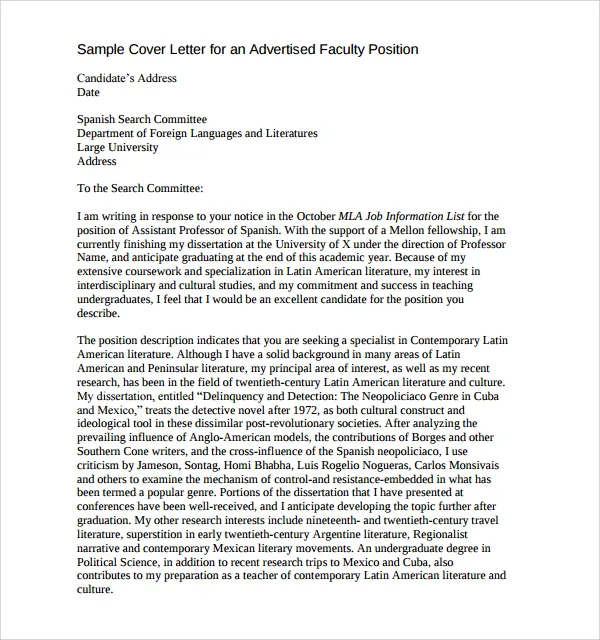
Crafting a Compelling Faculty Cover Letter
The faculty cover letter is more than just a formality; it’s your first opportunity to make a strong impression on a search committee. It’s where you introduce yourself, showcase your qualifications, and articulate why you’re the ideal candidate for the position. Crafting a compelling letter requires careful attention to detail, a clear understanding of the job requirements, and a strategic approach to highlighting your strengths. This guide will provide you with the essential elements needed to create a powerful faculty cover letter that captures the attention of search committees and sets you apart from the competition. Remember that the primary goal is to secure an interview, and your cover letter is the key that unlocks that possibility.
Understanding the Purpose of a Faculty Cover Letter
The faculty cover letter serves several crucial purposes in the application process. Firstly, it provides context to your curriculum vitae (CV), allowing you to elaborate on your experiences and achievements in a narrative format. Secondly, it demonstrates your understanding of the specific requirements of the position and how your skills and experiences align with them. Thirdly, it showcases your personality, writing style, and communication skills, which are vital for any faculty member. Lastly, it’s your chance to express your enthusiasm for the position and the institution, demonstrating that you’ve done your homework and are genuinely interested in joining their community. Failing to understand and address these key purposes will significantly weaken your application. Therefore, it’s critical to approach the cover letter with a clear understanding of its role in persuading the search committee to consider your candidacy further.
Highlighting Your Academic Background

Your academic background is the foundation of your faculty application, and your cover letter is the place to present it effectively. Begin by clearly stating your highest degree earned, the discipline, and the institution from which it was received. Briefly summarize your dissertation or major research projects, emphasizing the key findings and their significance within your field. Mention any relevant coursework, specializations, or honors you received during your studies. If you have publications or conference presentations, provide a brief overview and highlight the impact of your work. Remember to tailor this section to the specific requirements of the job, emphasizing aspects of your background that directly align with the position’s needs. For example, if the position emphasizes interdisciplinary research, highlight any interdisciplinary aspects of your academic training.
Showcasing Your Research Experience
Research experience is a cornerstone of most faculty positions, so your cover letter must effectively showcase your contributions. Describe your research agenda and its alignment with the department’s priorities or the specific research areas mentioned in the job posting. Detail your methodologies, findings, and their implications. Highlight any grants or funding you’ve secured, as this demonstrates your ability to attract resources and support your research program. If you have experience mentoring students or collaborating with other researchers, be sure to mention it. Quantify your achievements whenever possible; for example, cite the number of publications, the impact factor of journals where you’ve published, or the number of citations your work has received. The goal is to paint a clear picture of your research capabilities and potential for future contributions.
Detailing Teaching Philosophy and Experience
Teaching experience and philosophy are crucial for faculty roles. Articulate your teaching philosophy, including your approach to student engagement, assessment, and fostering a positive learning environment. Provide specific examples of your teaching methods, such as active learning strategies, use of technology, or innovative course designs. Describe the courses you’ve taught, the student evaluations you’ve received, and any curriculum development efforts you’ve undertaken. If you have experience mentoring students or advising student organizations, be sure to include that information. Clearly demonstrate your commitment to student success and your ability to effectively communicate complex concepts. Also, tailor your teaching philosophy to the specific institution and department by aligning your approach with their values and mission. A strong teaching statement demonstrates your commitment to education and your ability to contribute to the institution’s teaching mission.
Demonstrating Alignment with the Institution

One of the most crucial aspects of a successful cover letter is demonstrating your understanding of and alignment with the institution. Research the department’s mission, values, research priorities, and teaching philosophy. Explain how your research agenda, teaching experience, and service activities align with those of the department. Mention specific faculty members whose work interests you, and explain how you envision collaborating with them. Highlight any institutional initiatives or programs that resonate with your interests and goals. Demonstrate that you’ve taken the time to learn about the institution and that you see yourself as a valuable member of their community. This shows your genuine interest in the position and increases your chances of making a positive impression. This demonstrates your commitment to the institution’s long-term success and highlights your understanding of the role.
Emphasizing Skills and Qualifications
Beyond your academic and research background, your cover letter should emphasize the skills and qualifications that make you an ideal candidate. Highlight your communication skills, both written and oral, as these are essential for teaching, presenting research, and collaborating with colleagues. Mention any leadership experience you’ve gained through academic positions, research projects, or student organizations. If the position requires specific technical skills or software proficiency, be sure to include those details. Showcase your ability to work collaboratively, solve problems, and adapt to new challenges. Tailor this section to match the specific requirements listed in the job posting. For example, if the position requires experience with grant writing, be sure to showcase your experience in that area, and provide details about the grants you’ve successfully secured.
Tailoring the Cover Letter to Each Position
A generic cover letter is unlikely to impress a search committee. It’s essential to tailor your cover letter to each specific position you apply for. Carefully read the job posting and identify the key requirements, preferred qualifications, and institutional priorities. Customize your letter to address those specific needs and highlight the aspects of your background that align with them. Research the institution and department to gain a deeper understanding of their mission, values, and research areas. Mention specific faculty members whose work interests you and explain how you envision collaborating with them. By demonstrating that you’ve taken the time to understand the position and the institution, you significantly increase your chances of standing out. Avoid the temptation to reuse the same cover letter for multiple applications; the effort of tailoring it will pay off.
Formatting and Structure for Impact

The format and structure of your cover letter can significantly impact how it is received. Use a professional and readable font, such as Times New Roman or Arial, with a font size of 11 or 12 points. Maintain consistent margins and spacing throughout the document. Start with a professional salutation, addressing the search committee chair or the hiring manager by name if possible. In the first paragraph, state the position you’re applying for and briefly highlight your key qualifications. In the subsequent paragraphs, delve into your academic background, research experience, teaching philosophy, and institutional alignment. End with a strong concluding paragraph that reiterates your interest in the position and your enthusiasm for the opportunity. Proofread your letter carefully for any grammatical errors, typos, or formatting inconsistencies. A well-formatted and structured cover letter demonstrates your attention to detail and professionalism.
Proofreading and Editing Your Cover Letter
Before submitting your faculty cover letter, proofread and edit it meticulously. Errors in grammar, spelling, or punctuation can undermine your credibility and negatively impact your chances of getting an interview. Read your letter aloud to catch any awkward phrasing or unclear sentences. Ask a colleague, mentor, or career advisor to review your letter and provide feedback. They can offer a fresh perspective and help you identify areas for improvement. Pay close attention to the tone and style of your letter, ensuring that it is professional, enthusiastic, and well-written. Proofreading is a crucial step that demonstrates your attention to detail and your commitment to presenting yourself in the best possible light. A polished cover letter is a reflection of your professionalism, and will help you make a positive first impression.
In conclusion, a powerful faculty cover letter is a crucial component of any successful job application. By carefully crafting your letter to highlight your academic background, research experience, teaching philosophy, and alignment with the institution, you significantly increase your chances of making a positive impression on the search committee. Tailoring your letter to each specific position, emphasizing your skills and qualifications, and paying attention to formatting and structure are also essential steps in the process. Remember to proofread and edit your letter meticulously to ensure that it is free of errors and reflects your professionalism. By following these guidelines, you can write a cover letter that effectively showcases your strengths, captures the attention of hiring committees, and ultimately leads to an interview.