The Power of a Cover Letter
In the competitive world of management, a well-crafted cover letter can be the key to unlocking your dream job. It serves as your initial introduction to a potential employer, allowing you to showcase your personality, skills, and experience in a way that a resume alone cannot. A strong cover letter grabs the reader’s attention, demonstrating your enthusiasm for the role and the company. It provides an opportunity to elaborate on specific achievements, making you stand out from the crowd. It’s your chance to connect the dots between your qualifications and the company’s needs, illustrating how you can contribute to their success. Without a compelling cover letter, your application might be overlooked, no matter how impressive your resume. It is an essential tool to demonstrate the understanding of the management role, company, and industry.
Understanding the Purpose
The primary purpose of a cover letter is to persuade the hiring manager to read your resume and, ultimately, to invite you for an interview. It’s not a mere repetition of your resume; instead, it’s a targeted document that highlights the most relevant aspects of your background concerning the specific job. It should clearly articulate your career goals, your understanding of the company’s needs, and how you can meet those needs. A cover letter also provides a space to explain any gaps in your employment history or to address any concerns the hiring manager might have. A well-written letter demonstrates your written communication skills, attention to detail, and your genuine interest in the position. It is the best tool to convince the recruiter to make a positive decision.
Highlighting Skills and Experience

When writing a cover letter for a management position, you must emphasize your relevant skills and experience. Start by identifying the key requirements outlined in the job description, then tailor your letter to address them directly. Provide specific examples of your accomplishments that demonstrate those skills. Quantify your achievements whenever possible; for example, “Increased team productivity by 15% within six months.” Mention leadership skills, such as team building, conflict resolution, and decision-making. Showcase your experience in project management, budgeting, strategic planning, or any other areas relevant to the role. Remember to use action verbs to describe your responsibilities and accomplishments, painting a vivid picture of your capabilities. Ensure the recruiter understands the importance of your achievements to show the value you provide to the team.
Cover Letter Example Management
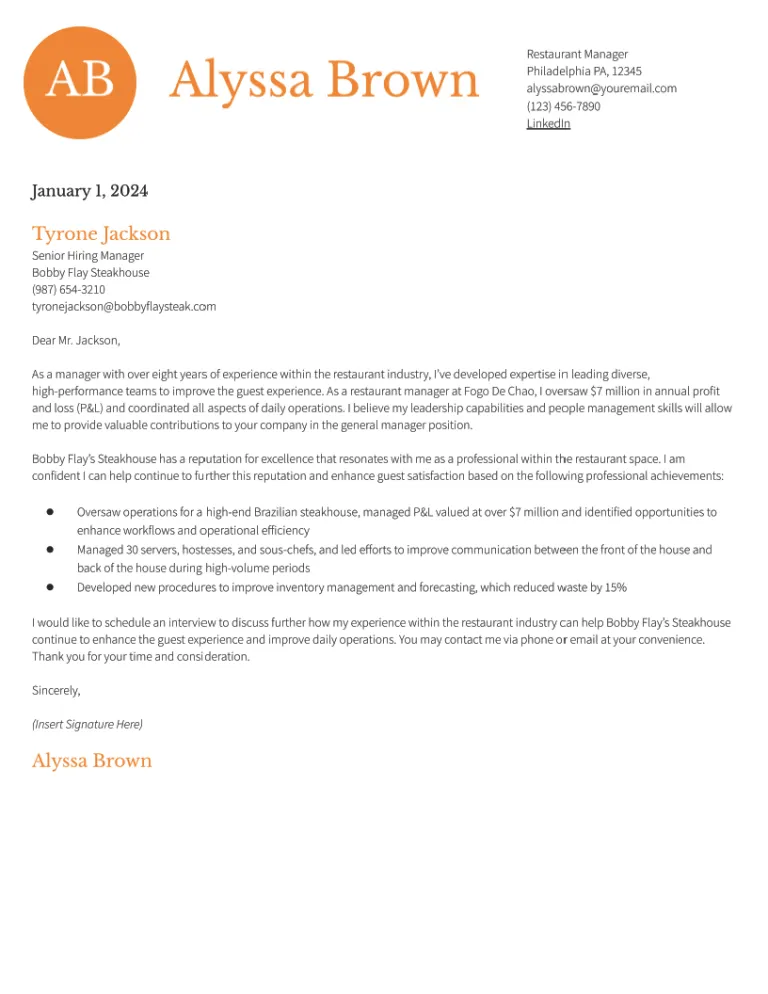
Let’s look at an example that reflects best practices. While every cover letter should be customized, understanding the structure and components of an effective one will help you get started. Remember to always personalize it to the company and the specific role. The following is a general example; adapt it to reflect your unique background and the specific requirements of the job. This will assist you in forming a cover letter with the appropriate tone. Below you can see the appropriate formatting that you can follow, also the language used must be professional.
Formatting Your Cover Letter
Formatting is crucial for presenting a professional image. The cover letter should be easy to read and visually appealing. Use a professional font like Times New Roman, Arial, or Calibri, with a font size between 10 and 12 points. Ensure consistent formatting throughout the document. Keep the letter concise, ideally within one page. Use clear and concise language, avoiding jargon or overly complex sentences. Properly format the letter with left alignment, single spacing, and a blank line between paragraphs. Proofread carefully to eliminate any grammatical errors or typos. Maintaining a polished format demonstrates your attention to detail and respect for the reader’s time. Using the appropriate format is as important as the content itself.
Header Section

The header section includes your contact information: your full name, phone number, email address, and LinkedIn profile (optional). It’s important to include your contact details, so the recruiter can quickly reach you. Below your information, add the date and then the hiring manager’s name, title, and the company’s address, if you know it. If you do not know the hiring manager’s name, you can use a general salutation, but always try to find out the name to personalize it. The header should look clean and professional. Avoid using unusual fonts or excessive formatting in the header.
Salutation
Begin your cover letter with a professional salutation. If you know the hiring manager’s name, use “Dear Mr./Ms./Mx. [Last Name]”. If you don’t know the name, use a general greeting like “Dear Hiring Manager” or “Dear [Company Name] Team”. Avoid outdated salutations like “To Whom It May Concern.” Ensure you spell the name correctly and use the appropriate title (Mr., Ms., etc.). This shows you’ve done your research and demonstrates your attention to detail.
Body Paragraphs
The body paragraphs are the heart of your cover letter. Start with a strong opening paragraph that states the position you’re applying for and where you found the listing. The second paragraph should highlight your relevant skills and experience, providing specific examples of your accomplishments. Quantify your achievements whenever possible. In the third paragraph, explain why you are interested in the company and the role. Tailor this part to showcase your knowledge of the company, its mission, and its values. Demonstrate how your skills and experience align with the company’s needs. Mention any specific projects you are interested in. Use a professional tone and avoid using slang. Structure your paragraphs logically, and use concise language. Each paragraph should have a clear focus. This will enable the reader to understand the value of your application.
Closing

The closing paragraph should reiterate your interest in the position and thank the hiring manager for their time and consideration. Include a call to action, such as expressing your availability for an interview. End with a professional closing, such as “Sincerely,” “Best regards,” or “Thank you.” Follow this with your typed name. Make sure you have proofread your cover letter before sending it to prevent errors. Make a final review to ensure your contact information is correct. Your closing paragraph will leave a lasting impression.
Tailoring Your Letter
The most effective cover letters are tailored to each specific job application. Generic cover letters are easily recognized and often discarded. Take the time to research the company, understand their values, and identify the key requirements of the role. Customize your letter to address those requirements directly, highlighting your skills and experience that align with the company’s needs. Show that you understand the company’s challenges and how you can contribute to their success. Tailoring your letter requires extra effort, but it greatly increases your chances of securing an interview. Generic cover letters show a lack of effort and interest.
Keywords and Customization
To effectively tailor your cover letter, use keywords from the job description. Identify the key skills, experience, and qualifications the employer is seeking. Incorporate these keywords naturally into your letter, ensuring they accurately reflect your abilities. Customization extends beyond keywords. Research the company’s mission, values, and recent projects. Demonstrate your understanding of their business and how your skills align with their goals. This shows that you are genuinely interested in the role and that you have the knowledge to contribute. Customization is your key to stand out from the crowd and land an interview.
Researching the Company

Before writing your cover letter, research the company. Visit their website, read their “About Us” section, and explore their recent news and projects. Look for their mission statement, values, and any information about their company culture. Review their social media profiles to learn more about their brand and their employees. Understand the industry trends and challenges the company faces. Use this knowledge to demonstrate your understanding of the company’s needs and how you can contribute to their success. Mentioning specific projects or initiatives that interest you demonstrates your enthusiasm and genuine interest. Tailoring your cover letter based on this research sets you apart.
Common Mistakes to Avoid
Even the most qualified candidates can sabotage their chances with a poorly written cover letter. Being aware of common mistakes can help you avoid them and present yourself in the best possible light. Several factors can cause your application to be dismissed by the recruiter. The most common are the use of generic language, and the excess of typos. Here are some of the most common mistakes.
Generic Language and Clichés
Avoid using generic language and clichés that make your cover letter sound impersonal and uninspired. Phrases like “I am a team player” or “I am a hard worker” are overused and don’t provide any real value. Instead, use specific examples to demonstrate your skills and abilities. Show, don’t tell. Use strong action verbs and avoid vague statements. Personalize your letter to show that you understand the company’s needs and have taken the time to learn about the role. Make sure the language you use is professional and tailored to the specific role.
Typos and Grammatical Errors

Typos and grammatical errors can undermine your credibility and make you appear careless. Proofread your cover letter carefully before submitting it. Use a grammar checker to identify and correct any errors. Have a friend or colleague review your letter for mistakes. Pay close attention to spelling, punctuation, and grammar. Even minor errors can create a negative impression. A flawless cover letter demonstrates your attention to detail and your commitment to excellence. Take the time to ensure your cover letter is polished and error-free.
Exceeding Page Limit
Keep your cover letter concise, ideally within one page. Hiring managers are busy and often don’t have time to read lengthy documents. Focus on the most relevant skills and experiences. Avoid rambling or including unnecessary details. Be direct and to the point. Use clear and concise language. Prioritize the information that directly relates to the job requirements. Tailor your letter to the specific role, and avoid adding irrelevant information. Respect the reader’s time by keeping your cover letter brief, while still providing a compelling introduction.
Call to Action
Writing a powerful cover letter takes time and effort, but it’s an investment that can significantly improve your chances of landing a management position. By following the guidelines outlined, you can create a cover letter that showcases your skills, experience, and enthusiasm for the role. Remember to tailor each letter to the specific job requirements and to proofread carefully. A well-crafted cover letter makes a strong first impression and sets the stage for a successful application. Use these examples and guidelines to make a cover letter that aligns with your goals. The perfect cover letter is waiting for you.