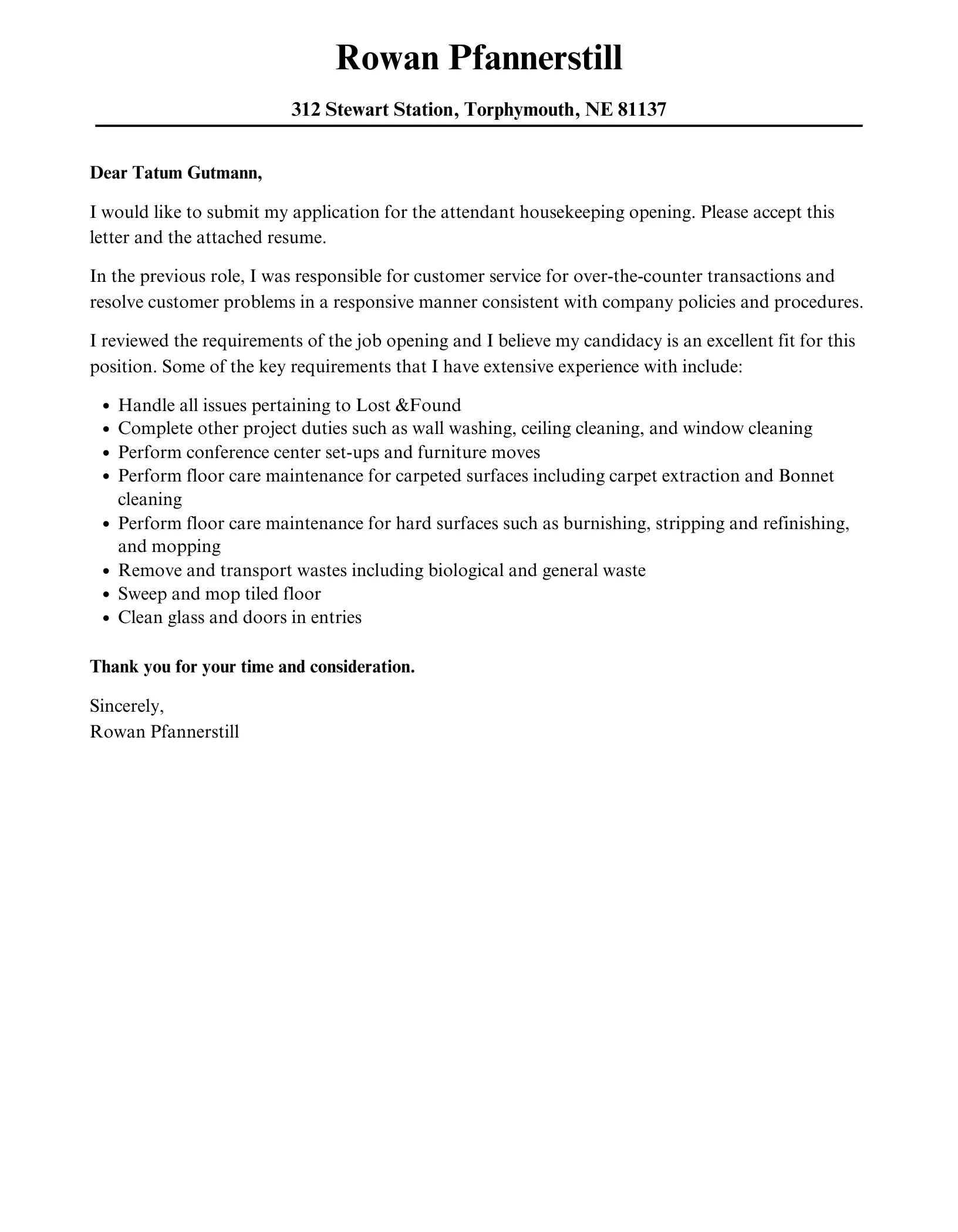
Understanding the Importance of a Housekeeping Cover Letter
In the competitive world of job applications, a well-crafted housekeeping cover letter can be your key to unlocking your dream job. It is often the first impression you make on a potential employer, offering a glimpse into your personality, skills, and enthusiasm for the role. A strong cover letter goes beyond simply listing your qualifications; it tells a story. It highlights your passion for cleanliness, your dedication to providing excellent service, and your understanding of the specific requirements of the position. By taking the time to write a personalized cover letter, you demonstrate your commitment and increase your chances of standing out from the crowd. This is your opportunity to shine, to show why you are the perfect fit for the job, and to get your foot in the door.
Key Components of a Winning Housekeeping Cover Letter
A winning housekeeping cover letter is composed of several essential elements, each playing a crucial role in presenting you as the ideal candidate. From the way it’s formatted to the specific details you include, every aspect contributes to the overall impact of your application. The key is to strike a balance between professionalism and personality, ensuring your letter is informative, engaging, and tailored to the specific job. It should be clear, concise, and easy to read, allowing the hiring manager to quickly grasp your qualifications and understand why you are the best choice for the role. Remember, your cover letter is your personal advertisement, so make it count!
Formatting Your Housekeeping Cover Letter

Header and Contact Information
Start your housekeeping cover letter with a professional header. Include your full name, address, phone number, and email address. Ensure your email address is professional and reflects your name. This information should be neatly presented at the top left or right of the page. This allows the hiring manager to easily contact you. Also, ensure that the font is readable, a simple, professional font like Times New Roman or Arial. Use a font size between 10 and 12 points for easy readability.
Date and Recipient Information
Following your contact information, include the date and the recipient’s details. If possible, address the letter to the hiring manager by name; this personal touch shows that you’ve done your research. Include their title, the company’s name, and the company’s address. If you can’t find the hiring manager’s name, use a general salutation like ‘Dear Hiring Manager’ or ‘Dear [Company Name] Hiring Team’. Accurate information showcases your attention to detail and professionalism.
Salutation

Begin your cover letter with a professional salutation. As mentioned above, ‘Dear [Hiring Manager Name]’ is ideal. If the name is unknown, use ‘Dear Hiring Manager’. Avoid overly casual greetings. This sets the tone for your letter, signaling respect and professionalism. A well-chosen salutation demonstrates your ability to communicate effectively and makes a positive first impression. Always double-check the correct spelling of the recipient’s name; a small mistake can undermine your professionalism.
Writing a Compelling Opening Paragraph
The opening paragraph is your chance to grab the reader’s attention and make a strong first impression. State the position you’re applying for and where you found the job posting. Briefly mention your relevant experience or a key skill that makes you a strong candidate. Express your enthusiasm for the opportunity and the company. This introductory section should be concise, engaging, and set the tone for the rest of your letter. Your goal is to make the reader want to learn more about you and your qualifications. Make it clear why you are interested in this particular role.
Highlighting Your Skills and Experience
This is the meat of your cover letter. Detail your experience and skills relevant to the housekeeping position. Provide specific examples of your accomplishments, quantifying them whenever possible (e.g., ‘Managed the cleaning of 10 rooms daily’). Showcase how your skills align with the job requirements. Mention any specific training or certifications you possess, like knowledge of cleaning products or equipment operation. Emphasize your ability to work independently and as part of a team, and your commitment to maintaining a clean and organized environment. This section is where you sell yourself.
Emphasizing Relevant Experience

When describing your experience, focus on the aspects most relevant to housekeeping. Mention previous housekeeping roles, detailing your responsibilities and accomplishments. If you lack direct experience, highlight transferable skills from other jobs, such as organizational skills, attention to detail, or customer service. Use action verbs to describe your duties (e.g., ‘Cleaned’, ‘Maintained’, ‘Organized’). Provide concrete examples to illustrate your experience, proving your capability to perform the job’s tasks effectively. Explain how your experience will enable you to excel in the housekeeping role.
Showcasing Cleaning Skills
List your specific cleaning skills, such as dusting, vacuuming, mopping, sanitizing, and laundry. Mention your knowledge of various cleaning products and equipment. If you have experience with specialized cleaning tasks (e.g., window cleaning, floor polishing), be sure to include them. Highlighting these skills demonstrates your competence. Make sure to mention any specific cleaning techniques you are proficient in, such as deep cleaning or eco-friendly cleaning practices. These skills showcase your ability to maintain a clean and healthy environment.
Demonstrating Soft Skills
In addition to cleaning skills, employers value soft skills. Mention skills like reliability, time management, attention to detail, and the ability to work independently. Showcase your communication skills, particularly if the role involves interacting with guests or residents. Illustrate how you have used these skills in previous roles with examples. For example, you might say, ‘I consistently received positive feedback for my attention to detail’. Soft skills complement your technical abilities. They demonstrate your professionalism and ability to thrive in a team environment. They show your commitment to providing excellent service.
Tailoring Your Letter to the Job Description

Customize your cover letter to each job application. Read the job description carefully and identify the key requirements. Highlight your skills and experiences that match those requirements. Mention specific skills or experiences the employer is looking for. This demonstrates your genuine interest in the role and your understanding of the company’s needs. Using keywords from the job description can also help your application get noticed by Applicant Tracking Systems (ATS). Tailoring shows you’ve taken the time to understand the role. It makes a positive impression on the hiring manager.
Researching the Employer
Before writing your cover letter, research the employer. Understand their values, mission, and the specific needs of the role. This knowledge allows you to tailor your letter effectively. If possible, visit the company’s website or social media pages. Demonstrate your understanding of the company’s culture and its commitment to quality. Use this information to demonstrate your passion and desire to contribute. Tailoring shows you are truly interested in working there and are not sending out a generic letter.
Matching Skills to Requirements
Carefully compare your skills and experience to the requirements listed in the job description. Identify the skills and experiences that align most closely. Provide concrete examples of how you have demonstrated those skills in the past. Use keywords from the job description to highlight your relevant skills. This shows the hiring manager that you are a good fit for the role. The matching of skills helps the employer to quickly understand how you can contribute to their team. It also demonstrates your ability to understand and fulfill the requirements of the housekeeping role.
Writing a Strong Closing Paragraph

Your closing paragraph should summarize your interest in the position and express your enthusiasm. Reiterate your key qualifications and emphasize why you are a good fit. Thank the reader for their time and consideration. State your availability for an interview and provide your contact information again, if desired. A strong closing paragraph leaves a lasting positive impression. It encourages the hiring manager to take the next step and contact you. It reinforces your commitment to the position. Ensure it is professional and reflects your genuine enthusiasm.
Expressing Enthusiasm and Availability
In your closing, express your enthusiasm for the opportunity and your interest in the company. Clearly state your availability for an interview. Indicate how you can be reached for an interview. Include your phone number and email address, making it easy for the hiring manager to contact you. This demonstrates your eagerness and professionalism, increasing the likelihood of a positive response. Make it easy for the hiring manager to take the next step. Expressing enthusiasm reinforces your interest in the position.
Using a Professional Closing and Signature
End your cover letter with a professional closing, such as ‘Sincerely’, ‘Best regards’, or ‘Thank you’. Leave a few lines for your signature, then type your full name. If submitting electronically, you can simply type your name. A formal closing adds a touch of professionalism and respect. Make sure your closing reflects the tone of your letter. The signature confirms the authenticity of your application. Ensure your name is clear and legible.
Proofreading and Editing Your Cover Letter

Before submitting your cover letter, meticulously proofread and edit it. Check for any grammatical errors, spelling mistakes, and typos. Ensure the letter flows logically and is easy to read. Consider having someone else review your cover letter to catch any errors you might have missed. Errors can detract from your credibility and professionalism. Take the time to make sure it is perfect. This demonstrates your attention to detail. The editing process is just as important as the writing process. Ensure your letter is free of errors.
Common Mistakes to Avoid
Grammar and Spelling Errors
Avoid common mistakes such as grammatical errors, spelling mistakes, and typos. These errors can undermine your professionalism and make a negative impression. Proofread your cover letter multiple times and use a grammar and spell checker. Even small errors can make it seem that you are not detail-oriented. Before submitting your cover letter, it is important to carefully check for any errors. A mistake-free cover letter is a sign of professionalism and competence.
Generic Language
Avoid using generic language that could apply to any job. Customize your letter to the specific housekeeping position and the company’s needs. Use specific examples and details to demonstrate your skills and experience. Generic letters do not show your enthusiasm and knowledge of the role. Customize your cover letter so it stands out. You should also include specific details that showcase your qualifications. Use language that reflects the unique needs of the company and position. You should highlight what makes you the best candidate for the role.
Ignoring the Job Description
One of the biggest mistakes is ignoring the job description. Not tailoring your cover letter to match the requirements listed. Make sure you address the specific skills, experiences, and qualifications mentioned in the job posting. Tailoring shows you’ve understood the requirements and that you are a good fit for the role. Pay close attention to the needs and expectations of the employer. Matching your skills and experience to the job description is key.
Housekeeping Cover Letter Examples and Templates
Many resources offer housekeeping cover letter examples and templates. These can serve as a valuable guide to help you structure your letter. Use these examples as inspiration, but always customize them to reflect your skills and experience. Tailor the template to the specific job you are applying for, ensuring it reflects your unique qualifications. Remember, your cover letter is a chance to shine. Make sure it is personalized and relevant to the housekeeping position. The best cover letters highlight your strengths and address the employer’s needs. Take advantage of these resources, but do not copy them directly.