What Is a Cover Letter
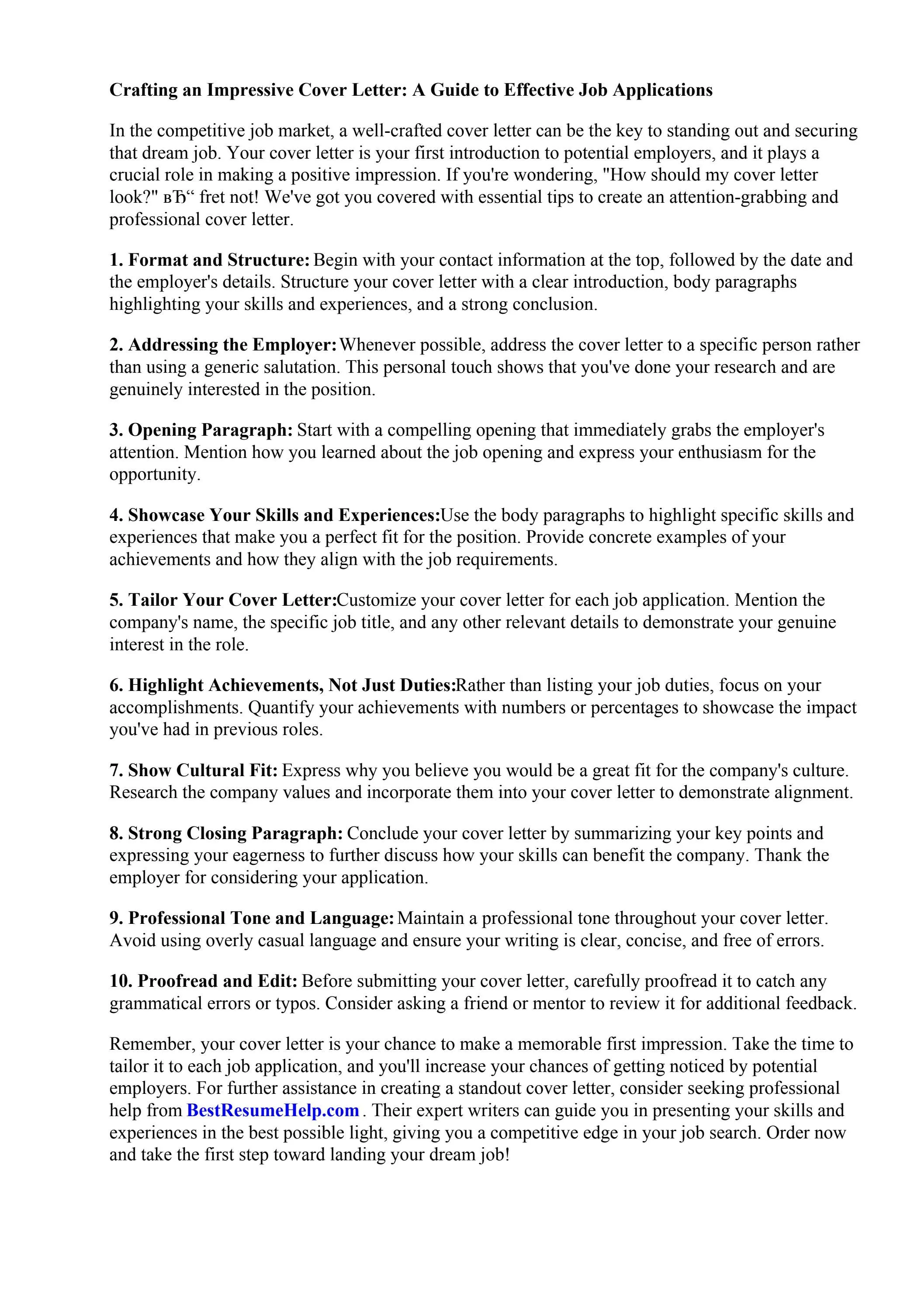
A cover letter is a crucial document that accompanies your resume when applying for a job. It serves as a personalized introduction, allowing you to elaborate on your qualifications and express your enthusiasm for the specific role and company. Unlike a resume, which provides a factual overview of your experience, a cover letter gives you the opportunity to tell your story, highlighting how your skills and experiences align with the job requirements and demonstrating your understanding of the company’s needs and values. It’s a chance to make a strong first impression and persuade the hiring manager to consider you for an interview, going beyond the static information presented in your resume.
Why Cover Letters Are Important
Cover letters are important because they provide context to your resume, allowing you to personalize your application and showcase your personality. They demonstrate your communication skills, attention to detail, and genuine interest in the position. A well-written cover letter can set you apart from other applicants by highlighting your unique value proposition. Many hiring managers consider a cover letter essential, as it provides insights into your writing ability, organizational skills, and understanding of the job requirements. Even in industries where they are not strictly required, submitting a cover letter can give you an edge by showing your initiative and commitment.
Key Components of a Cover Letter

A strong cover letter comprises several key components that work together to create a compelling narrative. These components include a well-structured header, a personalized salutation, an engaging opening paragraph, body paragraphs that highlight relevant skills and experiences, a concise closing paragraph with a call to action, and a professional closing. Each element plays a critical role in conveying your qualifications, enthusiasm, and suitability for the role. By addressing each section thoughtfully, you can ensure your cover letter is effective and impactful.
Header Essentials Contact Information
Your header should include your full name, contact information (phone number and email address), and optionally, your LinkedIn profile URL or personal website. This ensures the hiring manager can easily contact you. Make sure the information is accurate and up-to-date. The header establishes your professionalism and provides a clean, organized presentation that complements your resume. The header should be aligned to the left or right, but maintain a consistent style across all your application materials.
Recipient’s Details Getting It Right
Always address your cover letter to a specific person whenever possible. Research the hiring manager’s name and title. This demonstrates that you’ve taken the time to personalize your application and shows your genuine interest in the role. If you can’t find the hiring manager’s name, use a professional greeting like “Dear Hiring Manager” instead of a generic greeting. Correctly addressing the recipient is a small but significant detail that can make a positive impression.
Salutation Addressing the Hiring Manager

The salutation sets the tone for your letter. Use a professional greeting like “Dear Mr./Ms./Mx. [Last Name]” if you know the hiring manager’s name. If you don’t know the name, “Dear Hiring Manager” or “Dear [Department Name] Team” are acceptable alternatives. Avoid overly casual greetings such as “Hi” or “Hello.” The salutation should be followed by a colon, and the tone should be formal and respectful.
Body Paragraph 1 Grabbing Attention
The opening paragraph is your chance to grab the reader’s attention. Start with a strong statement that immediately indicates your interest in the position and company. Mention where you saw the job posting and why you’re excited about the opportunity. Briefly state your most relevant qualifications or experience. Avoid generic opening lines; instead, personalize your introduction to reflect your understanding of the role and the company’s needs. This paragraph should clearly convey your enthusiasm and set the stage for the rest of the letter.
Highlighting Your Skills and Experience
The body of your cover letter should highlight the skills and experiences that make you a strong candidate. Analyze the job description carefully and identify the key requirements. Provide specific examples that demonstrate how your skills and experiences align with those requirements. Use the STAR method (Situation, Task, Action, Result) to describe your accomplishments, quantifying them whenever possible. Focus on what you achieved and how your contributions benefited previous employers. Tailor your content to each job application, ensuring it reflects the unique needs of the role.
Quantifying Your Achievements

Whenever possible, quantify your achievements with numbers and data. Instead of saying “Improved customer satisfaction,” state “Increased customer satisfaction by 15% through implementation of new support strategies.” Quantifiable results make your accomplishments more impactful and demonstrate your ability to deliver tangible outcomes. Use percentages, dollar amounts, or specific figures to illustrate the scope and impact of your work. This approach provides concrete evidence of your value and makes your qualifications more persuasive.
Body Paragraph 2 Demonstrating Interest
In the second body paragraph, demonstrate your genuine interest in the company and the role. Show that you’ve researched the company, understand its mission and values, and are excited about the opportunity to contribute. Explain why you are drawn to this particular company and role, and how your career goals align with their objectives. Connect your skills and experiences to the company’s needs, demonstrating that you’re not just looking for a job but are genuinely interested in becoming part of their team. Mention specific projects or initiatives that resonate with you, showing you’ve done your homework and are prepared to contribute meaningfully.
Tailoring the Letter to the Job
Adapt your cover letter to each job application by carefully reviewing the job description and identifying the key requirements and qualifications sought by the employer. Highlight the skills and experiences that align directly with the job’s needs, and use keywords from the job description. Tailoring your letter shows the hiring manager that you understand the specific requirements of the role and that you have the relevant skills and experience to succeed. Avoid sending generic cover letters; personalization is key to standing out.
Showcasing Company Research

Conduct thorough research on the company before writing your cover letter. Visit their website, read their blog, and review their social media profiles to understand their mission, values, products, and services. Use this information to demonstrate your interest in the company and how your skills and experience align with their goals. Mention specific projects or initiatives that resonate with you, showing that you’ve taken the time to understand the company’s culture and are genuinely interested in contributing to their success. This demonstrates that you have a genuine interest in the company and that you are a thoughtful and well-prepared candidate.
Body Paragraph 3 Call to Action
In the final body paragraph, clearly state your call to action. Express your enthusiasm for the opportunity to discuss your qualifications further in an interview. Reiterate your interest in the role and the company. Thank the hiring manager for their time and consideration. This paragraph should be concise and leave a lasting positive impression. End by expressing your eagerness to learn more about the opportunity and how your skills and experiences can contribute to the company’s success.
Expressing Enthusiasm and Availability
Conclude your cover letter with a statement of your enthusiasm for the role and your availability for an interview. Express your eagerness to discuss your qualifications further and to learn more about the company and the specific opportunity. Make it easy for the hiring manager to take the next step by explicitly stating your availability. This closing paragraph provides a clear, decisive ending, leaving a lasting positive impression on the reader.
The Closing Complimentary Closing

Choose a professional closing such as “Sincerely,” “Best regards,” or “Yours sincerely.” Avoid overly casual closings like “Thanks” or “Best.” Ensure the closing aligns with the tone of your cover letter and reflects your professionalism. After the closing, leave a space for your signature (if submitting a hard copy), followed by your typed name. The closing provides a polished finish to your cover letter and reinforces your professional demeanor.
Proper Formatting for a Professional Look
Formatting is crucial for presenting a polished and professional image. Use a clear and easy-to-read font, maintain consistent spacing, and ensure proper margins. This makes your cover letter easy to read and demonstrates your attention to detail. Properly formatted documents reflect well on your organizational skills and commitment to excellence.
Font and Font Size Guidelines
Choose a professional and legible font such as Times New Roman, Arial, Calibri, or Helvetica. Keep the font size between 10 and 12 points for body text and 12-14 points for headings. Using a clear font ensures your letter is easy to read and conveys a sense of professionalism. Avoid using overly decorative or unconventional fonts, as they can distract from the content.
Spacing and Margins Best Practices

Use single spacing within paragraphs and double spacing between paragraphs. Set margins to one inch on all sides. Proper spacing and margins make your cover letter visually appealing and easy to read. They create a clean and organized appearance, which is important for a positive first impression. Consistent spacing and margins indicate your attention to detail and professionalism.
Proofreading and Editing Avoiding Errors
Proofread your cover letter meticulously to catch any grammatical errors, typos, and inconsistencies. Ensure that the language is clear, concise, and grammatically correct. Errors can undermine your credibility and make a negative impression. Proofreading is essential for demonstrating your attention to detail and your commitment to producing high-quality work.
Common Mistakes to Avoid
Avoid common cover letter mistakes such as grammatical errors, typos, and generic content. Ensure your letter is tailored to the specific job and company. Other mistakes to avoid include excessive length, unprofessional language, and a lack of enthusiasm. A well-written cover letter is free of errors and presents you as a highly qualified candidate.
Grammatical Errors and Typos
Carefully proofread your cover letter for any grammatical errors and typos. Errors can undermine your credibility and make a negative impression on the hiring manager. Use spell-check and grammar-check tools, but don’t rely on them completely. Always review your letter yourself to catch any mistakes the software might miss. Grammatical accuracy is essential for demonstrating professionalism and attention to detail.
Generic Cover Letters
Avoid using generic cover letters that are not tailored to the specific job or company. Generic letters show a lack of effort and can make you appear uninterested in the position. Instead, customize your letter to highlight the skills and experiences that align with the job requirements and to demonstrate your understanding of the company’s values and goals. Personalize your letter to show that you have done your research.
Overuse of Jargon and Clichés
Avoid using jargon and clichés in your cover letter. These can make your writing sound impersonal and unoriginal. Instead, use clear, concise language and focus on providing specific examples of your achievements and skills. Overuse of jargon and clichés can confuse the reader and make your letter less effective. Use straightforward language to convey your message effectively.
Cover Letter Examples and Templates
Utilize cover letter examples and templates as a starting point, but always customize them to fit your specific needs and the requirements of each job. Examples can provide a framework for your letter, but they should not be used verbatim. Use templates to help you structure your letter and ensure you include all the necessary elements, but personalize them with your own information and tailor them to the specific job requirements.
Different Cover Letter Types
There are several types of cover letters, including application letters, networking letters, and inquiry letters. Understand the purpose of each type and tailor your approach accordingly. An application letter responds to a specific job posting, a networking letter seeks informational interviews, and an inquiry letter expresses interest in a company even when there are no open positions. Each type requires a different approach and focus, so choose the right type for your needs.
Using Templates Effectively
Use cover letter templates effectively by customizing them to reflect your unique qualifications and the specific requirements of the job. Fill in the template with your personal information, skills, and experiences, and tailor the content to match the job description. Review the template to ensure that it accurately represents your skills and experience. This ensures that your cover letter effectively communicates your qualifications and your enthusiasm for the role.
Adapting Examples to Your Needs
Adapt cover letter examples to your needs by personalizing them to reflect your individual skills, experiences, and the specific requirements of the job. Review the job description, identify the key qualifications, and customize the examples to highlight the relevant skills. Adapt the language and tone of the examples to match your own style and personality, ensuring that the cover letter is authentic and reflects your unique qualifications.