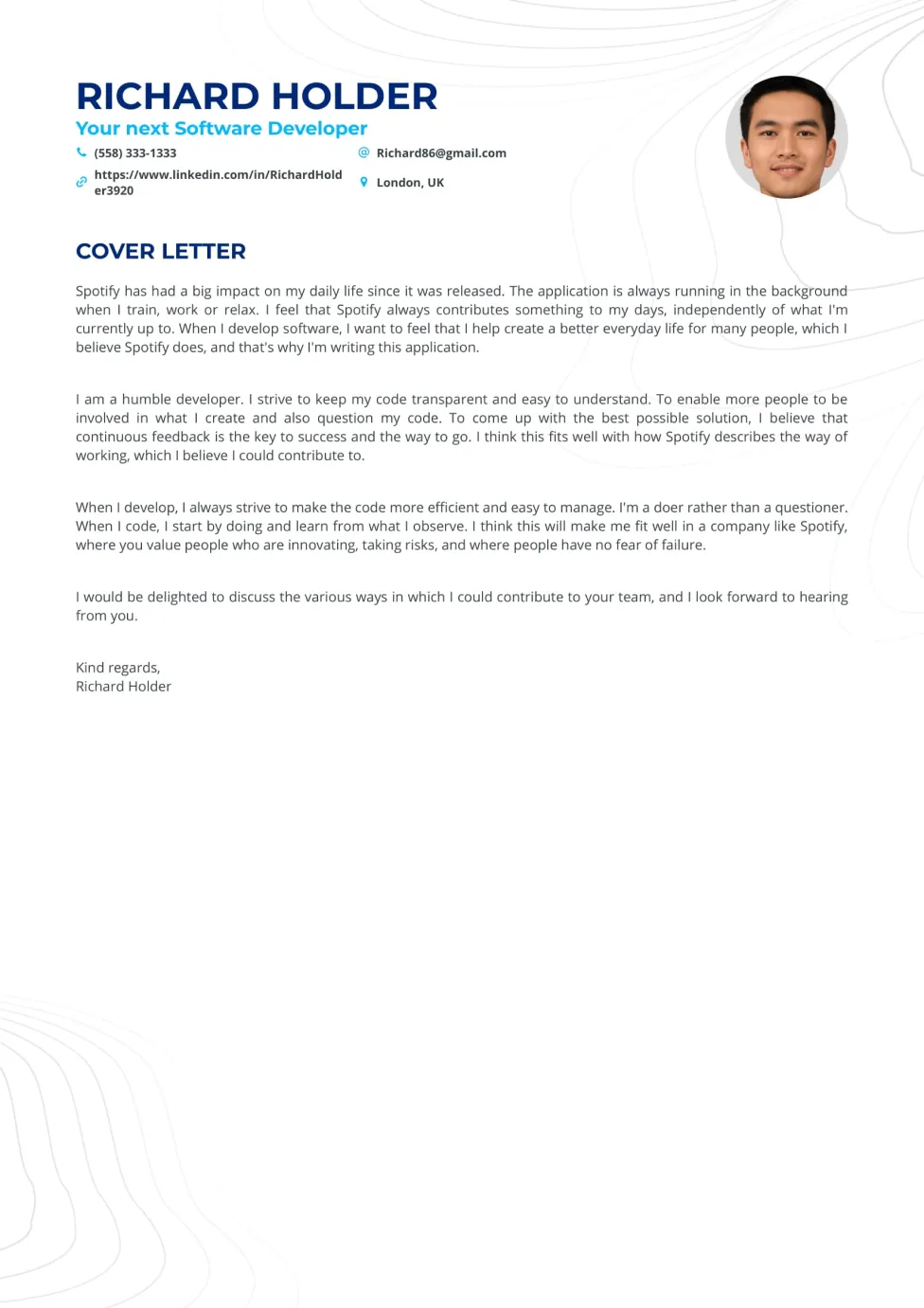
Why a Cover Letter is Crucial
In the competitive job market, a well-crafted cover letter can be your secret weapon. It’s not just a formality; it’s your first opportunity to make a strong impression and convince the hiring manager that you’re worth considering. While a resume provides a snapshot of your experience, a cover letter allows you to tell your story, connect the dots, and highlight why you’re the perfect fit for the specific role and company. A compelling cover letter can significantly increase your chances of getting an interview, setting you apart from other applicants and demonstrating your genuine interest in the position.
The Purpose of a Cover Letter
The primary purpose of a cover letter is to introduce yourself, express your interest in the position, and explain why you’re the ideal candidate. It allows you to elaborate on your resume, providing context and showcasing your personality, enthusiasm, and communication skills. A cover letter demonstrates your understanding of the company’s needs and how your skills and experience align with those requirements. It’s also an opportunity to highlight your unique value proposition and convince the hiring manager that you possess the necessary qualifications and cultural fit. Ultimately, the goal is to persuade the reader to invite you for an interview.
Key Elements of a Winning Cover Letter

A winning cover letter combines several essential elements. It should be personalized, showcasing your understanding of the company and the specific role. It needs to clearly articulate your relevant skills and experience, highlighting achievements and quantifying your contributions whenever possible. Moreover, it should reflect your enthusiasm for the opportunity, demonstrating your genuine interest and passion. The structure should be logical and easy to follow, with a clear header, engaging opening, concise body paragraphs, and a compelling closing with a strong call to action. By mastering these elements, you’ll significantly increase your chances of making a positive impression and securing an interview.
Personalize Your Cover Letter
Generic cover letters are easily spotted and often discarded. Personalization is key to making a lasting impression. Tailor your cover letter to each specific job application. This includes addressing the hiring manager by name (if possible), referencing the company’s mission, values, or recent achievements, and highlighting how your skills and experience align with the specific requirements of the role. Demonstrate that you’ve taken the time to understand the company and the opportunity, showing that you’re genuinely interested and not just sending out a mass application. This level of personalization showcases your attention to detail and commitment.
Research the Company
Before you start writing, conduct thorough research on the company. Visit their website, read their blog, and explore their social media profiles. Understand their products or services, their target audience, and their company culture. This research will help you tailor your cover letter to demonstrate that you understand the company’s mission, values, and goals. When you reference specific company initiatives or achievements, it shows that you’re engaged and committed to learning more. This research not only enhances your cover letter but also prepares you for the interview stage, should you be selected.
Highlight Relevant Skills and Experience

Your cover letter is the perfect place to highlight the skills and experience most relevant to the job you’re applying for. Carefully review the job description and identify the key requirements. Then, select specific examples from your work history that demonstrate your ability to meet those requirements. Avoid simply repeating your resume. Instead, provide context, explain the situation, and describe the actions you took and the results you achieved. Focus on showcasing your strengths and how they align with the company’s needs. This targeted approach allows you to present a compelling case for your candidacy.
Quantify Your Achievements
Whenever possible, quantify your achievements. Numbers and data add credibility and demonstrate the tangible impact of your work. Instead of saying, “Improved customer satisfaction,” try “Increased customer satisfaction scores by 15% within six months.” Quantifying your achievements shows the hiring manager the value you can bring to the company. Use metrics like percentages, dollar amounts, or time saved to illustrate the impact of your contributions. This level of detail provides concrete evidence of your accomplishments and helps you stand out from other candidates.
Showcase Your Enthusiasm
Let your enthusiasm shine through! Your cover letter is your opportunity to express your genuine interest in the company and the position. Show that you’ve done your research and that you’re excited about the prospect of joining their team. Use positive and energetic language. Share what motivates you about the company’s mission or products. Explain why you’re passionate about the industry. Enthusiasm is contagious and can make a significant difference in how the hiring manager perceives you. It demonstrates your drive and willingness to contribute to the team’s success.
Cover Letter Structure

A well-structured cover letter is easy to read and effectively conveys your key selling points. Following a standard structure ensures that you include all the essential information and presents it in a logical order. The structure generally consists of a header with your contact information, a professional greeting, an engaging opening paragraph, body paragraphs highlighting your skills and experience, a concise closing paragraph, and a clear call to action. A well-structured cover letter increases readability and makes a positive impression.
Header and Contact Information
Your header should include your full name, address, phone number, and email address. It is important to ensure that the information is accurate and professional. Consider using a professional-sounding email address. You can also include a link to your LinkedIn profile or online portfolio if applicable. The header ensures the hiring manager can easily contact you, establishing a professional impression from the start.
Greeting the Hiring Manager
Address the hiring manager by name whenever possible. This demonstrates that you’ve taken the time to research the company and personalize your application. If you can’t find the hiring manager’s name, use a professional greeting like “Dear Hiring Manager” or “Dear [Department] Team.” Avoid generic greetings such as “To Whom It May Concern.” Addressing the letter correctly can immediately engage the reader and shows attention to detail.
Opening Paragraph

The opening paragraph should grab the hiring manager’s attention and make them want to keep reading. State the position you’re applying for and how you found the job. Briefly mention why you’re interested in the role and the company. Consider starting with a compelling statement or a brief summary of your key qualifications that align with the job requirements. The goal is to immediately establish your interest and make a positive first impression, setting the tone for the rest of the letter.
Body Paragraphs (Experience and Skills)
The body paragraphs are where you showcase your skills, experience, and achievements. Use two to three paragraphs to elaborate on your qualifications and provide specific examples. Highlight relevant experiences from your previous roles, explaining how your skills align with the job requirements. Focus on what you accomplished, using action verbs and quantifying your achievements whenever possible. Show the hiring manager the value you can bring to the company by demonstrating your problem-solving abilities and your capacity to deliver results.
Closing Paragraph
In your closing paragraph, reiterate your interest in the position and the company. Summarize your key qualifications and express your enthusiasm for the opportunity. Thank the hiring manager for their time and consideration. Avoid simply restating your skills; instead, connect with the reader by summarizing your most significant qualifications for the role.
Call to Action

End with a clear call to action. Tell the hiring manager that you look forward to hearing from them and are available for an interview. Include your contact information again, making it easy for them to get in touch. A strong call to action encourages the reader to take the next step, increasing your chances of advancing in the application process. For example, you can write “I am eager to discuss my qualifications further and am available for an interview at your earliest convenience.”
Cover Letter Formatting
The appearance of your cover letter is just as important as its content. Proper formatting makes your letter easy to read and demonstrates your professionalism. Choose a clean, professional font and use consistent formatting throughout. Pay close attention to margins, spacing, and overall presentation.
Font and Size
Choose a professional and easy-to-read font, such as Times New Roman, Arial, or Calibri. Stick to a font size between 10 and 12 points. Ensure your chosen font is consistent throughout the entire document. A clean, legible font and appropriate size are crucial for readability, allowing the hiring manager to quickly scan and process the information. Avoid using overly decorative or unusual fonts that can be distracting.
Margins and Spacing

Set your margins to one inch on all sides. Use single spacing within paragraphs and double spacing between paragraphs. Proper spacing enhances readability, giving the reader’s eyes a rest and allowing them to quickly scan the information. A well-formatted document looks professional and shows that you pay attention to detail.
Proofreading and Editing
Proofreading and editing are essential steps to ensure your cover letter is free of errors. Check for typos, grammatical errors, and inconsistencies in formatting. Read your cover letter aloud to catch any awkward phrasing or sentences that don’t flow well. Have a friend or family member review it, as a fresh pair of eyes can often spot mistakes you might miss. A polished and error-free cover letter reflects your professionalism and attention to detail.
Common Cover Letter Mistakes to Avoid
Avoid these common mistakes to ensure your cover letter makes a positive impression. Being mindful of these errors can significantly boost your chances of success. Poorly crafted cover letters often lead to quick rejections, so attention to detail is critical to making a strong first impression.
Generic Cover Letters

Avoid using a generic cover letter that could be sent to any company. Tailor your cover letter to each specific job application. Demonstrate that you’ve researched the company and understand the role’s requirements. A personalized cover letter shows the hiring manager that you’re genuinely interested and have the necessary qualifications.
Typos and Grammatical Errors
Typos and grammatical errors can undermine your credibility and make you appear unprofessional. Proofread your cover letter carefully. Use spell-check and grammar-check tools, but don’t rely on them entirely. Read your letter aloud to catch any awkward phrasing or inconsistencies. A well-written cover letter reflects your attention to detail and communication skills.
Ignoring the Job Description
The job description is your roadmap. Failing to address the specific requirements and skills outlined in the job description is a missed opportunity. Carefully review the job description and tailor your cover letter to highlight your relevant experience and qualifications. Show the hiring manager that you understand the role and have what it takes to succeed.
Length and Conciseness
Keep your cover letter concise and to the point. Aim for one page or less. Focus on highlighting the most relevant information and avoid including unnecessary details. The hiring manager is busy, so make your cover letter easy to read and understand. A well-crafted, concise cover letter demonstrates your ability to communicate effectively.
Cover Letter Examples
Reviewing cover letter examples can provide valuable insights and inspiration. Here are examples for various roles to help you craft a winning cover letter tailored to your situation.
Example for a Marketing Position
Dear [Hiring Manager Name],
I am writing to express my keen interest in the Marketing Manager position at [Company Name], as advertised on [Platform]. With [Number] years of experience in marketing and a proven track record of driving successful campaigns, I am confident I possess the skills and expertise to excel in this role.
In my previous role at [Previous Company], I spearheaded a marketing campaign that increased lead generation by 30% within six months. I am proficient in market research, social media management, content creation, and SEO optimization. I am particularly drawn to [Company Name]’s innovative approach to [Industry] and believe my passion for digital marketing aligns perfectly with your company’s values.
I am eager to learn more about this opportunity and discuss how I can contribute to [Company Name]’s continued success. Thank you for your time and consideration. I look forward to hearing from you.
Sincerely, [Your Name]
Example for a Software Engineer Role
Dear [Hiring Manager Name],
I am writing to express my interest in the Software Engineer position at [Company Name]. I have been consistently impressed with [Company Name]’s work in [Area] and am eager to contribute my skills and experience to your team.
During my time at [Previous Company], I successfully developed and implemented [Project], resulting in [Positive outcome]. I am proficient in [Programming Languages] and experienced in [Relevant Technologies]. My passion for creating innovative and efficient solutions makes me an ideal candidate for this role.
I am excited about the opportunity to work on challenging projects and contribute to [Company Name]’s mission. Thank you for your time and consideration. I look forward to the possibility of discussing my qualifications further.
Sincerely, [Your Name]
Example for a Management Position
Dear [Hiring Manager Name],
I am writing to express my interest in the Management position at [Company Name]. With my experience in leadership, strategic planning, and team management, I am confident I can contribute significantly to your organization.
In my previous role at [Previous Company], I successfully led a team of [Number] employees, achieving a 20% increase in team productivity and a 10% reduction in operational costs. I am skilled in performance management, conflict resolution, and creating a positive and collaborative work environment. I am particularly drawn to [Company Name]’s commitment to innovation and employee development.
I am eager to leverage my skills and experience to drive positive outcomes for [Company Name]. Thank you for your time and consideration. I look forward to the possibility of discussing my qualifications further.
Sincerely, [Your Name]
Tips for Different Situations
Different situations require tailored cover letters. Consider these tips to help you create cover letters for entry-level positions, career changes, remote jobs, and internships.
Cover Letter for Entry-Level Positions
When applying for entry-level positions, focus on your relevant skills, academic achievements, and any internships or volunteer experience. Highlight transferable skills such as communication, teamwork, and problem-solving. If you lack direct experience, emphasize your eagerness to learn and your commitment to the company’s mission. Tailor your letter to demonstrate your understanding of the role and your ability to contribute.
Cover Letter for Career Changes
When changing careers, emphasize your transferable skills and explain why you’re making the transition. Connect your past experience to the new role and highlight the skills and knowledge that are relevant to the position. Be prepared to address why you’re seeking a career change and demonstrate your commitment to your new chosen field. Tailor your cover letter to showcase your versatility and your passion for your new career path.
Cover Letter for Remote Jobs
When applying for remote positions, highlight your experience working independently and your ability to manage your time effectively. Showcase your excellent communication and collaboration skills. Demonstrate your familiarity with remote work tools and technologies. Emphasize your ability to stay focused and productive in a remote environment and your understanding of the expectations of remote work.
Cover Letter for Internship
When applying for an internship, emphasize your academic achievements, relevant coursework, and any extracurricular activities. Highlight your enthusiasm for the industry and your desire to learn and contribute to the company. Show your willingness to take on new challenges and your ability to work collaboratively. Demonstrate your understanding of the internship program and how it aligns with your career goals.