Understand the Purpose of a Cover Letter
A cover letter serves as your personal introduction to a potential employer. It’s a chance to go beyond the confines of your resume and showcase your personality, enthusiasm, and specific qualifications that align with the job you’re applying for. Think of it as a sales pitch – you’re selling yourself! The main purpose of a cover letter is to express your interest in the position, highlight your most relevant skills and experiences, and persuade the hiring manager to read your resume and invite you for an interview. Unlike a resume, which provides a factual overview of your work history and education, a cover letter allows you to demonstrate your communication skills, explain why you’re a great fit for the company, and convey your genuine interest in the opportunity. A well-written cover letter can significantly increase your chances of landing an interview by setting you apart from other applicants and making a strong first impression.
Key Components of a Cover Letter
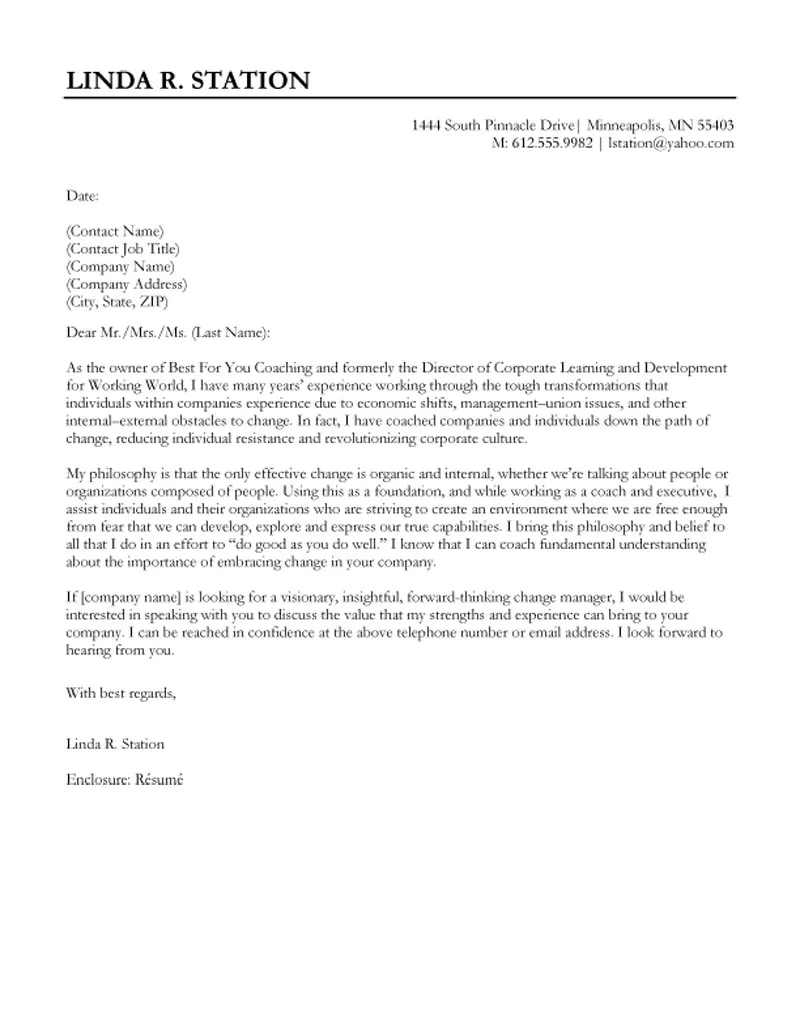
A compelling cover letter is composed of several key components, each playing a vital role in conveying your message effectively. These elements work together to present a complete picture of your suitability for the job. From the top of the letter to the closing, careful attention to these components helps ensure that your application is noticed and remembered.
Contact Information

Begin with your contact information at the top of the cover letter. Include your full name, phone number, email address, and optionally, your LinkedIn profile URL. Ensure your email address is professional, avoiding nicknames or unprofessional phrasing. This section provides the employer with all the necessary details to reach you. Ensure your contact information is accurate and up-to-date. Double-check for typos or errors, as even a small mistake could mean missing an opportunity.
Applicant Information
Follow your contact information with the date and the employer’s contact information. This typically includes the hiring manager’s name (if known), their title, the company name, and the company’s address. Addressing the letter to a specific person shows that you have taken the time to research the company and that you’re genuinely interested in the role. If you cannot find the hiring manager’s name, use a professional salutation such as ‘Dear Hiring Manager.’
Professional Salutation
The salutation sets the tone for your letter. Use a formal salutation, such as ‘Dear Mr./Ms./Mx. [Last Name],’ if you know the hiring manager’s name. If the name is unavailable, use a more general but still professional greeting, such as ‘Dear Hiring Manager’ or ‘Dear [Department Name] Team.’ Avoid overly casual greetings like ‘Hi’ or ‘Hello,’ as they may not be appropriate for all company cultures. Ensure that you spell the recipient’s name correctly; a misspelling can create a negative first impression. It’s essential to research the company’s culture to ensure your salutation is appropriate.
Opening Paragraph Grab Attention

Your opening paragraph is your first and often only chance to grab the reader’s attention. Start with a strong statement that immediately captures the reader’s interest. State the position you are applying for and where you found the job listing. Briefly mention something that demonstrates your enthusiasm for the role and the company. You could include a specific accomplishment, a unique skill, or an anecdote that directly relates to the job. The opening should clearly state your purpose for writing and encourage the reader to continue reading. Avoid generic openings; make sure yours is personalized and relevant to the job description and company culture. Tailor your opening to reflect your understanding of the company and the role.
Highlight Relevant Skills and Experience
This is the core of your cover letter, where you demonstrate how your skills and experience align with the job requirements. Select 2-3 key skills or experiences mentioned in the job description and provide specific examples to illustrate how you have used those skills in the past. Use the STAR method (Situation, Task, Action, Result) to structure your examples and provide context. Explain the situation, the task you were assigned, the actions you took, and the results you achieved. Quantify your achievements whenever possible, using numbers or metrics to showcase your impact. Focus on providing evidence of your ability to perform the job duties. Show, don’t just tell; use specific examples to back up your claims and demonstrate the value you can bring to the company. Make it easy for the hiring manager to see how your skills translate into the role.
Showcase Your Value Proposition
Go beyond just listing your skills and experiences; clearly articulate what makes you a valuable asset to the company. Explain how your unique combination of skills, experiences, and personal qualities will benefit the organization. Research the company and identify their current goals or challenges, then explain how you can help them achieve those goals. Highlight specific contributions you can make, such as improving efficiency, increasing sales, or enhancing customer satisfaction. Focus on demonstrating what you can offer the company and what they will gain by hiring you. Emphasize the value you bring to the table and how your skills will contribute to the company’s success.
Address the Company’s Needs

Demonstrate your understanding of the company’s needs and how your skills and experience can meet those needs. Research the company’s mission, values, and recent initiatives to understand their priorities. In your cover letter, explain how your background aligns with their specific requirements and how you can contribute to their goals. Show that you have taken the time to learn about the company and are genuinely interested in the opportunity. Tailor your letter to address the specific needs outlined in the job description, highlighting the skills and experiences that match their requirements. Prove you’re not just looking for a job but that you are interested in contributing to their success.
Closing Paragraph
Your closing paragraph is the last impression you’ll make, so make it count. Reiterate your interest in the position and your enthusiasm for the company. Thank the hiring manager for their time and consideration. Include a call to action, such as inviting them to contact you for an interview or expressing your eagerness to discuss your qualifications further. Keep the tone professional and enthusiastic, leaving the reader with a positive impression. Avoid clichés and aim for a concise, compelling summary of why you are the best candidate for the job. Make it easy for them to take the next step by providing your contact information again, if needed.
Express Enthusiasm and Call to Action
In your closing paragraph, express your enthusiasm for the opportunity and reiterate your interest in the position. State your eagerness to discuss your qualifications further and invite the hiring manager to contact you for an interview. Clearly state your availability for an interview and the best way to reach you. A strong call to action is essential as it prompts the hiring manager to take the next step. Make sure your closing is confident and professional, reflecting your genuine interest in the role. For example, you could say something like, “I am very excited about the opportunity and would welcome the chance to discuss my qualifications further. Thank you for your time and consideration; I look forward to hearing from you soon.”
Proofread and Edit Your Cover Letter

Before submitting your cover letter, thoroughly proofread and edit it for any errors in grammar, spelling, punctuation, and style. Errors can create a negative impression and may indicate a lack of attention to detail. Use spell-check and grammar-check tools, but also read the letter carefully yourself, as these tools may not catch all errors. Consider having a friend, family member, or career advisor review your cover letter as well. A fresh pair of eyes can often spot mistakes that you may have missed. Ensure the letter is well-organized, concise, and easy to read. Pay attention to your tone and make sure it aligns with the company culture. A polished and error-free cover letter demonstrates your professionalism and attention to detail.
Tailor Your Cover Letter for Each Application
Never use the same cover letter for multiple job applications. Tailor each cover letter to the specific job description and company. Customize your content to highlight the most relevant skills and experiences for each role. Research the company and show that you understand their needs and values. Personalizing your cover letter demonstrates that you have taken the time to learn about the company and are genuinely interested in the position. Review the job description carefully and identify the key requirements. Then, tailor your letter to address those specific needs and highlight the skills and experiences that match the role. Make it clear that you have carefully considered the position and are not simply sending a generic application.