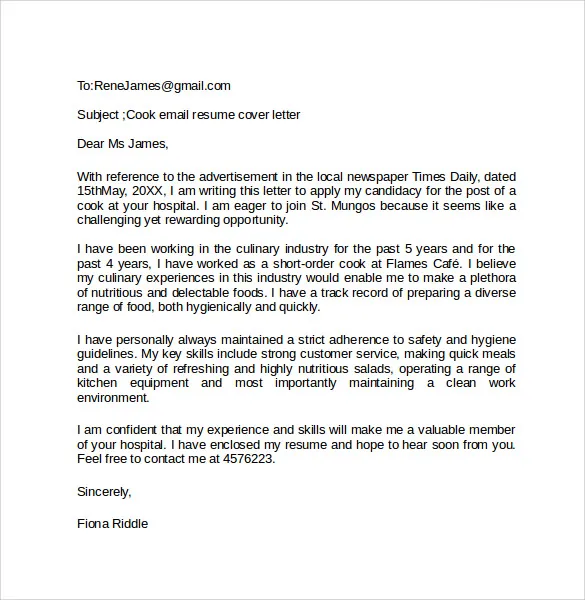
Cover Letter Email Basics
In today’s digital age, the cover letter email is often your first point of contact with a potential employer. It’s a critical component of your job application, setting the tone and providing a snapshot of your qualifications and personality. Unlike traditional mail, an email is immediate and allows you to make an initial impression quickly. Mastering this skill is essential for anyone seeking employment, as a well-crafted email cover letter can significantly increase your chances of landing an interview. The format is also a representation of your organizational skills.
Why You Need a Cover Letter Email
A cover letter email serves several vital purposes. Firstly, it introduces you and your application to the hiring manager. It provides context to your resume, highlighting the specific skills and experiences most relevant to the job. This helps the recruiter quickly understand why you’re a good fit. It also allows you to demonstrate your communication skills, professionalism, and attention to detail. A personalized email shows that you’ve taken the time to research the company and the role, which can significantly boost your application’s appeal. It is an opportunity to express enthusiasm for the position.
Formatting Your Cover Letter Email

The format of your cover letter email significantly impacts how it is received. A clean and professional format is crucial for making a positive impression. Choose a simple, easy-to-read font like Arial or Times New Roman in a standard size (11 or 12 points). Use a clear, concise subject line that immediately indicates the purpose of the email. Break up your text with clear paragraphs and use bullet points to highlight key skills or achievements. Ensure your email is free of typos, grammatical errors, and formatting inconsistencies. The overall goal is to create an easy-to-read document.
Subject Line Essentials
The subject line is the first thing a recruiter sees, so it must be effective. It should be clear, concise, and directly related to the job application. Include the job title and your name in the subject line to help the recruiter quickly identify the email. For example, ‘Application for Marketing Manager - John Doe’ or ‘Resume Submission - Software Engineer’. Avoid generic subject lines like ‘Job Application’ that can easily get lost in a crowded inbox. A well-crafted subject line ensures your email gets opened and read.
Email Body Structure
The body of your cover letter email should follow a logical structure. Start with a polite greeting and an introduction that states your interest in the position and how you found the job posting. In the main body, highlight your key qualifications and skills, using specific examples to demonstrate your achievements. End with a call to action, expressing your enthusiasm for the opportunity and stating your availability for an interview. Maintain a professional tone throughout and keep the email concise, ideally within three to five paragraphs. Remember to include your contact information at the end.
Opening Paragraph

Your opening paragraph sets the tone for the entire email. Start by addressing the hiring manager or recruiter by name, if possible. If you cannot find a specific name, use a general greeting like ‘Dear Hiring Manager’. Clearly state the position you are applying for and where you saw the job posting. Briefly mention why you are interested in the role and the company. This paragraph should grab the reader’s attention and encourage them to continue reading, showcasing your enthusiasm from the start.
Middle Paragraphs Highlighting Skills
The middle paragraphs are where you highlight your skills and qualifications. Tailor these paragraphs to match the job description, emphasizing the skills and experiences most relevant to the role. Use specific examples to illustrate your achievements and the impact you made in previous roles. Quantify your accomplishments whenever possible, using numbers and data to demonstrate your effectiveness. This is your chance to showcase your value and explain why you are the ideal candidate for the position.
Closing Paragraph
Your closing paragraph should reiterate your interest in the position and express your gratitude for the reader’s time and consideration. Reiterate your enthusiasm and state that you are looking forward to hearing from them soon. Include a call to action, such as stating your availability for an interview and providing your contact information. End with a professional closing, such as ‘Sincerely’ or ‘Best regards’, followed by your full name. This ensures a professional and positive conclusion.
Attaching Your Cover Letter and Resume

Properly attaching your cover letter and resume is essential. Always attach both documents as separate files, preferably in PDF format, to maintain their formatting and ensure they can be opened easily on any device. Name the files clearly, using your name and the document type, such as ‘John Doe - Cover Letter.pdf’ and ‘John Doe - Resume.pdf’. Briefly mention in your email that you have attached your cover letter and resume for their review. Double-check that both attachments are included before sending your email.
Cover Letter Email Examples
Sample Cover Letter Email for Job Application
Here’s a sample email for a job application:
Subject: Application for Marketing Manager - Jane Smith
Dear Mr. Johnson,
I am writing to express my interest in the Marketing Manager position at XYZ Company, as advertised on LinkedIn. With five years of experience in marketing strategy and brand development, I am confident I can significantly contribute to your team.
In my previous role at ABC Corp, I led a campaign that increased brand awareness by 30% and generated a 20% growth in leads. I am proficient in SEO, social media marketing, and content creation.
My resume is attached, providing further detail on my qualifications and experience. I am excited about the opportunity to discuss how my skills can benefit XYZ Company and am available for an interview at your earliest convenience.
Thank you for your time and consideration.
Sincerely, Jane Smith
Sample Cover Letter Email for Networking

Subject: Networking Introduction - Jane Doe, Marketing Professional
Dear Mr. Smith,
My name is Jane Doe, and I am a marketing professional with a strong interest in [Industry/Company]. I came across your profile on LinkedIn and was impressed by your work at [Company].
I have [Number] years of experience in [Relevant skills], and I am particularly interested in learning more about [Specific area of interest]. I would be grateful for the opportunity to connect with you and learn from your experience.
I have attached my resume for your reference. Thank you for your time and consideration.
Best regards, Jane Doe
Sample Cover Letter Email for Cold Outreach
Subject: Inquiry Regarding [Job Title/Area] - [Your Name]
Dear Ms. Johnson,
I am writing to inquire about potential opportunities at [Company]. I have been following [Company]’s work in [Industry/Area] with great interest and am impressed by [Specific achievement/project].
With experience in [Relevant Skills], I am confident I could contribute to your team. My resume is attached, offering more details on my background. I would appreciate the opportunity to discuss potential openings.
Thank you for your time, [Your Name]
Tips for a Winning Cover Letter Email
Personalization is Key

Personalizing your cover letter email shows that you’ve taken the time to research the company and the specific role. Tailor the email to match the job description and highlight the skills and experiences most relevant to the position. Mention the company’s values, recent projects, or achievements that resonate with you. This shows you are genuinely interested in the company and have a clear understanding of what the role entails.
Proofread for Errors
Proofreading is crucial to ensure your cover letter email is error-free. Errors, such as typos or grammatical mistakes, can create a negative impression and undermine your credibility. Carefully review your email for spelling, grammar, punctuation, and formatting inconsistencies. Use a spell-checker, but also read the email aloud to catch any errors you might have missed. Having a friend or colleague review your email can also provide an extra layer of quality control.
Follow Up Strategically
Following up on your cover letter email can show your continued interest in the position, but it should be done strategically. If you haven’t heard back within a week or two, sending a polite follow-up email is acceptable. In your follow-up, briefly reiterate your interest in the position and inquire about the status of your application. Be respectful of the recruiter’s time and avoid being overly persistent. A well-timed follow-up can help you stand out and increase your chances of moving forward in the hiring process.