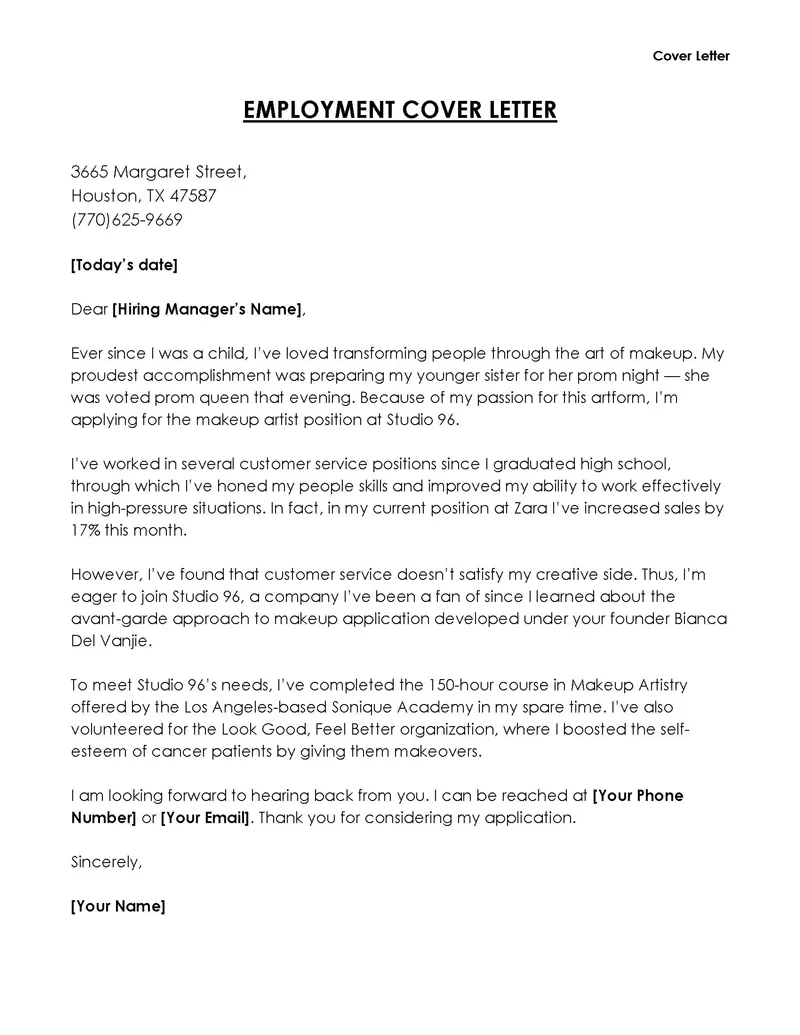
What is a Cover Letter
A cover letter is a one-page document that you submit as part of your job application alongside your resume. It serves as an introduction to your application and provides an opportunity to elaborate on your qualifications, skills, and experience. Unlike your resume, which presents a factual summary of your career, a cover letter allows you to express your personality, demonstrate your enthusiasm for the position, and explain why you are the ideal candidate. It is a crucial tool in the job search process, providing a platform to make a strong first impression on potential employers and ultimately increase your chances of securing an interview.
Why is a Cover Letter Important
Cover letters are important because they provide context to your resume. They allow you to connect your skills and experience to the specific requirements of the job description, demonstrating your understanding of the role and the company. A well-written cover letter showcases your communication skills, attention to detail, and genuine interest in the position. It also gives you the chance to explain any gaps in your employment history or unusual career moves. In a competitive job market, a compelling cover letter can set you apart from other applicants, highlighting your unique value proposition and increasing your likelihood of being selected for an interview. It can be the deciding factor when an employer is deciding between several similarly qualified candidates.
Key Components of a Cover Letter

A well-structured cover letter includes several essential components that work together to create a compelling narrative. These components are the building blocks of a successful cover letter, and each serves a specific purpose in conveying your qualifications and enthusiasm to the hiring manager. Understanding these key components ensures that your cover letter is comprehensive, professional, and effectively communicates your suitability for the role. The following sections provide a detailed breakdown of each element, ensuring that your cover letter makes a lasting positive impression.
Header Information
The header of your cover letter should include your contact information. This typically includes your full name, address, phone number, and email address. The header ensures the hiring manager can easily reach you. Make sure the information is accurate and up-to-date. A professional and clean header sets a positive tone for the rest of the letter and presents you as organized and detail-oriented. Consistency in formatting between your resume and cover letter is also recommended. Your header is the first thing the hiring manager will see, so it’s important to make a good initial impression.
Applicant’s Contact Information
At the top of your cover letter, include your full name, address, phone number, and email address. This allows the hiring manager to easily find your contact information if they wish to reach out to you. Ensure that the email address you use is professional. For example, use your name or initials, rather than a nickname or casual username. Proofread your contact information carefully to avoid any errors that could prevent the hiring manager from reaching you. Using a clear and readable font is crucial for this section, ensuring that your contact details are easily accessible.
Date

Below your contact information, include the date you are writing the cover letter. This helps the hiring manager understand when you submitted your application. Formatting the date consistently is essential to maintain professionalism. Using the month-day-year format (e.g., July 15, 2024) is standard practice. Including the date also provides a sense of timeliness and shows that you are actively seeking employment. Always ensure the date is current, reflecting the day you are submitting the application, so that the hiring manager knows that the information is recent.
Hiring Manager’s Contact Information
If possible, address your cover letter to a specific person. Researching the hiring manager’s name shows initiative and personalization. If you cannot find the name, you can use a general greeting like ‘Dear Hiring Manager’ or ‘Dear [Department] Hiring Team’. Addressing the cover letter to a specific person makes your application feel more personalized, increasing the chances of making a positive impression. If you find the hiring manager’s name, include their title as well to show that you value their role in the company. Check the job posting, company website, or LinkedIn to find the correct contact information, as this small detail demonstrates your attention to detail.
Greeting
The greeting sets the tone for your cover letter. Use a professional greeting, such as “Dear Mr./Ms./Mx. [Last Name],” if you know the hiring manager’s name. If you don’t have a specific name, use “Dear Hiring Manager” or “Dear [Department] Hiring Team.” Avoid generic greetings like “To Whom It May Concern.” A personalized greeting shows that you’ve done your research and increases the likelihood that your application will stand out. Make sure to spell the name correctly, which shows respect and attention to detail. The greeting is your first opportunity to make a positive impression on the reader.
Body Paragraphs

The body paragraphs are the heart of your cover letter, where you showcase your qualifications and express your interest in the position. These paragraphs should be well-structured and concise, conveying your key skills and experiences relevant to the job description. Effective body paragraphs demonstrate your understanding of the role and your ability to contribute to the company. They offer the opportunity to highlight specific achievements and explain how your background aligns with the job’s requirements. Use clear, concise language and tailor each paragraph to address the employer’s needs and expectations.
First Paragraph [Grab Their Attention]
The first paragraph should grab the reader’s attention and immediately state the purpose of your letter. Mention the specific position you are applying for and how you found the job listing. Briefly highlight something that initially caught your interest about the company or the role. Express your enthusiasm for the opportunity and indicate that you are a strong candidate. This paragraph is the hook, so it should be engaging and make the reader want to continue reading. Keep it concise and focused, leaving a positive first impression that encourages the hiring manager to delve deeper into your qualifications.
Second Paragraph [Highlight Your Skills]
In the second paragraph, showcase your relevant skills and experiences. Focus on the requirements listed in the job description. Provide specific examples of how your past accomplishments align with the company’s needs. Quantify your achievements whenever possible, using numbers and data to demonstrate your impact. Relate your skills to the company’s goals and express how you can contribute to their success. This is your opportunity to demonstrate how your skills and experiences make you the ideal candidate. Use action verbs to describe your responsibilities and accomplishments. Maintain a positive and confident tone, highlighting your value to the company.
Third Paragraph [Express Enthusiasm]

The third paragraph should express your genuine interest in the company and the role. Research the company and mention something specific that resonates with you, such as their mission, values, or recent projects. Explain why you are excited about the opportunity and how it aligns with your career goals. Demonstrate your understanding of the company’s culture and its impact on the industry. Show that you have taken the time to learn about the organization, and that you are not simply applying for any job, but are specifically interested in this one. Highlight your commitment to the company’s vision and reiterate your enthusiasm for the chance to contribute.
Call to Action
End your cover letter with a call to action. Clearly state your interest in an interview and how you can be reached. Thank the hiring manager for their time and consideration. Express your availability to discuss your qualifications further. Provide your contact information again for easy reference. This final paragraph should leave a lasting positive impression and encourage the hiring manager to take the next step. Keep the call to action concise and focused, ensuring it reflects your enthusiasm and professionalism.
Closing and Signature
The closing and signature are the final steps in your cover letter, finalizing your presentation. Use a professional closing, such as “Sincerely,” “Best regards,” or “Respectfully.” Leave a few lines for your signature, if you are printing the letter, and then type your full name. If you are sending the letter digitally, you can simply type your name. Ensure your closing aligns with the tone of your letter and reflects your level of professionalism. A clear and concise closing ensures a positive and memorable finish to your cover letter, reinforcing the positive impression you made throughout the document.
Formatting and Design

Formatting and design are crucial for readability and a professional appearance. Ensure your cover letter is easy to read and visually appealing. Proper formatting shows attention to detail, which is a key attribute that employers look for. A well-formatted cover letter improves the overall impression of your application, making it easier for the hiring manager to focus on the content and your qualifications. By paying attention to these formatting details, you can ensure that your cover letter makes a strong first impression and increases your chances of securing an interview.
Font and Style
Choose a professional and easy-to-read font, such as Times New Roman, Arial, or Calibri. Use a font size between 10 and 12 points. Keep the font consistent throughout the document. Use clear headings and subheadings to organize your content. Maintain consistent spacing and margins (typically 1-inch margins). A clean and professional design makes your cover letter more approachable and easier to read. Ensure your font choice complements the overall tone of your letter. Avoid overly elaborate or decorative fonts that can distract from the content. A professional and well-formatted cover letter demonstrates your attention to detail and commitment to presenting a polished application.
Length
Keep your cover letter concise and to the point. Aim for one page maximum. The length of your cover letter should reflect the amount of content you need to effectively communicate. Focus on the most relevant information and avoid unnecessary details. A brief and well-structured cover letter is more likely to be read in its entirety by the hiring manager. Prioritize the most important skills and experiences. Ensure that every sentence contributes to your overall message and demonstrates your value to the company.
Proofreading and Editing

Proofreading and editing are essential steps in ensuring your cover letter is free of errors. Carefully review your cover letter for any grammatical errors, spelling mistakes, and typos. Use a spell checker and grammar checker, but do not rely on them entirely. Read your cover letter aloud to catch any awkward phrasing or unclear sentences. Ask a friend or family member to proofread your cover letter. A polished and error-free cover letter shows attention to detail and professionalism, which are crucial for making a positive impression on potential employers. Errors can undermine your credibility. Proofreading helps demonstrate your commitment to quality and attention to detail.