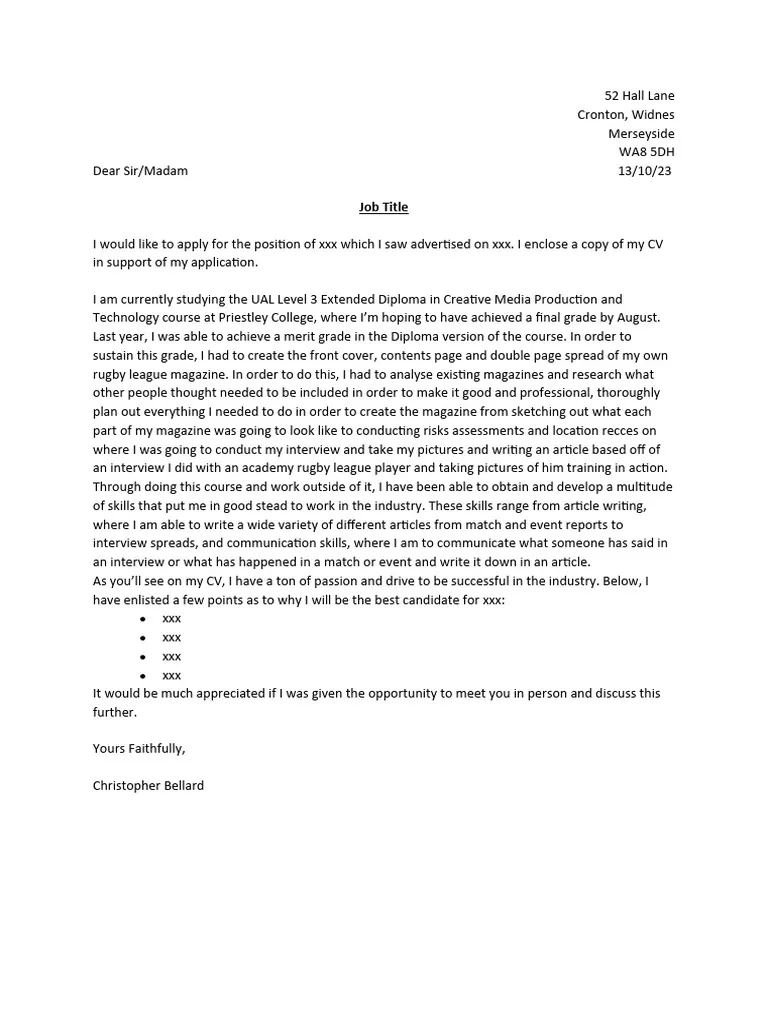
Understanding the Importance of a Communication Skill Cover Letter
A well-crafted cover letter is your first opportunity to make a strong impression on a potential employer. It’s where you can showcase not only your skills and experience but also your personality and passion for the role. In today’s competitive job market, a cover letter that highlights your communication skills is more critical than ever. It’s a chance to demonstrate your ability to articulate your value, connect with the reader, and make a compelling case for why you’re the perfect fit for the position. Failing to emphasize these skills is a missed opportunity, potentially leading to your application being overlooked. Remember, the cover letter serves as a preview of your communication prowess.
Why Communication Skills Matter
Communication skills are the cornerstone of success in almost every professional setting. They encompass your ability to convey information clearly, listen effectively, and adapt your message to different audiences. From the initial contact with a hiring manager to collaborating with colleagues and presenting to clients, strong communication skills are vital. They enable you to build rapport, resolve conflicts, and navigate the complexities of the workplace. Furthermore, in the digital age, effective communication extends beyond face-to-face interactions. It includes email etiquette, professional writing, and the ability to communicate your ideas concisely and persuasively through various channels.
Impact on Job Applications

A cover letter highlighting communication skills significantly increases your chances of getting noticed. It shows recruiters and hiring managers that you possess not only the necessary qualifications but also the soft skills essential for thriving in a team environment. By demonstrating your ability to communicate effectively, you signal that you can understand instructions, collaborate with others, and contribute to a positive work atmosphere. Recruiters often look for candidates who can communicate clearly and concisely, which makes a cover letter a crucial tool. A cover letter that showcases these abilities can set you apart from other applicants and increase your chances of securing an interview.
Key Components of a Compelling Cover Letter
Opening that Grabs Attention
Your opening paragraph is your first chance to captivate the reader. Instead of a generic greeting, consider a statement that immediately showcases your enthusiasm and highlights your most relevant skills. For example, start with a strong statement of intent such as ‘I am writing to express my keen interest in the [Job Title] position, leveraging my proven communication skills to excel in this role.’ This approach immediately informs the reader of your intentions and sets the tone for your cover letter. Making sure your opening is personalized, and not a generic template, also demonstrates to the employer that you are genuinely interested in the position and took the time to tailor your application.
Highlighting Communication Skills

The core of your cover letter should focus on showcasing your communication skills. Explicitly mention these skills, such as active listening, clear writing, public speaking, and the ability to communicate with diverse audiences. However, simply listing skills isn’t enough. You need to demonstrate them through examples. In each paragraph, connect your skills to experiences and provide context, illustrating how you have successfully used them in previous roles or situations. This approach makes your application more impactful and gives recruiters a clearer understanding of your abilities. Focus on what you can do and what you’ve accomplished.
Show, Don’t Tell: Providing Examples
Instead of stating, ‘I have excellent communication skills,’ give specific examples. Describe situations where you successfully communicated, such as leading a project, resolving a conflict, or presenting to a team. For example, ‘In my previous role at [Company], I successfully mediated conflicts between team members by actively listening to their concerns, leading to a more collaborative environment.’ The use of these concrete examples immediately tells the reader of your strengths and abilities. This allows recruiters and hiring managers to gain a clearer understanding of how you can translate your skills to the current open position. Moreover, it supports your claims by showing direct applications.
Quantifying Achievements
Whenever possible, quantify your achievements to demonstrate the impact of your communication skills. Instead of saying, ‘I improved team collaboration,’ say, ‘By implementing a new communication strategy, I improved team collaboration by 30% and reduced project completion time by 15%.’ Numbers and statistics provide concrete evidence of your success and make your accomplishments more compelling. This type of data shows the value you brought to previous employers. Such measurable results give employers a clear understanding of what you’re capable of and make your cover letter more effective. Focus on providing concrete examples.
Showcasing Different Types of Communication Skills

Communication skills encompass a wide range of abilities. Highlight the specific skills most relevant to the job. Adapt your letter to the skills requested in the job description. This helps illustrate that you’re a well-rounded candidate who can communicate effectively in various situations, and this showcases your adaptability. By providing this context, you increase your value to the employer. This means tailoring the language to the particular job and employer. This kind of work allows you to show how you understand the particular company’s specific needs.
Verbal Communication
Verbal communication is critical in any role. Highlight your ability to speak clearly, concisely, and persuasively. Include examples of giving presentations, leading meetings, or public speaking engagements. Mention instances where you’ve used your verbal communication skills to influence others, such as negotiating a deal or pitching an idea. Also, illustrate your abilities as an active listener, as this is a crucial part of verbal communication. Being able to take in information and effectively incorporate it into your next actions is a valuable skill. Providing examples of verbal skills in context will demonstrate your effectiveness in this area.
Written Communication
Written communication skills are crucial for professional success. Demonstrate your ability to write clear, concise, and grammatically correct emails, reports, and other documents. Provide examples of successful written communication, such as writing a persuasive proposal or drafting clear and effective instructions. Highlighting your skills in editing and proofreading also shows attention to detail, a very important skill. Use formal and professional language in all correspondence. This can leave a lasting impression of professionalism and accuracy. Effective written communication is essential for clear and concise communication.
Nonverbal Communication

Nonverbal communication includes body language, facial expressions, and tone of voice. Mention your ability to read and interpret nonverbal cues, which is vital for building rapport and understanding others. Highlight your ability to maintain a positive and professional demeanor in various settings, and show that you can adapt your communication style to suit the needs of the audience. For example, indicate instances where you’ve successfully used nonverbal cues to calm a tense situation or build trust with a client. Understanding how to adapt and use nonverbal cues will greatly improve your chances of success.
Tailoring Your Cover Letter to the Job
Researching the Company and Role
Before writing your cover letter, research the company and the specific role. Understand their mission, values, and the skills they prioritize. Tailor your cover letter to align with their needs and show that you understand their business. This includes identifying the key communication skills and how they relate to the job requirements. Use the company’s website, social media, and industry publications to gather information. By demonstrating your knowledge of the company and its needs, you show that you are serious and interested in the position. Taking the time to gather information can also provide ideas for how to frame your application.
Matching Skills to Requirements

Carefully review the job description and identify the key communication skills and qualifications. Use the job description as a guide to customize your cover letter. Highlight the specific skills that the employer is looking for, and provide examples that demonstrate your abilities. This helps show that you are a strong fit for the role. Don’t just list your skills; explain how you’ve used them to achieve results relevant to the job. This makes your cover letter highly targeted, increasing your chances of being noticed. Tailor your language and style to match the job requirements, showing that you pay close attention to details.
Formatting and Style Tips
Professional Tone and Language
Maintain a professional and respectful tone throughout your cover letter. Use clear, concise language and avoid jargon or overly casual expressions. Ensure your writing style is appropriate for the company culture and industry. The language you use should reflect professionalism and attention to detail, which are important aspects of communication. Proofread your cover letter carefully to eliminate any grammatical errors or typos, which can undermine your credibility. By crafting a professional cover letter, you present yourself as a skilled and polished candidate who pays attention to details.
Proofreading and Editing

Proofreading and editing your cover letter is critical for ensuring accuracy and professionalism. Errors can make a negative impression and detract from your message. Always proofread your cover letter multiple times, and consider having a friend or colleague review it as well. Pay close attention to grammar, spelling, and punctuation, and ensure your writing is clear and easy to understand. A well-edited cover letter demonstrates your attention to detail and commitment to quality communication. A final review is essential to ensure your cover letter makes the best possible impression.
Common Mistakes to Avoid
Generic Cover Letters
Avoid sending generic cover letters that could apply to any job. Generic cover letters fail to make a strong impression and demonstrate a lack of interest in the specific role and company. Tailor your cover letter to each job application and customize the content to show that you understand the requirements. Show that you have done your research on the company. Customize it by mentioning specific skills, experiences, and accomplishments that align with the job description. Personalization shows recruiters that you are genuinely interested and prepared for the position. This makes you much more likely to be considered for the next step.
Focusing Solely on Responsibilities
Don’t focus solely on listing your past job responsibilities. Instead, highlight your achievements and the impact you made in previous roles. Emphasize how your communication skills contributed to your successes. Provide specific examples of how you used your skills to achieve quantifiable results. For instance, if you improved a process by communicating more clearly, give data to showcase the impact. This is more impressive than a list of responsibilities. Show what you accomplished, not just what you did. Show the value you brought to previous employers, which will give an employer a sense of your future potential.
Closing Your Cover Letter Effectively
Expressing Enthusiasm
End your cover letter by expressing your enthusiasm for the opportunity. Reiterate your interest in the role and the company. Briefly summarize your key skills and why you are a strong fit. Show your excitement for the opportunity by mentioning why you want to work for that company. Your closing paragraph should leave a positive and memorable impression. This demonstrates your sincere interest in the position and the organization. It also serves as a final opportunity to reiterate your key value points. Showing enthusiasm increases your chances of getting to the next step in the hiring process.
Call to Action
Conclude with a clear call to action. This is a simple statement encouraging the reader to take the next step, such as requesting an interview. Indicate your availability and willingness to discuss your qualifications further. End with a professional closing such as ‘Sincerely’ or ‘Best regards,’ followed by your name and contact information. This will make sure the reader knows how to contact you. A strong call to action ensures that the recruiter understands your desire to progress. A call to action ensures that the next step in the hiring process will happen.