Highlight Your Skills & Experience
Your cover letter in the hospitality industry is your first opportunity to make a memorable impression. It is not just a formality; it’s a powerful marketing tool designed to showcase your value to a potential employer. Your primary goal is to capture the hiring manager’s attention quickly and entice them to read your resume. Start by clearly stating the position you’re applying for and where you saw the job advertisement. Immediately highlight the skills and experiences most relevant to the role. Think of this as your elevator pitch: a concise summary of why you are the ideal candidate. Tailor your language to the job’s specific requirements and the company’s core values. A compelling opening statement will set the tone for the entire letter and greatly improve your chances of being considered. Demonstrate how your past experiences have prepared you for this new opportunity, creating a clear link between your background and the employer’s needs.
Quantify Your Achievements
Instead of simply stating what you did in previous roles, quantify your achievements. Use numbers and data to provide tangible evidence of your abilities and impact. For example, instead of saying, “Managed guest complaints,” write, “Reduced guest complaint resolution time by 15%.” Rather than writing “Increased sales,” phrase it as “Increased beverage sales by 20% through targeted upselling and promotional strategies.” Quantifying your achievements provides concrete evidence of your capabilities and demonstrates your value to the company. Consider the results you achieved in previous roles. Did you improve customer satisfaction scores? Did you streamline any processes? Did you contribute to revenue growth? Even small improvements can be impactful when presented with supporting numbers. Using quantifiable data shows your proactive approach, strong attention to detail, and ability to deliver measurable results, all of which are highly valued in the hospitality industry.
Showcase Relevant Skills

Highlight only the skills that are most relevant to the specific job you are applying for. Carefully review the job description and identify the key skills the employer is seeking. These may include customer service, communication, problem-solving, teamwork, or specific technical skills like using POS systems or managing reservations. When listing your skills, don’t just mention them; provide brief examples of how you utilized those skills in the past. For example, instead of writing “Excellent communication skills,” write “Utilized strong communication skills to successfully resolve customer issues, resulting in positive feedback and repeat business.” This demonstrates that you possess the skills and have the practical ability to apply them effectively. Include a balanced mix of both soft skills and hard skills, showing a well-rounded skill set that can positively contribute to the team. Always tailor your skills section to match the job description’s requirements precisely, to make your application truly stand out.
Tailor to the Specific Role
Generic cover letters are often immediately dismissed. Always personalize your cover letter for each specific job application. This demonstrates that you have taken the time to thoroughly understand the role and the company, illustrating genuine interest. Begin by carefully reading the job description and identifying the key requirements. Then, focus on the skills and experiences that directly align with those requirements. Use the same keywords and phrases the employer uses to describe the role. This will help your application get noticed by applicant tracking systems (ATS), which often scan for specific keywords. Whenever possible, address specific points mentioned in the job description, showing how your prior experience and abilities make you a strong fit. A tailored cover letter clearly demonstrates that you aren’t just sending out a generic application, but that you are genuinely interested in the specific opportunity and the company’s goals.
Research the Company
Before you begin writing your cover letter, invest time in researching the company. Understand its mission, values, and recent achievements. Explore their website, social media channels, and recent press releases. This research will help you personalize your letter and exhibit a genuine interest in the organization. Knowing the company’s values allows you to strategically align your skills and experiences with their culture. For instance, if the company emphasizes sustainability, highlight any pertinent experience you possess in eco-friendly practices or initiatives. Mentioning specific projects or initiatives the company is involved in showcases that you’ve done your homework and are genuinely enthusiastic about contributing to their success. This research will enable you to gain a better understanding of the company’s needs and craft a more compelling cover letter.
Address Key Requirements

The job description is your primary guide. It outlines the essential requirements the employer seeks in a candidate. Carefully review the job description and ensure your cover letter directly addresses each requirement. Don’t assume the hiring manager will connect the dots; be explicit. Clearly state how your skills and experiences meet their specific needs. If the job requires proficiency with specific software or systems, be certain to mention your experience and proficiency. If they value teamwork, provide concrete examples of your collaborative efforts in prior roles. For each key requirement, supply a concise explanation or example of how you fulfill that requirement. This direct approach makes it easier for the hiring manager to quickly see that you are a strong candidate and increases your chances of securing an interview. This is your opportunity to demonstrate that you have the specific skills and the ability to excel in the role.
Emphasize Your Passion
The hospitality industry is all about people. Employers in this sector are searching for candidates who are genuinely passionate about providing excellent service and creating exceptional experiences. Show your enthusiasm for the industry in your cover letter. This doesn’t mean simply stating you’re passionate; it involves showcasing this passion through your words, your examples, and your actions. Share a concise story about a time you exceeded expectations for a guest or a colleague. Talk about what you love about hospitality: the variety, the challenges, and the ability to make people happy. Use enthusiastic language and a positive tone throughout your letter. Your passion will shine through and help you differentiate yourself from other candidates. A cover letter filled with genuine enthusiasm leaves a strong, positive impression.
Express Enthusiasm for Hospitality
Go beyond generic statements and express genuine enthusiasm for the hospitality industry. Share what truly excites you about working in this field. Do you thrive in the fast-paced environment, and do you enjoy constant interaction with people? Are you passionate about creating memorable experiences for guests and exceeding expectations? Do you find satisfaction in solving problems and ensuring guests have a wonderful experience? Use specific examples to demonstrate your passion. Describe a time you went the extra mile for a guest or a colleague, highlighting your commitment to exceptional service. Explain what genuinely motivates you and drives you to excel in your role. This helps the hiring manager see that you’re not simply seeking employment but are invested in a career in hospitality. When you show genuine excitement and passion, it forges a strong connection with the hiring manager, increasing the chances of a favorable outcome.
Demonstrate a Customer-Focused Approach

The essence of the hospitality industry is centered on delivering unparalleled customer service. Highlighting your customer-focused approach is essential in your cover letter. Provide specific examples of how you’ve consistently prioritized guest satisfaction in your previous roles. This could include effectively resolving complaints, anticipating guest needs, or creating personalized experiences. Use concrete examples to illustrate your approach. Did you receive positive feedback from guests? Did your efforts contribute to improved customer satisfaction scores or increased repeat business? Did you consistently exceed expectations in any way? Demonstrating your customer-focused approach is critical in hospitality. It shows your understanding of the importance of crafting positive guest experiences and building lasting relationships. By showcasing your dedication to customer satisfaction, you can prove you are a strong fit for any hospitality role.
Format and Structure Your Letter
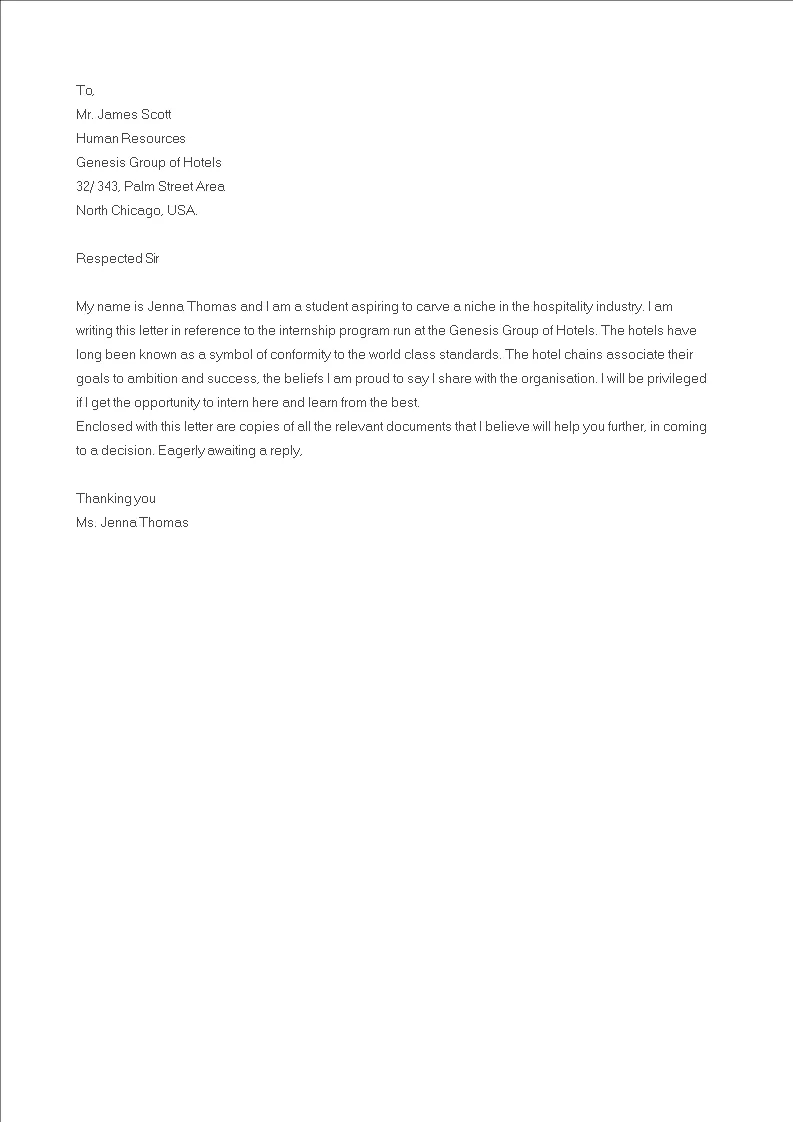
The format and structure of your cover letter are as important as its content. A well-formatted letter is easy to read and creates a positive impression. Choose a professional format with a clean, organized layout. Utilize a standard font like Times New Roman, Arial, or Calibri, keeping the font size between 10 and 12 points for optimal readability. Include your contact information at the top of the letter, along with the date and the hiring manager’s name and title if you know them. Break up your content into well-defined paragraphs and use headings and bullet points strategically to make your letter easier to scan. Avoid overly long paragraphs, which can overwhelm the reader. Keep your letter concise and focused, aiming for a single page if possible. A well-structured and professionally formatted cover letter shows your commitment to quality and increases the likelihood of your application being taken seriously.
Choose a Professional Format
A professional format is critical for making a positive first impression. It communicates that you are organized and pay close attention to detail. Start with a professional heading, including your full name, address, phone number, and a professional email address. Always follow this with the date and the hiring manager’s name and title if you have access to this information. Employ a formal salutation, such as “Dear Mr./Ms./Mx. [Last Name].” Organize your content into clear, concise paragraphs, maintaining a logical and easy-to-follow flow. Use a standard font, such as Times New Roman, Arial, or Calibri, and ensure a consistent font size between 10 and 12 points. Maintain consistent spacing between paragraphs and sections. End with a professional closing, such as “Sincerely” or “Best regards.” Finally, make sure your letter is aligned and easy to read. A professional format signals to the hiring manager that you are serious about the position and have taken the time to present yourself in a polished manner, setting a positive tone from the outset.
Proofread Meticulously

Errors in your cover letter can quickly undermine your credibility, making a negative impression. Proofreading is an essential step in the application process. Carefully check your letter for grammatical errors, spelling mistakes, and typos. Read it aloud to catch any awkward phrasing or issues with sentence structure. Utilize a spell checker, but remember that it’s not foolproof, so you can’t rely on it entirely. It’s always a smart idea to have a trusted friend, family member, or career advisor review your letter as well. They are often better at spotting errors you might have missed. Even minor errors can suggest that you are not detail-oriented, which can affect your chances. Ensuring your cover letter is completely error-free before submitting it shows your professionalism and respect for the hiring manager’s time.
Call to Action
Your cover letter should always end with a clear call to action. Tell the hiring manager what you want them to do next. This could be scheduling an interview, reviewing your resume, or contacting you for more information. Make your call to action specific, direct, and easy to follow. For example, you might write, “I am available for an interview at your earliest convenience, and you can reach me at [phone number] or [email address].” A clear call to action increases your chances of getting a response and moving forward in the hiring process. It demonstrates your enthusiasm for the opportunity and makes it simple for the reader to take the next step. The call to action should be confident without being overly demanding.
Express Availability for an Interview
One of the most effective ways to end your cover letter is by explicitly expressing your availability for an interview. This shows your eagerness to discuss the role further and demonstrate your qualifications in person. Be clear and direct. You might write, “I am available for an interview at your earliest convenience” or “I would welcome the opportunity to discuss my qualifications in an interview.” Provide your contact information, including your phone number and a professional email address. Also, specify your availability. This shows initiative and your willingness to take the next step. A well-crafted interview request leaves a lasting impression and increases your chances of getting invited. Make it easy for the hiring manager to contact you.
Provide Contact Information

Make it easy for the hiring manager to contact you by including your contact information in your cover letter. Provide your phone number and a professional email address at the top and, if space permits, at the bottom. Repeating your contact details is particularly helpful when expressing your availability for an interview. This ensures the hiring manager has multiple ways to reach you. Ensure your email address is professional. If you use voicemail, ensure it has a professional greeting, and that you are prepared to take their call. Providing readily accessible and accurate contact information helps the hiring manager reach you without difficulty and increases your chances of an interview. Always ensure the contact information you provide is current and that you can be reached promptly.