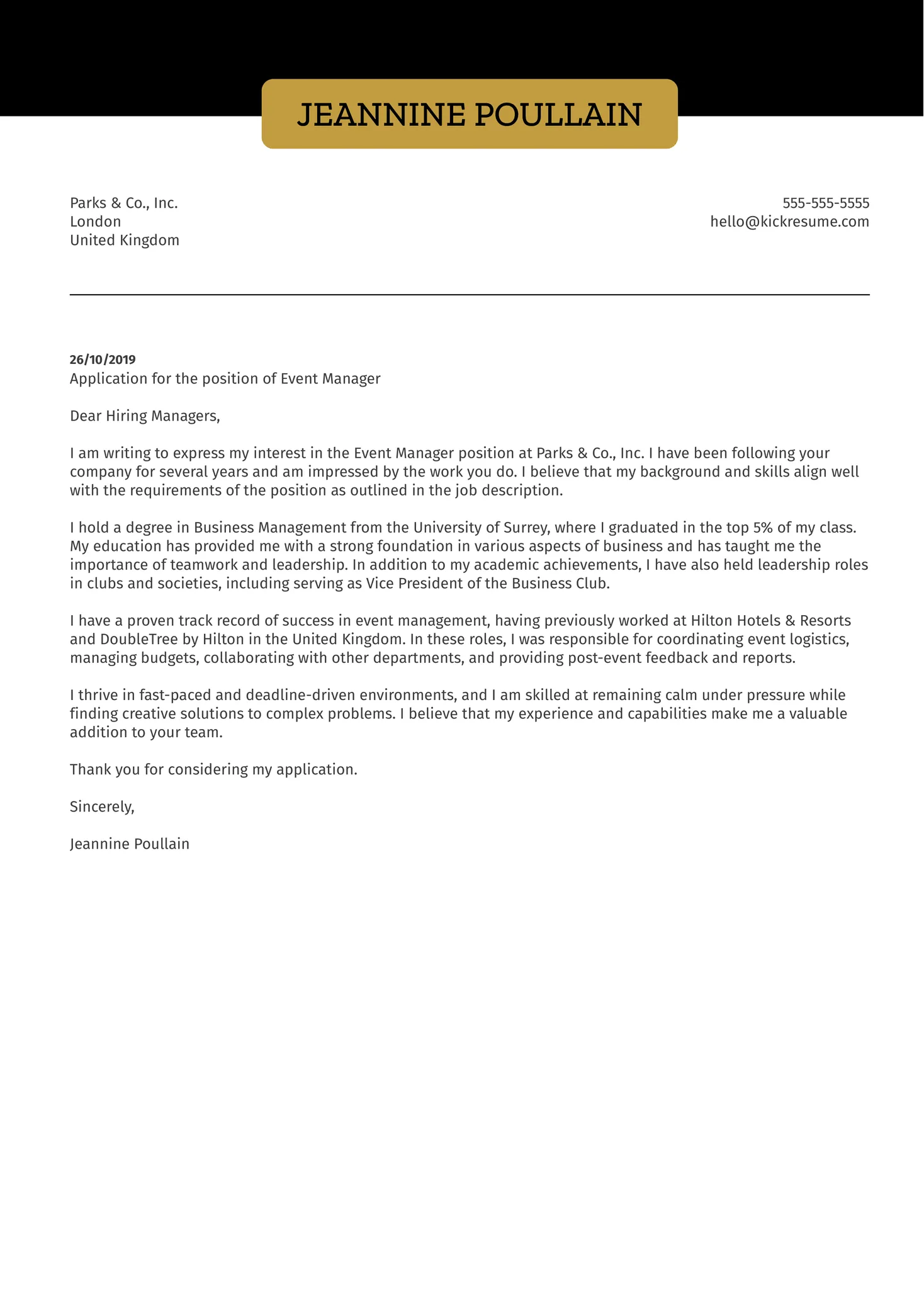
In the competitive world of event management, a well-crafted cover letter can be your golden ticket to landing your dream job. It’s your first opportunity to make a lasting impression on potential employers, showcasing your skills, experience, and passion for the industry. A compelling cover letter is more than just a formality; it’s a strategic tool that can set you apart from other applicants and increase your chances of securing an interview. This guide will provide you with essential tips and strategies to create an event management cover letter that grabs attention and helps you impress.
Crafting Your Event Management Cover Letter
Your cover letter serves as a personalized introduction, allowing you to elaborate on your resume and highlight the experiences and skills most relevant to the specific event management position you’re applying for. It’s a chance to tell your story and demonstrate why you’re the ideal candidate. A great cover letter goes beyond simply restating your resume; it provides context, showcases your personality, and illustrates your enthusiasm for the opportunity. Start by addressing the hiring manager by name if possible; this small detail demonstrates that you’ve done your research and are genuinely interested in the role. Make sure to tailor each cover letter to the specific job and company, as a generic letter will likely end up in the trash. Remember that the primary aim of your cover letter is to compel the hiring manager to read your resume and invite you for an interview.
Understanding the Purpose of a Cover Letter
The primary purpose of a cover letter is to introduce yourself and express your interest in a specific job while showcasing the skills and experiences that align with the job requirements. It’s a chance to explain why you’re a good fit for the role and the company, highlighting how your qualifications and background make you a valuable asset. Think of it as a sales pitch, selling your skills, experience, and enthusiasm to the hiring manager. The cover letter also serves to personalize your application, offering a glimpse into your personality and providing additional context that your resume alone cannot convey. It’s also an opportunity to demonstrate your communication skills, professionalism, and attention to detail, making it an essential component of your job application package. The goal is to secure an interview, and a well-crafted cover letter increases your chances of success.
Highlighting Relevant Skills

In your cover letter, highlight the event management skills that are most relevant to the specific job description. Identify the key skills the employer is seeking and emphasize your proficiency in those areas. Core skills may include project management, budget management, vendor negotiation, logistics coordination, and risk management. Be sure to mention your experience with event planning software or platforms, such as event management software or CRM tools. Showcase your strong communication, interpersonal, and problem-solving skills. Provide specific examples of how you’ve utilized these skills in previous roles to achieve successful outcomes. Customize your skills section to match the requirements of each job application, ensuring you address the employer’s specific needs and requirements. The skills you present should make it clear to the employer that you have what it takes to succeed in the role.
Showcasing Event Planning Experience
Provide details of your relevant experience, demonstrating how you’ve successfully managed events in the past. Your cover letter is the ideal place to go into depth about the events you’ve planned and managed. Clearly state the type of events, your specific roles, and the outcomes achieved. Highlight events that align with the job description’s requirements, emphasizing your experience with similar events or target audiences. Provide concrete examples of your accomplishments and contributions to show your value. Share quantifiable results whenever possible. Mention your experience working with different budgets, managing teams, and coordinating logistics. Consider using the STAR method (Situation, Task, Action, Result) to structure your examples, providing clear and concise stories of your past successes.
Detailing Specific Event Management Roles
When detailing your roles, be specific about your responsibilities, what you did, and the outcomes achieved. For example, instead of saying you “managed logistics,” you could say, “Oversaw all logistical aspects of the annual conference, including venue selection, vendor coordination, and on-site management, resulting in a 15% cost reduction and improved attendee satisfaction.” Include the specific types of events you’ve managed, such as corporate events, weddings, conferences, or festivals. Mention any specialized skills you possess, like experience with virtual events, hybrid events, or sustainable event planning. By providing detailed information, you allow the employer to understand your background and skills, making it easier for them to assess your suitability for the role. Focus on how your roles and skills align with the requirements of the job description and highlight your achievements to demonstrate your value as a candidate.
Quantifying Achievements

Use numbers and data to quantify your achievements and demonstrate your impact. Whenever possible, replace vague statements with measurable results. For example, instead of saying “Increased event attendance,” state “Increased event attendance by 20% through targeted marketing campaigns.” Include metrics such as budget savings, increased revenue, improved customer satisfaction scores, or a reduction in event-related expenses. Be specific about the projects you managed, the goals you set, and the outcomes achieved. Providing hard numbers makes your achievements more compelling and showcases your ability to deliver results. Use data to back up your claims and show the value you can bring to the company. Quantifying achievements is a key way to make your cover letter stand out and make a memorable impression on the hiring manager.
Customizing Your Cover Letter
Customizing your cover letter for each job is crucial for demonstrating genuine interest and understanding of the company and the role. Generic cover letters often appear impersonal, which can decrease your chances of getting an interview. Take the time to research the company and the specific job. Understand their mission, values, and recent events. This research helps you tailor your cover letter to show how your skills align with their needs and demonstrate your interest in the opportunity. Tailor the content to the specific requirements and the company culture, showcasing relevant experiences. By customizing your cover letter, you demonstrate your dedication to the job and your understanding of what the company is looking for, making a more compelling case for why you’re the right candidate.
Researching the Company and Role
Before writing your cover letter, invest time in researching the company and the specific role. Visit their website, social media profiles, and any relevant news articles. Understand their mission, values, and the types of events they manage. This research allows you to customize your letter, demonstrating that you’ve taken the time to learn about the organization. Also, review the job description carefully, identifying the key skills, responsibilities, and qualifications they are seeking. Understand the company’s culture and adapt your tone and language accordingly. By researching the company and role, you show that you’re genuinely interested and can highlight the aspects of your background that align with their specific needs, making your application more impactful.
Tailoring Content to Job Requirements

Make sure to tailor the content of your cover letter directly to the specific job requirements. Carefully review the job description and identify the keywords and qualifications listed. Then, align your skills and experience with the requirements mentioned in the job posting. Customize the language and content to reflect the job’s specific needs. Provide examples that showcase your ability to perform the required tasks. Don’t simply reiterate your resume; expand on the relevant experiences and skills. Show how your past experience uniquely qualifies you to succeed in the role. By tailoring your content to job requirements, you demonstrate to the hiring manager that you possess the skills and experience they seek. Highlight your most relevant achievements, and show why you are the perfect fit.
Formatting and Structure
Proper formatting and structure are crucial for creating a cover letter that is easy to read and professional in appearance. The format should be clear, concise, and visually appealing, as this will make the reader more likely to engage with your content. A well-formatted cover letter shows that you pay attention to detail and that you are capable of communicating effectively. Organize your cover letter into logical sections with clear headings and subheadings, making it easy for the reader to follow your main points. Use a professional font, such as Arial or Times New Roman, and maintain consistent formatting throughout the document. Ensure that the text is well-spaced, with adequate margins, and avoid using excessive formatting, which can distract from the content.
Professional Formatting Guidelines
Follow professional formatting guidelines to ensure your cover letter looks polished and professional. Use a standard business letter format, including your contact information at the top, the date, and the hiring manager’s name and title. Keep your cover letter to one page in length; this shows respect for the reader’s time and allows you to keep your letter focused. Use a clear and easy-to-read font like Arial or Times New Roman, in a size between 10 and 12 points. Maintain consistent spacing and margins (1-inch margins are standard) throughout the document, making it easy for the reader to scan the content. Break up large blocks of text with paragraphs and use bullet points when appropriate. Proofread your cover letter thoroughly to catch any errors in grammar, spelling, or punctuation. This attention to detail demonstrates professionalism and reflects well on your abilities.
Proofreading for Errors

Proofread your cover letter meticulously to eliminate any errors that could undermine your professionalism. Errors in grammar, spelling, or punctuation can create a negative impression, suggesting a lack of attention to detail or a lack of care. Proofread your letter multiple times, and consider having a friend, family member, or career advisor review it as well. Different people often catch different kinds of errors. When proofreading, read your letter aloud to catch any awkward phrasing or grammatical errors. Pay close attention to the proper use of punctuation, ensuring that all commas, semicolons, and periods are used correctly. Checking for inconsistencies in formatting, such as font styles or spacing, is also crucial. A well-proofread cover letter demonstrates your professionalism and attention to detail.
Making a Strong Impression
Your cover letter is your opportunity to make a strong impression, showcasing your personality, enthusiasm, and unique qualities. The goal is to grab the reader’s attention and make them want to learn more about you and your experience. Make sure your cover letter reflects your personality and passion for event management. Show your personality through the language you use and the way you express your ideas. Your genuine interest in the role and the company can leave a lasting impression. Avoid using clichés and aim for a conversational tone that engages the reader. Highlight any unique skills, experiences, or qualifications that set you apart from other candidates. Demonstrate your knowledge of the industry and your understanding of the company’s needs. Make your cover letter memorable to increase your chances of getting an interview.
Expressing Enthusiasm and Interest
Convey your enthusiasm and genuine interest in the role and the company. Be specific about why you’re excited about the opportunity. Mention what specifically appeals to you about the company’s mission, values, or recent events. Show your eagerness to contribute to their team and share what you can bring to the table. Avoid generic statements and express your genuine enthusiasm through your tone and the language you use. You may express your interest in their events, company culture, or the opportunity to learn and grow within the organization. By showing genuine enthusiasm, you create a positive impression and demonstrate that you are more than just an applicant, but a passionate and engaged individual who is genuinely interested in the position and the company.
Concluding with a Call to Action

End your cover letter with a strong call to action, encouraging the hiring manager to take the next step. Thank the hiring manager for their time and consideration, and reiterate your interest in the position. State your availability for an interview and provide your contact information clearly. Make it easy for them to contact you. Encourage them to review your resume and express your excitement about the opportunity to discuss your qualifications further. Your call to action should leave a lasting impression and prompt the hiring manager to take the next step in the hiring process. By providing a clear and direct call to action, you increase your chances of getting an interview and moving forward in the job search.
In conclusion, a well-crafted event management cover letter is a powerful tool that can significantly enhance your job application. By focusing on the key elements of your cover letter, showcasing your skills and experience, customizing your content, and making a strong impression, you can dramatically increase your chances of securing an interview. Take the time to create a cover letter that truly represents your qualifications and passion for event management. Your dedication and attention to detail can make a big difference in the competitive world of event management and help you land your dream job. Good luck with your applications!