Cover Letter for Engineer Fresh Graduate How-To Guide
Landing your first engineering job can be a daunting task. With limited professional experience, you need to showcase your potential and stand out from the competition. A well-crafted cover letter is your secret weapon. This guide provides a comprehensive overview on how to create an effective cover letter for a fresh graduate engineer, emphasizing key components, best practices, and common pitfalls to avoid. From highlighting your skills to expressing your enthusiasm, we’ll equip you with the tools needed to make a lasting impression on potential employers. Let’s dive in to create a compelling cover letter that opens doors to exciting career opportunities.
Understanding the Importance of a Cover Letter
A cover letter is more than just a formality; it’s your first opportunity to make a strong impression. It allows you to tell your story, demonstrate your personality, and explain why you’re the ideal candidate for the job. Unlike a resume, which presents a factual overview of your qualifications, a cover letter gives you the chance to connect with the hiring manager on a personal level. Use it to highlight your skills, express your enthusiasm, and show how your background aligns with the company’s needs.
Why a Cover Letter Matters for Engineers

For engineering graduates, a cover letter is crucial. It gives you a platform to translate your academic achievements and theoretical knowledge into real-world value. Employers want to see how you’ll apply your skills. Your cover letter provides this context. It’s your chance to explain projects, coursework, and any extracurricular activities that showcase your engineering prowess. It’s also where you can demonstrate your problem-solving abilities, attention to detail, and eagerness to learn, qualities highly valued in the engineering field.
Showcasing Your Unique Value Proposition
Every applicant has something unique to offer. Your cover letter is where you highlight what sets you apart. Consider what makes you stand out from other graduates. Have you excelled in a specific area, such as robotics or sustainable design? Did you lead a student project that yielded significant results? Are you proficient in specialized software or tools? Use your cover letter to showcase your distinct value proposition and explain how your skills and experiences can benefit the company.
Key Components of an Engineer Cover Letter
A well-structured cover letter follows a standard format, ensuring clarity and impact. Begin with your contact information, followed by the recipient’s details. The body of the letter should concisely address your interest in the position, highlight relevant skills and experiences, and express your enthusiasm for the role and the company. Conclude with a strong closing and a call to action.
Contact Information and Salutation

Start with your name, address, phone number, and email. If you have a professional online presence, like a LinkedIn profile, include the URL. Address the hiring manager directly if possible, using their name. If you can’t find the name, use a professional salutation like ‘Dear Hiring Manager’. This personal touch shows you’ve taken the time to research the company and position.
Highlighting Your Education and Skills
Even as a fresh graduate, you have valuable skills. Emphasize your educational background, mentioning your degree, major, and any relevant coursework or projects. Focus on skills directly related to the job description. Use keywords from the job posting to demonstrate your understanding of the role and the company’s needs. For example, if the job requires proficiency in CAD software, mention your experience with it, and if possible, showcase projects where you used it.
Quantifying Achievements
Whenever possible, quantify your achievements. Instead of saying ‘I worked on a team project,’ say ‘I led a team of five students to design a new prototype, which resulted in a 15% increase in efficiency.’ Use numbers and data to demonstrate the impact of your work. Quantifying your achievements makes them more credible and highlights your ability to deliver results. For example, mention a high GPA, awards received, or the successful completion of a challenging project.
Skills to Include in Your Cover Letter

Include both hard and soft skills. Hard skills are technical abilities, like programming languages, software proficiency, and design skills. Soft skills are interpersonal abilities, such as teamwork, communication, and problem-solving. Tailor the skills to match the job requirements. If the job description mentions specific software, make sure to highlight your expertise. Show how you’ve used these skills in projects, coursework, or extracurricular activities.
Demonstrating Your Enthusiasm and Fit
Show genuine enthusiasm for the role and the company. Research the company’s mission, values, and recent projects. Explain why you’re interested in working for them specifically. Discuss how your skills align with their goals. Be specific about the role. Explain why the specific job excites you and what contributions you hope to make. This shows you’ve done your homework and are genuinely invested in the opportunity.
Company Research and Tailoring Your Letter
Tailor your cover letter to each job application. Generic cover letters are easy to spot and often get discarded. Research the company thoroughly. Visit their website, read news articles, and check their social media presence. Customize your cover letter by mentioning specific projects, values, or achievements of the company that resonate with you. Show that you understand the company’s needs and can contribute meaningfully.
Expressing Your Career Goals

Briefly mention your career goals and how this position fits into them. Show the hiring manager that you are strategic about your career and that this role is a step toward achieving your aspirations. Express your desire to grow and learn within the company. This demonstrates your long-term commitment and ambition.
Writing a Strong Closing
Close your cover letter with a strong statement that reiterates your interest and value. Thank the hiring manager for their time and consideration. Express your anticipation of hearing from them. Reiterate your contact information. End with a professional closing like ‘Sincerely’ or ‘Best regards’, followed by your name.
Proofreading and Formatting Your Cover Letter
Proofread your cover letter multiple times. Typos, grammatical errors, and poor formatting can undermine your credibility. Ensure your cover letter is well-organized, easy to read, and free of errors. Use a professional font, such as Times New Roman, Arial, or Calibri, and maintain consistent formatting throughout. Have a friend or career counselor review your letter for feedback and errors.
Common Mistakes to Avoid

Avoiding common mistakes is crucial for making a positive impression. These errors can make a potential employer dismiss your application. Take care to avoid the following pitfalls.
Generic Letters and Lack of Personalization
Generic cover letters that could apply to any job application show a lack of effort and interest. Always personalize your cover letter to the specific job and company. This includes using the hiring manager’s name, referencing the company’s projects, and tailoring your skills to match the job description. Show that you’ve researched the company and understand the role.
Typos and Grammatical Errors
Typos and grammatical errors create a negative impression. They suggest a lack of attention to detail and professionalism. Proofread your cover letter multiple times. Use a grammar checker. Ask a friend or career advisor to review it. Ensure your cover letter is polished and error-free.
Ignoring the Job Description

Failing to address the requirements and keywords in the job description is a significant mistake. Review the job posting and ensure your cover letter highlights the relevant skills, experiences, and qualifications. Use keywords from the job description to demonstrate your understanding of the role and your suitability. This will help your application get noticed and considered.
Example Cover Letter for Engineer Fresh Graduate
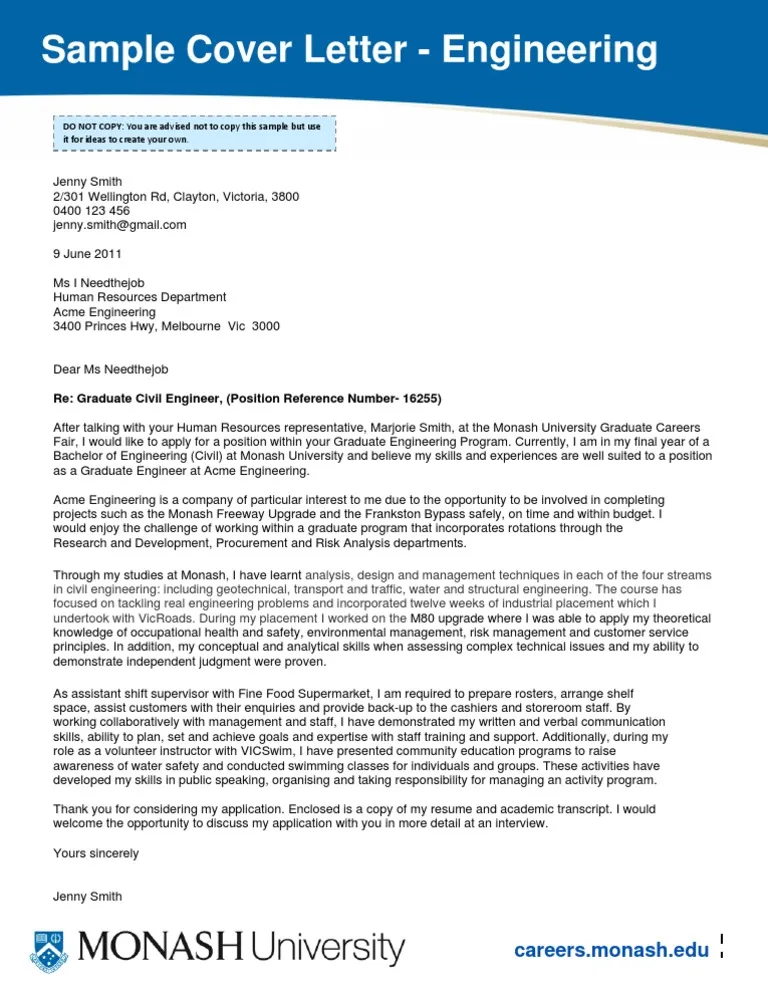
While it is impossible to provide a one-size-fits-all example, studying various examples can assist you in writing a personalized cover letter. Look for templates and examples online, tailoring the structure to your unique background and the specific job you’re applying for. By studying different structures and examples, you can ensure your cover letter is effective and tailored to your needs. Remember to replace the placeholders with your own information to make the example suitable for your application.
Here is a basic structure to help get you started (Remember to tailor this to your specific experience and the job description):
- Your Contact Information
- Date
- Hiring Manager’s Name (if known) and Title
- Company Name and Address
- Salutation (Dear Mr./Ms. [Last Name] or Dear Hiring Manager)
- First Paragraph (Express your interest in the position and company. Mention where you found the job posting)
- Second Paragraph (Highlight your relevant skills and experience. Mention specific projects or coursework. Quantify achievements if possible)
- Third Paragraph (Demonstrate your enthusiasm for the company and the specific role. Explain why you’re a good fit)
- Closing Paragraph (Reiterate your interest, thank the hiring manager, and express your availability)
- Closing (Sincerely, Best regards, etc.)
- Your Typed Name
Call to Action and Next Steps
Your cover letter is a critical tool in your job search. Take the time to create a well-crafted letter that highlights your skills, demonstrates your enthusiasm, and shows why you are the ideal candidate for the engineering role. Proofread meticulously. Customize each cover letter. Follow these guidelines, and you’ll significantly increase your chances of landing your first engineering job. Now it’s time to start applying and get hired. Good luck.