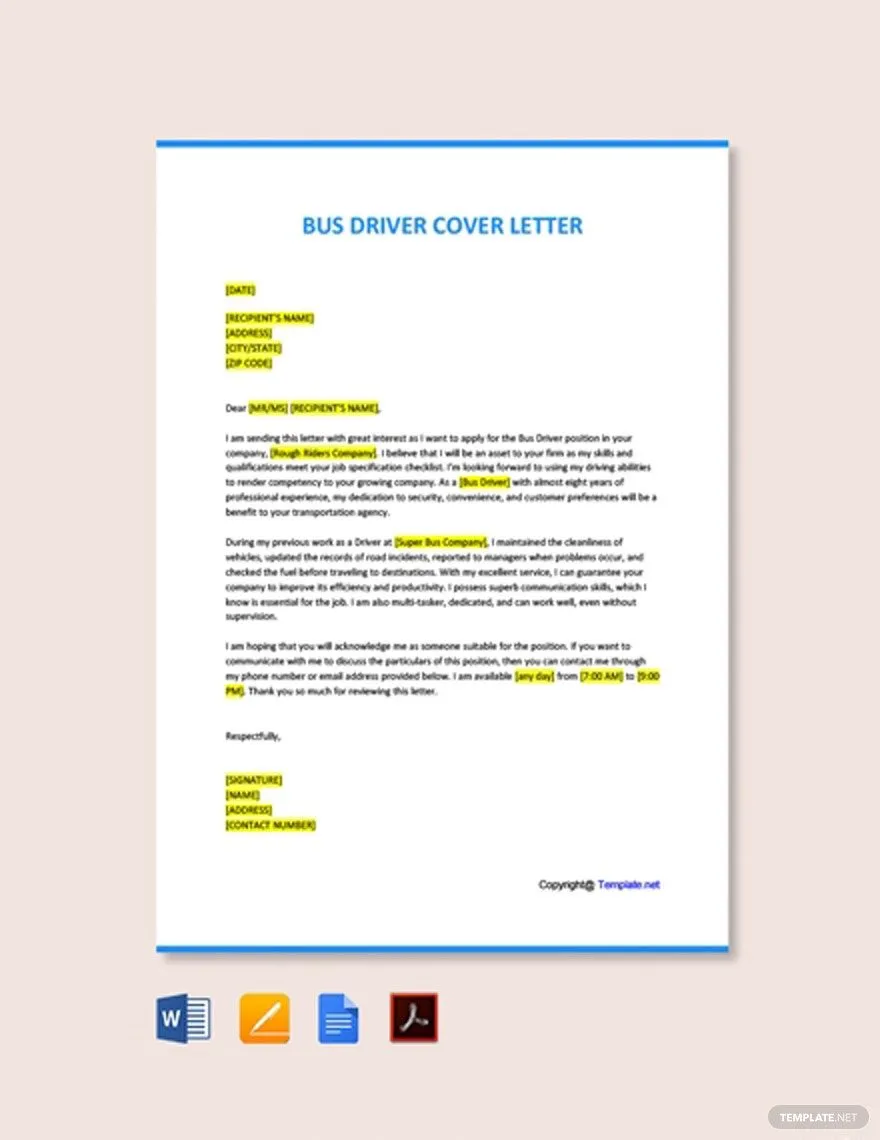
What is a Driver Cover Letter
A driver cover letter is a crucial document that accompanies your resume when applying for driving positions. It serves as your introduction to the hiring manager, allowing you to showcase your qualifications, experience, and personality. Unlike a resume, which provides a factual overview of your career, a cover letter allows you to tell your story and explain why you are the perfect fit for the specific role. It’s your opportunity to demonstrate your enthusiasm, highlight relevant skills, and persuade the employer to invite you for an interview. A well-crafted cover letter can significantly increase your chances of landing the job.
Key Components of a Driver Cover Letter
A strong driver cover letter includes several essential components that work together to make a compelling case for your candidacy. These components ensure your letter is professional, informative, and tailored to the specific job. The key elements, when combined effectively, create a narrative that highlights your strengths and demonstrates your suitability for the position. Skipping any of these vital elements can diminish your impact and lessen your chances of getting noticed by the recruiter or hiring manager.
Contact Information

Accurate contact information is the first impression you make on a potential employer. Ensure all details are correct and up-to-date, to facilitate easy communication and avoid any hurdles in the application process. This section sets the stage for a professional and efficient interaction. Including your contact information at the top of your cover letter is a standard practice, and it makes it easier for the hiring manager to reach you if they are interested in your application.
Your Name and Contact Details
Start with your full name, ensuring it matches the name on your resume. Below your name, provide your current phone number, a professional-sounding email address (e.g., firstname.lastname@email.com), and your mailing address. Double-check all the details for accuracy to ensure the employer can easily contact you.
Company’s Contact Information
Below your contact information, include the hiring manager’s name (if known), their title, the company name, and the company’s address. Addressing the letter to a specific person is always preferable. Research to find the hiring manager’s name. This demonstrates that you have taken the time to research the company and the role, which is a small but important detail that shows your interest.
Professional Greeting

Start your cover letter with a professional greeting. The best practice is to use ‘Dear Mr./Ms./Mx. [Last Name]’ if you know the hiring manager’s name. If you don’t know their name, you can use ‘Dear Hiring Manager’ or ‘Dear [Company Name] Hiring Team.’ Avoid generic greetings like ‘To Whom It May Concern,’ as they can make your letter feel impersonal.
Start with a Strong Opening
The opening paragraph is your first opportunity to grab the hiring manager’s attention. It should be concise, engaging, and clearly state the position you’re applying for. Briefly mention where you saw the job posting and express your interest in the role. This is your chance to make a positive first impression, demonstrating your understanding of the role and expressing your genuine interest in the company. This initial section sets the tone for the rest of your letter and encourages the reader to continue.
Highlighting Your Skills and Experience
The body of your cover letter is where you highlight your relevant skills and experience. Focus on the qualifications and experiences that align with the job description. Use specific examples to demonstrate your abilities. Tailor this section to the specific requirements of the job. This section should provide concrete evidence of your capabilities and suitability for the role. It is important to go beyond simply listing your skills and to provide context and demonstrate how you’ve used those skills successfully.
Driving Experience

Detail your driving experience, including the number of years you’ve been driving, the types of vehicles you’re qualified to operate (e.g., trucks, buses, vans), and the types of routes you’ve driven (e.g., local, regional, over-the-road). Mention any experience with specific equipment or technologies, such as GPS, ELD systems, or automated transmissions. Quantify your experience wherever possible, such as the number of miles driven or the number of deliveries made.
Licensing and Certifications
List your current licenses and certifications, such as a Commercial Driver’s License (CDL) with the necessary endorsements (e.g., Hazmat, Tanker). Include the issuing state and the expiration dates. If you have any other relevant certifications, such as defensive driving courses or first aid certifications, mention them here as well. This section clearly shows the employer that you meet the legal requirements for the job.
Safety Record and Compliance
Highlight your excellent safety record, including any awards or recognition you’ve received for safe driving. Mention your compliance with Department of Transportation (DOT) regulations and any experience with vehicle inspections, maintenance, or reporting. If you have a clean driving record, clearly state that fact. This is an area where you can differentiate yourself, as a good safety record is a key requirement in any driving role. A history of safe driving is a crucial indicator of reliability and professionalism.
Quantifiable Achievements

Provide examples of your accomplishments, such as on-time delivery rates, fuel efficiency improvements, or any instances where you went above and beyond to meet customer needs. Quantify your achievements whenever possible. For instance, instead of saying ‘improved fuel efficiency,’ state ‘improved fuel efficiency by 15%.’ Using numbers and data helps to demonstrate the impact of your skills and experience in a tangible way. Highlighting your ability to achieve positive results helps you stand out.
Demonstrating Your Professionalism
Beyond your technical skills, your cover letter should demonstrate your professionalism. This includes your work ethic, your ability to work independently and as part of a team, and your communication skills. Highlighting your professionalism can help to demonstrate your suitability for a role. You want to show that you are reliable, responsible, and capable of representing the company in a positive way. Showcasing professionalism is key to getting hired and shows your overall suitability for the role.
Addressing the Specific Job Requirements
Carefully read the job description and tailor your cover letter to address the specific requirements. Use keywords from the job description. Explain how your skills and experience align with each of the listed requirements. Customize your cover letter to fit each role. This approach demonstrates that you are a good fit for the role and will demonstrate that you took time to read and understand what the employer is looking for.
Showcasing Your Soft Skills

Include soft skills that are relevant to the driving profession, such as communication, time management, problem-solving, and customer service. Provide examples of how you’ve used these skills in previous roles. Soft skills are highly valued by employers, and demonstrating them can set you apart from other candidates. Highlight your ability to handle stressful situations, your adaptability, and your ability to work effectively with others.
Expressing Enthusiasm and Interest
Express your genuine enthusiasm for the position and the company. Explain why you’re interested in working for them and what attracts you to the role. Show that you are excited about the opportunity to contribute to their success. This can be accomplished through brief but impactful sentences. Mention any specific aspects of the company or the role that appeal to you. Let the hiring manager know you are truly interested in the position.
Call to Action and Closing
Conclude your cover letter with a clear call to action. State your interest in an interview and how you can be contacted. Thank the hiring manager for their time and consideration. End the letter with a professional closing, such as ‘Sincerely’ or ‘Best regards,’ followed by your full name. Ensure that your contact information is included one last time, making it easy for the hiring manager to follow up with you. A well-structured closing leaves the hiring manager with a positive impression.
In conclusion, a well-crafted driver cover letter is an essential tool in your job search. By following these guidelines, you can create a compelling cover letter that effectively showcases your skills, experience, and qualifications, increasing your chances of securing an interview and ultimately, the job. Remember to tailor each cover letter to the specific job and company to maximize your impact.