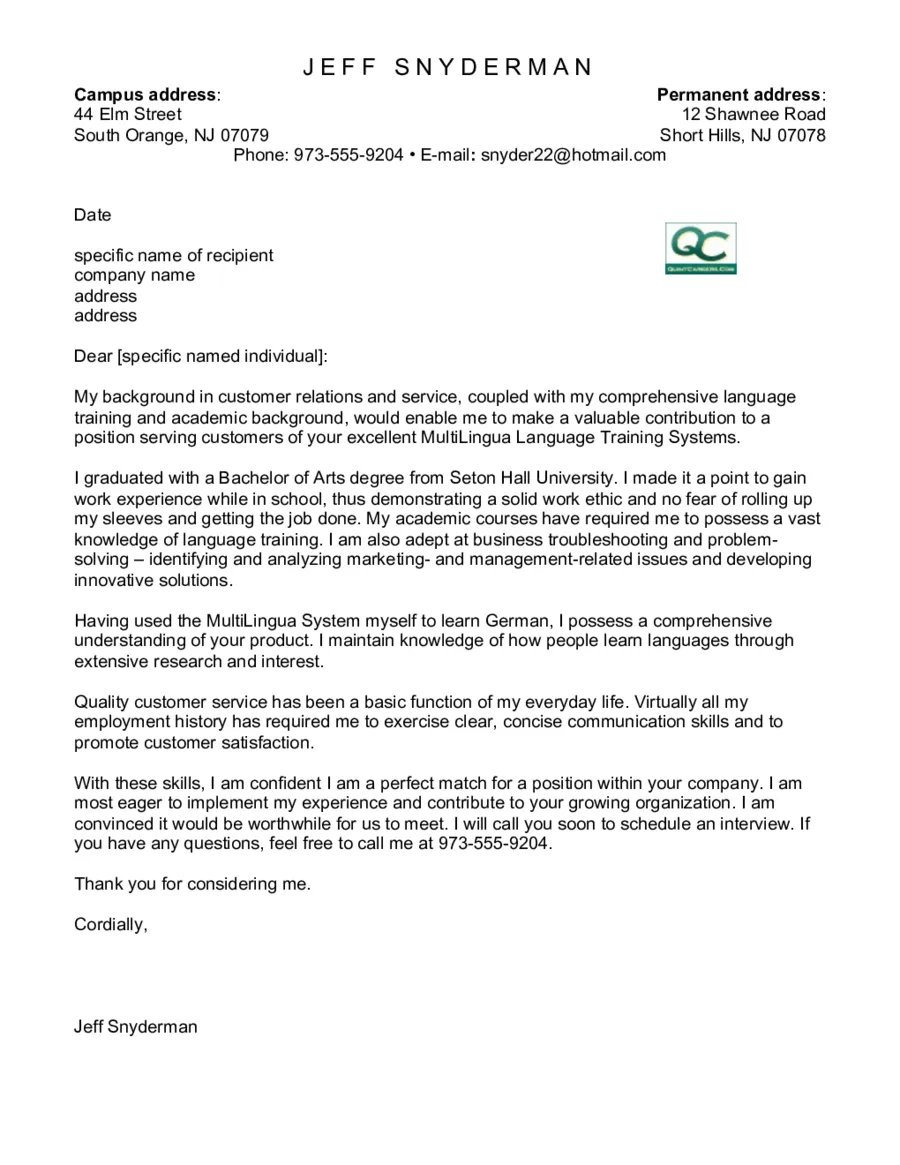
Crafting a Customer Service Cover Letter
A customer service cover letter is your first opportunity to make a strong impression on a potential employer. It’s a critical document that complements your resume and provides a deeper understanding of your qualifications, skills, and enthusiasm for the role. This guide provides a comprehensive approach to writing a cover letter that effectively showcases your experience and increases your chances of landing an interview. Writing a customer service cover letter is crucial to highlight your suitability for the role, making the process more effective by emphasizing your relevant skills and experience. This guide will lead you through everything you need to know to craft a customer service cover letter that gets you noticed, from understanding its importance to avoiding common mistakes.
Understanding the Importance of a Cover Letter
The importance of a well-crafted cover letter cannot be overstated. While a resume provides a snapshot of your professional history, a cover letter allows you to connect with the hiring manager on a personal level, demonstrating your personality and genuine interest in the specific position and company. It’s an opportunity to explain why you are the perfect fit, and what you specifically can offer the organization. It helps create a favorable first impression. The cover letter provides context, and allows you to expand on key skills and achievements in a way that a resume simply can’t.
Why a Cover Letter is Essential

A compelling cover letter significantly increases your chances of getting your resume noticed. It’s your chance to showcase your written communication skills, enthusiasm, and understanding of the role. In customer service, communication is key. A cover letter immediately demonstrates your ability to articulate your thoughts effectively. It sets the stage for your application by telling the hiring manager what makes you the right candidate. It allows you to showcase your personality and enthusiasm in a way that a resume alone cannot. It shows that you’ve taken the time to understand the job requirements and tailor your application accordingly. A cover letter makes your application stand out from the crowd.
Highlighting Your Customer Service Experience
When writing a cover letter, focus on the customer service skills that you have acquired in your previous roles. Provide specific examples to back up your claims, showing how you have handled various situations. This is not just about listing your duties; it is about demonstrating your competence through actual results. Did you improve customer satisfaction scores? Did you reduce resolution times? Did you handle difficult customers effectively? Your cover letter should act as a powerful narrative, conveying your experience, dedication, and ability to succeed in customer service. Use the opportunity to convey your communication skills, empathy, and ability to resolve complex customer issues. Quantify your achievements whenever possible to highlight your contribution.
Tailoring Your Cover Letter
Customize each cover letter for the specific job. Generic cover letters are easily recognizable and often end up in the rejection pile. Analyze the job description thoroughly to understand the company’s needs. Identify the key requirements and highlight your relevant skills and experiences that align with those needs. This shows that you have invested time and effort in understanding the role and the company. This level of personalization shows genuine interest and increases your chances of securing an interview.
Key Sections of a Customer Service Cover Letter

A well-structured cover letter is easy to read and understand. A clear, organized layout helps the hiring manager quickly grasp the key information. The standard sections include the header, salutation, opening paragraph, body paragraphs highlighting skills and experience, closing paragraph, and a professional sign-off. Each section plays a vital role in creating a persuasive and professional letter. A cover letter should be concise and to the point, highlighting the key aspects of your suitability for the role. A well-structured cover letter makes it easier for the recruiter to quickly evaluate your qualifications and experience.
Header and Contact Information
Start with your contact information: Name, phone number, email address, and LinkedIn profile URL. Also include the date and the hiring manager’s name and title, along with the company’s address. This provides the hiring manager with all the necessary information to contact you. The header should be professional, accurate, and easy to read. Ensure that your email address is professional and not casual. Including your LinkedIn profile URL is a great way to provide additional information about your experience.
Greeting the Hiring Manager
Address the hiring manager by name if possible. Researching the hiring manager’s name shows that you’ve done your homework. Use ‘Dear Mr./Ms. [Last Name]’ or, if you don’t know the name, use a professional alternative like ‘Dear Hiring Manager’. Personalizing your greeting creates a more personal connection. Avoid generic greetings like ‘To Whom It May Concern’ as they lack the personal touch. This shows you care about the role and also that you have taken the time to learn about the company and its team.
Writing a Compelling Opening Paragraph

The opening paragraph is your first opportunity to grab the hiring manager’s attention. State the position you’re applying for and how you learned about it. Briefly mention your most relevant skills or experience. This should be an attention-grabbing statement of purpose that hooks the reader. Express your enthusiasm for the role and company. Explain why you are interested in working for them. Make your opening concise, informative, and enthusiastic. Your opening paragraph needs to make a good first impression and make the recruiter want to continue reading.
Showcasing Your Skills and Experience
The main body of your cover letter should highlight your customer service skills and experience. Focus on the skills and experience most relevant to the job description. Use specific examples to demonstrate your abilities. Mention situations where you have successfully resolved customer issues, provided excellent service, or exceeded expectations. Customer service requires a blend of skills, including active listening, problem-solving, empathy, and clear communication. Emphasize how you have applied these skills in previous roles to achieve positive outcomes. Provide specific examples of situations where you applied these skills. Show the recruiter, don’t just tell them, you have what it takes to succeed.
Quantifying Your Achievements
Whenever possible, quantify your achievements. Use numbers and data to demonstrate the impact you’ve made in previous roles. Instead of saying ‘Improved customer satisfaction,’ say ‘Increased customer satisfaction scores by 15% within six months.’ Quantifying your achievements makes your accomplishments more tangible and impressive. Use metrics such as resolution times, customer retention rates, or sales targets achieved to provide a clear picture of your impact. Numbers add credibility to your claims and show the value you can bring to the company. Numerical data provides evidence of your ability to achieve results. Quantifiable results are more persuasive.
Demonstrating Soft Skills

Customer service relies heavily on soft skills. Highlight your ability to communicate effectively, empathize with customers, and remain calm under pressure. Demonstrate these soft skills through specific examples. For example, ‘Successfully handled over 50 irate customer calls per day, maintaining a 95% satisfaction rate.’ The best approach is to show, rather than tell. Provide specific examples that illustrate these skills in action. Emphasize your adaptability, problem-solving abilities, and teamwork skills. Show how you have handled difficult customer interactions. Make sure to demonstrate your communication skills, both written and verbal, in every part of your cover letter.
Closing Your Cover Letter
The closing paragraph summarizes your interest in the role and the company. It reiterates your key qualifications and expresses your enthusiasm for the opportunity. It should leave the reader with a lasting positive impression. Keep it concise and confident. Thank the hiring manager for their time and consideration. Reiterate your interest in the role and company, and make sure to express your enthusiasm.
Expressing Your Enthusiasm
Express your genuine enthusiasm for the opportunity and the company. Show that you are not just looking for any job. Expressing your enthusiasm is a key component of a successful cover letter. Mention specific aspects of the role or company that appeal to you. Research the company’s mission, values, and recent achievements. Mention something that resonates with you to show your genuine interest. This demonstrates that you are a good fit and will bring value to the team.
Call to Action

Include a clear call to action. State your availability for an interview and your eagerness to discuss your qualifications further. Make it easy for the hiring manager to take the next step. Offer your contact information again. This shows initiative and helps move the hiring process forward. A strong call to action increases your chances of getting an interview.
Formatting Your Cover Letter
Proper formatting is essential for readability. A well-formatted cover letter is easy on the eyes and makes a good first impression. This reflects your attention to detail and professionalism. It’s a clear sign that you pay attention to detail. Ensure your cover letter is visually appealing and easy to read.
Font and Readability
Choose a professional font like Arial, Calibri, or Times New Roman. Use a font size between 10 and 12 points for readability. Keep the font style consistent throughout the document. The goal is to make your cover letter as easy to read as possible. Clear fonts make the document much easier to read. Choose a readable font and maintain consistency.
Length and Structure

Keep your cover letter concise, ideally no more than one page. Use a clear structure with paragraphs that are easy to follow. Use bullet points to highlight key skills or accomplishments. Use short paragraphs and plenty of white space to make the document easy to read. Ensure that you have an engaging structure with a compelling opening, detailed body, and a strong closing. This makes it easy for the reader to quickly scan and understand the key information.
Proofreading and Editing
Proofread your cover letter carefully for any typos, grammatical errors, or inconsistencies. Use spell-check and grammar-check tools. Have a friend or colleague review your cover letter to catch any errors you might have missed. A polished cover letter demonstrates your attention to detail and professionalism. Errors can create a bad impression and may cost you the job. Proofread carefully and thoroughly, and then have someone else do the same.
Common Mistakes to Avoid
Certain mistakes can significantly decrease the effectiveness of your cover letter. Avoiding common errors can make a huge difference in the impression you create. Pay attention to the most common mistakes, so you don’t fall prey to them. Being aware of what to avoid will help you write a more effective cover letter. Avoiding mistakes helps you stand out for the right reasons.
Generic Cover Letters

Avoid using a generic cover letter that is not tailored to the specific job. Hiring managers can easily spot generic letters, and they rarely result in an interview. Customize your cover letter for each job application. Mention the specific company and position. Show you understand the requirements of the job. Generic cover letters make you seem uninterested or lazy. Always customize your cover letter. Demonstrate your specific interest in that role and company.
Typos and Grammatical Errors
Typos and grammatical errors can immediately disqualify your application. Always proofread your cover letter carefully. Use spell-check and grammar-check tools. Ask someone else to review your letter. A polished, error-free cover letter demonstrates your attention to detail. These mistakes show that you don’t care about detail or quality. Make sure to carefully review your work before you submit it.
Not Tailoring to the Job Description
Failing to tailor your cover letter to the job description is a major mistake. The cover letter should demonstrate how your skills and experience match the job’s requirements. Read the job description carefully, and then customize your letter to highlight relevant qualifications. Demonstrate that you have taken the time to understand the role. Tailoring your cover letter to the job description shows your interest. This shows a recruiter that you are serious about the role and have the skills they need. The most effective cover letters are specific and demonstrate your suitability.
Customer Service Cover Letter Examples
Reviewing customer service cover letter examples can help you understand how to effectively showcase your skills and experience. Looking at samples provides a framework and inspiration to structure your own letter. Understanding different approaches can greatly assist with writing your own. Use the samples as a guide and tailor them to your specific situation. Use these examples as inspiration to enhance your cover letter.
Entry-Level Cover Letter Example
An entry-level cover letter should highlight any customer service experience, even if it’s from part-time jobs or volunteer work. Focus on soft skills like communication, empathy, and problem-solving. Mention any training or certifications you have. Focus on your enthusiasm and eagerness to learn. You can demonstrate your potential to succeed in the role, even with limited experience. An entry-level cover letter offers you an opportunity to display your aptitude. It’s a chance to make a strong impression.
Experienced Professional Example
Experienced professionals should highlight their accomplishments with quantifiable results. Focus on your achievements in previous roles, such as increased customer satisfaction, reduced resolution times, or successful complaint resolution. Provide data and specific examples. Demonstrating the impact of your work is critical. Detail your history of successful customer service. Illustrate your specific achievements.
Tips for Standing Out
To truly stand out, take extra steps to make your cover letter exceptional. These small things can set you apart from the competition. Adding a little effort to your application can go a long way. Go above and beyond the basics to impress the hiring manager. Taking additional steps can greatly increase your chances.
Researching the Company
Research the company thoroughly before writing your cover letter. This shows you are genuinely interested in working for them. Understand their mission, values, and recent achievements. Mention something specific that resonates with you. This level of detail shows you are proactive. It demonstrates your genuine interest and that you are not just sending out mass applications.
Using Keywords
Incorporate keywords from the job description into your cover letter. This helps your application get past applicant tracking systems (ATS) and makes it clear you are a good fit for the role. Carefully review the job description and use relevant keywords throughout your cover letter. Use industry-specific terms to show your familiarity. Using the correct keywords will help get your application seen.
Following Up
Follow up on your application a week or two after submitting it. This shows your continued interest in the role. Send a polite email to the hiring manager or recruiter. Reference the position you applied for and reiterate your interest. This shows that you are proactive. A follow-up can help you keep your application at the front of the recruiter’s mind. Use a follow-up to reiterate your key qualifications.
Writing a customer service cover letter that stands out can take some time, but it’s an investment worth making. By following these guidelines, you can create a cover letter that grabs the attention of hiring managers and increases your chances of landing an interview. This is your chance to shine. Crafting a perfect cover letter will have a big impact on your career.