Cover Letter Secrets
A cover letter is your initial introduction to a potential employer, a crucial element in your job application package. It serves as more than just a formality; it’s an opportunity to present yourself as the ideal candidate. Knowing the secrets to crafting a compelling cover letter can significantly increase your chances of getting noticed and securing an interview. This article will explore the essential components and techniques to help you write a great cover letter that captures the attention of hiring managers and sets you apart from the competition. The goal is to transform your cover letter from a generic document into a persuasive marketing tool, highlighting your unique value and increasing your chances of success in the job market.
Understanding the Cover Letter’s Role
The role of a cover letter extends beyond merely restating the information found in your resume. It’s a platform to showcase your personality, enthusiasm, and specific suitability for the role. Your resume provides a snapshot of your past accomplishments and skills, while the cover letter gives you the chance to weave a narrative that connects those experiences to the requirements of the job. It also provides an opportunity to address any gaps in your resume, explain your career goals, and demonstrate your understanding of the company and the position.
Why a Cover Letter Matters

In a competitive job market, a cover letter can be the deciding factor in whether your application is considered. It allows you to make a positive first impression, demonstrating your communication skills and attention to detail. A well-crafted cover letter shows that you’ve taken the time to understand the job requirements and tailor your application accordingly. It also allows you to express your genuine interest in the company and the specific role, which can make a significant difference in how you’re perceived by the hiring manager. Many employers rely on cover letters to assess a candidate’s writing skills, professionalism, and overall suitability for the position. This is why it is crucial to invest time and effort in this important document.
Key Components of a Winning Cover Letter
Creating a winning cover letter involves more than just listing your qualifications; it’s about strategically presenting your skills and experiences to match the specific needs of the job. Each component, from your contact information to your closing, plays a critical role in making a positive impression. Focusing on these key elements ensures that your cover letter is clear, concise, and tailored to the job requirements. Attention to detail is crucial; ensure that your letter is free of grammatical errors and formatting issues that could undermine your credibility. Using a professional tone, while allowing your personality to shine through, also helps to create a strong connection with the reader.
Contact Information
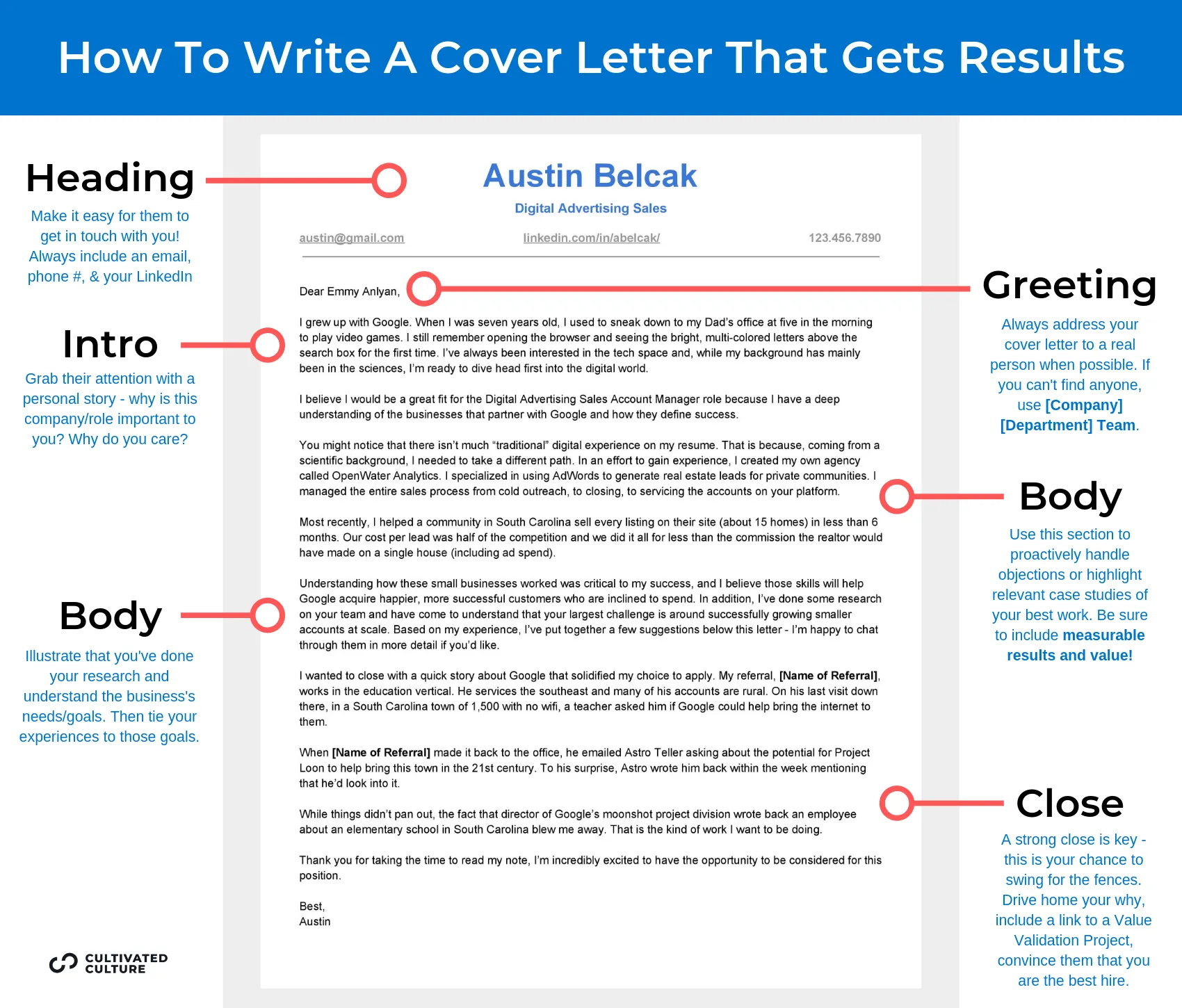
Start with your contact information at the top of your cover letter. This should include your name, phone number, email address, and LinkedIn profile URL (if you have one). Make sure your email address is professional-sounding. Double-check that all the information is accurate and up-to-date so that potential employers can easily reach you. Placing this information at the top, aligned to the left or right, makes it immediately accessible to the hiring manager, streamlining the process of contacting you for an interview. This small detail can significantly enhance the professionalism of your letter and ensure smooth communication.
Greeting

Address your cover letter to a specific person whenever possible. If you can find the hiring manager’s name, use it. This demonstrates that you’ve done your research and are genuinely interested in the position. Use a professional greeting such as “Dear Mr./Ms./Mx. Last Name.” If you’re unsure of the hiring manager’s name, it is acceptable to use “Dear Hiring Manager” or “Dear [Department] Team.” Avoid generic greetings like “To Whom It May Concern,” as these lack the personal touch that can make your cover letter stand out. Tailoring the greeting to the recipient immediately shows your attention to detail and your interest in the position.
Opening Paragraph
The opening paragraph is your chance to grab the reader’s attention. Start with a strong statement that immediately explains why you’re writing and the specific position you’re applying for. Briefly mention how you learned about the job and express your enthusiasm for the opportunity. Consider including a compelling sentence that highlights your most relevant skill or accomplishment. This initial hook should encourage the reader to continue reading and learn more about your qualifications. Keep it concise and focused; the goal is to create a positive first impression and set the tone for the rest of your cover letter.
Highlighting Relevant Skills and Experience
The body of your cover letter is where you showcase how your skills and experience align with the job requirements. Focus on the most relevant aspects of your background and provide specific examples of your accomplishments. Use the job description as a guide to identify the key skills and qualifications the employer is seeking. Tailor your letter to demonstrate how your experience has prepared you for this role, emphasizing the value you can bring to the company. Provide concrete examples of how you’ve used your skills to achieve results in previous roles. Do not merely list your skills; instead, explain how you applied them and what you achieved.
Quantifying Achievements

Whenever possible, quantify your achievements. Use numbers, data, and specific metrics to demonstrate the impact of your work. Instead of saying “Improved sales,” state “Increased sales by 15% in one quarter.” Providing these tangible results makes your accomplishments more credible and impressive. Highlight your successes using the STAR method: Situation, Task, Action, Result. This framework helps you structure your examples in a clear and impactful way. Quantifiable achievements provide concrete evidence of your capabilities and demonstrate the value you can bring to the company. Using numbers adds credibility to your claims and showcases your accomplishments more effectively.
Tailoring Your Letter to the Job
Customizing your cover letter for each job application is crucial. Generic cover letters are easily recognizable and often end up in the rejection pile. Review the job description carefully and adjust your letter to align with the specific requirements and the company’s values. Show that you understand the company’s mission, culture, and the challenges of the role. Use keywords from the job description to demonstrate that you meet the requirements. Tailoring shows that you have taken the time to understand the position and are truly interested in the opportunity. By doing so, you demonstrate your attention to detail and the effort you are willing to put into securing the job.
Expressing Enthusiasm and Fit
Expressing genuine enthusiasm and demonstrating a good fit with the company is essential. Explain why you’re excited about the specific opportunity and why you believe you are a good match for the company’s culture and values. Research the company and mention specific aspects that resonate with you. Show that you’re not just looking for any job; you’re specifically interested in this position and this company. This can be done by mentioning the company’s recent achievements, projects, or initiatives that appeal to you. Personalize your letter to showcase your personality and your genuine interest in the opportunity.
Call to Action and Closing

In your closing paragraph, reiterate your interest and include a clear call to action. Thank the hiring manager for their time and consideration. State that you look forward to the opportunity to discuss your qualifications further. End with a professional closing such as “Sincerely” or “Best regards,” followed by your name. Always make it easy for the hiring manager to contact you. Include your contact information one more time. The call to action encourages the hiring manager to take the next step and is a critical part of your cover letter. The closing paragraph should leave a lasting positive impression.
Formatting and Presentation
The format and presentation of your cover letter are just as important as the content. Use a professional font, such as Times New Roman, Arial, or Calibri, with a font size between 10 and 12 points. Use standard margins and ensure your letter is well-organized, with clear paragraphs and spacing. Avoid using excessive colors, graphics, or unusual fonts. Keep your cover letter concise, ideally within one page. A well-formatted letter is easier to read and conveys professionalism. Poor formatting can distract from your message and make a negative first impression. The goal is to present your information in a way that is both appealing and easy to digest, making it convenient for the hiring manager to review your qualifications.
Proofreading and Editing
Proofread your cover letter multiple times to catch any errors in grammar, spelling, or punctuation. Errors can undermine your credibility and make you appear careless. Ask a friend, family member, or career counselor to review your letter. They may spot mistakes that you’ve missed. Reading your letter aloud can help you identify awkward phrasing or sentences. Ensure consistency in formatting, such as the use of commas, periods, and capitalization. Proofreading is a critical step in ensuring that your cover letter reflects your professionalism and attention to detail. Take your time, review carefully, and make sure your final product is polished.
Writing a great cover letter is an essential part of the job application process. By following these secrets and incorporating the key components, you can create a compelling cover letter that effectively showcases your skills, experience, and enthusiasm. A well-crafted cover letter can make a significant difference in your job search, increasing your chances of getting an interview and landing your dream job. Invest the time and effort to create a cover letter that truly reflects your qualifications and personal qualities.