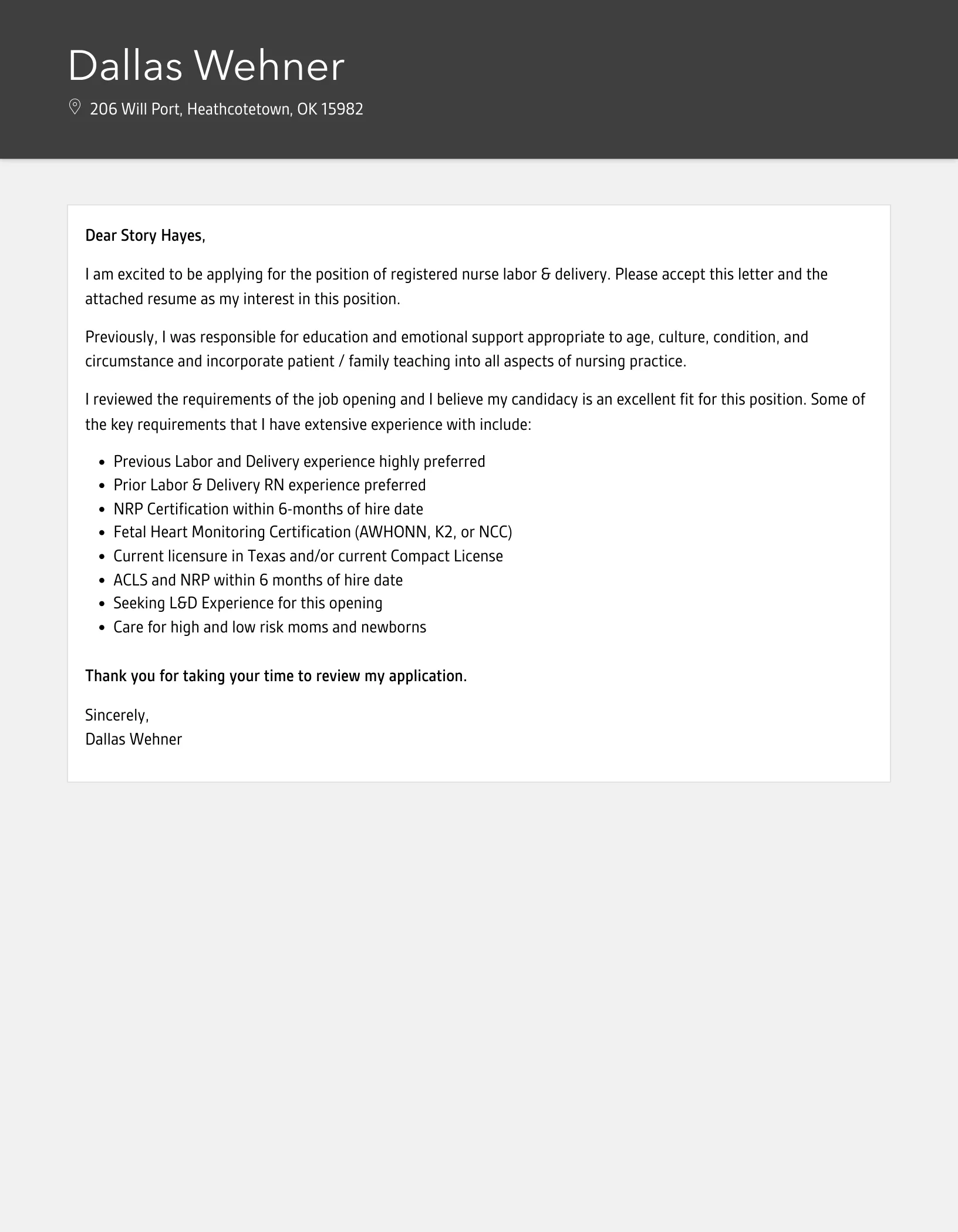
Crafting Your Labor & Delivery Nurse Cover Letter
A well-crafted cover letter is crucial for any Labor & Delivery (L&D) nurse looking to make a strong first impression. It’s your chance to showcase your skills, experience, and passion for providing exceptional care to mothers and newborns. This guide provides essential tips on how to write a cover letter that highlights your qualifications and increases your chances of landing your dream job. Remember, your cover letter isn’t just a formality; it’s a marketing tool that sells your abilities and personality to potential employers. Take your time and tailor it to each specific position.
Understanding the Role of a Labor & Delivery Nurse
Before you start writing, understand the responsibilities. L&D nurses provide comprehensive care to women during labor, delivery, and the immediate postpartum period. This includes monitoring fetal heart rates, assisting with deliveries, administering medications, educating patients, and providing emotional support. You should demonstrate a strong understanding of these responsibilities in your cover letter to show you are a suitable candidate. Your cover letter should clearly convey your understanding of the unique demands of this role, showcasing your compassion, expertise, and ability to thrive in a fast-paced environment.
Essential Skills for L&D Nurses

Highlighting essential skills is paramount. L&D nurses require a diverse skill set, including clinical expertise, communication skills, and the ability to remain calm under pressure. Make sure to emphasize skills that align with the job description. Focus on skills such as fetal heart rate monitoring, knowledge of common complications, proficiency in assisting with vaginal and cesarean deliveries, and the ability to educate and support patients and their families. Do not underestimate the importance of demonstrating these abilities in your application.
Key Elements to Include in Your Cover Letter
There are several key elements that must be included in your cover letter. These elements provide a solid foundation for your introduction and the core content of your letter. These elements should include your contact information, a professional summary, your key experiences, your skills, your passion for labor and delivery nursing, and your overall goal of obtaining the position. These elements help highlight your experiences and qualifications.
Your Contact Information
Begin your cover letter by providing your full name, address, phone number, and professional email address. Ensure that your email address sounds professional. This information ensures that the hiring manager can easily contact you. Double-check the accuracy of your contact information. Make it easy for the employer to reach you by providing correct details.
Professional Summary & Objective

In your opening paragraph, craft a compelling summary or objective statement. If you have significant experience, a professional summary is better; if you are early in your career, a clear objective is more appropriate. Briefly describe your key skills, experience, and what you are hoping to achieve in the role. The main goal is to catch the reader’s attention and make them want to know more. Make it clear that you’re enthusiastic about the opportunity and the healthcare organization.
Highlighting Your Experience
Detail your relevant work experience, highlighting your accomplishments and responsibilities in previous L&D positions. Use action verbs to describe your duties and focus on what you achieved. Include the name of each hospital or clinic, your job title, and the dates you were employed. If you have experience in a specific area, such as high-risk pregnancies or specific delivery methods, make sure to include this information in your cover letter.
Quantifying Your Accomplishments
Whenever possible, quantify your achievements. For example, mention the number of deliveries you’ve assisted with, the percentage of improved patient outcomes you achieved, or any specific protocols or procedures you helped implement. Quantifiable results provide concrete evidence of your effectiveness. Use numbers to back up your claims, such as ‘Successfully managed over 100 deliveries’ or ‘Reduced patient readmission rates by 15%’. Quantifying your achievements makes your cover letter more impactful.
Showcasing Your Skills

Showcase both your technical and soft skills. L&D nursing requires a blend of clinical proficiency and interpersonal abilities. Providing a list of skills in these areas will allow the hiring manager to understand your qualifications. Tailor your skills section to align with the specific requirements outlined in the job description. Focus on your most relevant skills to demonstrate you can meet the needs of the position. Include both technical and soft skills to display your expertise.
Technical Skills
List your technical skills related to L&D nursing. This might include fetal monitoring, epidural management, assisting with vaginal deliveries and C-sections, and knowledge of relevant medical equipment. Also include any certifications you hold, such as BLS, ACLS, and NRP. Detail any specializations like high-risk pregnancies or experience with specific procedures. Show proficiency in electronic medical records systems, if applicable. Be as specific and detailed as possible when listing your technical skills.
Soft Skills
Highlight your soft skills, such as communication, empathy, teamwork, and problem-solving. L&D nurses must be able to communicate effectively with patients, families, and other healthcare professionals. Emphasize your ability to provide emotional support, manage stress, and work collaboratively in a team environment. Describe how you handle difficult situations, such as emergency deliveries or complications. These skills show your ability to navigate the challenging circumstances that can arise.
Expressing Your Passion for L&D Nursing

Share your passion for L&D nursing in your cover letter. Explain what motivates you to work in this specialty, and what you find most rewarding about caring for mothers and newborns. Show genuine enthusiasm for this rewarding field. Mention any specific experiences that have shaped your passion. Your cover letter is your opportunity to express why you are the ideal candidate, so do not be afraid to show your emotions.
Tailoring Your Cover Letter to the Job
Personalizing your cover letter to each job application is vital for showcasing your unique qualities. Demonstrating that you have taken the time to read the job description and understand the specific needs of the position will set you apart from other candidates. Tailoring demonstrates you’re a serious applicant and shows your commitment to the role.
Researching the Hospital or Clinic
Research the hospital or clinic you are applying to. Learn about its mission, values, and any specific programs or initiatives it offers. This information will allow you to tailor your cover letter and highlight how your skills and experience align with the organization’s goals. Knowing the values and missions of the institution helps with your expression of passion. Demonstrating your familiarity with the organization shows your interest in them.
Addressing the Specific Requirements

Carefully review the job description and address each requirement mentioned. Highlight how your qualifications and experience meet the listed criteria. If the job description specifically mentions certain skills or certifications, be sure to include them in your cover letter. Mentioning the specific words and phrases from the job description can also help get your cover letter past applicant tracking systems. Show that you understand the job and have what they are looking for.
Formatting Your Cover Letter
Proper formatting is crucial for ensuring your cover letter is easy to read and professional in appearance. A well-formatted cover letter is more likely to catch the attention of the hiring manager. Choose a clear, professional format and maintain consistency throughout the document. Proper formatting makes your cover letter look professional, ensuring the reader will feel the same way.
Choosing a Professional Font
Select a professional and easy-to-read font. Fonts like Times New Roman, Arial, or Calibri are generally recommended. Use a font size between 10 and 12 points. Ensure your font choice reflects professionalism and makes your cover letter easy to read. Poor font choices can be distracting, detracting from the content. Proper formatting, including font selection, is a sign of attention to detail and professionalism.
Maintaining a Clear and Concise Tone
Keep your tone clear, concise, and professional throughout your cover letter. Avoid using overly casual language or jargon. Be direct and get to the point, highlighting your key qualifications and achievements. Use active voice and avoid passive constructions. Ensure your language is easy to understand and reflects your professionalism. Writing a letter in a clear tone demonstrates your skills and abilities.
Proofreading and Editing
Thoroughly proofread and edit your cover letter before submitting it. Errors can undermine your credibility and make you appear careless. Ask a friend or colleague to review your cover letter as a fresh pair of eyes can catch mistakes you might miss. Make sure to check for grammatical errors, spelling mistakes, and any inconsistencies in your formatting. Proofreading guarantees that your cover letter showcases your professionalism.
Common Mistakes to Avoid
Be mindful of common mistakes. Avoiding these mistakes will increase your chance of impressing the hiring manager. Avoiding these errors will help you to make a professional and thoughtful cover letter that showcases your skills.
Generic Language
Avoid using generic language or templates. Tailor your cover letter to each job application, highlighting specific skills and experiences that align with the job description. Avoid using clichés or phrases that do not reflect your unique abilities. Writing a personalized letter will demonstrate the fact you have put time and effort in the process.
Typos and Grammatical Errors
Typos and grammatical errors can significantly damage your credibility. Carefully proofread your cover letter for any mistakes. Use grammar and spelling checkers to identify errors. Have a friend or family member review your cover letter to ensure it is error-free. Correcting mistakes allows you to project a professional image and ensure you give the best possible impression.
Neglecting to Tailor Your Letter
Failing to tailor your cover letter to the specific job and organization is a common mistake. Customize your cover letter to each application, emphasizing the skills and experiences that align with the job requirements. Research the hospital or clinic and highlight how your qualifications match their mission and values. Tailoring your cover letter demonstrates your interest in the position and increases your chance of getting an interview.
Finalizing and Submitting Your Cover Letter
Before submitting your cover letter, ensure it is formatted correctly and free of errors. Verify all contact information and attachments. Save your cover letter in a professional format, such as PDF. Carefully review the application instructions and submit your cover letter through the designated channels. Be sure to follow up appropriately after submitting your application. Once you have completed these steps, you are prepared to apply and find the right job for you.