Understanding the Executive Assistant Role
An Executive Assistant (EA) is a crucial professional who provides high-level administrative support to executives, ensuring the smooth and efficient operation of their daily tasks. EAs serve as gatekeepers, managing schedules, coordinating meetings, handling communications, and often performing project-based tasks. The role demands a high degree of organizational skills, strong communication abilities, and the capacity to handle confidential information with discretion. Understanding the multifaceted nature of this role is the first step towards crafting a compelling cover letter.
Key Responsibilities of an Executive Assistant
The responsibilities of an Executive Assistant are diverse and critical. They often include managing executives’ calendars, scheduling meetings, and making travel arrangements. They also handle correspondence, prepare reports and presentations, and manage information flow. EAs may also be responsible for managing budgets, coordinating events, and assisting with project management. High-level EAs often have a strategic role, anticipating needs and proactively solving problems. A good cover letter should highlight the skills to excel in these areas.
Importance of a Strong Cover Letter

A well-crafted cover letter is your first opportunity to make a positive impression on a potential employer. It provides a space to highlight your skills, experience, and personality in a way that a resume alone cannot. For an Executive Assistant position, the cover letter demonstrates your communication skills, attention to detail, and understanding of the executive’s needs. It showcases how your unique skills align with the company’s specific requirements. It is a chance to distinguish yourself from other applicants and demonstrate your genuine interest in the role and the company.
Essential Components of an Executive Assistant Cover Letter
Contact Information and Salutation
Begin with your contact information at the top of the letter, including your name, phone number, email address, and LinkedIn profile URL (optional). Address the hiring manager by name, if possible, to demonstrate you’ve done your research. Generic salutations such as “To Whom It May Concern” should be avoided. Instead, try to find the name of the hiring manager or use a professional alternative, such as “Dear Hiring Manager.”
Opening Paragraph Grab Attention

Your opening paragraph should immediately capture the reader’s attention. Clearly state the position you’re applying for and, if possible, mention where you saw the job posting. Briefly highlight your key skills or a significant achievement that aligns with the job requirements. Show your enthusiasm for the opportunity and mention why you are a good fit. Focus on what you can offer the company and set the tone for the rest of the letter. Use a strong opening that grabs attention and keeps the reader engaged.
Highlighting Relevant Skills and Experience
In the body of your cover letter, expand on your relevant skills and experience. Focus on the skills the employer is looking for. Executive assistants must possess strong organizational, communication, and multitasking abilities. Highlight how you have used these skills in the past. Provide specific examples of how you have managed calendars, coordinated travel, handled correspondence, or prepared presentations. Tailor your skills and experience section to the specific requirements of the job posting.
Quantifiable Achievements
Whenever possible, quantify your achievements. Instead of saying “Managed executive schedules,” say “Managed schedules for a team of three executives, resulting in a 20% improvement in meeting efficiency.” Use numbers and data to demonstrate the impact you made in previous roles. This shows the hiring manager the real value you can bring to the organization. Quantifiable achievements make your cover letter more impactful and memorable.
Demonstrating Soft Skills

While hard skills are important, also highlight your soft skills. Demonstrate your ability to communicate effectively, work collaboratively, and manage time efficiently. Executive assistants require strong interpersonal skills, discretion, and the ability to handle confidential information. Provide examples of how you have demonstrated these skills in the workplace. Explain how you handle difficult situations or resolve conflicts. Show your ability to maintain professionalism under pressure. Soft skills are a key part of the executive assistant role.
Showcasing Company Research and Interest
Show you’ve researched the company and understand its mission, values, and recent activities. Mention something specific that interests you about the company or the role. Tailor your cover letter to show how your skills and experience align with the company’s goals. This demonstrates genuine interest and initiative. Researching and understanding the company can set you apart from other candidates and show that you’re serious about the role.
Call to Action and Closing
End your cover letter with a clear call to action. State that you are eager to discuss the opportunity further and are available for an interview. Reiterate your enthusiasm for the role and the company. Thank the hiring manager for their time and consideration. Use a professional closing, such as “Sincerely” or “Best regards,” followed by your name and contact information. Make it easy for the hiring manager to contact you.
Formatting and Design Best Practices

Font and Readability
Choose a professional and easy-to-read font, such as Arial, Calibri, or Times New Roman. Use a font size between 10 and 12 points. Ensure your cover letter is well-formatted with clear spacing and paragraph breaks. Avoid using excessive bolding, underlining, or italics. Make sure your cover letter is clean and easy to read, making it visually appealing to the hiring manager. Readability is essential for ensuring the reader absorbs the information.
Professional Tone and Language
Use a professional and confident tone throughout your cover letter. Maintain a formal tone, avoiding slang or overly casual language. Proofread your letter carefully for any grammatical errors or typos. Ensure your writing is concise and to the point. Highlight your skills and experience without being overly boastful. Maintain a balance between professional and personable in your approach to the writing.
Proofreading and Editing

Proofread your cover letter multiple times to catch any errors. Errors can be detrimental to your application. Use spell-check and grammar-check tools, but don’t rely solely on them. Have a friend or colleague review your cover letter for any mistakes you might have missed. Proofreading is a crucial step. A well-proofread cover letter demonstrates your attention to detail. It makes a positive impression and increases your chances of getting an interview.
Adapting the Cover Letter for Specific Jobs
Tailoring to the Job Description
Carefully review the job description and tailor your cover letter to match the specific requirements and keywords mentioned. Customize each cover letter for each job application. Highlight the skills and experiences that are most relevant to the role. Address the company’s needs and show how you can meet them. Show that you understand what the company is looking for. This customization enhances your chances of standing out and getting an interview.
Addressing Specific Requirements

If the job description lists specific requirements, such as experience with certain software or a particular skill set, make sure to address these requirements directly in your cover letter. Provide concrete examples of how you have met these requirements in the past. Show that you have the qualifications needed to succeed in the role. Addressing these requirements demonstrates that you’re a good fit for the role.
Using Keywords from the Job Posting
Incorporate keywords from the job posting into your cover letter. This can help your application get noticed by applicant tracking systems (ATS). Use the same terminology the company uses. However, avoid keyword stuffing, which can make your cover letter sound unnatural. The goal is to make your cover letter relevant and clear. This can improve your chances of getting selected.
Cover Letter Examples and Templates
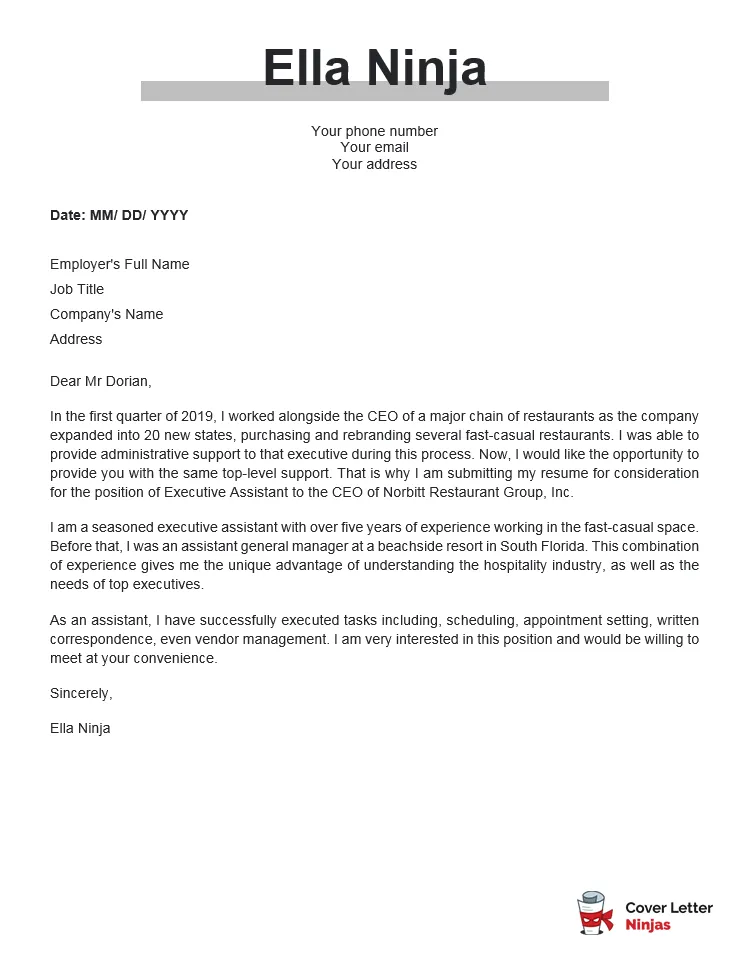
Executive Assistant Cover Letter Template
Use a template to structure your cover letter. Several templates are available online. These templates provide a framework for you to fill in. Customize the template. This ensures you include all necessary information. Make sure your cover letter looks professional and well-organized. A template can streamline the process.
Cover Letter Examples for Various Industries
Review cover letter examples from different industries to get inspiration. See how other successful candidates have approached cover letters. Tailor the examples to fit your specific situation and the jobs you’re applying for. Adapt examples to your needs. This research can help you improve your writing and structure. Ensure that your style is appropriate for the job market.
Common Mistakes to Avoid
Generic Content
Avoid using a generic cover letter. Customize it to the specific job and company. Show that you’ve researched the company. Write a cover letter that feels personal. Generic letters show a lack of effort. This damages your application. Take the time to tailor your cover letter to each application.
Typos and Grammatical Errors
Proofread your cover letter thoroughly. Typos and grammatical errors undermine your professionalism. They can give the wrong impression to the hiring manager. Always check spelling and grammar. Use proofreading tools and ask someone else to review your letter.
Overly Formal or Informal Tone
Maintain a professional tone. Avoid being overly formal or informal. Research the company’s culture. Adjust your tone to match. Strive for a balance. Show professionalism, while also letting your personality shine through.
Submitting the Cover Letter
File Format and Naming Conventions
Submit your cover letter in a professional file format, such as PDF. Ensure the file name is clear and includes your name and the job title. This makes it easy for the hiring manager to identify. Use a format that protects the formatting. Also, make sure the file name is easy to read.
Following Application Instructions
Follow all the application instructions provided by the employer. Pay close attention to any specific guidelines. Ensure that you meet the submission deadline. Failure to follow instructions can result in the rejection of your application. Be detail-oriented. Following instructions shows you pay attention to detail.
In conclusion, creating a strong cover letter is a critical step in securing an Executive Assistant position. By understanding the role, following best practices, and avoiding common mistakes, you can significantly increase your chances of making a positive impression. Remember to tailor your cover letter to each specific job application, highlighting your relevant skills, quantifying your achievements, and demonstrating your enthusiasm. A well-crafted cover letter will help you stand out from the competition and get you one step closer to your dream job.