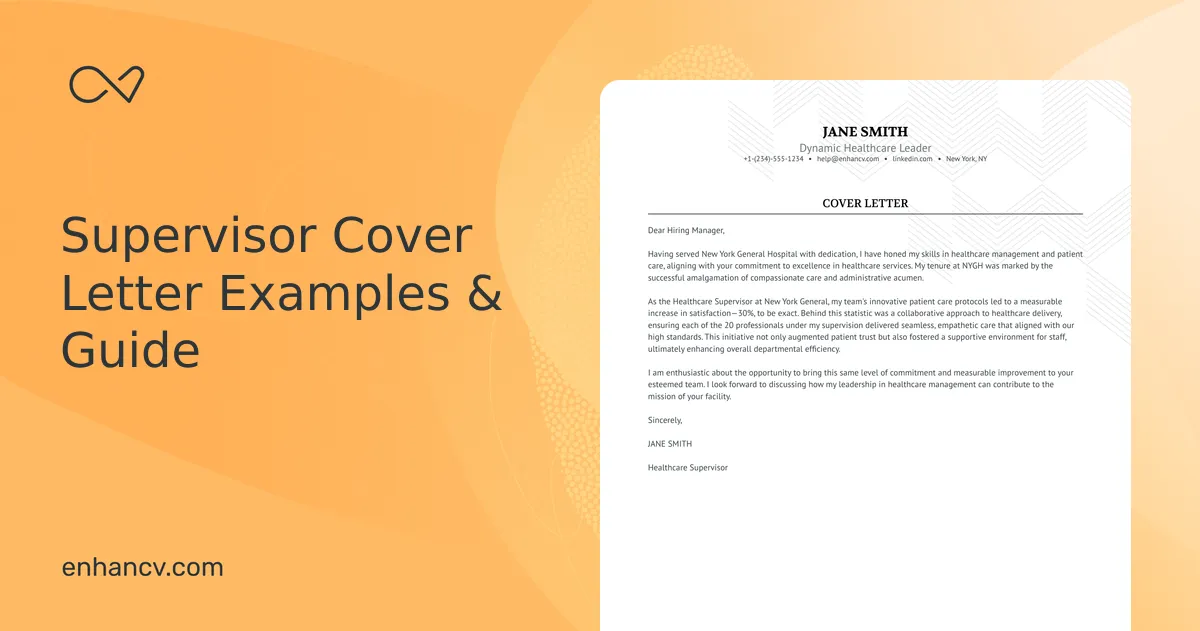
What is a Cover Letter and Why is it Important
A cover letter is a crucial document that accompanies your resume when applying for a job, serving as your introduction to a potential employer. It’s more than just a formality; it’s your opportunity to showcase your personality, demonstrate your understanding of the role, and explain why you are the ideal candidate. While your resume provides a concise overview of your experience and skills, your cover letter allows you to elaborate on these qualifications, providing context and highlighting how they align with the specific requirements of the supervisor position. In essence, the cover letter provides the narrative that connects your past experiences to the future opportunity.
Key Components of a Cover Letter for Supervisors
Crafting an effective cover letter requires attention to detail and a strategic approach. The key components work together to create a compelling narrative that captures the reader’s attention and conveys your suitability for the role. Properly structuring your cover letter will greatly increase your chances of getting noticed by hiring managers. This includes the header, greeting, body paragraphs, and closing. Each part serves a unique purpose in presenting your qualifications and enthusiasm.
Header Section for Cover Letter

The header section of your cover letter sets the tone for the entire document. It’s the first thing a hiring manager sees, and it should be clean, professional, and easy to read. This section includes your contact information, the date, and the recipient’s information. A well-formatted header ensures that your application looks polished and organized, reflecting your attention to detail. It also provides the necessary information for the employer to contact you if they are interested in scheduling an interview.
Contact Information
Start with your full name, followed by your phone number, email address, and optionally, your LinkedIn profile URL. Make sure your contact information is accurate and up-to-date. Use a professional-sounding email address. This makes it easy for the hiring manager to reach you.
Date
Include the date you are writing the cover letter. This helps establish the timeliness of your application. Position the date below your contact information, usually aligned to the left or right.
Recipient’s Information

If possible, address the cover letter to a specific person (e.g., the hiring manager) and include their title. This demonstrates that you’ve done your research and are genuinely interested in the role. If you cannot find the name, use the title of the person who will be reviewing the applications.
Greeting in Cover Letter
The greeting sets the tone for your cover letter. The most common and professional greeting is “Dear [Hiring Manager name],” or, if you do not know the name, “Dear Hiring Manager.” Avoid generic greetings like “To Whom It May Concern.” This personalized approach immediately engages the reader and shows that you’ve taken the time to research the company and the role. Ensure your greeting is aligned with the overall tone of the letter – formal or semi-formal, depending on the company culture.
Body Paragraphs for Cover Letter
The body paragraphs are the heart of your cover letter, where you elaborate on your qualifications and connect them to the requirements of the supervisor position. This section is your opportunity to tell your story, showcasing your skills, achievements, and enthusiasm for the role. The body typically consists of three main paragraphs: the opening, the skills and qualifications, and the achievements paragraph. Each paragraph should serve a specific purpose in building your case for why you are the ideal candidate.
First Paragraph- Why you’re Applying

Start by clearly stating the position you are applying for and where you found the job posting. Briefly explain why you are interested in the role and the company. Show your enthusiasm and briefly mention something specific that attracted you to the position. This helps the hiring manager immediately understand your purpose and motivation.
Second Paragraph- Showcasing Skills
Highlight the skills and experiences that align with the job description. Focus on the key requirements mentioned in the job posting and provide specific examples of how you have demonstrated these skills in the past. Use action verbs to describe your accomplishments, and quantify your achievements whenever possible. Make sure the skills you showcase are relevant and tailored to the specific role of a supervisor.
Third Paragraph- Highlighting Achievements
Provide concrete examples of your achievements in previous roles. Quantify your results whenever possible to demonstrate your impact. For instance, instead of saying “Improved team performance,” say “Increased team productivity by 15% through the implementation of a new training program.” This adds credibility and shows the tangible value you can bring to the organization. Relate your achievements to the responsibilities outlined in the job posting.
Closing Paragraph- Call to Action

In your closing paragraph, reiterate your interest in the position and thank the hiring manager for their time and consideration. Include a call to action, such as stating that you look forward to hearing from them soon or that you are available for an interview at their earliest convenience. Ensure the tone is professional and enthusiastic, leaving a positive lasting impression.
Formatting Your Cover Letter
The formatting of your cover letter is as important as the content. It’s the first visual impression, and a well-formatted letter is easy to read and projects professionalism. Pay close attention to the font, margins, spacing, and overall layout to create a polished document. Good formatting shows that you care about details and are willing to put in the effort to present your qualifications effectively.
Font Selection and Size
Choose a professional and legible font such as Times New Roman, Arial, or Calibri. Ensure the font size is between 10 and 12 points for easy readability. Avoid using overly decorative or unusual fonts, as they can distract the reader and make your cover letter appear unprofessional.
Margins and Spacing

Set your margins to one inch on all sides to provide enough white space, making the document visually appealing. Use single spacing within paragraphs and double spacing between paragraphs to improve readability. Properly formatted spacing allows the reader to easily digest the information presented, which will enhance your application’s overall impact.
Proofreading and Editing
Proofread your cover letter meticulously. Check for grammatical errors, typos, and inconsistencies in your formatting. Use spell check, but also read the document carefully, as spell check may not catch all errors. Having a second pair of eyes to review your letter can be invaluable. A polished, error-free cover letter demonstrates your attention to detail and professionalism. Proofreading is an essential step in ensuring that your application makes a positive first impression.
Different Cover Letter Examples for Supervisors
The best cover letter for a supervisor role is not a one-size-fits-all document. The specific content and approach should be tailored to the context of the position, whether it is an internal promotion, an external hire, or a role within a particular industry. You must consider these differences to ensure the cover letter effectively communicates your qualifications and suitability for the role. Here are examples to help you structure your cover letter.
Cover Letter for an Internal Supervisor Position

When applying for a supervisor position within your current company, highlight your existing knowledge of the organization, your understanding of the company culture, and the relationships you have already built. Focus on your accomplishments within the company, the value you have provided, and how you are ready to take on more responsibility. This shows that you understand the company’s goals, you are committed to its success, and you are a known quantity in the organization. Mention your understanding of company values and the projects you have been involved in. You can show your readiness for the next step.
Cover Letter for an External Supervisor Position
When applying for a supervisor role at a new company, you need to emphasize the transferable skills and experiences that align with the job description. Research the company and tailor your letter to showcase how your skills and experiences meet their needs. Highlight any relevant industry experience and your understanding of the industry’s challenges and opportunities. The main goal is to demonstrate that you have the skills and knowledge necessary to succeed in this new environment. Show that your knowledge of their company has value.
Cover Letter for a Supervisor Role in a Specific Field
When applying for a supervisor position in a specific field, such as healthcare, finance, or manufacturing, highlight your industry-specific expertise, certifications, and accomplishments. Use industry-specific keywords and demonstrate a deep understanding of the challenges and opportunities within the field. Tailor the letter to demonstrate your knowledge of the industry and to show how your experience will help the company. This targeted approach increases your chances of standing out to hiring managers who understand the field’s unique requirements.
Tips for Writing a Cover Letter
Writing a compelling cover letter requires attention to detail and a strategic approach. Here are several tips to guide you in crafting a cover letter that effectively highlights your qualifications and increases your chances of securing an interview.
Research the Company and the Role
Before you start writing, research the company and the specific requirements of the supervisor role. Understand the company’s mission, values, and recent achievements. Review the job description carefully and identify the key skills and qualifications the employer is seeking. This information will enable you to tailor your cover letter, demonstrating your interest in the role and showing that you understand their needs. Visit the company’s website, read news articles, and check out their social media pages to get a sense of their culture and values. Knowing this information allows you to address the needs of the hiring manager.
Tailor Your Letter
Avoid using a generic cover letter. Customize each letter to match the specific job and company. Highlight the skills and experiences that directly align with the job description, and use keywords from the posting. Mention how your qualifications meet the employer’s needs and what value you can bring to the company. By tailoring your cover letter, you demonstrate your genuine interest in the role and show the hiring manager that you have taken the time to understand their requirements.
Use Action Verbs
Use strong action verbs to describe your accomplishments and responsibilities. This approach makes your cover letter more dynamic and engaging. Action verbs create a sense of energy and highlight your accomplishments, making your experience more impactful. For example, instead of saying “Responsible for managing a team,” use “Led a team of 10 employees, resulting in a 15% increase in productivity.” Action verbs such as “managed,” “led,” “achieved,” “implemented,” and “improved” can all add impact to your writing.
Quantify Your Achievements
Whenever possible, quantify your achievements to demonstrate the impact you have made in previous roles. Use numbers and specific data to illustrate your accomplishments. For example, instead of saying “Improved customer satisfaction,” state “Increased customer satisfaction scores by 20% through the implementation of a new customer service protocol.” Quantifying your accomplishments shows the value you bring to the organization and gives the hiring manager a clear understanding of your capabilities. Use metrics like percentages, dollar amounts, or other relevant data to make your achievements more compelling.
Review Cover Letter Examples
Reviewing cover letter examples can provide valuable insights and inspiration. Search online for cover letter templates and examples for supervisor positions. Pay attention to the structure, content, and formatting of these examples. Use them as a guide, but always tailor the content to your own experiences and the specific job you are applying for. Studying different cover letter examples can help you understand what makes an effective cover letter and how to best present your qualifications.
Common Mistakes to Avoid in a Cover Letter
Avoiding common mistakes is essential to ensure your cover letter makes a positive impression. Here are some common pitfalls to avoid:
Grammatical Errors and Typos
Grammatical errors and typos can immediately undermine your credibility and professionalism. Always proofread your cover letter carefully and use spell check. Consider asking a friend or colleague to review your letter before submitting it. Errors suggest a lack of attention to detail and can lead the hiring manager to believe that you are not careful. Ensure your letter is polished and free of errors.
Generic and Uninspired Language
Avoid using generic and uninspired language that does not reflect your unique qualifications or personality. Tailor your cover letter to the specific job and company. Avoid clichés and repetitive phrases. Highlight your skills and experiences in a way that demonstrates your understanding of the role and your enthusiasm for the opportunity. A personalized cover letter grabs the reader’s attention, and using specific examples of your experiences provides a clear illustration of your unique qualities.
Ignoring Instructions
Carefully read and follow all instructions in the job posting. If the employer asks for specific information or formatting requirements, make sure your cover letter complies. Failing to follow instructions can indicate a lack of attention to detail or a lack of interest in the role. Adhering to specific guidelines shows that you are able to meet the requirements of the role and follow the company’s procedures.
Failing to Proofread
Failing to proofread your cover letter is a common mistake that can easily be avoided. Always review your cover letter for errors in grammar, spelling, punctuation, and formatting. A well-proofread cover letter shows that you are professional and detail-oriented. Read your letter aloud to catch errors you may have missed during silent review. Make sure your cover letter is clear, concise, and error-free.
Final Thoughts on Cover Letter Examples
Writing a compelling cover letter is a key step in your job search for a supervisor role. By understanding the essential components, utilizing effective formatting, and avoiding common mistakes, you can create a cover letter that effectively showcases your qualifications and secures you an interview. Remember to tailor each letter to the specific job and company, and always proofread carefully. The cover letter is your chance to make a great first impression, so put in the effort to make it count. Good luck with your job search!