Understanding the Academia Cover Letter
The academia cover letter is a critical document for anyone seeking a position in higher education. Unlike cover letters for non-academic jobs, this document serves not only to introduce you but also to showcase your unique qualifications, research interests, teaching experience, and overall fit within the institution’s culture and values. A well-crafted academia cover letter is a powerful tool that can significantly increase your chances of securing an interview and ultimately landing your dream job. It’s an opportunity to present a compelling narrative of your academic journey and professional aspirations.
Key Differences Between Academic and Non-Academic Cover Letters
Academic cover letters differ significantly from those used in non-academic job applications. The primary difference lies in the emphasis on research, teaching, and publications. Academic cover letters delve deeper into these areas, providing specific details about your contributions to your field. Non-academic cover letters often focus on skills and experiences directly relevant to the specific job duties. Academic letters also place a greater emphasis on your long-term goals, research agenda, and alignment with the institution’s mission, whereas non-academic letters frequently concentrate on immediate contributions to the company.
Another critical difference is the audience. Academic cover letters are read by committees composed of academics who are experts in their fields. These committees scrutinize your credentials, publications, and research to determine if your expertise aligns with the department’s needs. Non-academic letters are usually reviewed by HR professionals and hiring managers who may have a broader understanding of the field.
Tailoring Your Cover Letter for Academia

Personalization is key to success in the world of academia. Generic cover letters are easily spotted and often discarded. Tailor your cover letter to each specific position and institution. Research the department, its faculty, and its research priorities. Identify how your research aligns with the department’s needs and how your teaching philosophy complements the institution’s educational approach. Use the job description as your roadmap, ensuring you address all the required qualifications and skills.
Formatting Your Academia Cover Letter
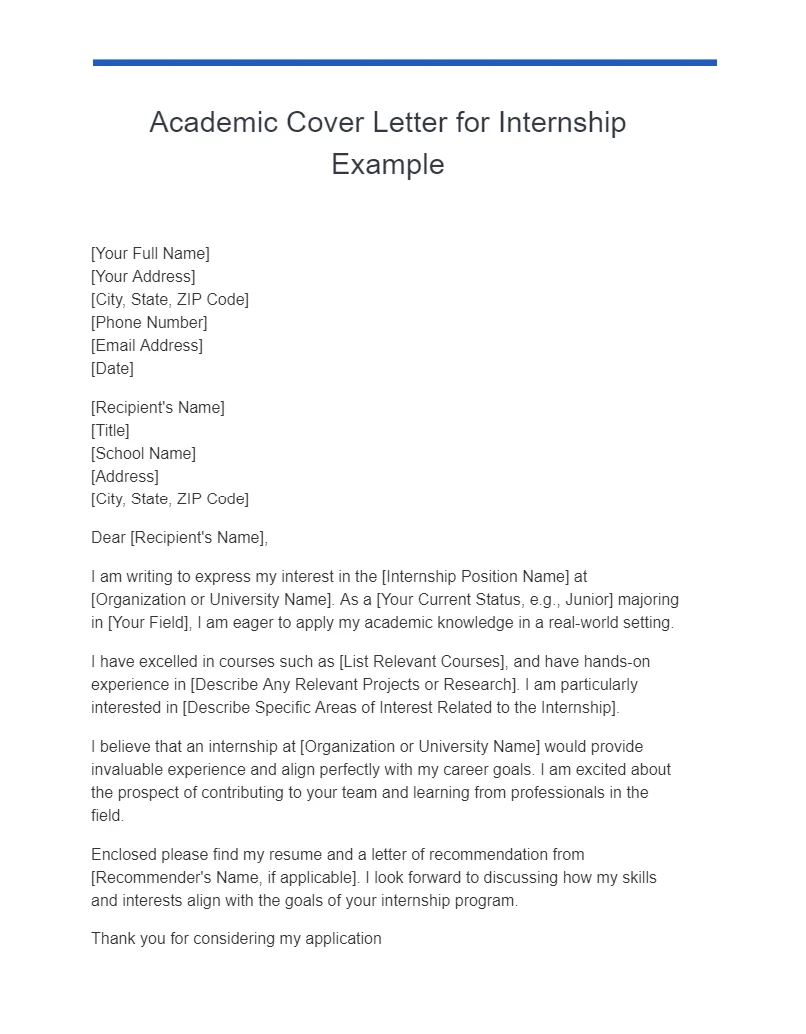
The formatting of your academia cover letter is as important as its content. A well-formatted letter is easier to read and demonstrates your attention to detail, which is highly valued in academia. The letter should be professional, clean, and easy on the eye. The general structure includes a header, a body, and a closing. Each section plays a crucial role in conveying your qualifications and enthusiasm for the position.
Header Essentials
The header should include your contact information, the date, and the recipient’s information. Make sure to include your full name, address, phone number, and email address. If you have a professional website or online portfolio, you can also include the link. Include the date you are sending the letter and address the letter to the hiring committee chair or the specific person mentioned in the job posting. Ensure all contact details are current and accurate.
Body Paragraph Structure for Academia

The body of your cover letter should consist of several paragraphs, each addressing a specific aspect of your qualifications and suitability for the position. It typically includes an introduction, a section highlighting your achievements, a section demonstrating your research skills, a section showcasing your teaching experience, and a closing paragraph. Each paragraph should flow logically and contribute to a cohesive narrative that highlights your strengths. Aim for a balance between conveying information concisely and providing sufficient detail to illustrate your capabilities.
Introduction
In your introduction, state the position you are applying for and where you saw the advertisement. Briefly mention your qualifications and your strong interest in the position and the institution. It should immediately capture the reader’s attention and clearly state your intent.
Highlighting Your Achievements
This section should showcase your most significant achievements, focusing on how they relate to the job requirements. Provide specific examples of your accomplishments, such as successful grants, publications, awards, or presentations. Quantify your achievements whenever possible. Instead of saying you ‘increased student engagement,’ you could state ‘increased student engagement by 20% through innovative teaching methods.’ Use strong action verbs to describe your accomplishments and quantify the impact of your contributions.
Demonstrating Research Skills

Describe your research experience in detail. Explain your research interests, your past projects, and your future research plans. Highlight any publications, presentations, or grants you have received. Mention your research methodologies, the impact of your research, and how it aligns with the department’s research priorities. You should also discuss your ability to secure funding, manage research projects, and collaborate with other researchers.
Showcasing Teaching Experience
Describe your teaching experience, including the courses you have taught, your teaching philosophy, and your teaching methods. Highlight your ability to engage students, create a positive learning environment, and effectively communicate complex concepts. Mention any teaching awards or positive student feedback you have received. If you have limited teaching experience, emphasize related skills, such as mentoring students or giving presentations.
Closing
In your closing paragraph, reiterate your interest in the position and the institution. Express your enthusiasm for the opportunity and your confidence in your ability to contribute to the department’s mission. Include a call to action, such as expressing your availability for an interview or mentioning your willingness to provide additional information. Thank the hiring committee for their time and consideration and include a professional closing such as ‘Sincerely’ or ‘Respectfully’.
Proofreading and Editing

Proofreading and editing are non-negotiable steps in the cover letter writing process. Carefully proofread your cover letter for any grammatical errors, typos, or formatting inconsistencies. Ensure that your writing is clear, concise, and grammatically correct. Ask a colleague, mentor, or career advisor to review your cover letter for feedback. Multiple reviews can help you catch any mistakes you might have missed and ensure the cover letter represents you in the best possible light. A polished cover letter demonstrates professionalism and attention to detail, which are essential in academia.
Essential Content to Include in Your Cover Letter Academia
Certain content is critical to the success of your academic cover letter. This includes a statement of purpose, your research experience, your teaching philosophy, your publications and presentations, and your skills and qualifications. Addressing these elements comprehensively demonstrates your suitability for the position and your alignment with the institution’s values and goals. It also provides a detailed account of your professional experience.
Statement of Purpose
Your statement of purpose should succinctly explain your reasons for applying for the position. Articulate your career goals, your interest in the institution, and how this role aligns with your aspirations. Explain what motivates your research, your vision for teaching, and what you hope to achieve in the role. Express your passion for the field and the specific area of research and teaching that interests you. It helps you stand out from other applicants.
Research Experience

Provide a detailed account of your research experience, including your research interests, methodologies, and findings. Highlight your publications, presentations, and grants you have obtained. Explain the significance of your research and its impact on your field. If applicable, discuss any collaborative projects, data analysis, or other relevant research skills. Be sure to align your research interests with the department’s research priorities to show a good fit.
Teaching Philosophy
Your teaching philosophy should outline your approach to teaching, your teaching methods, and your goals for students. Explain your approach to student engagement, assessment, and curriculum development. Discuss how you foster a positive learning environment and address diversity and inclusion in your classroom. Provide examples of your successful teaching strategies and how you adapt your approach to different learning styles and student needs. Show that you are invested in student success.
Publications and Presentations
Include a list of your publications, presentations, and any other scholarly work. Provide complete citations for all publications and presentations, following a consistent style guide. Highlight your most significant publications and presentations, and briefly describe their content and contribution to your field. If your work is not yet published, indicate its status, such as ‘under review’ or ‘in press.’ This section helps demonstrate your track record and research impact.
Skills and Qualifications

Summarize your key skills and qualifications, highlighting those most relevant to the job description. Include research skills (e.g., data analysis, grant writing), teaching skills (e.g., curriculum development, student assessment), and any other relevant skills. Provide examples of how you have used these skills in your past experiences. Align your skills with the requirements of the position to show you are a good fit for the role and the institution. Consider listing them using bullet points for readability.
Common Mistakes to Avoid in Academia Cover Letters
Avoiding common mistakes is essential to ensuring your cover letter effectively presents your qualifications and expertise. These errors can make or break your application. Paying attention to detail can significantly improve your chances of being selected for an interview. Reviewing your cover letter with a critical eye is a key step in securing your desired position in academia.
Generic Cover Letters
Using a generic cover letter is a common mistake. Generic cover letters don’t demonstrate the effort required to personalize the letter for each position. Always tailor your cover letter to each job, highlighting the relevant skills and experiences. Research the department, its faculty, and its research interests. Show a clear understanding of the specific needs of the position and the institution. Tailoring shows your commitment and that you’ve put in the work.
Ignoring the Job Description
Failing to address the specific requirements outlined in the job description is a critical error. The job description is your guide. Read the job description carefully and address each requirement in your cover letter. Match your skills and experiences to the qualifications listed in the posting. Failing to do so can make it seem that you are not a good fit for the position and may lead to the rejection of your application.
Typos and Grammatical Errors
Typos and grammatical errors undermine your credibility. Proofread your cover letter carefully before submitting it. Use spell check and grammar check tools, but do not rely on them entirely. Have someone else review your letter to catch any errors you might have missed. Errors demonstrate a lack of attention to detail, which is crucial in academic settings, and can lead to a negative first impression.
Failing to Highlight Relevant Skills
Failing to highlight skills that are most relevant to the position is another common mistake. Don’t assume the hiring committee will automatically know what you bring to the table. Explicitly state how your skills and experiences align with the job requirements. Provide specific examples of how you have used these skills in the past. Use action verbs to describe your achievements. This allows the hiring committee to see how you can contribute to the department’s needs and objectives.