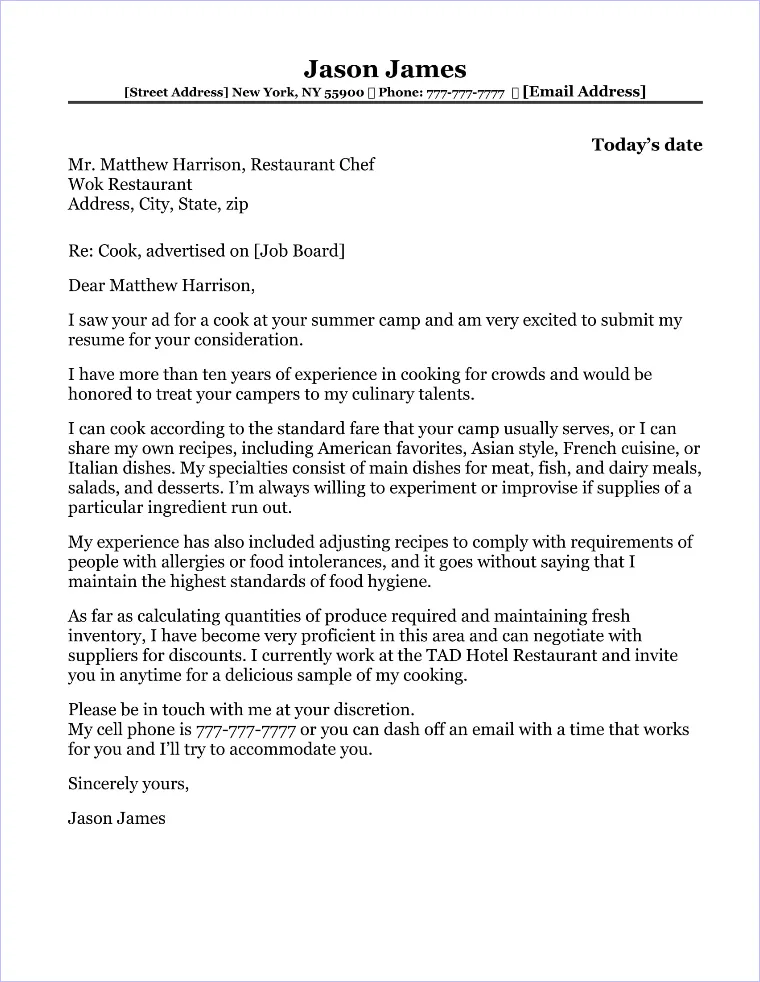
Crafting the Perfect Cook Cover Letter
Landing your dream cook position hinges not only on your culinary prowess but also on a well-crafted cover letter. This crucial document acts as your first impression, providing an opportunity to showcase your skills, experience, and passion for cooking. A compelling cover letter can significantly increase your chances of securing an interview, setting you apart from other applicants. It’s your chance to tell your story, demonstrating why you’re the ideal candidate and how you can contribute to the restaurant’s success. A generic or poorly written cover letter can easily get overlooked, so taking the time to create a polished and personalized document is essential. Let’s delve into the secrets of crafting a cover letter that grabs attention and gets you hired fast.
Highlighting Your Culinary Skills
Your cover letter should be a showcase of your culinary abilities. Don’t just list your skills; illustrate them with specific examples. For instance, instead of writing “Proficient in various cooking techniques,” elaborate by saying, “Proficient in sautéing, grilling, and preparing sauces, demonstrated by successfully managing the pasta station at [Previous Restaurant] for two years.” Mention any specializations like pastry, international cuisine, or specific dietary requirements (vegetarian, vegan, gluten-free) you are adept at. If you have experience with food safety and hygiene standards, make sure to include it. Quantify your achievements whenever possible. For instance, “Increased kitchen efficiency by 15% by implementing a new organizational system.” Highlighting your ability to work under pressure and your adaptability to different cooking styles are also essential. Your goal is to provide a clear picture of your skills and expertise and how they align with the requirements of the cook position.
Detailing Your Cooking Experience

Your work history is a critical part of your cover letter. Begin by listing your previous cooking positions in reverse chronological order. For each role, provide the name of the establishment, dates of employment, and a brief description of your responsibilities. Instead of merely listing duties, focus on the impact you made in each role. For example, instead of “Prepared food according to recipes,” write “Prepared and plated over 100 meals per service while maintaining strict adherence to recipes, ensuring consistent quality and presentation.” Mention any specific achievements, such as being recognized for your culinary contributions, successful menu implementations, or positive guest feedback. Emphasize experiences that are relevant to the position you are applying for. If you have experience in a specific type of cuisine or restaurant setting, highlight that. Tailor your descriptions to match the job requirements, using keywords from the job description to demonstrate your understanding of the role and the restaurant’s needs.
Showcasing Relevant Certifications and Training
Certifications and training are essential in showcasing your commitment to food safety and culinary excellence. List all relevant certifications, such as ServSafe, Food Handler’s Certificate, or any specialized training programs you’ve completed. Include the name of the certification or program, the issuing organization, and the date of completion. If you have participated in culinary workshops, courses, or apprenticeships, be sure to mention them, highlighting the skills you gained. If you’ve earned any awards or recognitions, they should also be prominently featured. If the job description requires specific certifications, make sure they are highlighted. These certifications not only demonstrate your commitment to safety and quality but also show that you’re up-to-date with the latest industry standards and best practices. If you are seeking opportunities for career advancement, include any professional development courses or training in your resume.
Structuring Your Cover Letter for Maximum Impact
The Importance of a Strong Opening

The opening paragraph is your first chance to grab the reader’s attention. Start by stating the position you’re applying for and where you found the job posting. Then, include a brief, compelling statement about why you are a strong candidate. Avoid generic phrases like “I am writing to express my interest…” Instead, try a more engaging approach, such as “With five years of experience in fast-paced kitchen environments and a passion for creating exceptional dishes, I am excited to apply for the Cook position at [Restaurant Name].” The opening should immediately convey your enthusiasm and suitability for the role. Mention any personal connections, such as knowing someone who works at the restaurant. Briefly state what you can bring to the table, such as relevant skills, experience, or achievements. The goal is to make a positive impact immediately, encouraging the reader to continue reading your cover letter.
Writing a Compelling Body Paragraph
The body paragraphs should provide more detailed information about your skills, experience, and qualifications. This is where you elaborate on the points you mentioned in the opening. Use specific examples to demonstrate your abilities. If the job description emphasizes teamwork, provide an instance where you successfully collaborated with others in a kitchen environment. If the job requires proficiency in a particular type of cuisine, highlight your relevant experience and achievements. Show, don’t just tell, by using action verbs to describe your accomplishments. For example, instead of writing “Responsible for menu planning,” write “Developed and executed weekly menu plans, resulting in a 10% increase in customer satisfaction.” Quantify your achievements whenever possible to provide tangible evidence of your impact. Highlight experiences that align with the job’s requirements and demonstrate why you are a good fit for the position and the restaurant’s culture.
Creating a Powerful Closing
The closing paragraph should reiterate your interest in the position and express your eagerness for an interview. Thank the hiring manager for their time and consideration. Clearly state your availability for an interview and provide your contact information. Reiterate your enthusiasm and reiterate your commitment to the role. If you are available to start immediately, mention this. End with a professional closing, such as “Sincerely” or “Best regards,” followed by your name. Review your cover letter carefully to ensure your closing paragraph leaves a positive impression, reinforcing your desire to work for the restaurant and making it easy for the hiring manager to take the next steps. Make sure the closing is polite, professional, and leaves a lasting, positive impression.
Adapting Your Cover Letter to the Job Description

Researching the Restaurant or Establishment
Before you write your cover letter, research the restaurant or establishment thoroughly. Visit their website, social media pages, and online reviews to understand their cuisine, values, and target audience. This research will help you tailor your cover letter to align with the restaurant’s specific needs and preferences. Identify the restaurant’s brand and culinary style. If it’s a fine dining establishment, highlight your experience in upscale kitchens. If it’s a casual dining restaurant, showcase your ability to work efficiently in a fast-paced environment. Understanding the restaurant’s mission and values will enable you to emphasize skills that are most relevant to their operation. Showing that you’ve done your homework demonstrates your genuine interest in the role and the restaurant, increasing your chances of getting hired.
Tailoring Your Skills to Their Needs
Carefully review the job description and identify the skills and qualifications the restaurant is seeking. Use this information to tailor your cover letter, emphasizing experiences and skills that match their requirements. Use keywords from the job description in your cover letter, demonstrating your understanding of the role and the restaurant’s needs. If the job requires experience with a specific type of cuisine or equipment, highlight any related experiences. Show how your skills and experience align with the restaurant’s goals. Personalize your cover letter to showcase your interest and understanding of the specific role and the restaurant’s needs. By tailoring your skills to their needs, you’ll demonstrate that you’re a strong fit for the position and have the potential to succeed in the role.
Proofreading and Formatting Your Cover Letter

Avoiding Common Cover Letter Mistakes
Avoid these common mistakes to increase your chances of getting hired. First, do not send a generic cover letter. Always personalize it to the specific job and restaurant. Second, proofread your cover letter carefully for spelling and grammatical errors. Errors show a lack of attention to detail, which is critical in a kitchen environment. Third, do not use overly casual language or slang. Maintain a professional tone throughout. Fourth, don’t just repeat your resume. Provide additional context, elaborating on your experiences and achievements. Finally, avoid being overly wordy. Keep your cover letter concise, focusing on the most relevant information. A well-written, error-free cover letter that showcases your skills and enthusiasm can make a significant difference.
Using Action Verbs and Keywords Effectively
Using action verbs and relevant keywords is crucial. Action verbs bring your experiences to life and highlight your accomplishments. Use verbs such as “Prepared,” “Managed,” “Developed,” “Implemented,” and “Supervised” to describe your skills and responsibilities. Incorporate keywords from the job description to show that you meet the job requirements. This helps the hiring manager quickly identify your suitability for the role. Make sure keywords fit naturally within your sentences. Do not overuse keywords, as this can make your cover letter sound unnatural. Your cover letter is a marketing document and should emphasize your value as a cook. A cover letter that incorporates strong action verbs, relevant keywords, and a focus on your skills will make your cover letter more effective.
Conclusion
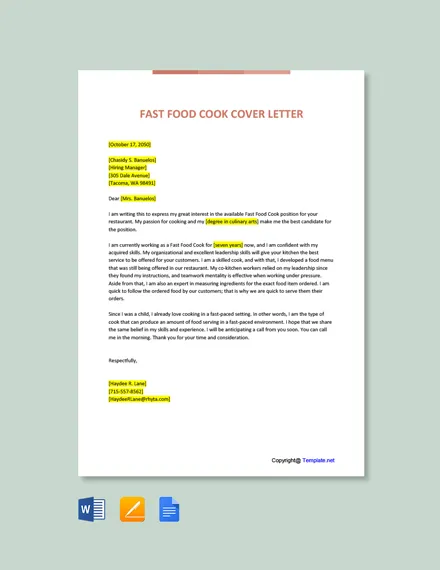
Writing a compelling cover letter is critical for landing a cook position. By following these secrets, you can showcase your culinary skills, detail your experience, and demonstrate why you’re the ideal candidate. Remember to tailor your cover letter to the job description, research the restaurant, and highlight your achievements. Proofread your cover letter carefully and use action verbs and keywords effectively. With a well-crafted cover letter, you’ll increase your chances of getting hired and starting your culinary career. Embrace these strategies and get ready to impress the hiring manager with a cover letter that sets you apart from the competition and showcases your passion for food.