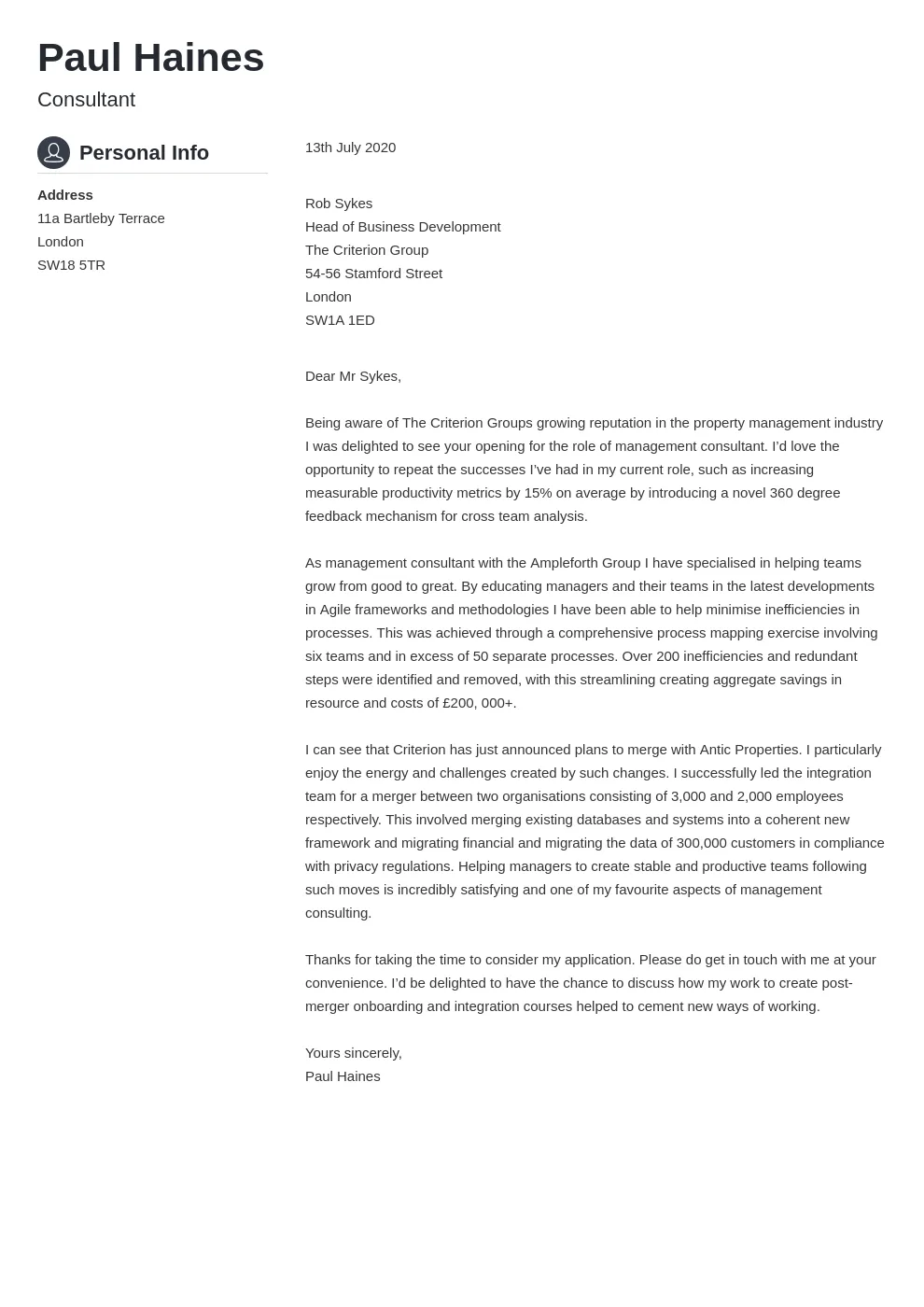
Understanding the Consulting Cover Letter
The consulting cover letter is more than just a formality its your first opportunity to make a strong impression and secure an interview. Unlike a resume, which provides a factual overview of your experience, the cover letter allows you to tell a story about your skills, motivations, and how you can contribute to the consulting firm’s success. It’s a chance to showcase your personality, your understanding of the firm, and your specific interest in the role. A well-crafted cover letter is a crucial component in differentiating yourself from other applicants and getting your foot in the door. Its purpose is to persuade the reader that you are a good fit for the position and to highlight the key aspects of your background that align with the firm’s needs. Consulting firms receive numerous applications, so your cover letter must be compelling and tailored to stand out from the crowd. A generic cover letter will likely be discarded, so investing time and effort to create a targeted and customized letter is vital.
Key Elements of a Consulting Cover Letter
Several core elements contribute to a successful consulting cover letter. Start with a professional header that includes your contact information, the date, and the recipient’s details. The opening paragraph should immediately grab the reader’s attention by stating the specific role you’re applying for and expressing your interest in the firm. Briefly mention what attracted you to the company and why you are excited about the opportunity. The body paragraphs should provide detailed examples of your skills and experiences, showcasing how you meet the job requirements. Make sure to demonstrate your understanding of the consulting industry and the firm’s focus. The closing paragraph should reiterate your enthusiasm, summarize your key qualifications, and request an interview. Always end with a professional closing and signature. By incorporating all of these elements, you can create a comprehensive and professional cover letter that is sure to grab the attention of the hiring manager.
Highlighting Your Skills and Experience

Consulting firms seek individuals with a diverse set of skills. When writing your cover letter, focus on highlighting the skills and experiences most relevant to the role and the firm’s needs. Emphasize your problem-solving abilities, analytical skills, and experience in project management. Provide specific examples of how you have used these skills to solve complex problems or achieve tangible results. If you have experience with data analysis, financial modeling, or strategic planning, make sure to mention it. Show how your skills align with the requirements outlined in the job description. Quantify your achievements whenever possible, using numbers and data to demonstrate the impact of your work. For instance, if you improved efficiency, state the percentage increase. If you were part of a project that saved the company money, specify the amount saved. Showing the impact and results of your experience is key to making your skills stand out.
Tailoring Your Cover Letter to the Firm
One of the biggest mistakes applicants make is submitting a generic cover letter. To truly stand out, you must tailor your cover letter to each specific firm and role. Research the company thoroughly and understand its mission, values, recent projects, and clients. Address the letter to the specific hiring manager or recruiter if possible. In the body of your letter, refer to the firm’s recent accomplishments, or discuss its strategic goals to show your awareness and genuine interest. Explain why you are drawn to this particular firm and what aspects of its culture or work resonate with you. Demonstrate that you have a deep understanding of the firm’s values and how you align with them. This personalized approach shows the hiring manager that you have taken the time to learn about their firm and are genuinely interested in joining their team.
Showcasing Your Problem-Solving Abilities
Consulting is, at its core, about solving problems. Your cover letter should demonstrate your ability to analyze complex situations and develop effective solutions. When describing your previous experiences, focus on projects where you successfully identified a problem, gathered relevant data, analyzed the situation, and implemented a solution. Describe the methodologies you used, such as frameworks, tools, and analytical techniques. Explain the results you achieved and how you overcame any challenges. Use the STAR method Situation, Task, Action, Result to structure your examples. By using the STAR method, you provide a clear and concise story of your problem-solving skills, demonstrating your ability to tackle complex challenges effectively. This focused approach underscores your ability to think critically and deliver results, making you a highly desirable candidate for any consulting role.
Demonstrating Your Consulting Skills

Consulting firms seek candidates with specific skills that are essential for success. These skills include strong communication, teamwork, leadership, and project management abilities. In your cover letter, provide examples of how you have demonstrated these skills in your past roles or projects. If you have experience leading teams, describe your leadership style and how you motivated your team to achieve its goals. Highlight your communication skills by describing how you presented your findings to clients, wrote compelling reports, or facilitated productive meetings. Showcase your teamwork skills by describing your experience collaborating with colleagues and your ability to work effectively in diverse teams. Mention instances where you have effectively managed projects, including planning, executing, and monitoring. Providing concrete evidence of these skills will significantly strengthen your cover letter and increase your chances of being selected for an interview.
Quantifying Your Achievements
Quantifying your achievements is one of the most effective ways to make your cover letter stand out. Use data and numbers to demonstrate the impact of your work. Instead of saying you ‘improved efficiency’, state the exact percentage increase. If you managed a project, mention the budget you handled or the number of people on your team. When describing results, provide specific figures to illustrate your accomplishments. This approach not only shows the impact of your work but also highlights your analytical skills. For example, ‘Increased sales by 15% in Q2’ is much more persuasive than ‘Improved sales’. Include metrics such as cost savings, revenue growth, or efficiency gains. By quantifying your accomplishments, you demonstrate your value and make a compelling case for why you are the right fit for the role. Using numbers adds credibility to your claims and makes it easier for the hiring manager to assess your potential contributions to the firm.
Formatting and Structure for a Consulting Cover Letter
The format and structure of your cover letter are important. Keep it concise, typically within one page. Use a professional and easy-to-read font, such as Times New Roman or Arial, with a font size between 11 and 12 points. Use clear headings and bullet points to break up text and make it easy to scan. Start with a strong opening that grabs the reader’s attention. In the body paragraphs, clearly explain your relevant skills and experiences, tailoring them to the specific requirements of the role and the firm. Use concise language, and avoid jargon. Proofread meticulously for any grammatical errors or typos. Ensure the formatting is consistent throughout. The structure should include an introduction, 2-3 body paragraphs, and a compelling conclusion. Use a professional closing, such as ‘Sincerely’ or ‘Best regards,’ followed by your typed name. By paying attention to formatting and structure, you will make your cover letter more readable and professional, and will better capture the hiring manager’s attention.
Common Mistakes to Avoid

Certain mistakes can immediately disqualify your cover letter. Avoid using a generic template or recycling the same cover letter for multiple applications. Proofread your letter carefully for any grammatical errors or typos. Do not include irrelevant information or information that is not aligned with the job requirements. Avoid exaggerating your skills or experience, as this can damage your credibility. Never include negative comments about a previous employer. Do not use overly casual language or slang. Always research the company and tailor your cover letter accordingly. Finally, make sure the cover letter is the appropriate length, and that it is well-organized and easy to read. By avoiding these common mistakes, you can create a cover letter that effectively showcases your qualifications and increases your chances of securing an interview.
Finalizing and Proofreading Your Cover Letter
Before submitting your cover letter, take the time to finalize it. Review your letter to ensure all your information is accurate and up-to-date. Proofread it several times to catch any errors in grammar, spelling, or punctuation. Ask a friend, mentor, or career counselor to review your cover letter as well. A fresh pair of eyes can often spot mistakes that you might have missed. Ensure that your cover letter is well-formatted, and that the font and layout are professional. Verify that your contact information is correct. Double-check that you have addressed the letter to the correct person and that the company name is spelled correctly. Once you are satisfied with the final version, save it in a PDF format to preserve the formatting. By taking these final steps, you can submit a polished and professional cover letter that effectively presents your qualifications and increases your chances of success in the consulting job application process.