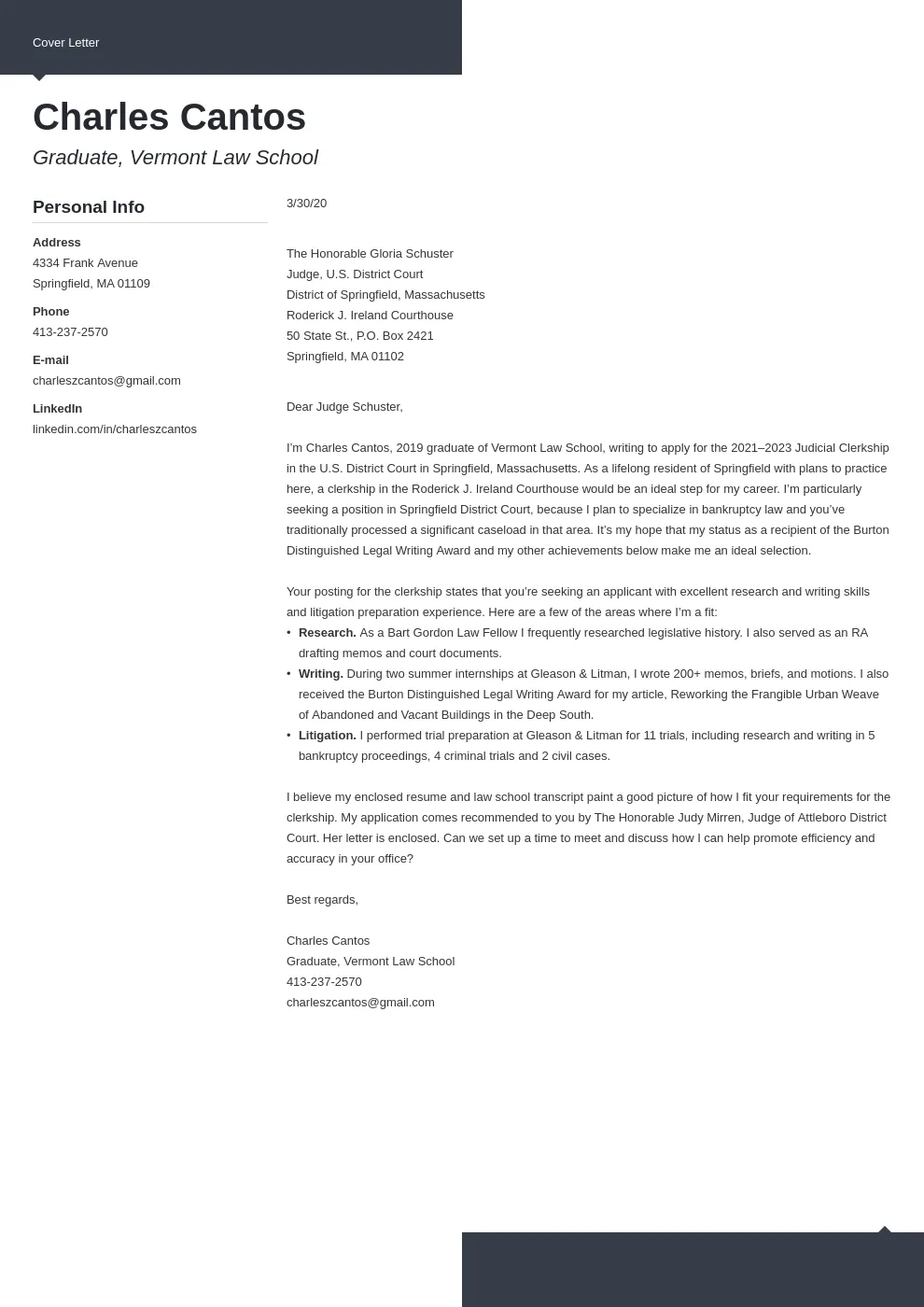
What is a Clerkship Cover Letter
A clerkship cover letter is a crucial document that accompanies your application for a judicial clerkship. It serves as your introduction to the judge or the hiring committee, providing them with a snapshot of your qualifications, experiences, and why you are the ideal candidate for the position. Unlike a resume, which simply lists your achievements, a cover letter allows you to articulate your interest in the specific clerkship, highlight your relevant skills, and showcase your personality. A well-crafted cover letter can significantly increase your chances of securing an interview and ultimately, the clerkship position. This document is your opportunity to make a strong first impression and distinguish yourself from other applicants. It is an essential part of any successful application and should be written with careful consideration.
Key Components of a Clerkship Cover Letter
A compelling clerkship cover letter typically includes several key components that work together to present a complete picture of your candidacy. These elements are designed to inform the reader of your qualifications and interest, as well as demonstrate your ability to write clearly and concisely. Understanding these parts and their significance is key to writing an effective cover letter. Each component plays a crucial role in making your application stand out. Ensure that each of these areas are clearly articulated and presented effectively.
Contact Information & Salutation

Start with your full name, address, phone number, and email address. Include the date, and then the judge’s or hiring committee’s name, title, and address. Always use a professional salutation, such as “Dear Judge [Last Name]” or “Dear Hiring Committee.” If you’re uncertain of the specific name, research it if possible or use a general greeting.
Purpose of the Cover Letter
Clearly state the specific clerkship you are applying for and where you learned about the opportunity. Briefly mention your primary qualifications and why you are interested in this particular position. Indicate your enthusiasm for the clerkship and your understanding of the judge’s work. If you have a specific connection to the judge, this is the place to mention it.
Highlighting Relevant Experience
Focus on experiences relevant to the clerkship, such as legal internships, research projects, moot court participation, or other practical experiences. Quantify your accomplishments whenever possible, using numbers and specific examples to demonstrate your skills and contributions. Explain how these experiences have prepared you for the responsibilities of a judicial clerk.
Academic Achievements

Highlight relevant academic achievements, such as your class rank, GPA, and any honors or awards received. Mention courses that relate to the judge’s areas of interest or specialization. Show how your academic record reflects your dedication and ability to excel in a demanding legal environment. Demonstrate your academic excellence and how it connects to the clerkship role.
Work Experience
Detail your work experience, including any legal internships, externships, or other related jobs. Briefly describe your responsibilities and accomplishments in each role. Emphasize the skills and experience gained that are relevant to the clerkship position. Tailor the description to match the requirements of the specific clerkship.
Skills and Abilities
Identify and describe skills that are pertinent to the clerkship, such as legal research, writing, analysis, and communication skills. Provide specific examples of how you have utilized these skills in your academic or professional experiences. Demonstrate your ability to think critically, solve problems, and work independently.
Tailoring Your Letter

Customize your cover letter for each clerkship application. Avoid using a generic cover letter. Show that you have researched the judge’s background, interests, and recent cases. Mention specific aspects of the judge’s work that appeal to you and explain how your skills and experiences align with their needs. Demonstrating genuine interest and understanding is important.
Research the Judge or Firm
Before writing your cover letter, thoroughly research the judge or firm. Learn about their background, their areas of expertise, and their recent cases. This will enable you to demonstrate a genuine interest in the position and to tailor your cover letter to the specific requirements and expectations of the judge. This also helps you to show your commitment to the role and allows you to speak directly to what they are looking for in a candidate.
Address Specific Requirements
Pay careful attention to any specific requirements mentioned in the job description. If the judge or firm has specific preferences, such as a writing sample or letters of recommendation, make sure to address these in your cover letter. Always follow all instructions to the letter and include everything they have requested.
Formatting and Style

Maintain a professional and polished format throughout your cover letter. Use a standard business letter format with a clear and easy-to-read font, such as Times New Roman or Arial. Keep the letter concise, typically one page in length. Use concise and clear language, and proofread carefully for any grammatical errors or typos.
Professional Tone
Adopt a formal and respectful tone. Demonstrate your professionalism through your writing style and choice of words. Avoid slang, jargon, or overly casual language. Show your respect for the judge or hiring committee through your tone and demonstrate that you understand the seriousness of the application.
Proofreading and Editing
Thoroughly proofread and edit your cover letter before submitting it. Check for any spelling errors, grammatical mistakes, or typos. Consider having a friend, professor, or career counselor review your cover letter for clarity and effectiveness. This is a crucial step to ensure your cover letter makes a strong and positive impression.
Call to Action & Closing

Conclude your cover letter with a call to action, such as expressing your availability for an interview. Reiterate your interest in the clerkship and thank the judge or hiring committee for their time and consideration. Use a professional closing, such as “Sincerely” or “Respectfully,” followed by your typed name.
Example Cover Letter
Here is a general example of a cover letter. Remember to customize to your specific application. [Your Name] [Your Address] [Your Phone Number] [Your Email] [Date] [Judge’s Name] [Judge’s Title] [Court Address] Dear Judge [Last Name], I am writing to express my strong interest in the judicial clerkship with your chambers for the [Term/Year] term, as advertised on [Platform]. As a highly motivated [Year] law student at [Law School], I am eager to contribute my research, writing, and analytical skills to assist in your chambers. I have a strong academic record. My work in [relevant experience] has prepared me to excel as a judicial clerk. I am particularly drawn to your work on [specific cases or legal areas] and I believe my skills in [specific skills] align well with the requirements of the position. Thank you for your time and consideration. I have attached my resume and writing sample and I am available for an interview at your earliest convenience. Sincerely, [Your Typed Name].
Formatting
Ensure the formatting is professional. Use a standard business letter format, 1-inch margins, and a readable font like Times New Roman or Arial. Ensure the letter is well-organized, with clear paragraphs and proper spacing to make it easy to read.
Key Takeaways

A strong clerkship cover letter is crucial for a successful application. Customize your letter for each application and highlight relevant experience, skills, and academic achievements. Proofread carefully, maintain a professional tone, and always follow the instructions. By following these tips, you can significantly improve your chances of landing a judicial clerkship.