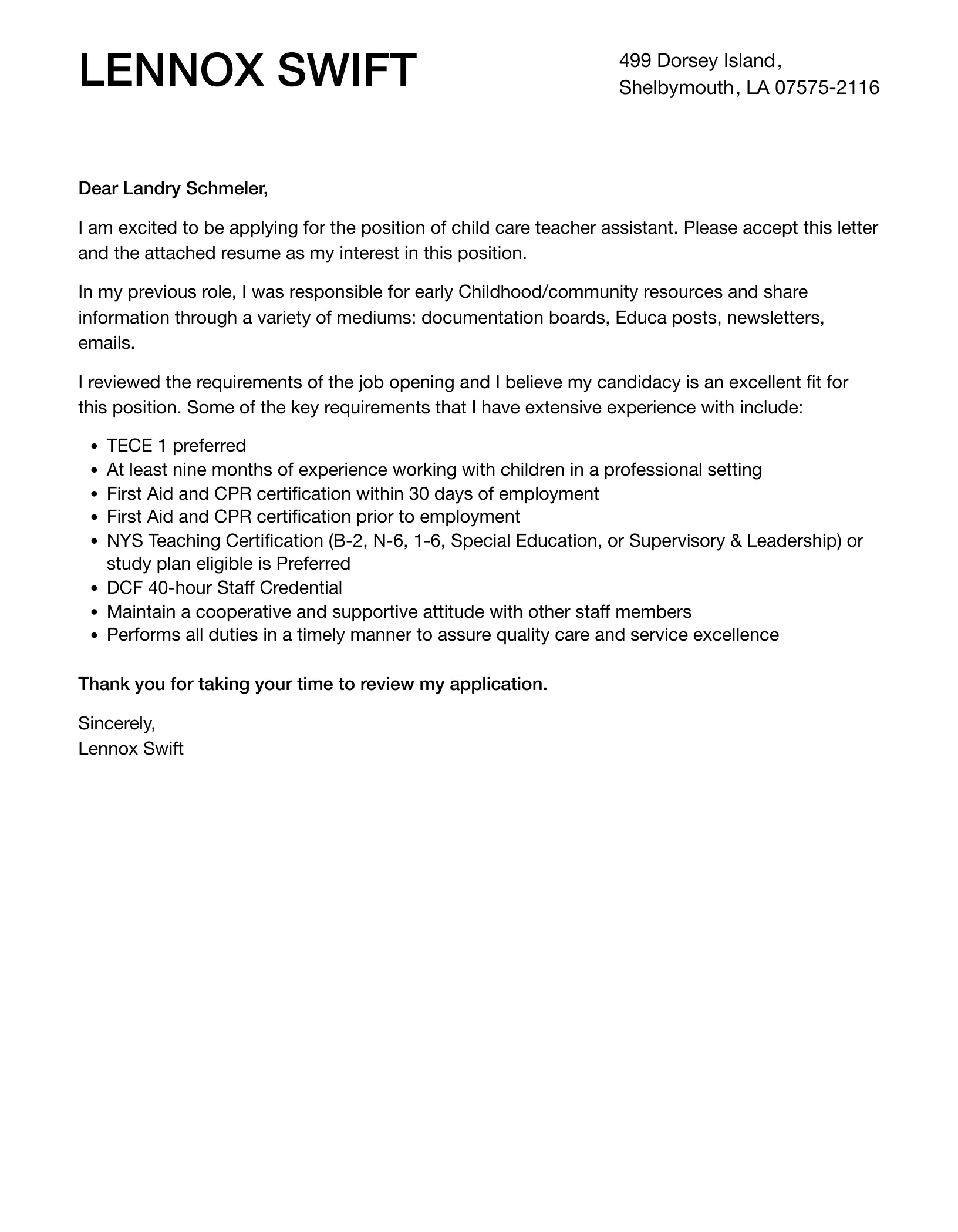
Why a Cover Letter Matters for a Child Care Assistant
In the competitive field of child care, a well-crafted cover letter is your first chance to make a positive impression. It’s more than just a formality; it’s an opportunity to showcase your personality, passion for working with children, and the unique skills you bring to the table. Unlike a resume, which lists your qualifications, a cover letter allows you to tell a story, highlighting why you’re the perfect fit for the role and the specific child care facility. It’s your chance to connect with the hiring manager on a personal level and demonstrate your genuine interest in the position, setting you apart from other applicants and increasing your chances of getting an interview.
Highlighting Your Skills and Experience
Your cover letter should be a strategic marketing tool, carefully showcasing your relevant skills and experiences. This involves more than just listing your previous roles; it requires demonstrating how your abilities align with the specific needs of the child care facility. Use concrete examples to illustrate your accomplishments and how you’ve positively impacted children’s lives. When you explain how you managed a group of children or developed engaging activities, potential employers can easily grasp your capabilities. Consider what makes you stand out and clearly communicate that in your letter to make it memorable and increase the chances of securing an interview.
Child Care Skills to Showcase

Child care positions require a blend of soft and hard skills. In your cover letter, emphasize your ability to create a nurturing and supportive environment. Detail your experience with activities like arts and crafts, storytelling, and outdoor play. Highlight your skills in fostering creativity, managing conflicts, and promoting positive social interactions. Furthermore, stress your ability to effectively communicate with both children and parents, which is crucial for building trust and providing updates on each child’s progress. Highlight your skills to showcase your proficiency in these areas.
Experience with Children
Detail your previous experience working with children. This includes paid roles like babysitting, teaching assistant positions, or volunteer work at children’s organizations. Be specific about the age groups you’ve worked with and the types of care you provided, such as assisting with homework, organizing games, or providing emotional support. If you have experience with children with special needs, be sure to highlight it, as this can be a significant advantage. Focus on experiences that showcase your ability to build rapport, understand child development, and handle the responsibilities of caring for children effectively.
Educational Background and Certifications
Include your educational background, such as a high school diploma or any relevant college coursework. Certifications like CPR, First Aid, and Child Development Associate (CDA) are essential. These certifications showcase your dedication to safety and your understanding of child care practices. Be sure to mention any specialized training related to child care, such as courses on early childhood education, behavior management, or special needs. Highlight how your education and certifications prepare you for the role and align with the child care facility’s values and standards.
Structuring Your Child Care Cover Letter

Structuring your cover letter logically and professionally is essential to making a positive impression. A well-organized letter is easy to read and allows the hiring manager to quickly grasp your key qualifications. Proper formatting ensures your letter reflects professionalism and attention to detail, both of which are critical in child care. Focus on clear, concise writing and use headings and bullet points to break up large blocks of text and make your information easily accessible. A well-structured cover letter is more likely to capture the reader’s attention and increase your chances of being invited for an interview.
Header and Contact Information
Begin your cover letter with a professional header that includes your full name, address, phone number, and email address. Include the date and the hiring manager’s name and title, if known, along with the child care facility’s address. This section provides essential information for the employer to contact you and demonstrates your attention to detail. Ensure your contact information is accurate and up-to-date to avoid missing any opportunities. Use a professional email address and a consistent format throughout your application materials to maintain a polished appearance.
Greeting and Introduction
Start your cover letter with a formal greeting, such as “Dear Mr./Ms. [Last Name],” if you know the hiring manager’s name. If not, a general greeting like “Dear Hiring Manager” is appropriate. In your introduction, immediately state the position you’re applying for and how you learned about the opportunity. Briefly mention your passion for child care and your key skills or experiences that make you a strong candidate. Keep your introduction concise, aiming to capture the reader’s attention from the start. Express your enthusiasm and set the stage for the body paragraphs that will follow.
Body Paragraphs Highlighting Skills

The body paragraphs are the heart of your cover letter. This is where you highlight your skills and experiences and demonstrate your ability to excel in the role. Use this section to delve deeper into your qualifications, using specific examples to illustrate your achievements. Mention the skills that align with the job requirements. Use action verbs to describe your accomplishments and the impact you made in previous roles. Structure your paragraphs logically, with each paragraph focusing on a specific skill or experience. Make sure to tailor your cover letter to the particular needs of the child care facility.
Closing the Cover Letter
Conclude your cover letter with a strong closing paragraph that reiterates your interest in the position and summarizes your key qualifications. Express your enthusiasm and reiterate why you are the best fit for the role. Thank the hiring manager for their time and consideration. Include a call to action by stating your availability for an interview and your willingness to provide any additional information they might need. End with a professional closing, such as “Sincerely” or “Respectfully,” followed by your typed name.
Common Mistakes to Avoid
Several common errors can undermine your cover letter and hurt your chances of getting hired. Avoiding these mistakes is critical for creating a strong, effective application. Take the time to carefully review your cover letter for these potential pitfalls, so you can present yourself in the best possible light. By paying attention to these common mistakes, you can significantly increase the impact of your cover letter and make a positive impression on hiring managers. Here’s what to avoid:
Generic Language and Lack of Specificity

Generic cover letters that use vague language and lack specific examples are easily dismissed. Avoid using generic phrases that could apply to any job. Tailor your cover letter to each position. Instead, highlight your achievements with concrete examples. When describing your skills and experience, provide specific details about your responsibilities and the positive results you achieved. Tailor the language to match the child care facility’s values and mission. Use the language from the job description. This level of detail shows that you understand the role and have the skills to succeed.
Typos and Grammatical Errors
Typos and grammatical errors can create a negative impression, making you appear careless and unprofessional. Proofread your cover letter carefully, checking for spelling, grammar, and punctuation errors. Use spell-check tools and consider having someone else review your letter for a fresh perspective. Errors are easily missed, and they can damage your credibility. Make sure your language is clear, concise, and free from mistakes. A polished, error-free cover letter demonstrates your attention to detail, which is essential in child care.
Not Tailoring to the Job
Sending a generic cover letter to multiple job applications is a major mistake. Tailoring your cover letter to each job is vital for demonstrating your genuine interest and relevance to the position. Customize your letter by including the specific name of the child care facility. Show that you’ve researched the organization, mentioning their programs or values. Match your skills and experience to the job requirements. This personalized approach shows the hiring manager that you are interested in their organization and are not simply sending out a mass application. Always tailor your cover letter to each job.
Tailoring Your Cover Letter to the Job

Customizing your cover letter for each job application significantly increases your chances of getting hired. This involves understanding the specific requirements and values of the child care facility and demonstrating how your qualifications align with their needs. Focus on the details in the job description and highlight your relevant skills and experiences that match those requirements. This demonstrates your understanding of the role and your suitability for the position, making you a more attractive candidate.
Researching the Child Care Facility
Before writing your cover letter, research the child care facility. Visit their website, read their mission statement, and learn about their programs and values. This will give you insights into their specific needs and priorities. Identify the key qualities they seek in candidates, and tailor your cover letter to address those points. Use information from your research to show that you understand the facility’s culture and are a good fit. This demonstrates genuine interest and shows you have taken the time to learn about their organization.
Matching Skills to Job Requirements
Carefully review the job description to identify the skills and experiences the child care facility is seeking. List these requirements and match them with your qualifications. Provide examples of your achievements that demonstrate these skills in action. Use the same keywords and phrases from the job description in your cover letter. Ensure you address each of the required qualifications. This focused approach makes it easy for the hiring manager to see that you meet the job requirements. Show how your experiences align with the needs of the child care facility.
Reviewing and Proofreading Your Cover Letter

Once you have finished writing your cover letter, it’s essential to review and proofread it meticulously. This ensures that your letter is polished, professional, and free of errors. This process helps catch mistakes you might have missed during the writing phase. A well-edited cover letter enhances your credibility and shows attention to detail. Dedicate time to review your document, and consider seeking feedback from others to make sure your letter is the best it can be.
Seeking Feedback
Ask a trusted friend, family member, or career counselor to review your cover letter. A second pair of eyes can catch errors you may have overlooked. Get feedback on the clarity, organization, and effectiveness of your letter. Ask if your skills and experiences are well-presented. Seek suggestions for improvement. Their feedback provides valuable insights and helps refine your cover letter to its best form. Their perspective can help identify areas that need clarification or strengthening.
Proofreading and Editing
After getting feedback, proofread your cover letter carefully. Check for any spelling, grammatical, and punctuation errors. Ensure that your sentences flow smoothly and that your language is clear and concise. Verify that your contact information is correct. Make sure your formatting is consistent and professional. This final step makes sure your cover letter is polished and error-free. A well-proofread cover letter shows that you pay attention to detail. This attention to detail is critical in child care.