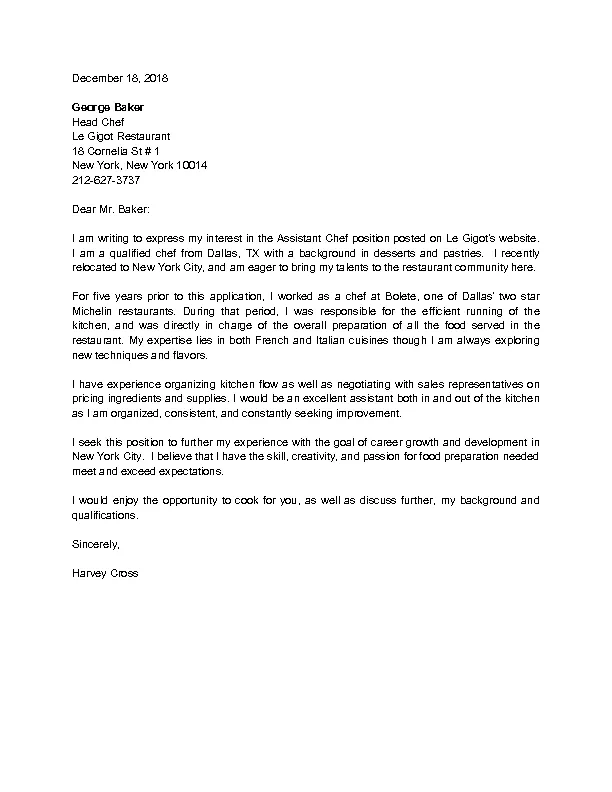
Understand the Basics of a Chef Cover Letter
A chef cover letter is more than just a formality; it’s your chance to make a strong first impression and convince a potential employer that you are the right person for the job. Unlike a resume, which provides a factual overview of your career, a cover letter allows you to showcase your personality, passion for cooking, and unique qualifications. It’s an opportunity to tell a story, to explain why you’re drawn to this specific role and this particular restaurant. A well-crafted cover letter can significantly increase your chances of landing an interview. This guide provides you with a comprehensive overview on how to write a standout chef cover letter that will get you hired.
Header Information
The header of your chef cover letter is crucial for providing essential contact information and making a professional impression. It’s the first thing a hiring manager will see, so it needs to be clear, concise, and accurate. Proper formatting demonstrates attention to detail and professionalism, both of which are highly valued in the culinary world. Ensure that all the information is up-to-date and easy to read. The header sets the tone for the entire letter, so take your time and get it right.
Your Contact Information

Start with your full name, address, phone number, and professional email address. Use a professional-sounding email; avoid nicknames or casual phrases. This ensures that the employer can easily contact you for an interview. Double-check that all contact details are correct to avoid missed opportunities. This section is crucial for the employer to reach out to you quickly. It’s also a chance to show you can present yourself in a professional manner.
Date
Following your contact information, include the date you are writing the letter. This is important for record-keeping purposes and to show the letter is current. Use a standard date format, like Month Day, Year (e.g., March 8, 2024). Place the date directly below your contact information, typically aligning it to the left or right side of the page, whichever format you choose, be consistent throughout your letter. This detail adds to the overall professional appearance.
Employer Contact Information
Below the date, include the hiring manager’s name, their title, the restaurant’s name, and the restaurant’s address. If you know the hiring manager’s name, use it; this personal touch makes the letter more engaging. If you are unsure, you can use a general title like ‘Hiring Manager’. Researching this information shows that you are proactive and interested in the specific establishment. Accurate details here demonstrate your attention to detail.
Professional Greeting

The greeting sets the tone for your entire letter. Always use a professional greeting such as ‘Dear Mr./Ms./Mx. [Last Name]’. If you do not know the hiring manager’s name, use ‘Dear Hiring Manager’. Avoid generic greetings like ‘To Whom It May Concern’ as it can make your letter feel impersonal. A personalized greeting shows that you have taken the time to research the company and the role. The greeting should be polite and respectful, setting a positive tone.
Body Paragraphs
The body paragraphs are the heart of your chef cover letter. Here, you have the opportunity to showcase your skills, experiences, and passion for cooking. These paragraphs should be well-structured, concise, and tailored to the specific job requirements. Focus on highlighting your most relevant qualifications and achievements. Use strong action verbs and provide specific examples to support your claims. Ensure that the content is easy to read and flows naturally. The goal is to capture the hiring manager’s attention and make them want to learn more about you.
Opening Paragraph
Begin by clearly stating the position you are applying for and how you learned about the opportunity. Briefly mention your most impressive qualifications and why you are interested in the role and the restaurant. This section should capture the reader’s attention immediately and make them want to continue reading. Show genuine enthusiasm for the position, mentioning what specifically attracts you to the role or the restaurant. Keep the opening brief and impactful, setting the stage for the rest of the letter.
State Your Intent

Clearly state the specific chef position you are applying for. Mention where you found the job posting (e.g., online job board, company website, referral). Briefly explain why you are interested in the role and the restaurant. This immediately informs the reader of your purpose and sets the context for the rest of your letter. Be direct and specific about the position you’re targeting, demonstrating your clear career goals.
Highlight Key Skills and Experiences
In the main body, emphasize your most relevant skills and experiences. Connect your qualifications directly to the requirements listed in the job description. Use specific examples from your previous roles to demonstrate your abilities. This is where you can showcase what makes you a good chef candidate. Use action verbs and quantifiable results to make your accomplishments more impressive. Show how you have contributed to the success of previous establishments. This section needs to be compelling to the hiring manager.
Showcase Relevant Skills
Detail your culinary skills such as menu planning, food preparation techniques, and knowledge of different cuisines. Highlight your proficiency in kitchen management, including inventory control, staff training, and maintaining a clean and organized work environment. Mention any special skills, like proficiency in a specific cuisine or certification in food safety. Tailor your skills to match the job description, including the skills the employer is looking for. This helps demonstrate that you are a good fit for the role.
Quantify Achievements

Instead of just listing your skills, quantify your achievements whenever possible. Use numbers and statistics to show the impact of your work. For example, mention how you reduced food costs, increased customer satisfaction, or improved kitchen efficiency in your previous roles. Providing these details demonstrates the value you brought to your previous employers, making it easier for the hiring manager to see the potential value you would bring to their establishment. Quantifiable achievements can set you apart from other candidates.
Closing Paragraph
The closing paragraph should summarize your interest, express gratitude, and provide a clear call to action. Reiterate your enthusiasm for the position and mention you are eager to learn more about the opportunity. A strong close leaves the reader with a positive impression and encourages them to take the next step. It is your final opportunity to leave a lasting impact. This section is just as important as any other part of the cover letter.
Express Enthusiasm and Next Steps
Restate your interest in the role, and express your enthusiasm for the opportunity. Indicate your availability for an interview and how you can be reached. Thank the hiring manager for their time and consideration. Include a call to action, such as ‘I look forward to hearing from you’ or ‘I am available for an interview at your earliest convenience.’ This final step is crucial to signal your interest and readiness to move forward.
Formal Closing

Use a professional closing such as ‘Sincerely,’ ‘Best regards,’ or ‘Thank you.’ Sign off with your typed name. Make sure the closing is appropriate for the tone of your letter. Keep it short and professional, avoiding overly casual or informal sign-offs. This simple formality leaves a positive impression. Ensure this part is consistent with the rest of the letter.
Proofreading and Formatting
Proofreading and formatting are critical steps in ensuring your chef cover letter is professional and polished. Errors in grammar, spelling, and formatting can undermine your credibility and make it seem like you are not detail-oriented. Proper formatting helps make the letter easy to read and visually appealing. Taking the time to proofread and format your letter shows that you care about presenting yourself in the best possible way. This attention to detail makes your application stand out.
Accuracy and Clarity
Carefully proofread your letter for any spelling, grammar, or punctuation errors. Ensure that your language is clear, concise, and easy to understand. Use a grammar checker, but also read the letter aloud to catch any awkward phrasing. Ask a friend or colleague to review your letter as a second pair of eyes can often identify mistakes you might have missed. Double-check all names, dates, and other factual information. Accuracy and clarity demonstrate professionalism and a commitment to excellence.
Formatting Guidelines

Use a professional and easy-to-read font, such as Times New Roman, Arial, or Calibri, with a font size between 10 and 12 points. Use standard margins (1 inch on all sides) and single-spacing throughout the letter. Maintain consistent formatting throughout the document. Ensure that your contact information, the date, and the employer’s contact information are clearly organized. A well-formatted cover letter is visually appealing and reflects a commitment to professional standards.
Review and Revise
After writing your cover letter, review it multiple times. Make any necessary revisions to improve clarity and impact. Check that your letter aligns with the job description. Ensure that your content is tailored to the specific role and the restaurant. If possible, ask someone else to review the letter and provide feedback. Revising and refining your cover letter is essential for ensuring that it effectively showcases your skills and experience.
Key Skills to Include in a Chef Cover Letter
Your chef cover letter should highlight a variety of skills to show you are well-rounded. Include a mix of culinary, management, and soft skills to demonstrate your ability to succeed in the role. Prioritize the skills that are most relevant to the job requirements and tailor your descriptions to showcase your expertise and experience. Demonstrating that you have these skills increases your chances of getting the job.
Culinary Skills

List your technical culinary skills, such as proficiency in various cooking techniques (e.g., grilling, sautéing, baking), knowledge of different cuisines, and experience with menu development. Include your ability to manage food costs and inventory. If you have experience with a specific type of cuisine, highlight that. Showcase your skills using action verbs and specific examples. This makes your achievements more tangible.
Management Skills
Include management skills, such as leadership, team building, staff training, and the ability to manage a kitchen efficiently. If you have experience supervising a team, managing schedules, or ensuring food safety standards, mention it. Show how you can make a kitchen run smoothly and efficiently. Highlight your ability to motivate and mentor other kitchen staff. Leadership is an important skill.
Soft Skills
Include soft skills like communication, problem-solving, adaptability, and attention to detail. Highlight your ability to work under pressure and in a fast-paced environment. Show your interpersonal skills and ability to work well with others. Mention your organizational skills, your ability to handle feedback, and your proactive approach. These skills are just as important as technical skills.
Cover Letter Examples and Templates
Using cover letter examples and templates can be incredibly helpful when crafting your own chef cover letter. They provide a solid framework to guide your writing and ensure you include all the necessary elements. Look for examples tailored to the chef position, focusing on the specific skills and experiences employers seek. Remember to adapt the examples to your own unique experiences and qualifications. Personalizing the examples makes the letter authentic and reflects your individual style. These resources can save you time and help you create a compelling cover letter.