Understand the Purpose of a Case Manager Cover Letter
A case manager cover letter serves as your initial introduction to a potential employer, offering you the chance to make a strong first impression. It goes beyond the information presented in your resume, allowing you to showcase your personality, enthusiasm, and specific qualifications for the role. The primary aim of a cover letter is to persuade the hiring manager that you are the ideal candidate for the position. It’s your opportunity to explain why you are interested in the job, and demonstrate how your skills and experience align with the requirements of the position. It’s also a chance to show your understanding of the organization and the case management field. A well-crafted cover letter, tailored to the specific job, significantly increases your chances of landing an interview by highlighting your unique value proposition.
Key Components of a Case Manager Cover Letter
A well-structured cover letter is essential for presenting yourself professionally and effectively. Every part of your letter contributes to your overall presentation, so make sure to get all components right. A standard cover letter includes several key components, each playing a crucial role in conveying your qualifications and interest. The best cover letters create a cohesive narrative that tells a story about your skills and experiences, connecting them with the employer’s needs.
Contact Information and Date
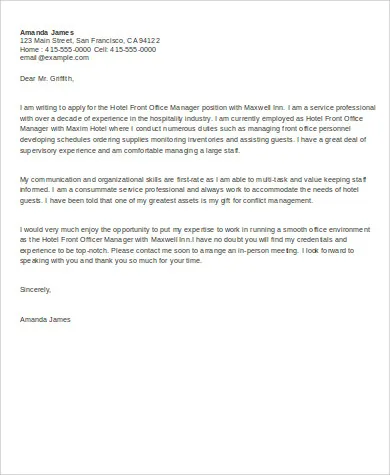
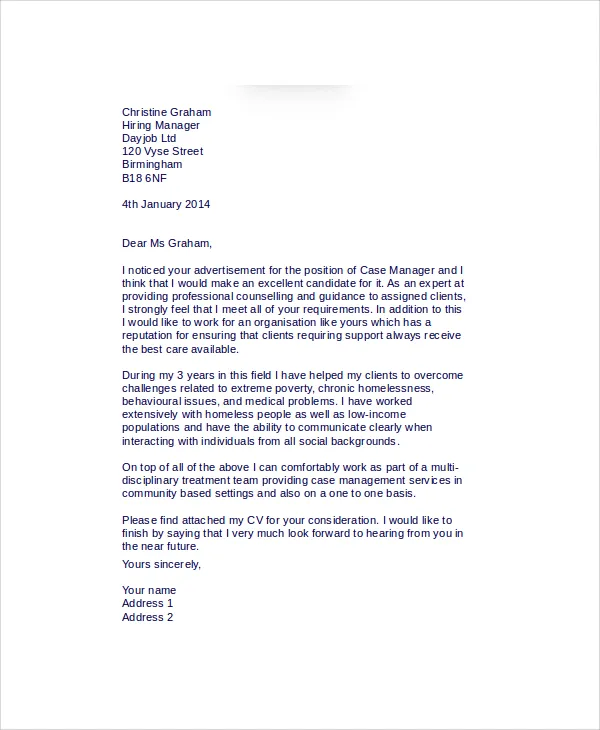
Begin your cover letter with your contact information. This typically includes your full name, phone number, email address, and optionally, your LinkedIn profile URL. Place this information at the top left of the letter. Below your contact details, include the date you are writing the letter. This provides a clear timestamp for the application.
The Recipient’s Details
Directly below the date, on the left or center, include the hiring manager’s details. Whenever possible, address the letter to a specific person, such as the hiring manager or the director of the department. Include their full name, title, and the organization’s address. If you are unable to find the specific person’s name, use a general greeting like ‘Dear Hiring Manager’.
Professional Salutation
Start your letter with a professional salutation. ‘Dear Mr./Ms./Mx. [Last Name]’ is the most common and respectful way to begin. If you don’t know the name of the hiring manager, ‘Dear Hiring Manager’ is acceptable. Avoid overly casual greetings; it’s essential to maintain a formal tone throughout the letter. A strong salutation sets the tone for the rest of the letter.
Writing a Compelling Opening Paragraph

The opening paragraph is your first opportunity to grab the reader’s attention. Begin with a strong statement that immediately conveys your interest in the position and the organization. Briefly mention the position you are applying for and where you saw the job posting. Immediately demonstrate your understanding of what the organization is looking for. In the first sentence, you should express your enthusiasm and make it clear why you are a strong candidate. This paragraph sets the tone for the entire letter, so make sure it is concise and impactful.
Highlighting Relevant Skills and Experiences
This section is the meat of your cover letter, where you elaborate on your qualifications and experiences. Tailor this section to match the job description. Review the job requirements carefully and highlight the skills and experiences that align with the specific needs of the role. Use specific examples to demonstrate how you have successfully applied these skills in previous positions. This shows that you are not just listing skills, but also explaining how you have used them to achieve results.
Emphasizing Case Management Skills
Case management requires a specific set of skills, so be sure to highlight these prominently. Include examples of your skills such as assessment, care planning, advocacy, communication, and critical thinking. Provide specific examples of situations where you successfully used these skills. The best examples will demonstrate your ability to manage and coordinate care effectively, as well as your ability to work with diverse populations. Also, showcase skills like crisis intervention and resource coordination.
Showcasing Relevant Experience

Detail your relevant work experience, focusing on roles where you have worked as a case manager or in a related capacity. Describe your responsibilities, the types of clients you have worked with, and the outcomes you achieved. Focus on your most relevant experiences first, ensuring they align with the job requirements. Be sure to include the name of the organization, your job title, the dates of employment, and a brief overview of your duties. Use this section to demonstrate a progression in your case management career, showing how you have grown and expanded your skills over time.
Quantifying Achievements
Quantify your achievements whenever possible. Use numbers and data to illustrate your impact. Instead of saying ‘Improved client outcomes,’ say ‘Improved client outcomes by 15% through the implementation of a new care plan.’ Providing measurable results helps the hiring manager understand your contributions and the value you bring to the role. Quantifying your achievements demonstrates a commitment to excellence and your ability to create positive change.
Expressing Enthusiasm and Fit
In this section, express your genuine enthusiasm for the position and the organization. Explain why you are drawn to this specific role and what excites you about the opportunity. Briefly mention your knowledge of the organization and what resonates with you about its mission or values. Your goal here is to show that you have carefully researched the organization and are eager to contribute to its success. Make it clear that you are not just looking for a job, but that you genuinely want to be part of their team.
Call to Action and Closing

Conclude your cover letter with a clear call to action. State that you are eager to discuss your qualifications further and express your availability for an interview. Thank the hiring manager for their time and consideration. Close your letter with a professional closing, such as ‘Sincerely’ or ‘Respectfully,’ followed by your full name. This concluding paragraph reinforces your interest in the position and leaves a positive final impression.
Formatting and Proofreading
Attention to detail is crucial in case management and the same is true when preparing a cover letter. The letter must be well-formatted, error-free, and professional. Proofreading is an essential step in the application process and a poorly formatted or error-riddled letter will have you on the losing end. This section will focus on formatting guidelines and provide helpful proofreading tips.
Formatting Guidelines
Use a professional font such as Times New Roman, Arial, or Calibri. The font size should be between 10 and 12 points. Ensure that your letter is properly aligned and that the margins are set to one inch on all sides. Use single spacing within paragraphs and double spacing between paragraphs. Break up large blocks of text with shorter paragraphs to make the letter easier to read. Keep the letter concise, ideally within one page. Use a clear and organized layout to enhance readability.
Proofreading Tips

Proofreading is critical to ensure your cover letter is free of errors. Start by thoroughly reviewing your letter for any spelling, grammar, and punctuation mistakes. Read the letter aloud to catch any awkward phrasing or sentence structure issues. Ask a friend or colleague to review your letter for you. A fresh pair of eyes can often identify errors that you might miss. Ensure that your contact information is accurate and that your formatting is consistent. Proofread multiple times to ensure your cover letter is polished and professional, and will get you an interview.