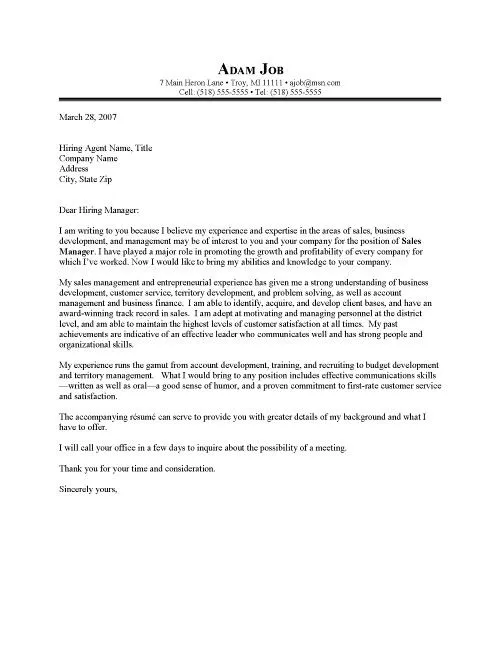
What is a Business Development Cover Letter
A business development cover letter is a crucial document accompanying your resume when applying for business development roles. It serves as your initial introduction to a potential employer, offering a concise yet compelling overview of your skills, experience, and enthusiasm for the position. Unlike a resume, which provides a factual account of your professional history, a cover letter allows you to narrate your career journey, highlight relevant achievements, and express your specific interest in the company and the role. A well-crafted cover letter can significantly increase your chances of securing an interview.
Why Is a Business Development Cover Letter Important
In the competitive landscape of business development, a cover letter is essential for several reasons. It provides a space to personalize your application beyond the standard resume format. This personalization can demonstrate your genuine interest in the specific company and role. It also provides an opportunity to highlight achievements, demonstrating your value through quantifiable results. A strong cover letter can clarify your career goals and explain how your skills align with the company’s needs, which is difficult to convey solely through a resume. Furthermore, it offers a chance to showcase your communication skills, which is a critical trait for business development professionals.
Key Elements of a Business Development Cover Letter

Header
Your header should include your contact information (name, phone number, email, and optionally, your LinkedIn profile URL) and the date. The company’s information, including the hiring manager’s name (if known), should also be included in the header. Maintaining a professional and organized header is vital for the first impression you make.
Greeting
Address the hiring manager by name if possible. This shows that you have taken the time to research the company and the role. If the name isn’t available, a generic greeting such as “Dear Hiring Manager” is acceptable but less impactful.
Body Paragraphs

The body paragraphs are the core of your cover letter. Here, you should showcase your skills and experience. Explain why you’re interested in the role and the company. Provide examples of your achievements in previous roles, using quantifiable metrics to demonstrate your successes. Highlight your understanding of business development and the value you can bring to the company. The goal is to create a narrative that demonstrates the direct relevance of your qualifications to the job requirements.
Conclusion
The conclusion should reiterate your interest and state your availability for an interview. Thank the hiring manager for their time and consideration. Express enthusiasm for the opportunity to discuss your qualifications further. End with a professional closing, such as “Sincerely” or “Best regards,” followed by your name.
Formatting and Design for Cover Letter
Use a clean, professional font like Arial, Times New Roman, or Calibri, sized between 10 and 12 points. Maintain consistent formatting throughout the document. Use clear and concise language and keep paragraphs relatively short for easy readability. Ensure proper spacing between paragraphs and sections. Your cover letter should be no more than one page long. This ensures that you maintain reader engagement and avoids overwhelming the hiring manager.
Best Practices for Business Development Cover Letters
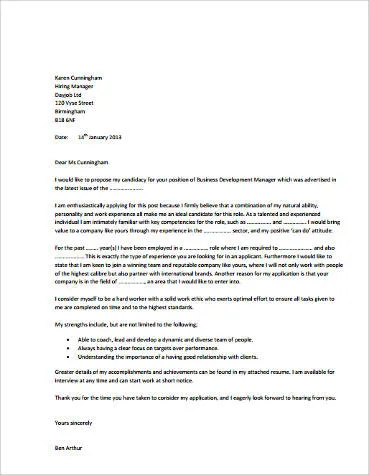
Highlight Relevant Skills and Experience
Carefully review the job description and identify the key skills and experiences the employer is seeking. Tailor your cover letter to highlight those specific qualifications. Provide examples of how you have used these skills in previous roles to achieve success. Quantify your achievements whenever possible by using numbers and data to demonstrate the impact of your work. The goal is to prove that you have the exact skills and experience to excel in the position.
Tailor Your Letter to the Job Description
Avoid using a generic cover letter. Customize each letter for the specific role and company. Research the company’s mission, values, and recent news to demonstrate your genuine interest. Show how your skills and experience align with the requirements of the role and the company’s goals. The more personalized the letter, the more likely it is to make a positive impression.
Showcase Your Achievements and Results

Instead of merely listing your responsibilities, focus on your achievements and the results you’ve delivered. Use the STAR method (Situation, Task, Action, Result) to provide context and demonstrate your problem-solving skills. Provide specific examples of how you’ve increased revenue, improved efficiency, or secured new clients. Highlight your contributions in a way that showcases your value to the company.
Proofread and Edit Your Letter
Before submitting your cover letter, carefully proofread it for any grammatical errors, typos, or formatting inconsistencies. Have a friend or colleague review it as well, as a fresh pair of eyes can often catch mistakes you might miss. A polished and error-free cover letter demonstrates attention to detail and professionalism.
Business Development Cover Letter Templates
Free Cover Letter Templates

Many websites offer free cover letter templates that you can adapt to your specific needs. These templates provide a solid structure and can save you time when creating your cover letter. Some popular websites include Canva, Resume.io, and Zety. These provide a starting point and guidance for formatting, allowing you to focus on content.
Paid Cover Letter Templates
If you want a more polished and professional look, consider using paid cover letter templates. These often come with advanced formatting options and are designed to help you stand out. Websites such as Etsy and Envato Elements offer a variety of premium templates designed by professionals.
How to Customize Your Cover Letter for Different Roles
Research the Company and Role

Before you start writing, research the company and the specific role you are applying for. Visit the company’s website, read their mission statement, and learn about their products or services. Understand the key responsibilities of the position and identify the skills and experience the company is looking for. This research will inform your cover letter and enable you to tailor it to the company’s specific needs.
Adapt the Language and Tone
Adjust the language and tone of your cover letter to match the company’s culture and the role’s requirements. If the company has a formal culture, maintain a professional and respectful tone. If the company has a more relaxed culture, you can adopt a more conversational tone. Make sure that the tone of your cover letter is appropriate for the industry, the company, and the specific role. Maintain consistency throughout your cover letter.
Use Keywords from the Job Description
Carefully review the job description and identify the keywords that the company uses to describe the required skills and experience. Incorporate these keywords naturally into your cover letter to show that you are a good match for the role. This will help your application get past applicant tracking systems (ATS) and catch the hiring manager’s attention.
Mistakes to Avoid in a Business Development Cover Letter
Generic Cover Letters
Avoid sending the same cover letter to multiple companies. Generic cover letters don’t demonstrate your genuine interest in the specific role. Take the time to customize each letter to the company and the position. Address the hiring manager by name, mention specific details about the company, and highlight the skills and experiences relevant to the role.
Typos and Grammatical Errors
Typos and grammatical errors can undermine your credibility and make a negative impression. Always proofread your cover letter carefully before submitting it. Have a friend or colleague review it as well, as they may catch mistakes you’ve missed. Use a grammar checker to ensure that your writing is error-free. A well-written, error-free cover letter is essential.
Lack of Enthusiasm
Show your enthusiasm for the role and the company. Express your excitement about the opportunity to contribute to their success. Demonstrate your genuine interest by discussing specific aspects of the company that appeal to you. Passion for the industry and the role can make you stand out.
Business Development Cover Letter Examples
Example for a Senior Business Development Role
For a senior business development role, highlight your extensive experience and significant achievements. Showcase your ability to lead and mentor a team. Mention your success in driving revenue growth, expanding market share, and developing strategic partnerships. Provide specific examples of past successes, including measurable results. Demonstrate leadership skills, strategic thinking, and ability to manage complex projects. Your cover letter is a testament to your leadership abilities.
Example for a Junior Business Development Role
For a junior business development role, focus on your transferable skills, education, and any relevant internships or projects. Highlight your passion for business development and your willingness to learn and grow. Showcase any achievements, even if they are from academic or extracurricular activities. Tailor the cover letter to demonstrate your enthusiasm, communication skills, and ability to contribute to the company’s goals. You want to emphasize your ability to quickly adapt and learn in a professional environment.
Business Development Cover Letter FAQs
How long should a business development cover letter be? A business development cover letter should be no more than one page. Should I include my salary expectations in my cover letter? It’s often best to avoid mentioning your salary expectations in your cover letter unless the job posting specifically requests it. If asked, tailor your response to reflect market rate and your experience. What should I do if I don’t know the hiring manager’s name? Address the cover letter to ‘Dear Hiring Manager’ or ‘Dear [Company Name] Hiring Team’.