Crafting a Bank Job Cover Letter
A well-crafted cover letter is your first introduction to a potential employer, and for a bank job, it’s crucial. It’s your opportunity to showcase why you’re the perfect fit, highlighting your skills, experience, and enthusiasm for the role. Unlike a resume, a cover letter allows you to tell a story, connecting your qualifications to the specific requirements of the position. It’s not merely a summary of your resume; it’s a persuasive document aimed at securing an interview. The best cover letters are tailored to each job, demonstrating that you’ve taken the time to understand the bank’s needs and how you can contribute to their success. This guide will walk you through each step, ensuring your cover letter stands out from the competition, making you the best applicant.
Researching the Bank and Role
Before you start writing, thorough research is essential. Visit the bank’s website to understand its mission, values, and recent news. Explore their products and services to grasp their market position. Look into the specific job description, identifying the required skills and qualifications. Understanding the bank’s culture will allow you to tailor your letter to their specific needs. This will also help you use relevant keywords, demonstrating that you understand the role and are interested in the company. This will set a good impression to the employer, making them believe you are genuinely interested.
Highlighting Relevant Skills and Experience

Focus on skills and experiences that align with the job description. Banking roles often require strong analytical skills, attention to detail, customer service abilities, and proficiency in relevant software. If you have prior banking experience, highlight your roles and responsibilities, such as managing accounts, processing transactions, or providing financial advice. Even if your background is not directly in banking, emphasize transferable skills. For example, excellent communication from a customer service role, or strong organizational skills from an administrative role are just as vital. The goal is to show how your skills meet the employer’s needs.
Quantifying Achievements for Impact
Don’t just list your responsibilities; quantify your achievements. Use numbers to demonstrate your impact. Instead of saying “Managed customer accounts,” say “Managed a portfolio of 150 customer accounts, resulting in a 10% increase in customer satisfaction.” Quantifying achievements provides concrete evidence of your capabilities. This adds weight to your claims, proving that you can contribute to the company’s success. Use metrics such as percentages, dollar amounts, or the number of clients served to show your value. This makes a compelling case for why you’re the best candidate.
Tailoring Your Cover Letter to the Job
Each cover letter should be unique to the job you’re applying for. Avoid using a generic template. Carefully review the job description and match your skills and experience accordingly. Mention the specific name of the bank and the role you’re applying for in the introduction. Show that you understand the bank’s needs by addressing their challenges and how you can help. This customized approach shows that you’ve put in the effort, making your application more compelling. Tailoring shows you are not only interested in the job but also invested in the company.
Formatting and Structure Essentials

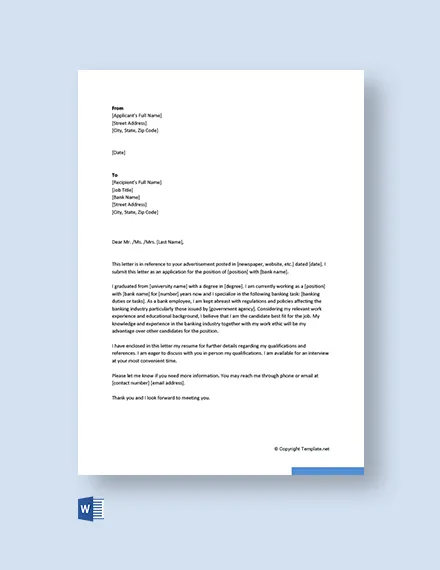
A well-formatted cover letter is easy to read and professional. Use a clear and professional font like Arial or Times New Roman. Maintain consistent margins and spacing. Keep the letter concise, ideally one page. Structure your letter with a clear heading, opening paragraph, body paragraphs, and closing paragraph. Use bullet points to list skills or achievements for easy readability. Proofread carefully for grammar and spelling errors. A well-structured letter demonstrates your attention to detail, a crucial skill in banking.
Key Elements to Include in Your Letter
Your cover letter should include essential elements. Start with a professional heading including your contact information and the date. Address the hiring manager by name if possible, otherwise use a general salutation. The body should highlight your key skills and experience, tailor it to the job requirements, and explain why you’re a great fit. Always include a call to action, such as requesting an interview. End with a professional closing and your full name. Including all these elements will give the employer confidence.
Opening Paragraph Strategies
The opening paragraph sets the tone for your entire cover letter. It should immediately capture the reader’s attention. Start by stating the position you’re applying for and where you saw the job posting. Briefly mention a key skill or experience that makes you a strong candidate. You could also mention why you’re excited about the bank or the role. Avoid generic phrases; instead, aim to be enthusiastic and specific. Making a great first impression is crucial, ensuring the employer will continue reading.
Highlighting Banking Experience (If Applicable)
If you have banking experience, this is the perfect time to highlight it. Mention your specific roles, the banks you’ve worked for, and your key responsibilities. Detail your achievements, such as improving customer service ratings, increasing sales, or reducing errors. Show your understanding of banking procedures, regulations, and financial products. Use industry-specific terminology to demonstrate your expertise. Highlighting your experience can help you stand out against other candidates, potentially leading to a higher position.
Showcasing Transferable Skills
If you don’t have direct banking experience, focus on transferable skills. Emphasize customer service, communication, problem-solving, and analytical skills. If you have experience from other fields like retail or hospitality, showcase how your skills are relevant to banking. For example, show your ability to handle customer inquiries, manage transactions, or work in a team. Explain how these skills make you a suitable candidate for the banking role. Highlighting your transferable skills can help you bridge the gap between your past experiences and the job requirements.
Demonstrating Enthusiasm and Interest
Show your genuine enthusiasm for the role and the bank. Explain why you’re interested in the specific position and what attracts you to the company. Mention any aspects of the bank’s mission or values that resonate with you. Show that you’ve researched the bank and understand their goals. This helps demonstrate your commitment and initiative. Demonstrating your passion will leave a positive impression on the employer, increasing your chances of getting the job.
Closing Paragraph and Call to Action

Your closing paragraph should reiterate your interest and summarize your qualifications. Thank the hiring manager for their time and consideration. Clearly state your availability for an interview and express your eagerness to discuss your application further. Provide your contact information again, making it easy for the employer to reach you. A strong call to action is essential. The closing paragraph needs to be short and memorable, leaving a positive impression.
Proofreading and Editing for Perfection
Before submitting your cover letter, proofread it carefully. Check for any grammatical errors, spelling mistakes, or typos. Ensure your sentences are clear, concise, and well-structured. Read the letter out loud to identify any awkward phrasing. Consider asking a friend or family member to review it for a second opinion. A polished, error-free cover letter demonstrates your attention to detail and professionalism. Proofreading is essential in every job, and this is your first test.