Crafting the Perfect Administrative Assistant Cover Letter
A well-crafted administrative assistant cover letter is your first chance to make a strong impression. It’s more than just a formality; it’s your opportunity to showcase your skills, experience, and personality to potential employers. This guide will walk you through every step, from understanding the purpose of a cover letter to submitting your application with confidence. Creating a compelling cover letter tailored for an administrative assistant position can significantly increase your chances of landing an interview. It complements your resume by providing context, highlighting relevant skills, and demonstrating your genuine interest in the role and the company. Follow the steps outlined below for a standout cover letter!
Understanding the Purpose of a Cover Letter
The primary goal of your administrative assistant cover letter is to introduce yourself, express your interest in the position, and persuade the hiring manager to read your resume. It allows you to go beyond the bullet points of your resume and tell a compelling story about your qualifications. The purpose is not just to list your skills, but to demonstrate how your skills align with the specific requirements of the job. It’s also a chance to show your personality and communication skills which are essential for an administrative role. Remember, a well-written cover letter can set you apart from other candidates and make you a more attractive choice for employers. Consider it your sales pitch and the chance to convince the hiring manager that you are the perfect fit.
Highlighting Your Skills and Experience

Your administrative assistant cover letter is the perfect place to highlight the most relevant skills and experiences that match the job description. Focus on the experiences that demonstrate your proficiency in the key requirements outlined by the employer. Don’t just list your skills, provide examples of how you’ve used them successfully. Use action verbs to describe your accomplishments and the impact you made in previous roles. This helps the hiring manager to visualize your abilities and understand the value you bring to the team. Always tailor your letter to each job application. Be sure to use the job posting as a guide to identify the most important skills and experiences to emphasize.
Key Skills to Showcase
When applying for an administrative assistant role, emphasize key skills that are most relevant to the position. These include strong organizational abilities, excellent communication skills (both written and verbal), proficiency in office software (like Microsoft Office Suite), and attention to detail. Highlight your ability to manage multiple tasks simultaneously, prioritize effectively, and maintain confidentiality. Additionally, showcase your interpersonal skills, such as your ability to work collaboratively, handle phone calls professionally, and provide excellent customer service. Experience with scheduling, data entry, and records management are also highly desirable. Be sure to align your skills with the specific requirements mentioned in the job posting.
Quantifiable Achievements
To make your cover letter even more impactful, include quantifiable achievements. These are specific accomplishments that demonstrate the results you’ve achieved in previous roles. Instead of simply stating that you managed schedules, provide examples of how you improved efficiency or reduced scheduling conflicts. Instead of saying you managed data entry, specify how many records you processed per day and with what accuracy. Use numbers, percentages, and specific figures to highlight your success. Quantifiable achievements provide concrete evidence of your abilities and make a stronger case for your candidacy. For example, mention that you reduced administrative costs by a certain percentage or improved customer satisfaction scores.
Formatting Your Administrative Assistant Cover Letter

Proper formatting is crucial for making your cover letter easy to read and professional in appearance. Use a clear and readable font like Arial or Times New Roman, with a font size of 11 or 12 points. Maintain consistent margins (typically one inch) and ensure there is adequate spacing between paragraphs. Avoid lengthy blocks of text; use short paragraphs and bullet points where appropriate to break up the content. Keep your cover letter to one page and proofread it carefully for any typos or grammatical errors. The goal is to present your information in a way that is both visually appealing and easy for the hiring manager to digest.
Header and Contact Information
Start your cover letter with a professional header that includes your contact information. Include your full name, phone number, email address, and LinkedIn profile URL (if you have one). Place this information at the top of the letter, either left-aligned or centered. If you know the hiring manager’s name, address the letter to them directly; otherwise, use a general salutation like “Dear Hiring Manager.” Ensure that your contact information is accurate and up-to-date, as this is how employers will reach you. Double-check your email address and phone number to avoid any errors that might prevent them from contacting you.
Salutation and Tone
The salutation sets the tone for your entire cover letter. If possible, use the hiring manager’s name (e.g., “Dear Mr. Smith”). If you don’t know the name, use a professional greeting like “Dear Hiring Manager” or “To Whom It May Concern.” Maintain a professional and respectful tone throughout the letter. Avoid overly casual language or slang. Use a confident yet humble tone, highlighting your skills and experience without being arrogant. Be enthusiastic and demonstrate your genuine interest in the position. Your tone should reflect your personality and professionalism, showing the employer that you are a good fit for their company culture.
Body Paragraphs

The body paragraphs are where you make your case for why you are the best candidate. Structure your body paragraphs to highlight your key skills and experiences. Use the STAR method (Situation, Task, Action, Result) to describe your accomplishments. Start with a brief introduction, then elaborate on your skills and experiences, providing specific examples. Tailor each paragraph to the job description, emphasizing the most relevant skills. Make sure each paragraph has a clear and concise focus. Maintain a positive and engaging tone, and demonstrate your understanding of the company and the role. Conclude each paragraph by reinforcing your interest in the position and your belief in your ability to succeed. Keep paragraphs brief and to the point.
Introduction
Your introduction should immediately grab the hiring manager’s attention. State the position you are applying for and where you saw the job posting. Briefly mention why you are interested in the role and the company. Highlight one or two key skills or experiences that make you a strong candidate. Keep it concise and focused. Aim to make a strong first impression. For example, if the job posting emphasizes organization, mention your strong organizational skills in your introduction. This shows you’ve read the job description and are a good match. Your introduction is the hook—use it wisely!
Middle Paragraphs
The middle paragraphs are the core of your cover letter. Here, delve deeper into your skills and experiences. Provide specific examples of how you’ve used your skills to achieve results. Use the STAR method (Situation, Task, Action, Result) to give context, describe your responsibilities, detail your actions, and explain the outcome. Quantify your achievements whenever possible to demonstrate your impact. Focus on what you did, how you did it, and the outcomes you achieved. Make each paragraph focused on one or two key skills or experiences that align with the job description. By using this detailed approach, you highlight why you are the best fit for the role.
Concluding Paragraph

Your concluding paragraph should reiterate your interest in the position and company. Reiterate your enthusiasm and how you can contribute to the team. Include a call to action, such as expressing your availability for an interview. Thank the hiring manager for their time and consideration. Keep the tone positive and professional. Express your excitement about the opportunity, and mention that you look forward to discussing your qualifications further. Close with a formal closing such as “Sincerely” or “Respectfully” followed by your full name. Ensure your conclusion leaves a positive and lasting impression, demonstrating your commitment to securing the role.
Proofreading and Editing
Proofreading and editing are critical steps in the cover letter writing process. Errors, typos, and poor grammar can detract from your professional image and reduce your chances of getting an interview. Proofread your cover letter multiple times, ideally letting it sit for a day or two before reviewing it with fresh eyes. Check for grammatical errors, spelling mistakes, and punctuation issues. Read your letter aloud to catch any awkward phrasing or sentence structures. Consider asking a friend, family member, or career counselor to review your cover letter. A second pair of eyes can often catch errors you might miss. Ensure every sentence is clear, concise, and effectively communicates your qualifications.
Common Mistakes to Avoid
Avoid common mistakes that can undermine your cover letter. Do not use generic cover letters, as they demonstrate a lack of interest. Avoid rambling and ensure each sentence serves a purpose. Do not exceed one page; keep the content concise. Do not lie or exaggerate; always be truthful about your skills and experience. Avoid negative language or criticizing previous employers. Do not simply repeat your resume; instead, provide context and highlight specific achievements. Finally, be sure to avoid typos and grammatical errors. Proofread your letter carefully before submitting your application. By avoiding these common errors, you can increase your chances of making a strong impression on the hiring manager.
Using Keywords Effectively

Use keywords from the job description throughout your cover letter. Hiring managers and applicant tracking systems (ATS) often scan for specific keywords. Identify the key skills, qualifications, and requirements mentioned in the job posting. Incorporate these keywords naturally into your cover letter. Do not stuff your cover letter with keywords. Include them strategically, where they fit logically within your sentences. Use keywords in your introduction, body paragraphs, and conclusion. This helps to ensure that your cover letter aligns with the job requirements and increases your chances of getting noticed. This also allows your letter to pass through ATS systems which can automatically filter applications.
Generic vs. Tailored Letters
Always tailor your cover letter to each job application. A generic cover letter is easy to spot and can indicate a lack of genuine interest. Customize your letter to each position. Research the company and the role to understand their specific needs and requirements. Address the letter to the hiring manager by name. Highlight the skills and experiences that align with the job description. Demonstrate your understanding of the company’s values and mission. Show that you have taken the time to learn about the company. Customize your letter to showcase how your qualifications and career goals align with the employer’s needs. This personalized approach will significantly increase your chances of success.
Examples and Templates
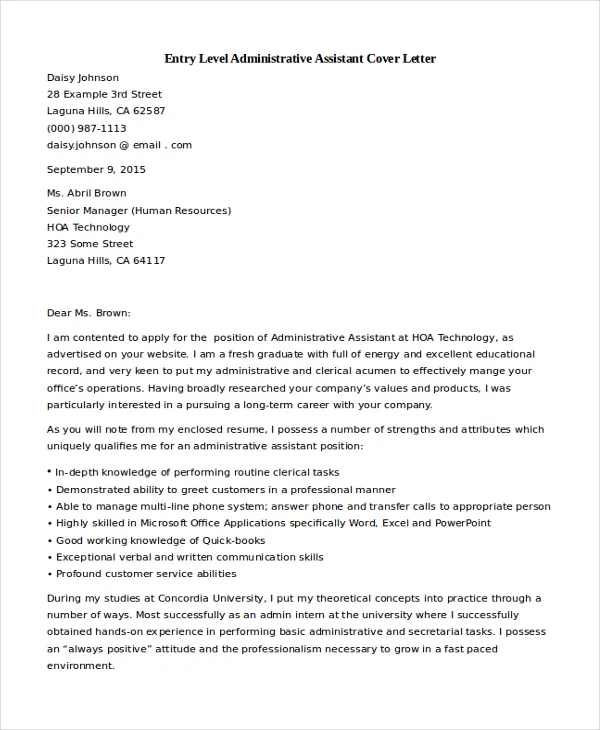
Leverage examples and templates to help you structure and write your cover letter. Use these as a starting point to customize your own letter. Adapt the language to reflect your unique skills and experiences. Research and analyze different examples of cover letters for administrative assistant positions. Pay attention to the structure, tone, and language used. Identify elements that resonate with you, and incorporate these elements into your letter. Remember, templates are meant to be adapted, not copied. Tailor the templates to your own skills and experience. Make sure your cover letter reflects your personality and unique qualifications.
Administrative Assistant Cover Letter Examples
Reviewing examples of successful administrative assistant cover letters can provide valuable insights. Look for examples that align with your own experience and the specific positions you are applying for. Analyze how the applicants highlight their skills, experience, and achievements. Pay attention to the structure, language, and tone used in the examples. Use these examples as a guide to creating your cover letter. Review multiple examples to see how others have successfully presented their qualifications. Modify the examples to match your own unique background. Use these examples as a source of inspiration. This will allow you to craft a tailored and effective cover letter.
Templates for Different Scenarios
Use different cover letter templates for different scenarios, such as entry-level positions, mid-career roles, or career changes. Choose a template that matches the job you are applying for. Adapt the language and structure of the template to fit your own experience and qualifications. Modify the templates to highlight your most relevant skills and experience. Tailor the template to emphasize the aspects most important to the job posting. Ensure that the template aligns with the company’s culture and your professional goals. Using different templates for different scenarios can help you create the most effective cover letter for each opportunity.
Applying and Following Up
Once you’ve written and perfected your cover letter, take the final steps to submit your application and follow up with the hiring manager. Ensure your application is complete, and follow all the instructions provided in the job posting. Be patient but proactive during the application process.
Submitting Your Cover Letter
When submitting your cover letter, follow the employer’s instructions carefully. Pay attention to the preferred file format (e.g., PDF or Word document). Attach your cover letter and resume, and double-check that you have included all required documents. Use a professional email subject line, such as “Application for Administrative Assistant Position – [Your Name].” Ensure all of your attachments are correctly named and easy to identify. Always double-check your email address for accuracy. Verify that your documents open correctly. The final step is to submit your application, confident you’ve presented yourself in the best possible light!
Following Up on Your Application
After submitting your application, follow up with the hiring manager. Send a polite thank-you email within a week or two. Reiterate your interest in the position. Briefly restate why you are a good fit for the role. Mention any key skills or experiences that align with the job requirements. Inquire about the status of your application, and politely ask if they need any further information. Keep your follow-up email brief and professional. Avoid being overly aggressive. Showing initiative and maintaining communication can significantly improve your chances of getting an interview.