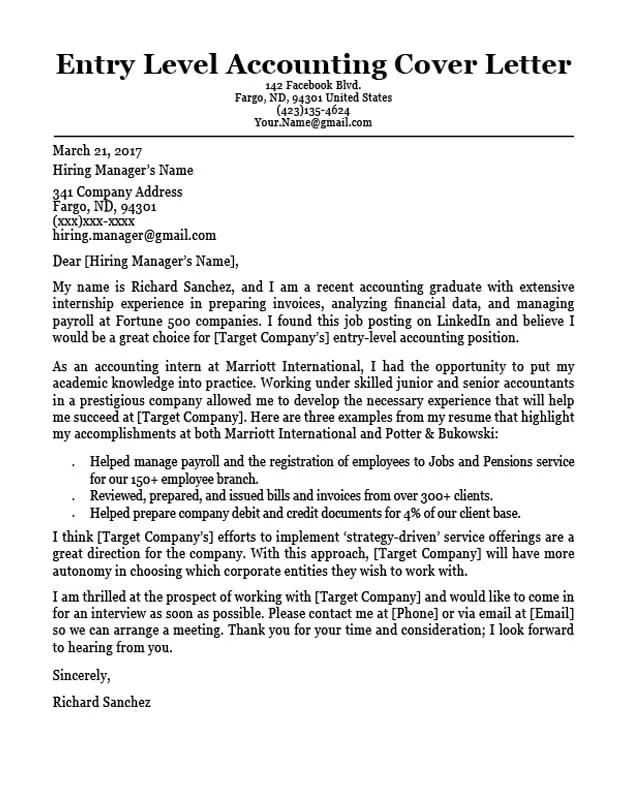
Crafting an Accounting Cover Letter That Gets Noticed
In the competitive world of entry-level accounting, a well-crafted cover letter is your secret weapon. It’s your first opportunity to make a positive impression on potential employers, setting you apart from other candidates and demonstrating your genuine interest in the position. A cover letter is far more than just a formality; it’s your personal marketing document, showcasing your personality, skills, and enthusiasm for accounting. This article provides a detailed guide to help you create an accounting cover letter that not only gets noticed, but also helps you secure your first accounting role. By following these guidelines, you can significantly increase your chances of landing an interview and launching your career in the field of accounting.
Understanding the Importance of a Cover Letter
A cover letter is an essential part of any job application, particularly in the accounting field where precision and attention to detail are highly valued. Think of it as a personalized introduction, a chance to speak directly to the hiring manager and explain why you’re the perfect fit for the role. It goes beyond the information presented in your resume, allowing you to provide context, elaborate on your skills, and express your passion for accounting. In the competitive job market, especially for entry-level positions, a strong cover letter can be the deciding factor in whether or not you get an interview.
Why a Cover Letter Matters for Entry-Level Accounting

For entry-level accounting positions, candidates often have limited professional experience. This is where your cover letter becomes incredibly valuable. It provides an opportunity to highlight relevant coursework, internships, volunteer work, or personal projects that demonstrate your aptitude for accounting. It’s a chance to showcase your enthusiasm for the field, explain why you’re interested in the specific company, and demonstrate your understanding of the role. A well-written cover letter can compensate for a lack of experience, effectively communicating your potential and eagerness to learn and contribute to the organization. It also shows initiative, a critical trait for any aspiring accountant.
Key Components of a Standout Accounting Cover Letter
To create a standout accounting cover letter, you need to focus on several key components. These elements work together to create a compelling narrative that grabs the reader’s attention and convinces them that you are a suitable candidate. A well-structured cover letter includes a clear introduction, a compelling body, and a strong conclusion. Each section plays a crucial role in conveying your message and securing you an interview. Make sure the letter is easy to read, error-free, and tailored specifically for each job application. Generic cover letters are easily spotted, so customization is crucial for success in the accounting job market.
Contact Information & Salutation
Start your cover letter with your contact information at the top. Include your name, address, phone number, and email address. Make sure your email address is professional and appropriate for the job application. Following this, address the hiring manager directly, if possible. Research the company and try to find the name of the person who will be reviewing your application. Addressing the letter to a specific person shows that you have taken the time to do your research and are genuinely interested in the position. If you can’t find a name, use a professional salutation like “Dear Hiring Manager”.
Highlighting Your Skills and Qualifications

The body of your cover letter is where you highlight your skills and qualifications. Focus on the skills and experience that are most relevant to the specific job you are applying for. This will demonstrate that you have read the job description carefully and understand the requirements. Do not just list your skills; provide specific examples of how you have used those skills in the past. This could include projects from your coursework, internships, or volunteer work. Use action verbs to describe your accomplishments and quantify your achievements whenever possible. Tailoring your skills and qualifications to match the job description is key.
Tailoring Your Letter to the Job Description
One of the most critical aspects of an effective cover letter is tailoring it to the specific job description. This involves carefully reviewing the job posting and identifying the key skills, qualifications, and experiences that the employer is looking for. Once you have identified these requirements, make sure to highlight the relevant skills and experiences from your own background. Use the same keywords and phrases from the job description throughout your cover letter to show that you have read the description and are a good match for the role. Personalize your cover letter, making sure the tone and style align with the company’s culture.
Quantifying Your Achievements
Whenever possible, quantify your achievements to make your cover letter more impactful. Instead of saying “I improved efficiency,” say “I improved efficiency by 15% by implementing a new filing system.” This gives the reader a clear understanding of your contributions and provides concrete evidence of your skills. Use numbers, percentages, and other specific data to demonstrate your accomplishments. This not only shows the impact of your work but also highlights your attention to detail, a crucial skill for any aspiring accountant. Provide concrete examples that demonstrate your analytical skills, attention to detail, and ability to solve problems.
Demonstrating Your Passion for Accounting

Show your enthusiasm for accounting. Explain why you are passionate about the field and what motivates you to pursue a career in accounting. Describe your interest in the specific company, and explain why you want to work for them. This can be achieved by mentioning their values, mission, or recent accomplishments. Research the company, their values, and their goals to show genuine interest. Demonstrate a solid understanding of the accounting field, including current trends and challenges. Clearly articulate why you are pursuing a career in accounting and what excites you most about the profession.
Showcasing Relevant Experience
Even if you have limited professional experience, you can showcase relevant experience. This could include internships, volunteer work, or projects from your coursework. Describe your responsibilities and accomplishments in these roles, highlighting the skills you gained. Focus on transferable skills, such as attention to detail, problem-solving, and communication, which are highly valued in accounting. If you participated in accounting clubs or related organizations, be sure to mention it. Any experience, regardless of how small, can be leveraged to demonstrate your suitability for the position.
Formatting and Presentation Tips
The format and presentation of your cover letter are as important as the content. A well-formatted cover letter is easy to read and visually appealing. It shows attention to detail and professionalism, qualities that are highly valued in accounting. Make sure your cover letter is clean, well-organized, and free of errors. Pay attention to the font, layout, and overall appearance. Proofreading is essential to ensure that your cover letter is polished and professional.
Choosing the Right Font and Layout

Choose a professional and easy-to-read font, such as Times New Roman, Arial, or Calibri. Keep the font size between 10 and 12 points. Use a standard layout with one-inch margins on all sides. Make sure your letter is single-spaced with a blank line between each paragraph. Use clear headings and subheadings to break up the text and make it easier to scan. Ensure a consistent and professional appearance. Avoid using overly ornate or distracting fonts.
Proofreading for Errors
Proofread your cover letter carefully for any grammatical errors, spelling mistakes, or typos. Errors can create a negative impression and make you appear careless. Use a grammar checker and ask a friend or family member to review your letter. Double-check all names, dates, and contact information for accuracy. Pay attention to punctuation and sentence structure. A flawless cover letter demonstrates your attention to detail and professionalism. The best cover letters are polished and free of errors.
The Art of the Closing
The closing of your cover letter is your final opportunity to leave a lasting impression. It’s where you can express your enthusiasm, gratitude, and call to action. A strong closing should reiterate your interest in the position and encourage the hiring manager to contact you. Make sure your closing is professional, enthusiastic, and memorable. Your goal should be to make it easy for the hiring manager to reach out and schedule an interview. This is the perfect place to leave a final, positive impression and encourage the next step in the application process.
Expressing Enthusiasm and Gratitude

In the closing paragraph, express your enthusiasm for the opportunity and your gratitude for the reader’s time and consideration. Reiterate your interest in the position and company. Show your eagerness to learn more about the role and the organization. Use a professional closing, such as “Sincerely” or “Respectfully,” followed by your typed name. A sincere expression of gratitude and enthusiasm can leave a lasting impression and increase your chances of getting an interview. The goal is to show that you are genuinely excited about the prospect.
Call to Action
End your cover letter with a clear call to action. State your availability for an interview and provide your contact information one more time. Make it easy for the hiring manager to reach out to you. Encourage them to contact you by phone or email. Express your interest in discussing your qualifications further. This shows initiative and makes it easy for the hiring manager to take the next step. Clearly state that you are available for an interview at their earliest convenience. Provide a concise and professional closing.